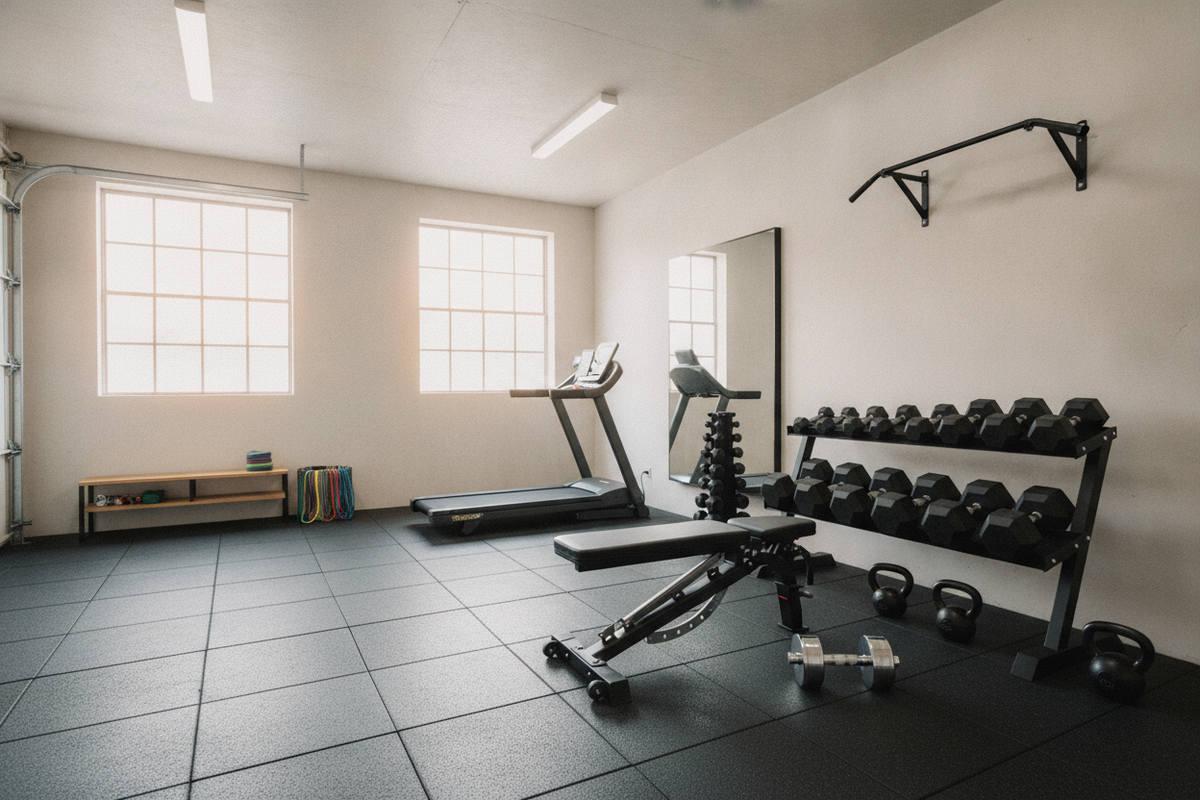
Lower Body Workouts: Standing Strength Frameworks, Movement Selection, and Home Floor Stability
Designing effective lower body workouts requires an understanding of human movement, balanced muscle recruitment, and a stable training surface. While floor-based isolation exercises have their place, standing training patterns challenge the kinetic chain by demanding active stabilization through the feet, ankles, knees, hips, and core. For home gym practitioners, standing routines maximize vertical space efficiency while fostering functional strength that carries over into everyday athletic tasks.
Foundational Principles of Standing Lower Body Workouts
A well-rounded standing lower body routine focuses on multi-joint compound movement patterns. When performing an exercise for lower body muscles from an upright posture, your body coordinates multiple muscle groups simultaneously. Standing exercises rely on ground reaction forces, requiring stable contact points with the floor to transfer force cleanly through the lower limbs.
Standing lower body training stimulates the quadriceps, hamstrings, gluteal complex, and calves while challenging the trunk to maintain an upright, braced posture. By prioritizing standing movements, lifters develop balance, spatial awareness, and joint stability across multiple planes of motion. Structuring a routine around standing mechanics also minimizes transition time between sets, allowing for continuous, productive training sessions in compact home environments.
Core Movement Categories: Selecting Every Exercise for Muscle in Lower Body Development
To ensure balanced muscular hypertrophy and joint resilience, program design should balance knee-dominant, hip-dominant, and unilateral movement patterns. Relying exclusively on a single movement type can create muscular imbalances and limit overall development.
- Knee-Dominant Movements: Exercises such as front-loaded squats, goblet squats, and tempo bodyweight squats emphasize the anterior chain, particularly the quadriceps and adductors.
- Hip-Dominant Movements: Romanian deadlifts, good mornings, and standing hip hinges focus on posterior chain recruitment, placing tension on the hamstrings and glutes.
- Unilateral and Multi-Planar Movements: Reverse lunges, split squats, step-ups, and lateral lunges challenge each leg independently, addressing bilateral strength discrepancies and engaging lateral hip stabilizers.
- Ankle and Calf Integration: Standing calf raises and controlled deceleration drills train the gastrocnemius, soleus, and stabilizing tendons of the lower leg.
Choosing the right combination of lower body moves ensures that each muscle group receives adequate stimulus. For a detailed breakdown of movement selection strategies, consult our exercise muscle lower guide. If you prefer incorporating specialized equipment into your training layout, explore our dedicated lower body strength collection to complement free-weight and bodyweight programming.
How to Build Lower Body Muscle with Standing Protocols and Progressive Tension
Understanding how to build lower body muscle without commercial machine stacks comes down to managing mechanical tension, training volume, and progressive overload. When training at home, muscle growth can be stimulated through several variable adjustments:
- Tempo Control and Pauses: Slowing the eccentric (lowering) phase of a squat or lunge to three or four seconds increases time under tension, recruiting more muscle fibers without requiring excessively heavy weights.
- Unilateral Progression: Transitioning from bilateral squats to split squats or rear-foot elevated split squats doubles the relative load placed on the working limb.
- Density and Rest Management: Shortening rest periods or performing exercises in paired sets maintains elevated muscular fatigue while keeping workout duration efficient.
- External Loading: Adding dumbbells, kettlebells, or weighted vests allows for systematic, incremental load increases over training blocks.
Athletes seeking quick, structured standing sessions can review our 10-minute standing lower body strength guide for practical pacing and sequencing ideas.
Home Gym Surface Setup: Flooring Stability and Subfloor Protection for Dynamic Moves
A frequently overlooked factor in standing lower body muscles exercises is the flooring beneath your feet. Hardwood, tile, and concrete floors present distinct challenges for standing strength routines. Hard surfaces offer little impact dampening during dynamic lunges, while slick surfaces can cause foot slippage during wide-stance squats or lateral shifts.
Deploying dense, high-traction gym flooring provides two key functional benefits:
- Footing and Lateral Traction: A non-slip textured mat allows lifters to root their feet firmly, driving outward through the hips without fear of the foot sliding during heavy or dynamic sets.
- Subfloor and Joint Cushioning: Dense rubber or micro-foam layers absorb the downward force of dropped implements and cushion the lead knee during deep lunges, protecting both the home subfloor and the lifter's joints.
For broad standing movements, a spacious mat such as the 6x10ft exercise mat gym flooring for home workouts provides ample seamless coverage for multi-directional lunges, squats, and loading shifts without stepping off the protective boundary.
Mat Maintenance, Layout Optimization, and Long-Term Training Space Strategy
Maintaining a dedicated standing workout zone ensures that your equipment remains hygienic, safe, and ready for high-intensity training. To keep your flooring in optimal condition over time, implement the following best practices:
- Keep Surfaces Clean: Wipe down mat surfaces regularly with a damp microfiber cloth and mild soap to remove sweat and dust, which can degrade surface traction over time.
- Ensure Flat Edges: Position mats on clean, dry subfloors to prevent shifting. If using rollable mats, unroll them fully and allow them to settle flat before initiating loaded footwork.
- Optimize Room Layout: Maintain a clear perimeter around your mat space so that lateral lunges and wide-stance hinges can be executed without obstruction from furniture or equipment racks.
Using a durable, multi-purpose option like our large yoga and exercise workout mat creates a stable, professional foundation that supports consistent lower body strength workout routines for years to come.