Lower Back Pain on Presses? Try These Exercises for Shoulder Flexion
I spent years wondering why my lower back felt like it was being crushed every time I tried to strict press 185 lbs. I thought I had a weak core, so I did more planks. I thought I had tight hip flexors, so I lunged until I was blue in the face. Nothing worked. The reality was much simpler: my shoulders were stuck in the 90s, and not the cool, grunge-rock kind of way. If you cannot get your arms overhead without looking like a human banana, you need specific exercises for shoulder flexion.
- The Fault: Lacking overhead range forces the lumbar spine to over-arch to keep the bar over your midfoot.
- The Fix: Isolate the shoulder joint with floor-based and wall-based drills that lock the ribcage down.
- The Gear: A PVC pipe, a light kettlebell, and a grippy mat are all you need to fix your mechanics.
- The Goal: 180 degrees of pure shoulder flexion without cheating via the lower back.
The Hidden Reason Your Overhead Press Feels Awful
Most lifters think they have 'bad shoulders' when they actually just have 'stiff shoulders.' When you lack the ability to reach a full 180 degrees of vertical reach, your brain doesn't just stop the lift. It finds a workaround. Usually, that workaround involves tilting your pelvis forward and aggressively arching your lower back just to get the weight stacked. You aren't pressing the bar up; you're leaning back so far that you're essentially doing a standing incline bench press.
This is a recipe for a herniated disc and a plateau that lasts for years. Before you add another 5 lbs to the bar, you need to understand where you actually stand. Checking your Shoulder Flexion Degrees The Definitive Guide To Range Of Motion is the first step. If you can only hit 160 degrees, that 20-degree deficit has to come from somewhere, and your lumbar spine is the first volunteer. True overhead mobility means your ribs stay glued down while your biceps reach your ears.
How I Test My Own Overhead Mobility (Without Equipment)
I use a simple wall-sit test to keep myself honest. Sit on the floor with your back against a flat wall. Bend your knees and pull your feet in so your entire spine—from your tailbone to the back of your head—is flush against the surface. If there is a gap big enough to slide a hand behind your lower back, you are already cheating.
Now, try to raise both arms overhead and touch your thumbs to the wall above you. Keep your elbows locked straight. If your back peels off the wall the moment your arms pass your forehead, you have failed the test. This is a shoulder flexion exercise in its purest form because the wall acts as a literal barrier to your typical cheating patterns. I do this every Monday morning to see how much 'office chair slouch' I need to undo before my heavy session.
My Go-To Floor Exercises to Increase Shoulder Flexion
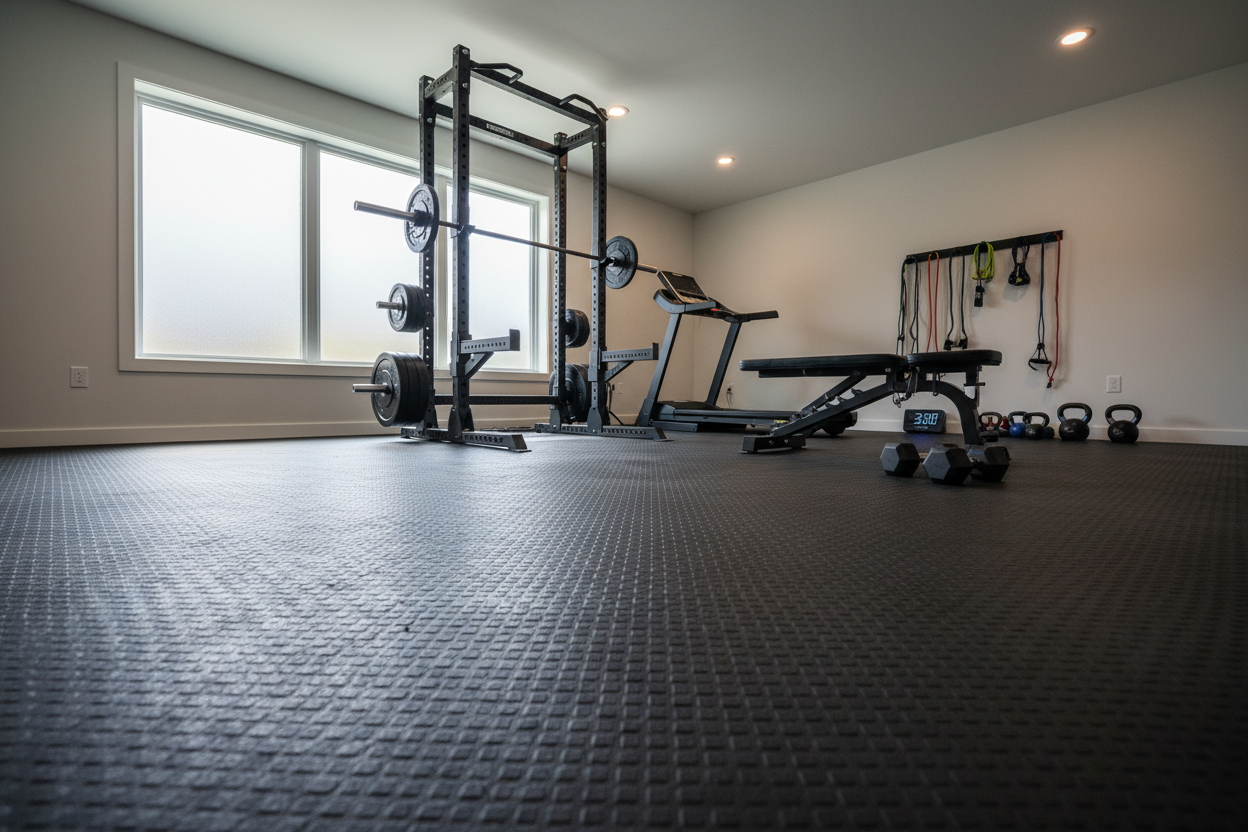
The floor is your best friend for mobility because it provides immediate tactile feedback. You can't arch your back if the floor is pushing back against you. When I started my rehab, I moved all my warm-ups to a Large Exercise Mat For Home Gym. It sounds trivial, but having a dedicated, cushioned space makes you actually do the work instead of rushing through it on cold, dusty concrete.
The goal here is to isolate the glenohumeral joint. By lying down, we take the hips and knees out of the equation. We want to focus on how to improve shoulder flexion by teaching the scapula to rotate upward properly while the humerus moves through its full range. These aren't 'burners'; they are precision drills designed to recalibrate your nervous system.
Prone PVC Pipe Lifts
This is arguably the best shoulder flexion strengthening exercise for anyone with a desk job. Lie face down on a 6X8Ft Exercise Mat Yoga Mat Gym Flooring For Home Workout and hold a PVC pipe with a shoulder-width grip. Rest your forehead on the mat. Keeping your arms perfectly straight, lift the pipe as high as you can toward the ceiling.
You will likely only move it three or four inches. That’s fine. The magic happens in the lower traps and rear delts. You are forcing the muscles responsible for overhead stability to fire without the assistance of your massive lower back muscles. I do 3 sets of 15 reps, holding the top for two seconds. It’s humbling, it’s frustrating, and it’s exactly what your overhead press needs to actually feel stable.
Dead Bugs with Pullovers
To increase shoulder flexion while keeping the core engaged, I use the dead bug pullover. Lie on your back, legs in a tabletop position. Hold a light kettlebell (10-15 lbs is plenty) over your chest. As you extend one leg out, slowly lower the kettlebell behind your head. The weight of the kettlebell acts as a gentle shoulder flexion stretch, pulling you into a deeper range.
The trick is to keep your lower back pressed so hard into the mat that a breeze couldn't get through. If your ribs flare up, you've gone too far. This drill teaches your brain that it can move the shoulders into deep flexion without losing core tension—a skill that translates directly to the top of a heavy military press.
Standing Drills That Actually Translate to the Barbell
Floor work is great for isolation, but eventually, you have to stand up. The transition to Standing Shoulder Flexion The Master Key To Overhead Mobility is where most lifters fail. Gravity changes the demand on your stabilizers. When you're standing, your pelvis is free to tilt, making it much easier to 'fake' mobility.
I use standing drills to bridge the gap between physical therapy and performance. These shoulder flexion and extension exercises ensure that when you finally get under a 20kg bar, your movement patterns are baked in. You want to feel the same 'locked-in' ribcage feeling you had on the floor while you are vertical.
Wall-Facing Angels
Face a wall with your toes about two inches from the baseboard. Place your forearms against the wall in a 'goalpost' position. Now, slide your arms up the wall into a 'V' shape. The catch? Your nose, chest, and forearms must stay in contact with the wall, but your lower back cannot arch. This is a brutal shoulder flexion example of how limited most of us really are.
If you feel a massive stretch in your lats or a burning in your mid-back, you're doing it right. This drill forces the serratus anterior to work, which is the muscle that helps your shoulder blade wrap around your ribcage. Without a functioning serratus, your shoulder flexion workout is basically just a rotator cuff injury waiting to happen. Do 10 slow reps before every upper body session.
How to Program These Drills Without Wasting Time
You don't need a 45-minute mobility circuit. I’ve found that 5 minutes of focused exercises to increase shoulder flexion is better than an hour of mindless stretching. Pick two drills—one floor-based and one standing—and do them as a superset between your warm-up sets of presses. It keeps the mobility 'fresh' in your nervous system right before you demand performance from the joint.
For example, do 10 Prone PVC Lifts, then 5 Wall-Facing Angels. Then do your empty bar warm-up. Repeat this for three rounds. By the time you get to your working weight, your shoulders will feel 'greased' and your lower back won't feel the need to jump in and save the day. It took me six weeks of doing this consistently to add 15 lbs to my press simply because I was finally in an efficient mechanical position.
FAQ
What is a normal range for shoulder flexion?
For most lifters, 180 degrees is the gold standard. This means your arm is perfectly vertical, parallel with your spine, without your ribs flaring or your back arching. If you are under 160 degrees, you are significantly increasing your risk of impingement and lower back strain during overhead movements.
Can I use a barbell for these exercises?
I wouldn't start there. A barbell is 45 lbs, which is often too heavy to use for pure mobility drills without compensation. Start with a PVC pipe or a broomstick. You want the weight to be light enough that you can focus entirely on the position of your shoulder blades and spine.
How often should I do shoulder flexion strengthening exercises?
If you have tight shoulders, do them daily. It takes high frequency to change the resting length of a muscle and the 'setting' of a joint. Even on rest days, five minutes of wall angels can help counteract the damage done by sitting at a computer all day.