Is Your Bodybuilding Weekly Workout Plan Just Junk Volume?
I remember standing in my garage at 10 PM, staring at a pair of adjustable dumbbells and a rack that took up half the floor space, wondering why my chest looked exactly the same as it did three months ago. I was following a pro's bodybuilding weekly workout plan that called for six different chest exercises. By the time I got to the cable flyes, I wasn't even training the muscle; I was just moving weight to check a box. It felt productive because I was sweating, but I was actually just digging a recovery hole I couldn't climb out of.
Quick Takeaways
- Junk volume is any set that adds fatigue without adding a growth stimulus.
- Two high-intensity movements per muscle group often outperform six moderate ones.
- The goal of a weekly workout plan for bodybuilding should be progressive overload, not variety.
- Home gym lifters need to prioritize stability and safety to reach true failure on fewer sets.
The Trap of the Magazine Muscle Split
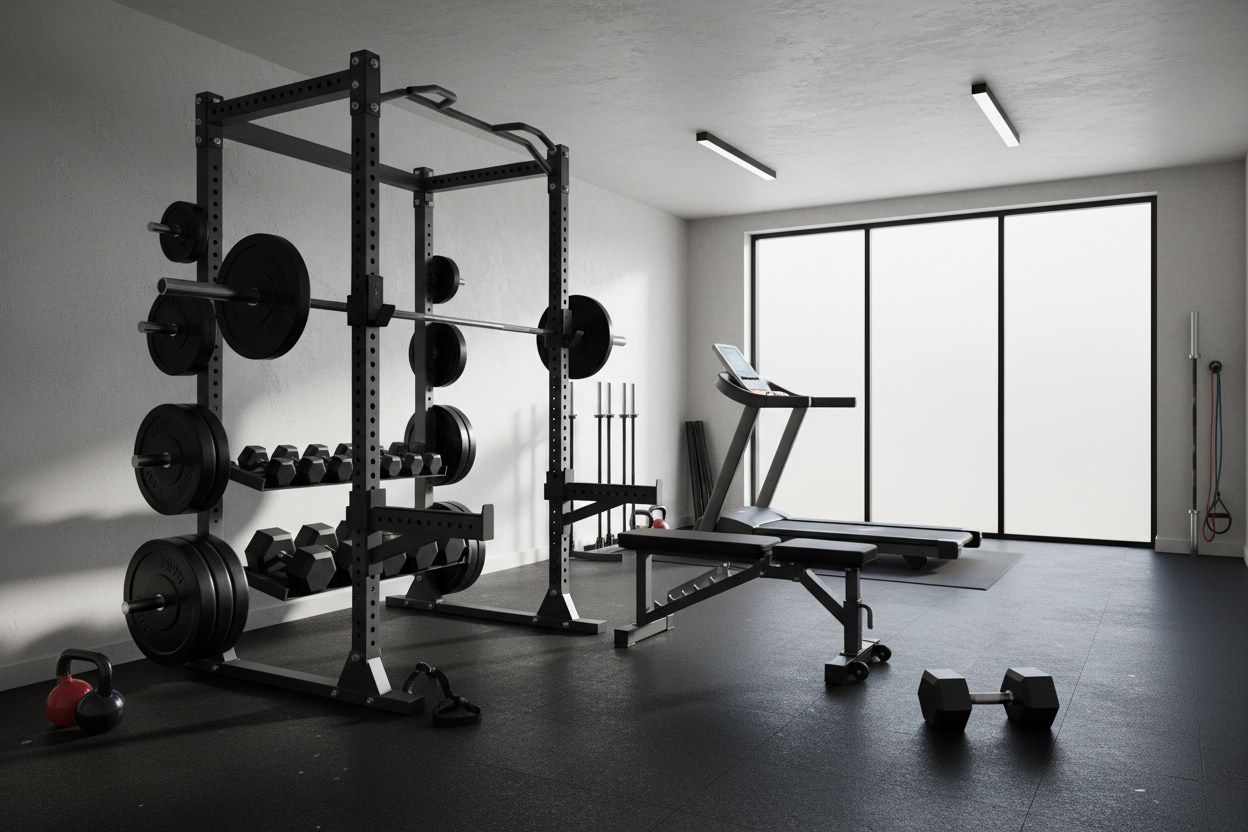
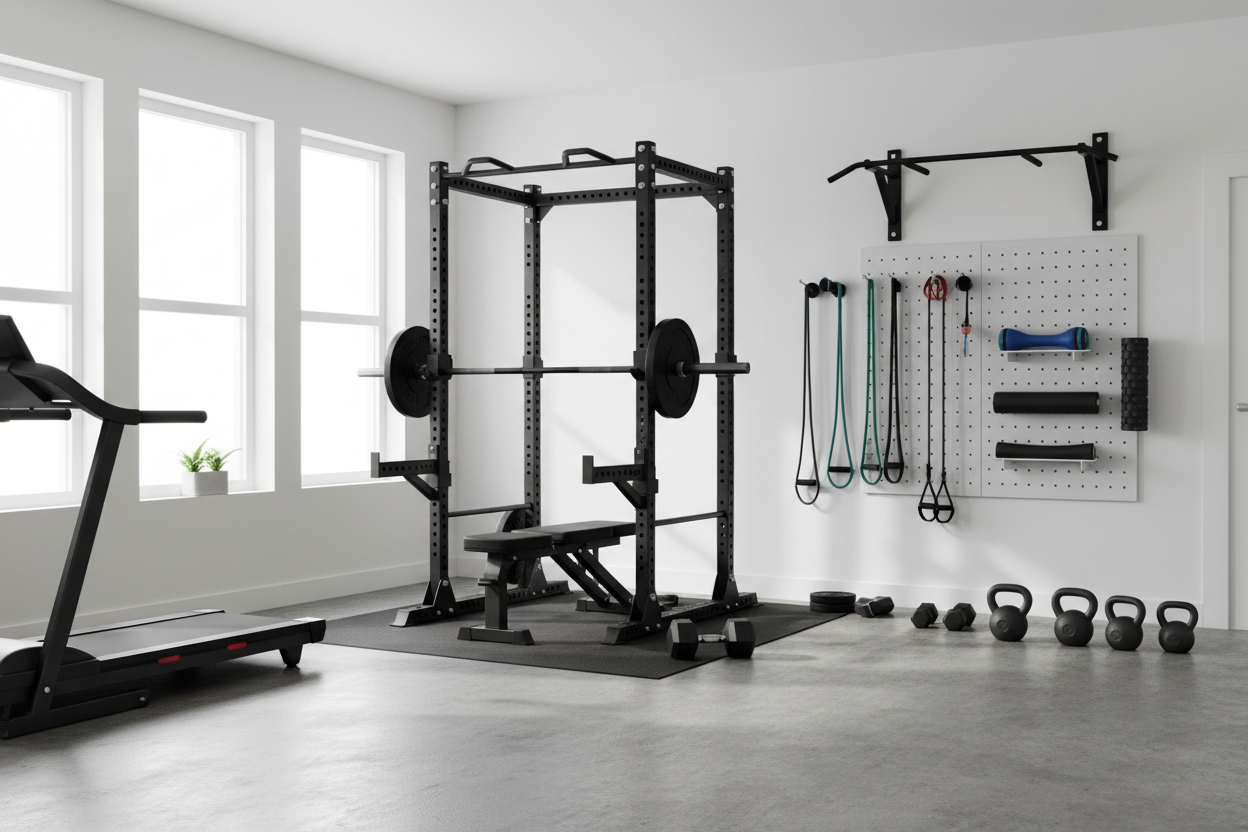
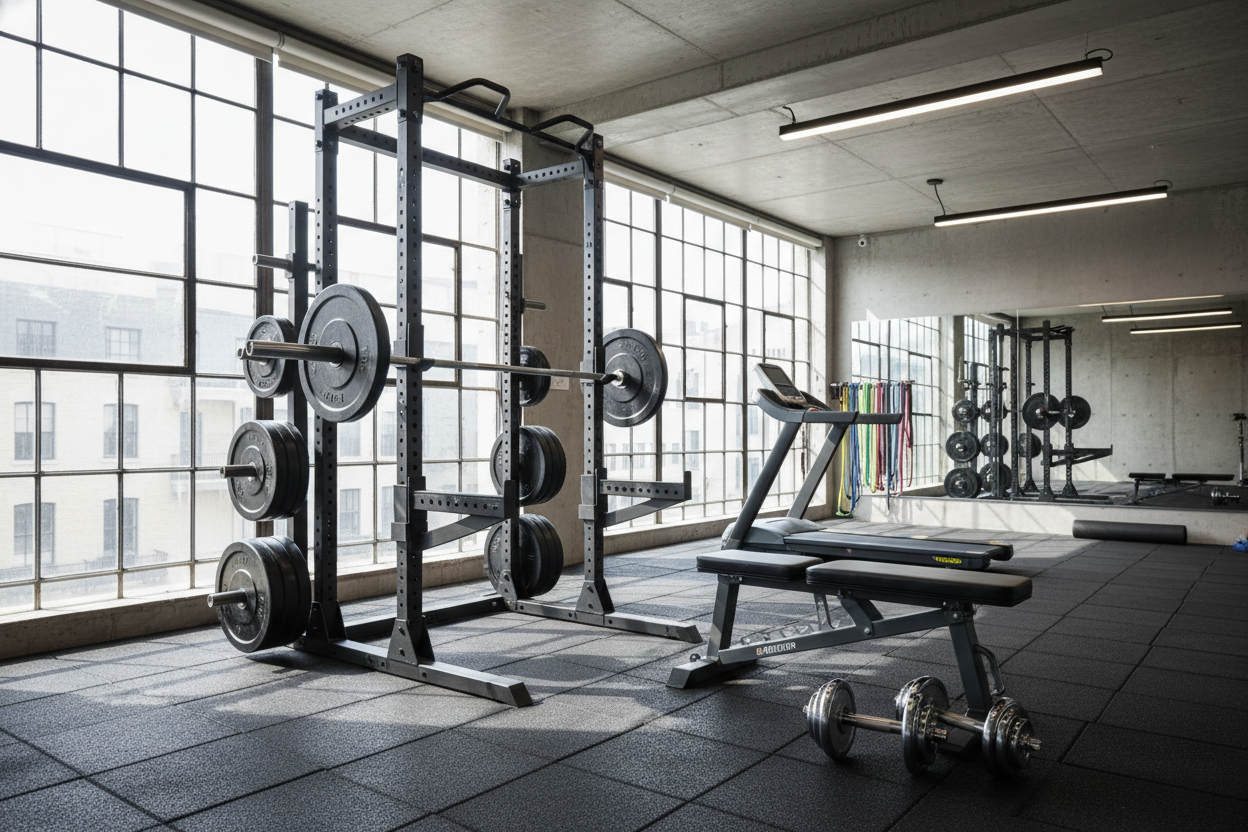
Most garage gym owners fall into the same trap: we copy the routines of guys who have professional chefs and 'pharmaceutical' assistance. We see a 30-set leg day in a magazine and assume that’s the gold standard. In reality, for those of us training in a 10x12 space with a power rack and a barbell, that much volume is a death sentence for progress.
When you try to hit a muscle from six different angles in one session, your intensity naturally drops. You start pacing yourself. You stop three reps short of failure on your first exercise because you know you have five more to go. That’s not bodybuilding; that’s cardio with heavy objects. Real growth happens when you demand the muscle adapt to a specific, heavy stressor.
What 'Junk Volume' Actually Means in a Garage Gym
Junk volume is the 'extra' work that doesn't trigger hypertrophy but does fry your central nervous system. Think of your recovery like a bank account. Every set you do is a withdrawal. The first two exercises for a muscle group might cost $20 but give you $100 in growth. By the fifth exercise, you're spending $50 in recovery energy for about $2 in growth. That’s a bad investment.
In a home gym environment, we often lack the fancy machines that allow for 'easy' volume. We’re usually dealing with free weights or basic pulleys. This means every set takes more out of you. If you’re grinding through a fourth variation of a row, you’re likely just fatiguing your lower back and grip rather than building a wider lat spread.
The 2-Movement Rule for Home Hypertrophy
The most effective way to strip the fat from your routine is the 2-Movement Rule. For every muscle group, pick one heavy compound movement that emphasizes the 'stretch' (like a deep squat or an incline press) and one movement that emphasizes the 'squeeze' or peak contraction (like a leg extension or a pec deck). That’s it.
For example, if you’re looking for a leg and back workout bodybuilding approach that actually works, you’d pair a heavy RDL for the stretch with a chest-supported row for the squeeze. Once you've smashed those two movements with 100% effort, move on. Your CNS will thank you, and your measurements will actually start to move.
Structuring Your Stripped-Down Routine
A smart weekly workout plan for bodybuilding doesn't need to be a six-day 'bro split.' I’ve found that a four-day Upper/Lower or a five-day Push/Pull/Legs split is the sweet spot for most home lifters. This allows you to hit each muscle group twice a week without spending two hours in the garage every night.
If you're struggling to figure out how to fit your specific equipment into a template, check out our workout hub for ideas on how to rotate your movements. The key is consistency. Instead of changing exercises every week to 'confuse the muscle,' stick to the same two movements for 8-12 weeks and focus on adding weight or reps every single session.
High Effort Requires a Solid Foundation
When you cut your volume down to two exercises per muscle, those sets have to be brutal. You’re going to failure, or very close to it. This is where your equipment matters. You can't safely push a set of squats to the limit if your feet are sliding on bare concrete or cheap, thin foam tiles.
I learned this the hard way when I nearly dumped 315 lbs because my rear foot slipped during a split squat. Investing in a heavy-duty 6x8ft exercise mat provides the grip and stability you need to actually reach that hypertrophy threshold. When you aren't worried about your floor or your footing, you can put 100% of your focus into the muscle contraction.
My Honest Mistake
A few years ago, I was convinced I needed 'maximum variety.' I had a belt squat, a rack, and three different types of bars. I was doing 25 sets for legs every Tuesday. I was constantly sore, my knees felt like they were filled with crushed glass, and my squat numbers were actually going down. I cut my leg day down to just two exercises: heavy high-bar squats and Bulgarian split squats. In six weeks, my legs grew more than they had in the previous year. I realized I wasn't 'hardcore' for doing 25 sets; I was just inefficient.
FAQ
How do I know if I'm doing junk volume?
If you find yourself 'saving' energy during your first two exercises so you can finish the rest of the workout, or if your strength on an exercise is significantly lower than it should be because you're already exhausted, you're likely dealing with junk volume.
Is two exercises really enough for big muscles like the back?
Yes, provided you pick movements that cover different planes. A vertical pull (lat pulldown) and a horizontal pull (row) cover the vast majority of the back's functions. Do them with high intensity and you'll grow.
Should I never do high-volume phases?
High volume has its place for short 'overreach' blocks, but for the average person training at home, a low-to-moderate volume approach with high intensity is much more sustainable and easier to track for progress.