Lifetime Barbell Workouts: What to Expect and Home Setup
Lifetime barbell training has grown into a major staple for fitness enthusiasts who want structured weightlifting without spending hours designing their own programming. Stepping into a group fitness class built around a barbell introduces a balance of athletic conditioning, guided progression, and clear technique instruction. If you are exploring a lifetime barbell program, understanding how the exercises flow and how to adapt those same lifts in your personal gym space can elevate your weekly training. In this guide, we break down what makes the lifetime barbell format distinctive, how it compares to other formats, and how to build a reliable setup at home.
What Is the Lifetime Barbell Experience?
The lifetime barbell concept is anchored in purposeful resistance training delivered in an energetic studio setting. Unlike fast cardio intervals that focus purely on heart rate spikes, a dedicated barbell strength class emphasizes controlled cadence, deliberate muscle contractions, and steady progression. In a standard lifetime barbell session, participants gather around individual workout stations equipped with adjustable weight bars, collars, and plate sets. For anyone seeking a lifetime barbell workout that builds tone and confidence, the studio environment supplies both structure and encouragement.
Instructors in these sessions blend the motivation of a group fitness class with the technical precision of personal barbell training. Rather than racing through reps, you focus on form and pacing, allowing every rep to work the targeted muscle groups through a complete range of motion. For many lifters, the lifetime barbell routine serves as an ideal bridge between casual gym visits and structured strength routines. Over time, participants develop true barbell strength through consistent practice and gradual load increases.
What Should You Expect in a Lifetime Barbell Strength Class?
In a lifetime barbell strength class, you should expect a comprehensive full-body session structured around foundational compound movements performed to rhythmic or timed intervals. Each session generally starts with an active warm-up using an unloaded or lightly loaded bar to mobilize joints and rehearse fundamental lifting technique. Once warmed up, the workout transitions into focused blocks targeting major muscle groups, helping attendees enhance full-body barbell strength over weeks of training.
Within each block, lifters encounter moderate rep ranges designed to test muscular stamina and barbell strength simultaneously. Rather than aiming for a single maximum lift, the barbell strength class format leans into sustained sets where muscle endurance meets progressive overload. Coaches provide cues on bar path, hip hinge angles, and breathing patterns. Joining a regular barbell strength class gives participants direct feedback on their posture, making the lifetime barbell format accessible yet demanding for lifters of varying experience levels.
Core Movements in Lift Barbell Strength Lifetime Sessions
The signature lift barbell strength lifetime programming revolves around multi-joint lifts that recruit large muscle networks. Instead of isolating single muscles on machines, the core routine emphasizes foundational compound movements that challenge the entire body. Inside a lifetime barbell workout, balance and stability develop alongside pure muscular force.
Chief among these lifts are barbell squats, which anchor the lower-body portion of the class. Whether performing back squats or front-loaded squat variations, participants learn to sink to parallel while keeping their core braced. Following squats, deadlifts take center stage for the posterior chain, reinforcing proper hip hinge patterns while protecting the spine. Upper-body work is anchored by barbell rows to build back density and the overhead press to develop vertical pushing power and shoulder stability. For further advice on vertical pressing technique, you can consult our detailed barbell lift strength guide.
Throughout these lifts, coaches frequently incorporate tempo training. Slowing down the eccentric phase of a squat or pausing at the knee during deadlifts forces muscles to work harder without requiring excessively heavy loads. This emphasis on lift barbell strength ensures that every movement delivers maximum training value while reinforcing safe movement patterns.
Can You Replicate Lift Barbell Strength Workouts at Home?
You can easily replicate lift barbell strength workouts at home if you select versatile equipment and establish a dedicated training perimeter. Many lifters who enjoy the group atmosphere of lift barbell strength lifetime sessions want the flexibility to complete barbell workouts on their own schedule without commuting to a commercial facility. Practicing a lifetime barbell routine at home gives you flexibility while maintaining continuous athletic progress.
To mirror the structure seen in strictly strength lifetime formats, you do not need an entire commercial facility, but you do need thoughtful programming. You can structure your barbell workouts by pairing upper and lower body movements into circuits or straight sets with timed rest windows, focusing on core exercises such as squats, presses, and barbell rows. If you want to see how a complete studio session translates to a garage or spare room, read our practical breakdown in this lifetime strictly strength guide. While a traditional barbell strength class relies on collective energy, building barbell strength in a home gym allows you to work at your exact comfort level. Using tempo training during each repetition helps spark adaptation, while maintaining disciplined form and pacing and keeping track of your rep ranges will recreate the intense conditioning of a live lifetime barbell class.
Essential Floor Protection for Barbell Training
Selecting high-quality floor protection is crucial whenever you bring barbell training into a living space, garage, or basement. Bare concrete or residential wood floors cannot absorb the concentrated point-load stress of heavy iron or hard plate collars, making specialized gym flooring a mandatory foundation. Adapting your space for lifetime barbell exercises requires a surface that handles heavy impact without shifting.
Without adequate floor protection, setting down a loaded bar or managing accidentally dropped weights can crack tiles, dent concrete, and ruin finished flooring. The impact from dropped weights travels through rigid surfaces unless cushioned by dense rubber gym mats that shield your subfloor protection layer. Furthermore, heavy-duty gym flooring absorbs acoustic vibration, reducing the rumbling noise that travels throughout the house during deadlifts or barbell squats. Ensuring adequate subfloor protection prevents structural stress across high-traffic training areas.
Beyond protecting the structure, rubber gym mats provide essential traction. Sweaty soles on smooth wood or polished garage concrete create slipping hazards during an overhead press or deep barbell squats. A textured rubber gym mats surface provides stability for confident lifetime barbell lifting. Quality gym flooring also simplifies cleanup after tough workouts while providing reliable support for heavy barbell strength exercises. For individuals setting up a full lifting area, exploring a curated strength equipment collection can help match mats and racks for long-term durability.
Equipment Spacing and Home Gym Layout Tips
Smart equipment spacing is the key to executing barbell training at home safely without bumping into walls, furniture, or storage racks. A standard Olympic or studio barbell measures between five and seven feet in length, meaning you need sufficient lateral room to load and unload plates freely on both ends. When outfitting a lifetime barbell training station, layout matters just as much as equipment quality.
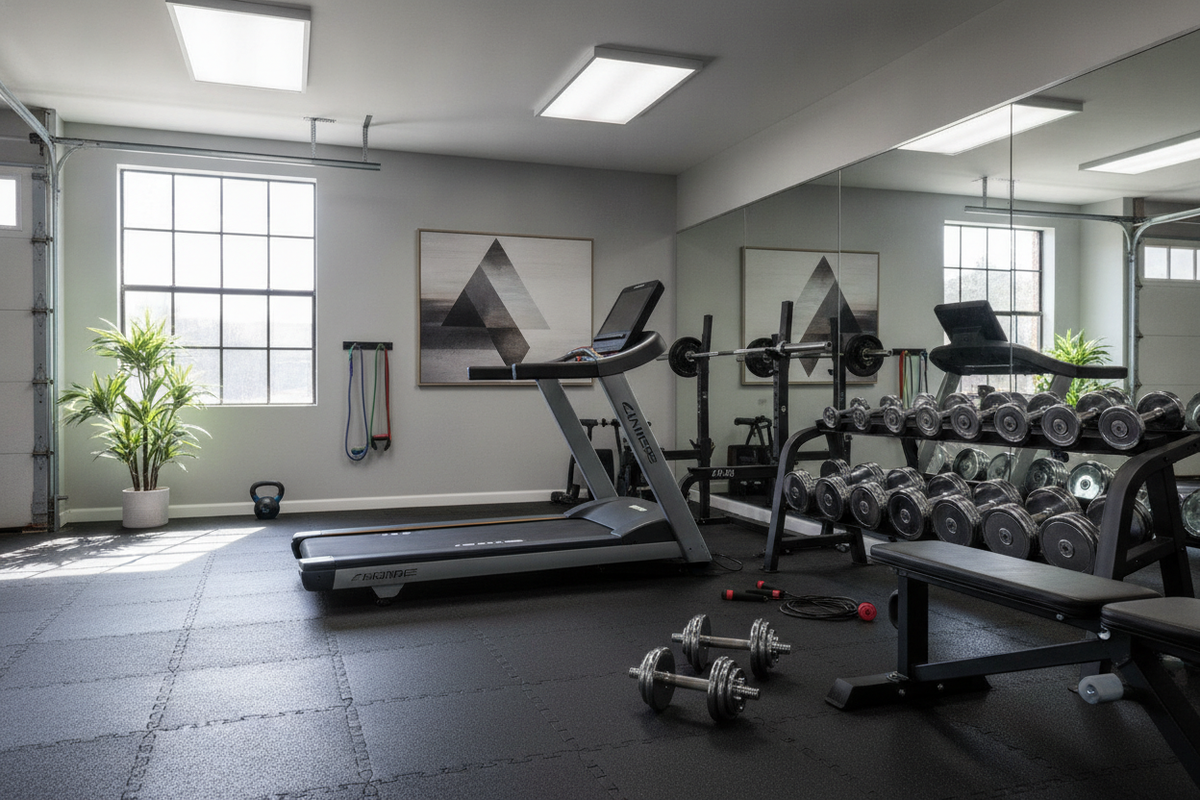
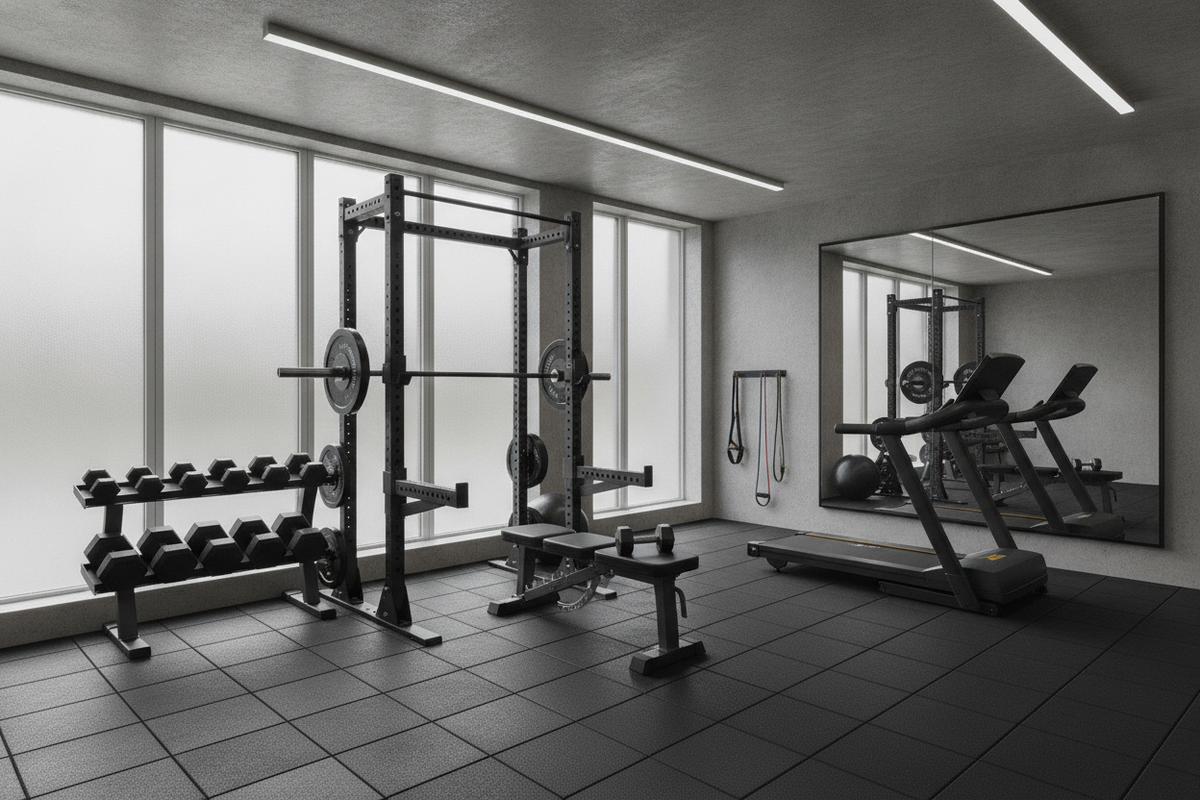
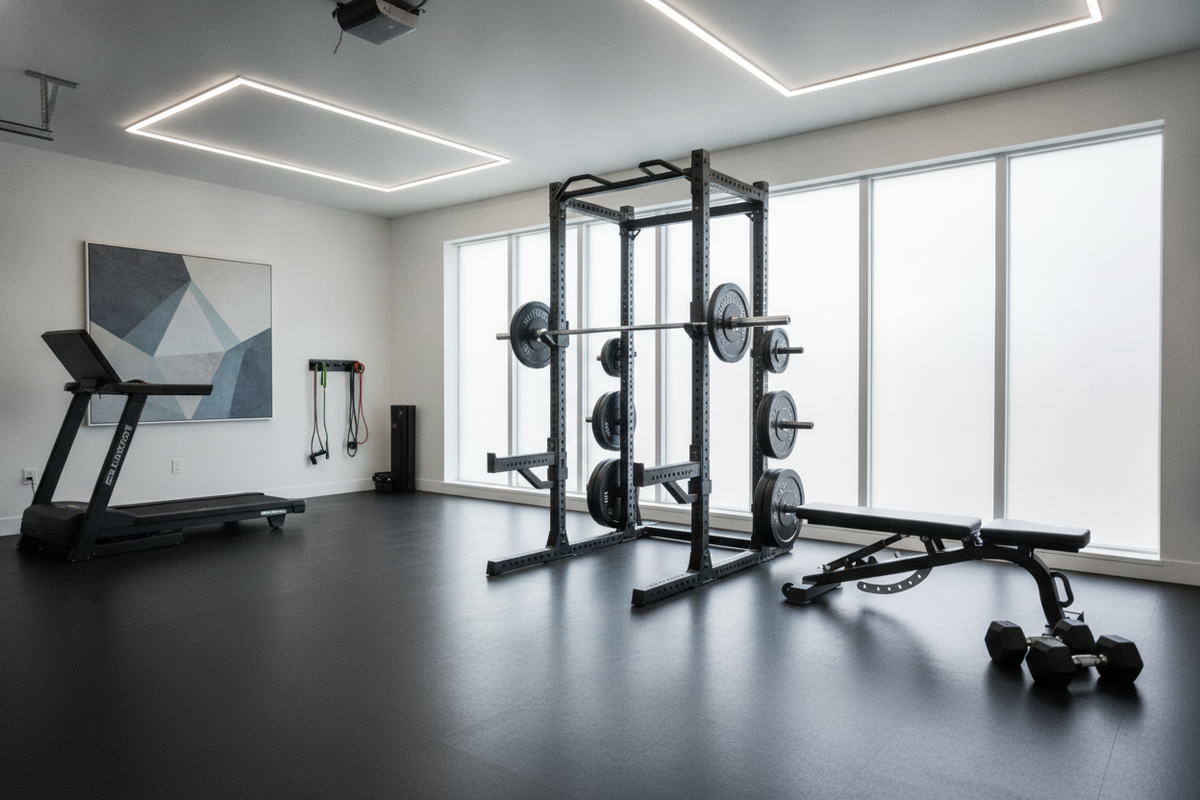
Plan your layout so you have open perimeter space surrounding your barbell workouts zone. If your routine includes an adjustable weight bench or a stationary power rack, position them so that your bar path remains unobstructed. In my own home gym planning, I found that leaving generous buffer zones around the power rack made transitioning between exercises much smoother and far less frustrating. Having a sturdy power rack secures the bar at the exact height needed for pressing or squatting, and clearing vertical headroom for an overhead press prevents collisions with low ceilings or light fixtures.
Proper equipment spacing also demands designated plate storage. Allowing bumper plates or iron discs to scatter across the floor introduces severe tripping hazards and clutters your lifting platform. Slide a weight bench under the bar when bench pressing, and roll it clear when deadlifting. Setting up a compact weight tree or utilizing the weight pins on a comprehensive package like this integrated power rack barbell package keeps bumper plates organized and protects your rubber gym mats from uneven wear.
Lower Body Support and Machine Pairings
While compound movements with a barbell form the bedrock of strength development, integrating accessory resistance training accelerates overall progress. In both commercial lifetime barbell environments and home setups, lifters often pair free-weight barbell rows, deadlifts, and squats with targeted machine movements to isolate specific muscles without excessive spinal fatigue. A comprehensive lifetime barbell approach unites technique, support work, and progressive loading.
For example, following heavy barbell squats with guided leg presses or seated leg curls allows you to exhaust quadriceps and hamstrings safely once stabilizing muscles are fatigued. If you have the space to expand your training station, adding dedicated pieces from a lower body strength machine collection provides the ideal supplement to your barbell training sessions, helping accelerate your overall barbell strength development.
Combining strictly strength lifetime principles with smart floor protection, proper equipment spacing, and complementary resistance training gives you everything you need to build muscle endurance and strength. Whether you attend a weekly group fitness class or practice lift barbell strength lifetime lifts at home, staying focused on long-term barbell strength pays dividends. Disciplined technique, quality bumper plates, and a reliable weight bench will keep your lifetime barbell workouts safe, effective, and rewarding for years to come.