Let's Settle This: What Is Strengthening Exercise Without the BS?
I’ve spent a lot of money making mistakes in my garage. I’ve bought the 1/2-inch foam tiles that pull apart like puzzle pieces during a heavy deadlift, and I’ve tried to get 'strong' by doing 50-rep sets of air squats until my lungs burned. It took a few years and a lot of joint pain to realize I was just getting tired, not getting better. If you’ve ever wondered what is strengthening exercise while staring at a pair of 5-lb dumbbells and a heart rate monitor, this is for you.
- Strength is about force production, not just sweat and exhaustion.
- Mechanical tension is the primary driver of muscle growth and bone density.
- High-rep 'toning' classes are usually just disguised cardio sessions.
- Your environment dictates your output: if you don't feel stable, you won't lift heavy.
The Difference Between Getting Tired and Getting Strong
There is a massive industry built on the idea that if you are gasping for air and dripping in sweat, you’ve had a great workout. I used to fall for it. I’d go to these 'metcon' classes, move a 15-lb kettlebell around for 45 minutes, and leave feeling like I’d been hit by a truck. But six months later, my squat hadn’t moved. My deadlift was stagnant. I wasn't stronger; I was just better at being exhausted.
True strength training isn't about burning calories. It's about forcing your nervous system and your muscle fibers to adapt to a load they aren't prepared for. When you do a set of five heavy deadlifts, your heart rate might not hit 180 BPM, but your central nervous system is screaming. That 'tired' feeling after a sprint is metabolic fatigue; the 'heavy' feeling after a set of squats is mechanical load. One makes you a better runner; the other makes you harder to break.
So, What Is Strengthening Exercise Actually?
Strip away the marketing and the neon lights, and strength exercise is defined by one thing: resistance that challenges your voluntary force production. Mechanically, it’s about creating enough tension in the muscle fibers to cause micro-tears and signaling the body to reinforce those fibers. This usually happens in the 1 to 12 rep range. If you can do 30 reps of an exercise without breaking a sweat or losing form, you aren't doing strength work; you're doing endurance work.
You need three things for a movement to count as a strengthening exercise. First, you need resistance—this can be a barbell, a 50-lb dumbbell, or even your own body weight if the leverage is difficult enough (think pull-ups). Second, you need intent. You aren't just moving the weight; you are trying to move it with maximum force. Third, you need progressive overload. If you lift the same 20-lb dumbbell for the next three years, you stopped 'strengthening' about two years and eleven months ago. You’re just maintaining.
Why Tension Matters Way More Than Sweat
Your muscles don't have eyes. They don't know if you're holding a rusted iron plate or a fancy chrome-plated adjustable dumbbell. They only sense tension. Time under tension (TUT) is the secret sauce that separates the 'sweaty' workouts from the 'strong' ones. When you slow down the eccentric (lowering) phase of a lift, you create massive amounts of tension that trigger growth.
I’ve seen guys in commercial gyms fly through reps, using momentum to swing weights around. They sweat a lot. They look busy. But they are bypassing the very tension required to get strong. If your heart rate is the only thing you're tracking, you're missing the point. A high heart rate is a byproduct of effort, but it is not a metric for strength. I’d rather see a trainee do three perfectly controlled, heavy reps than twenty sloppy ones that look like a seizure.
Stop Falling for Fake Strength Routines
The fitness industry loves the word 'toning.' It’s a fake word designed to sell light weights to people who are afraid of getting 'bulky.' Let’s be clear: you cannot change the shape of a muscle; you can only make it larger or smaller. That 'toned' look people want is actually just having muscle mass and a low enough body fat percentage to see it. You don't get that by lifting 2-lb pink weights for 100 reps.
Most 'sculpt' or 'burn' classes are just low-impact cardio. If the resistance isn't heavy enough to make you struggle by the 10th rep, you aren't building strength. You’re burning a few calories, which is fine, but don't expect your bone density to improve or your metabolism to shift. Real strength work is uncomfortable. It requires you to strain. If it feels like a massage or a light jog, it’s not a strengthening exercise.
Setting Up a Space That Actually Supports Heavy Lifting
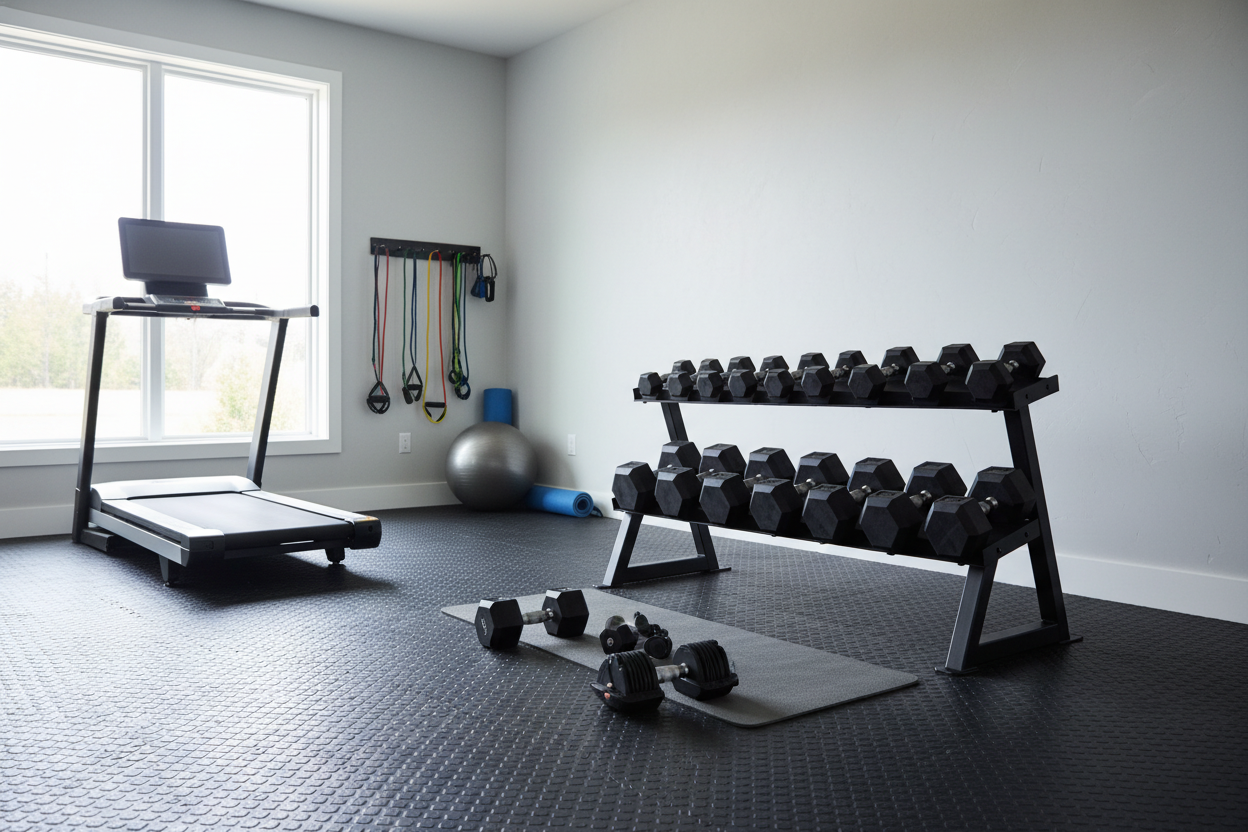
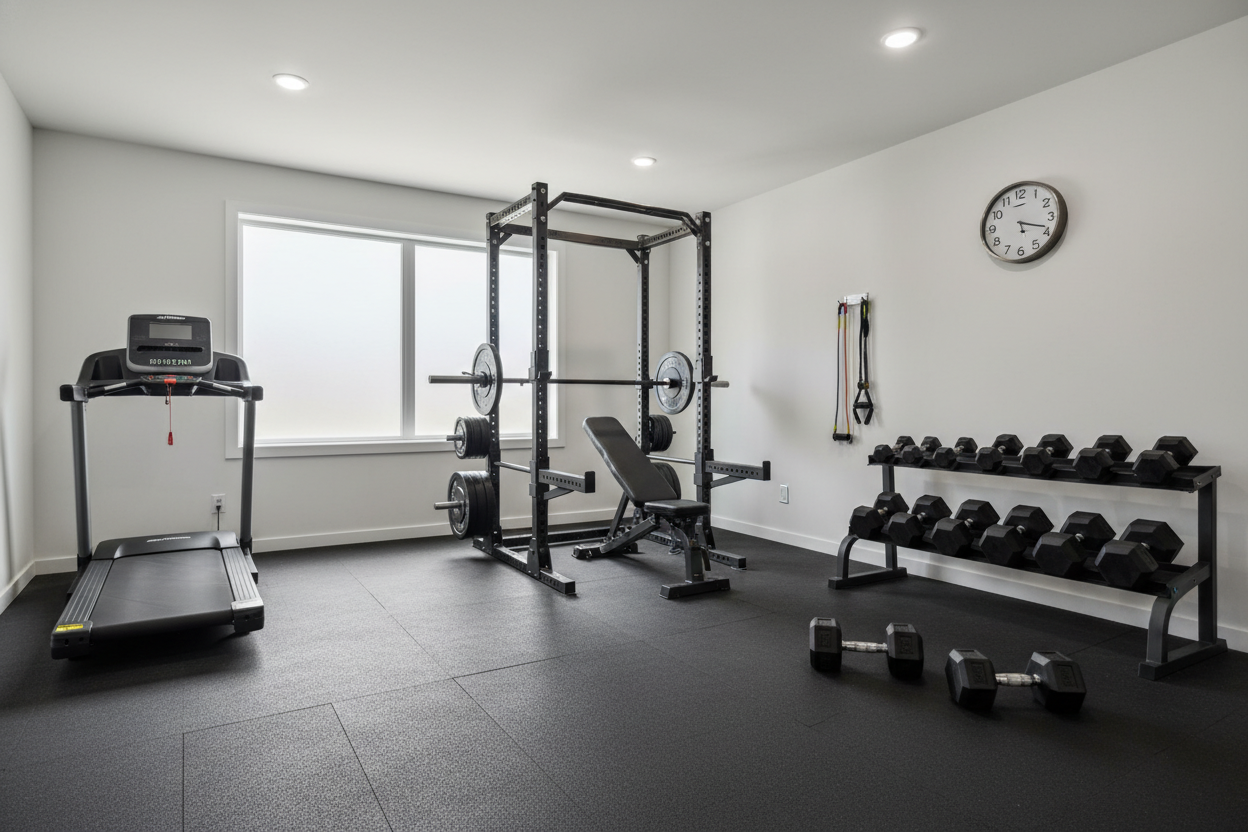
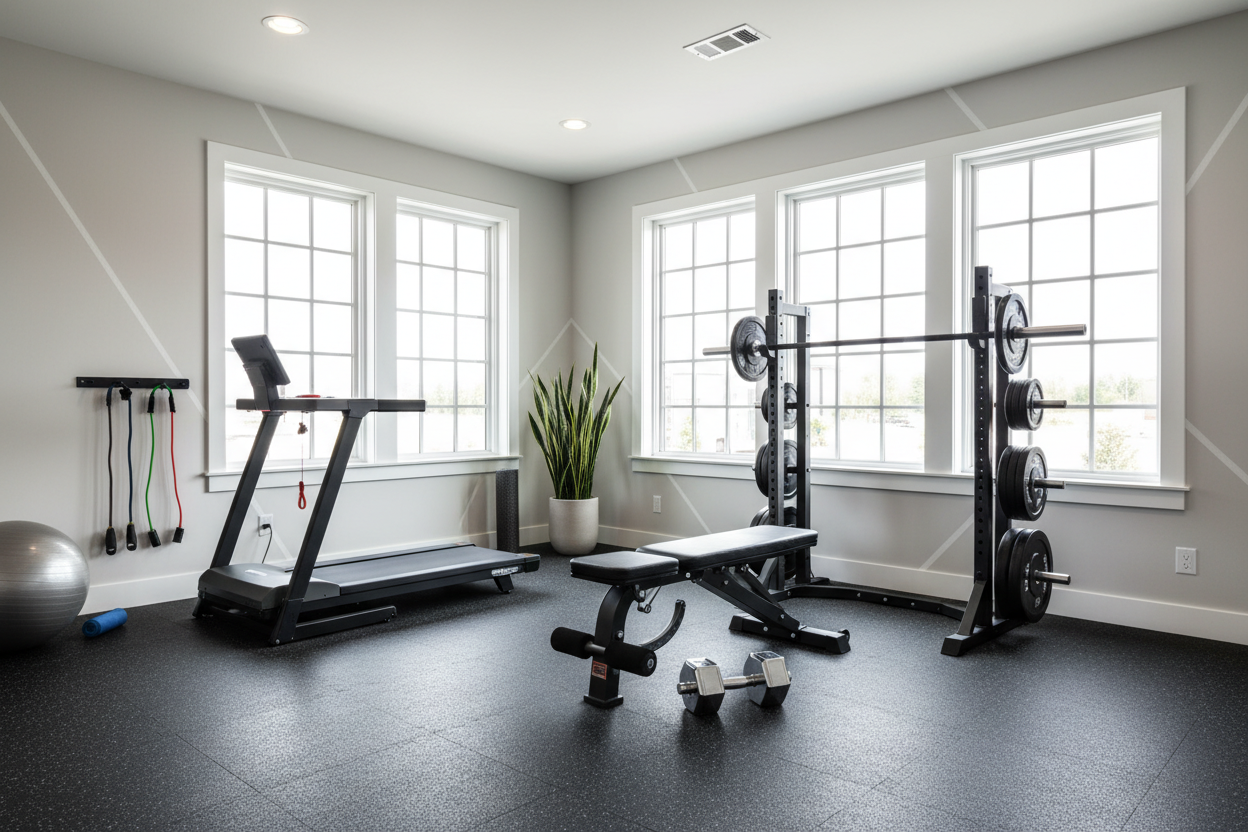
If you’re training at home, your floor is your foundation. I learned this the hard way when I tried to squat in a spare bedroom on plush carpet. My ankles were wobbling, my balance was shot, and I was terrified of dropping the weights. You cannot produce maximum force if your brain thinks you’re standing on a marshmallow. You need a dedicated surface that offers grip and impact protection.
People often ask What Is An Exercise Mat versus a real lifting floor? A standard yoga mat is for stretching; it’s too soft and thin for weights. For real strength work, you need high-density rubber that doesn't compress under a 200-lb load. I personally use a 6X8Ft Exercise Mat Yoga Mat Gym Flooring For Home Workout because it’s thick enough to protect my subfloor when I set down heavy dumbbells and large enough that I’m not stepping off the edge during lunges. If you can't trust your footing, your lifts will always be sub-maximal.
A No-BS Framework to Start Building Real Muscle Today
You don't need a 50-piece cable jungle to get strong. You need four movements: a squat (legs), a hinge (back/glutes), a push (chest/shoulders), and a pull (back/arms). If you perform these four movements twice a week and focus on adding a little more weight or one more rep every session, you will get stronger than 90% of the people at your local big-box gym.
Designate a spot in your house—even if it’s just a corner of the garage—and lay down a Large Exercise Mat to mark your territory. This isn't just about floor protection; it's psychological. When you step on that mat, you aren't there to 'burn calories' or 'get a sweat on.' You are there to move heavy things with perfect form. Stick to the basics: Goblet squats, floor presses, rows, and RDLs. That is the blueprint for strength.
Personal Experience: The Boutique Trap
A few years ago, I got talked into a high-end 'strength' boutique class. The music was loud, the lights were dim, and we did 500 reps of various movements with 10-lb weights. I was exhausted. I felt like I had worked hard. But when I went back to my home gym the next day to hit my usual 315-lb deadlift, it felt heavier than ever. My 'strength' class had actually just drained my recovery capacity without giving me any actual stimulus to get stronger. I realized then that I’d rather spend 20 minutes doing three heavy sets than 60 minutes doing 'junk volume' that leads nowhere.
FAQ
Do I need to lift every day to see results?
No. In fact, lifting every day is a great way to burn out. Strength is built during recovery, not the workout itself. Three days a week is plenty for most people, provided those sessions are intense and focused on progressive overload.
Can I build strength with just bodyweight?
Yes, but you have to make the movements harder as you go. Doing 100 pushups is endurance. Doing 5 slow, controlled 'archer' pushups is strength. Resistance is resistance, whether it comes from iron or gravity.
How do I know if the weight is heavy enough?
Use the 'two-rep rule.' If you finish a set and feel like you could have done more than two additional reps with perfect form, the weight is too light. Strength happens in that 'difficult but doable' zone.