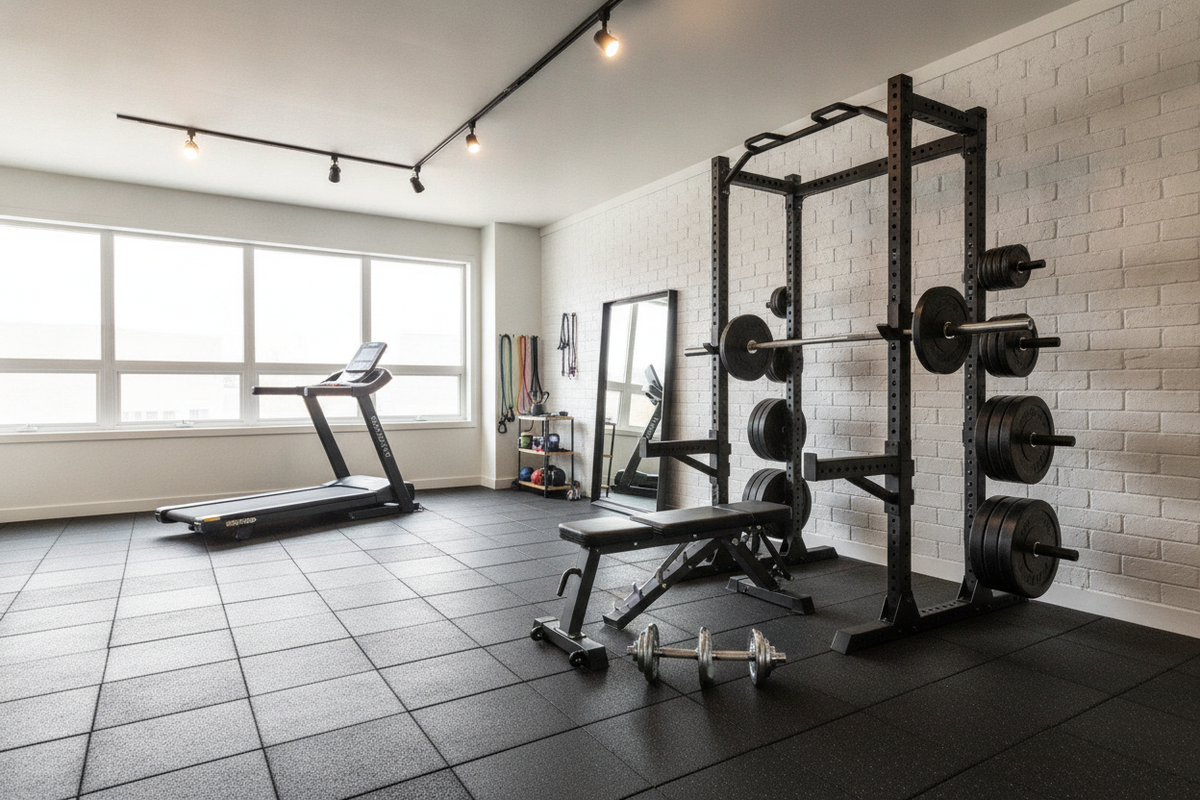
Leg and Glute Home Workout: Movement Architecture, High-Density Blueprints, and Dedicated Floor Staging
Executing an effective leg and glute home workout requires more than simply cycling through bodyweight squats until fatigue sets in. Commercial fitness centers supply dedicated leg presses, hack squats, and selectorized hip abduction machines, but training outside a commercial gym demands a clear understanding of biomechanical leverage, tempo modulation, and functional staging. By organizing your lower-body training around distinct movement archetypes and establishing a stable floor platform, you can build a comprehensive legs and glutes workout routine at home that rivals the stimulus of any dedicated weight room.
Biomechanics of a Balanced Leg and Glute Home Workout
A balanced lower-body program distributes mechanical tension across the quadriceps, gluteal complex, hamstrings, and calves while sparing spinal and connective structures. To achieve complete muscular development, a home routine must blend knee-dominant patterns with hip-dominant mechanics.
Movement Archetypes: Squat, Hinge, Lunge, and Thrust Patterns
Every well-structured lower-body routine relies on four core movement categories:
- Squat Patterns: Knee-dominant actions such as goblet squats, tempo air squats, and narrow-to-wide stance squats that emphasize knee flexion and anterior chain loading.
- Hinge Patterns: Hip-dominant mechanics, including Romanian deadlifts, single-leg good mornings, and kickstand hinges, where the pelvis travels horizontally backward to load the hamstrings and gluteus maximus.
- Lunge and Split Stance Patterns: Unilateral variations like forward lunges, reverse lunges, lateral step-downs, and Bulgarian split squats that challenge lateral pelvic stabilizers and uncover bilateral strength imbalances.
- Horizontal Thrust Patterns: Glute bridges and hip thrusts elevated against a bench or couch, placing peak mechanical tension on the glutes at full hip extension without loading the axial spine.
Structuring your weekly program across these four pillars ensures you target the lower body comprehensively rather than over-relying on repetitive knee extension. Trainees looking to explore complementary split templates can reference our broad workout resource directory for broader session architectures.
Targeting the Posterior Chain vs. Anterior Drive at Home
Many basic living-room routines tilt heavily toward quad dominance because air squats and forward steps are easy to execute without equipment. Developing the posterior chain—specifically the gluteus medius, gluteus maximus, and hamstrings—requires deliberate intent. Incorporating isometric pauses at the top of single-leg glute bridges, focusing on a deep hip hinge during deadlift variations, and adding lateral banded walks creates the necessary posterior focus for the best leg and glute workout at home.
Progressive Blueprints: Structuring Workouts for Legs and Glutes at Home
Progressive overload at home does not require an Olympic barbell set. By manipulating training variables such as time under tension, range of motion, and modular resistance, you can continually stimulate muscular adaptation.
Bodyweight Density and Tempo Controls
When working purely with bodyweight, changing the movement cadence alters the tension profile significantly. Utilizing a three-to-four-second eccentric (lowering) phase followed by a two-second isometric hold in the bottom position increases metabolic accumulation and muscle fiber recruitment. Density protocols—such as completing a set number of unilateral repetitions within a fixed time window—also raise workout density without adding external mass.
Integrating Free Weights and Resistance Bands for Progressive Tension
Introducing compact tools such as adjustable dumbbells, kettlebells, and looped resistance bands expands your progressive loading options. Looped mini-bands placed above the knees during hip thrusts increase gluteus medius activation by requiring constant abduction against dynamic resistance. Holding a single moderate dumbbell in a goblet position increases the load on the anterior core and quads during deep squats. For a step-by-step progression model, you can consult our detailed leg workout routine guide to understand how volume and loading variables interact over multi-week cycles.
Designing an Intense Leg and Glute Workout at Home Routine
Constructing an intense leg and glute workout at home relies on intelligent pairing and controlled rest periods rather than erratic pacing. Grouping complementary movements keeps localized tension high while allowing systemic recovery between rounds.
Superset Strategies for Lower-Body Muscle Activation
Antagonistic and non-competing supersets maximize session efficiency. Consider the following high-density structure for a killer leg and glute workout at home:
- Primary Strength Pair: Bulgarian Split Squats paired immediately with Floor-Based Single-Leg Hip Thrusts (3 to 4 rounds per leg).
- Hinge & Lateral Complex: Dumbbell Romanian Deadlifts paired with Standing Banded Abductions or Lateral Skater Hops (3 rounds).
- Metabolic Finisher: Tempo Goblet Squats directly into Bodyweight Jump Squats or Pulse Lunges (2 to 3 rounds).
For additional programming strategies focused on high-intensity lower-body isolation, explore our killer leg workout guide to refine your set and repetition schemes.
Managing Rest Intervals, Volume, and Joint Fatigue
High-frequency home training requires careful volume management. Because home workouts often rely on higher repetition ranges, connective tissues around the knees and hips can experience repetitive stress. Maintain 60 to 90 seconds of rest between demanding unilateral supersets, focus on deliberate joint alignment, and ensure knees track inline with your middle toes during all squatting and lunging vectors.
Floor Staging, Traction, and Subfloor Protection for Lower-Body Training
Executing high-intensity lower-body movements safely requires a dedicated, slip-resistant surface. Standard residential flooring—such as smooth hardwood, laminate, or glazed tile—poses traction hazards during dynamic lunges and provides inadequate cushioning for ground-contact exercises.
Traction Requirements for Lunges and Lateral Explosiveness
Dynamic lower-body movements exert strong lateral and diagonal shear forces against the floor. During walking lunges, lateral lunges, or skater jumps, standard area rugs or slick floorboards can slide, disrupting footing and compromising joint stability. Deploying a dedicated high-density workout product provides the textured top-layer grip and grounded base needed for aggressive foot strikes without slipping.
Cushioning Ground-Contact Points During Kneeling and Glute Bridges
Floor-based posterior chain exercises place sustained pressure on sensitive contact points:
- Kneeling Variations: Movements such as kneeling hip thrusts and rear-foot-elevated setups exert direct pressure on the patella and surrounding connective tissues.
- Pelvic Ground Contact: Supine glute bridges and floor hip thrusts require firm thoracic and sacral contact with the floor.
A dense, shock-absorbing mat creates a resilient barrier that cushions bony prominences while remaining firm enough to prevent energy dissipation during heavy heel drives.
Safeguarding Domestic Flooring Against Heavy Free-Weight Impacts
Repeatedly staging adjustable dumbbells, kettlebells, or weighted benches directly on domestic subfloors risks scratching wood finishes, cracking tiles, or denting structural subflooring. An expansive, resilient mat distributes point-load forces across a wider surface area, preserving the underlying residential floor throughout high-volume workouts.
Mat Care, Grip Maintenance, and Safe Home Training Hygiene
Maintaining a dedicated home gym surface ensures consistent grip, prevents odor accumulation, and extends the usable lifespan of your workout space.
Sweat Management and High-Traction Surface Upkeep
Intense lower-body sessions inevitably lead to sweat dripping directly onto the training area. Unmanaged moisture compromises shoe traction and creates a slick training surface. To preserve optimal grip, wipe down the mat after each session using a mild mixture of water and gentle soap or non-abrasive fitness equipment wipes. Avoid harsh bleach-based chemicals or petroleum cleaners that can degrade polymer structures and diminish surface friction.
Storage Solutions and Layout Optimization for Compact Spaces
For trainees utilizing multi-purpose living areas, a large-format workout product that unrolls flat without edge curling allows you to transition any room into a functional training zone in moments. When your session concludes, loosely rolling the mat and securing it with storage straps allows upright storage in a closet or corner, keeping your living space clean, organized, and ready for your next lower-body training session.