The Killer Leg Workout for Females That Actually Sculpts Glutes
You have likely been sold a lie. Fitness magazines and influencers often promise that doing hundreds of air kicks or using three-pound dumbbells will result in a defined, strong lower body. That approach rarely works. To actually change the shape of your legs and glutes, you need a killer leg workout for females that prioritizes mechanical tension and progressive overload over endless, low-impact repetitions.
We need to move past the fear of "getting bulky" and embrace the science of hypertrophy. If you want legs that are strong, shapely, and powerful, you have to train them with intent. This guide breaks down exactly how to do that without wasting hours in the gym.
Key Takeaways: The Essentials
- Compound Movements First: Always start with multi-joint movements (squats, deadlifts) when your energy is highest to recruit the maximum amount of muscle fibers.
- Volume and Intensity: A "killer" workout implies high intensity. You should be lifting heavy enough that the last 2 reps of every set feel genuinely difficult.
- Unilateral Training: Incorporating single-leg movements is non-negotiable for fixing imbalances and targeting the glutes specifically.
- Rest Periods: Unlike cardio circuits, this routine requires 90-120 seconds of rest between heavy sets to allow for full recovery and maximal effort.
Why Heavy Lifting is Non-Negotiable
There is a biological misconception that lifting heavy weights instantly turns women into bodybuilders. It is physiologicaly difficult for females to build massive amounts of muscle quickly due to lower testosterone levels compared to men. When you perform a killer leg workout female athletes use, you are stimulating hypertrophy—which simply means the muscle fibers grow stronger and denser.
This density is what creates the "toned" look. Without the muscle mass underneath, lowering your body fat percentage will just leave you looking flat. To get the curves, you have to build the foundation.
The Anatomy of a Killer Leg Session
An effective killer leg workout women can rely on follows a specific hierarchy. We don't choose exercises at random; we structure them based on energy expenditure and muscle recruitment.
1. The Primary Compound (The Squat Pattern)
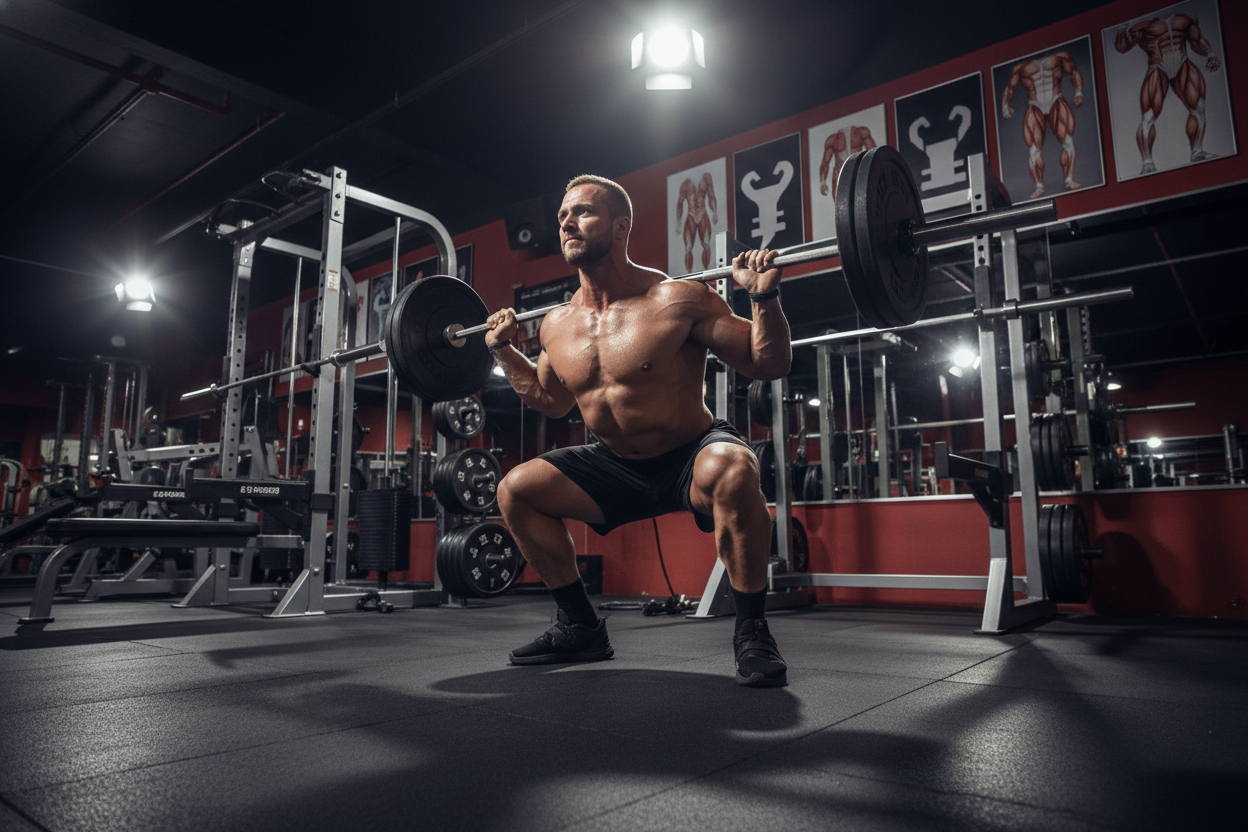
We start here. Whether it is a Barbell Back Squat or a Goblet Squat, this movement targets the quads, glutes, and core. The goal here is strength. Aim for 3 to 4 sets in the 6-10 rep range. You should be struggling to maintain form on the final rep.
2. The Posterior Chain (The Hinge Pattern)
Next, we move to the Romanian Deadlift (RDL). This is arguably the most important movement for the hamstrings and glutes. Unlike a conventional deadlift, the RDL keeps constant tension on the hamstrings. Keep your knees soft, push your hips back as far as they can go, and stop when your hips stop moving—going lower usually just rounds your back.
3. The Unilateral "Killer" (Single-Leg Work)
This is where the workout earns its name. The Bulgarian Split Squat is notorious for a reason. By isolating one leg, you force the glute medius to work overtime for stability. It burns, it’s uncomfortable, and it is incredibly effective. Do 3 sets of 10-12 reps per leg. If you aren't grimacing by rep 8, add weight.
My Training Log: Real Talk
I want to be honest about what this session actually feels like. I’ve been training legs consistently for over a decade, and the Bulgarian Split Squats still humble me every single time.
Last Tuesday, I was midway through my second set. I wasn't worried about the weight; I was worried about my grip failing before my legs did. There is a very specific, shaky feeling you get in your back leg—the non-working leg—when you are truly pushing the intensity. It feels like your hip flexor is about to snap. I also specifically recall the annoyance of my waistband rolling down every time I hit the bottom of the rep, forcing me to do that awkward "shimmy" adjustment between reps. It’s not glamorous, there is sweat dripping into your eyes, and you will likely walk funny specifically when going down stairs the next day. But that specific soreness? That’s how you know you hit the fibers that air-squats miss.
Conclusion
Building a strong lower body doesn't happen by accident, and it certainly doesn't happen by staying in your comfort zone. This routine is designed to be difficult. It requires focus and grit. But if you stay consistent with this workout and focus on slowly increasing the weight over time, you will see changes in your strength and physique that cardio simply cannot provide.
Frequently Asked Questions
Will this workout make my legs look bulky?
No. Building significant muscle mass takes years of dedicated eating and training. This workout will build density and shape, resulting in a "sculpted" look rather than a bulky one, provided you are eating at maintenance calories or a slight deficit.
How many times a week should I do this routine?
For most women, hitting legs twice a week is the sweet spot. This allows for sufficient volume to stimulate growth while providing 48 to 72 hours of rest between sessions for recovery.
Can I do this workout at home?
Yes, but you will need resistance. Bodyweight alone will eventually stop providing enough stimulus. A pair of adjustable dumbbells or heavy kettlebells are sufficient to replicate the squats, RDLs, and lunges effectively.