Large Yoga Mats: Spacious Flow Architecture, Barefoot Grip, and Home Studio Staging
Why Traditional Mats Constrain Movement: The Shift to Oversized Yoga Mats
For decades, dedicated movement spaces have been shaped by standard rectangular floor coverings designed to fit tightly packed commercial classrooms. As personal fitness areas and dedicated rooms become central to mindful training, practitioners increasingly recognize that standard proportions restrict natural biomechanics. Shifting toward large yoga mats alters how an individual interacts with room geometry, posture transitions, and floor-based balance.
The Historical Limitation: Why Are Yoga Mats So Narrow?
The compact footprint of conventional studio pads evolved largely from transport convenience and commercial studio real estate. Studio owners needed to position as many practitioners as possible across open floor plans, leading to narrow strips that accommodated straight-line alignments. While portable for daily commuting, these tight dimensions routinely force limbs beyond the borders during sweeping postures, supine extensions, or wide-stance warrior poses.
When practicing yoga at home, spatial constraints set by communal studio logistics no longer apply. Moving to an oversized yoga mat eliminates the artificial boundaries of a slender strip, enabling unencumbered transitions where hands and feet remain firmly grounded on a unified surface.
Unconfined Movement: Spatial Benefits for Tall Practitioners and Wide Asanas
Taller individuals routinely experience the frustration of head or heels spilling over the perimeter during corpse pose, downward dog, or plank variations. An extra large yoga mat introduces the linear length and perimeter needed for taller bodies to extend fully without skin contacting cold tile, abrasive carpet, or slick hardwood.
Beyond linear height, multi-directional sequences—such as lateral lunges, extended side angles, and rotational arm sweeps—require lateral breathing room. A wide yoga mat creates an expansive boundary that accommodates broad limb spans, encouraging a continuous flow state uninterrupted by the need to micro-adjust stance to stay on the mat.
Yoga Mat vs. Exercise Mat: Distinguishing Barefoot Flow from Heavy Training Surfaces
Selecting the right foundational surface requires understanding the distinction between a dedicated yoga mat and a multi-purpose fitness mat or heavy-duty gym tile. While both provide a barrier between the practitioner and the structural floor, their material behavior, tactile texture, and mechanical priorities differ substantially.
Barefoot Traction and Tactile Response in Flow Workouts
Yoga practice relies predominantly on direct skin contact, requiring exceptional barefoot grip and hand traction. A slip workout mat designed for mindful practice integrates a textured non slip surface that grips dry skin without feeling tacky or gummy. In flowing vinyasa, standing balances, or gentle stretching, the surface must absorb subtle lateral forces without shearing under the foot.
Conversely, a generic exercise mat often incorporates closed-cell finishes engineered specifically for athletic shoes, which can feel slick under bare, perspiring hands. Flow workouts demand tactile feedback that allows the toes and palms to splay naturally, engaging stabilizing muscles across the ankles and wrists.
Tension Resistance vs. Shoe Abrasion: Structural Differences
The structural reinforcement within an oversized exercise surface dictates its functional lifespan. Mats designed primarily for weighted training and shoe traffic emphasize abrasion resistance against rough outsoles and dropped workout equipment. However, when subjected to downward dog or expansive lunges, dense shoe-tolerant surfaces can stretch along their longitudinal axis if internal tension scrims are absent.
A dedicated wide yoga mat utilizes cohesive foam structures or internal mesh layers that resist horizontal elongation. This mechanical tension resistance guarantees that when hands press forward and heels press back, the mat remains completely stable. For a broader comparison of equipment staging, consulting a large exercise mat guide helps clarify where shoe-rated surfaces end and barefoot floor spaces begin.
Determining Ideal Dimensions for Your Home Gym Studio
Transforming an open floor into an inspiring home gym studio involves assessing how movement patterns interact with available square footage. The goal is to define an intentional sanctuary that accommodates dynamic sprawling movements while integrating seamlessly with the surrounding furniture and equipment layout.
Evaluating Mat Width for Rotational Poses and Partner Sessions
Mat width directly influences the fluidity of rotational floor exercises. Standard dimensions often require constant pivoting or repositioning when shifting from a linear sequence to a wide straddle or prone rotation. An expansive surface provides enough transverse space for full arm extensions, spinal twists, and rolling transitions without limb displacement.
For shared environments—such as paired mobility routines, guided stretching, or workouts shared between women men—a broader profile transforms a solo space into a collaborative floor platform. Two individuals can complete simultaneous calisthenics or low impact exercise routines side by side without competing for protective cushioning.
Spatial Layout: Anchoring a Dedicated Movement Zone in the Home Gym
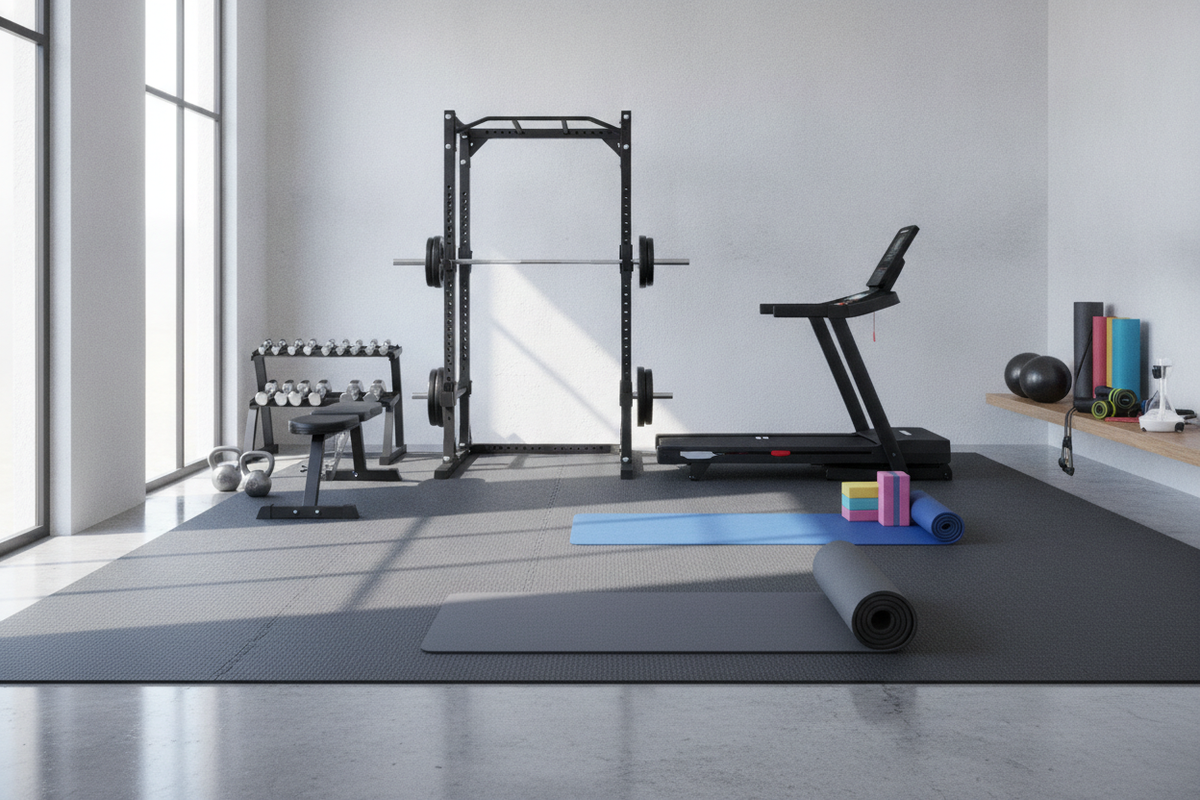
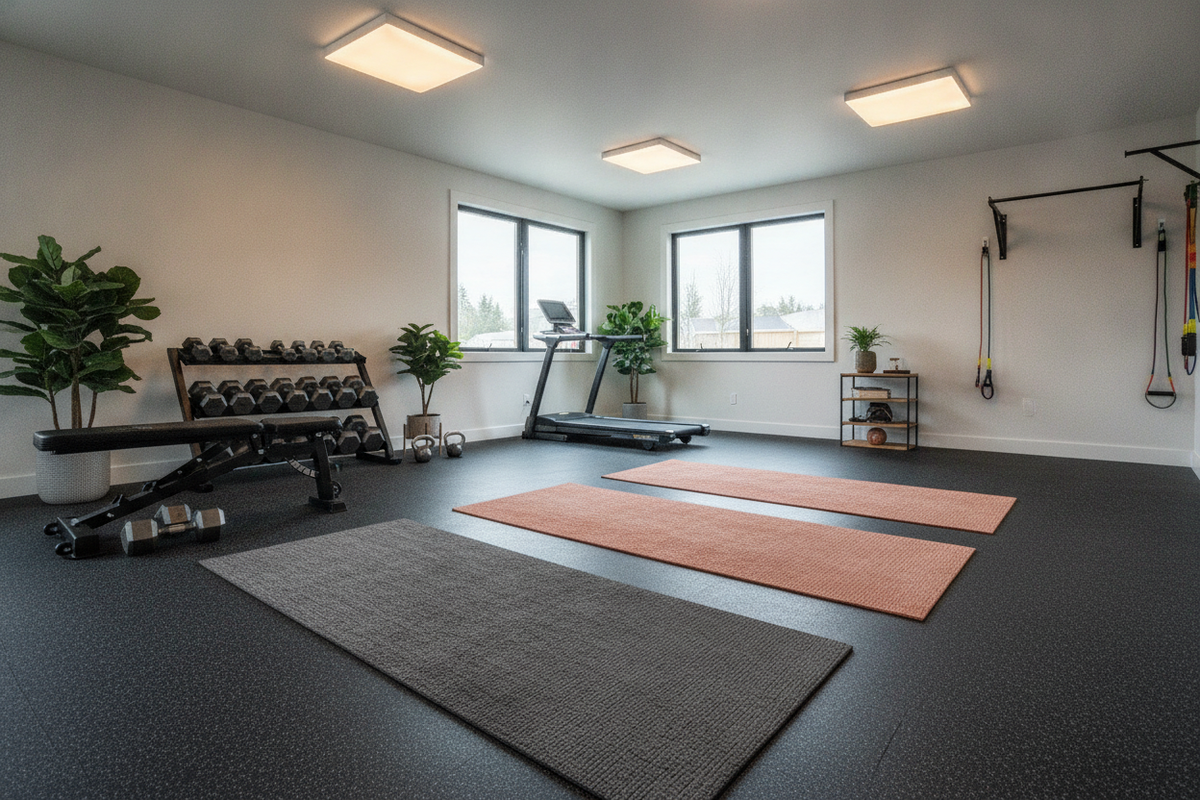
Within a multi-use home gym, visual and physical zoning fosters mental focus. Placing an expansive mat establishes a permanent floor exercise perimeter distinct from heavy iron zones, squat racks, or cardio stations. This perimeter signals a transition to restorative movement, core stability, and disciplined stretching.
When planning your space, leave adequate perimeter clearance around the mat edges to ensure walls, baseboards, and storage racks do not interrupt dynamic arm circles or deep lunges. Exploring an established large exercise mat collection offers a sense of standard sizing ratios suitable for square or rectangular room footprints.
Density, Cushioning, and Stability: Selecting the Proper Mat Thickness
Finding the optimal balance between soft comfort and grounded stability is one of the most critical decisions in selecting an expansive floor pad. While deeper foam feels inviting under tired joints, excessive softness compromises balance in standing postures.
Balance Dynamics: Extra Thick Cushioning vs. Grounded Joint Stability
A thick yoga mat for home gym installations must provide sufficient compressive resistance to shield the knees, elbows, and hips during sustained floor contact. Without adequate cushion, bony prominences bear uncomfortable pressure against unforgiving subfloors. However, choosing an extra thick surface that is excessively squishy creates a distinct problem: the foot sinks unevenly, destabilizing the ankles and arch during single-leg balances.
A properly engineered thick mat balances firmness with compliance, yielding slightly under point loading while offering firm resistance across the broader sole of the foot. Practitioners seeking a balanced analysis of dense staging options can review the oversized mat large guide to see how density ratings influence postural control.
Material Composition: Evaluating Eco Friendly Resins and Resilient Foam
Material chemistry dictates durability, environmental footprint, and tactile feel. Premium mats typically avoid brittle plastics in favor of high-grade, resilient polymer formulations. Evaluating eco friendly construction ensures the mat remains supple over seasons of repeated use without cracking, flaking, or emitting harsh chemical odors into enclosed home workout rooms.
A well-constructed non toxic surface features high-density cell structures that resist flattening over time. When unrolled, the mat should lie completely flat rather than curling persistently at the edges, ensuring safe footwork and a clean visual presentation across the room.
Storage, Roll Management, and Daily Hygiene for Large Mats
Because oversized mats occupy significant surface area, managing daily deployment, clean-up, and storage requires practical routines. Whether a mat remains permanently unrolled as a home studio focal point or gets stowed after each session, mindful maintenance preserves its structural integrity.
Handling and Stowing: Utilizing a Carrying Strap and Fasteners
Managing the mass of an extra large workout surface can feel unwieldy without proper accessories. Utilizing a heavy-duty carrying strap or dual hook-and-loop storage bands prevents the roll from loosening during handling. When rolling the mat, roll the top textured side facing outward to preserve flat-edge memory upon unrolling.
For spaces where flooring must alternate between open living space and exercise zones, investing in a portable format such as a dedicated large exercise mat product ensures quick transitions between storage and practice without strain.
Surface Hygiene and Grip Maintenance for Barefoot Home Workouts
Because yoga flows involve direct contact with hands, feet, and face, maintaining surface hygiene is vital. Dust, household micro-debris, and skin oils can accumulate on non slip ridges, gradually diminishing tactile grip. Establishing a consistent maintenance habit prevents residue buildup and prolongs material resilience:
- Wipe Down Regularly: After sweaty sessions, clean the surface using a soft microfiber cloth lightly dampened with mild soap and warm water. Avoid abrasive scrubbers that degrade grip textures.
- Ensure Complete Drying: Always let the waterproof material air dry completely before rolling to prevent moisture entrapment.
- Avoid Harsh Solvents: Steer clear of bleach, alcohol, or aggressive chemical sprays that can break down eco friendly foam polymers.
- Protect the Underside: Periodically vacuum the subfloor beneath the mat to remove grit that could otherwise cause abrasion against the underside over repeated workouts.
Creating an Enduring Practice Zone: Selecting a Long-Term Best Seller
In my own studio setup, swapping out a restrictive studio strip for an expansive movement pad instantly removed the mental friction of constantly repositioning my hands and feet during expansive sequences. Having that generous perimeter allows movement to become intuitive rather than cautious.
When assessing a potential best seller for your fitness space, review the total package of features: reliable non slip grip, resilient material density, clean edge profiles, and dimensional compatibility with your room. A premium oversized surface turns any corner into a professional-grade movement zone, fostering regular practice, deep stretching, and unconfined personal freedom.