Kettlebell Squeeze Press: How to Do It for Chest
Quick answer: To do a kettlebell squeeze press (also called a crush press), lie on your back on a mat with knees bent and hold one kettlebell by the bell or horns with both hands against your chest. Squeeze your palms hard into the kettlebell, then press it straight up over your chest while keeping that squeeze, and lower it slowly back to the chest. Do 3 sets of 10–15 reps. Squeezing the bell turns on the chest muscles throughout the movement, so the squeeze press builds the inner chest and triceps even with a light kettlebell.
Key takeaways
- Squeeze hard the entire set; that's what makes it work.
- Press straight up over the chest.
- Elbows close to the body.
- Light weight works: the squeeze adds tension.
- Floor version needs no bench.
Muscles worked
| Muscle | Role |
|---|---|
| Chest (especially inner pecs) | Squeeze and press |
| Triceps | Straighten the elbows |
| Front delts | Assist the press |
| Forearms | Maintain the squeeze |
Benefits
- Constant chest tension from the squeeze.
- Triceps strength with a close-grip style press.
- Shoulder friendly: elbows stay tucked.
- Effective with light bells at home.
- Mind-muscle connection for chest training.
How to do a kettlebell squeeze press
- Lie down: on a mat, knees bent, feet flat.
- Hold: place the kettlebell on your chest, hands pressing into the sides of the bell or horns.
- Squeeze: press the palms together into the bell as hard as you can.
- Press: push the bell straight up, keeping the squeeze and elbows close.
- Lower: 2–3 seconds back to the chest.
- Repeat without relaxing the squeeze.
Variations
| Variation | Why |
|---|---|
| Floor squeeze press | Elbows stop at the floor; very shoulder friendly |
| Bench squeeze press | Longer range; see the rack and bench packages |
| Standing squeeze press | Press forward from the chest; core and shoulders |
| Squeeze press with pause | Hold 2 seconds at the top |
Squeeze press vs floor press
| Squeeze press | Kettlebell floor press | |
|---|---|---|
| Kettlebells | One, held with both hands | One or two |
| Grip | Palms squeezing together | Each hand on a handle |
| Focus | Inner chest, triceps | Overall chest, triceps |
| Load | Lighter | Heavier |
Common mistakes
| Mistake | Fix |
|---|---|
| Relaxing the squeeze | Squeeze through every rep |
| Elbows flaring | Keep them close to the ribs |
| Pressing toward the face | Press straight up over the chest |
| Going too heavy | Light to moderate bell |
Sample chest workout without a bench
| Exercise | Sets × reps |
|---|---|
| Push-ups | 3 × 10–15 |
| Kettlebell floor press | 4 × 10 |
| Kettlebell squeeze press | 3 × 12 |
| Kettlebell pullover | 3 × 12 |
See more ideas in bench press alternatives.
Who should be careful
- Wrist pain: adjust hand position on the bell.
- Shoulder pain: the floor version is usually most comfortable.
Equipment
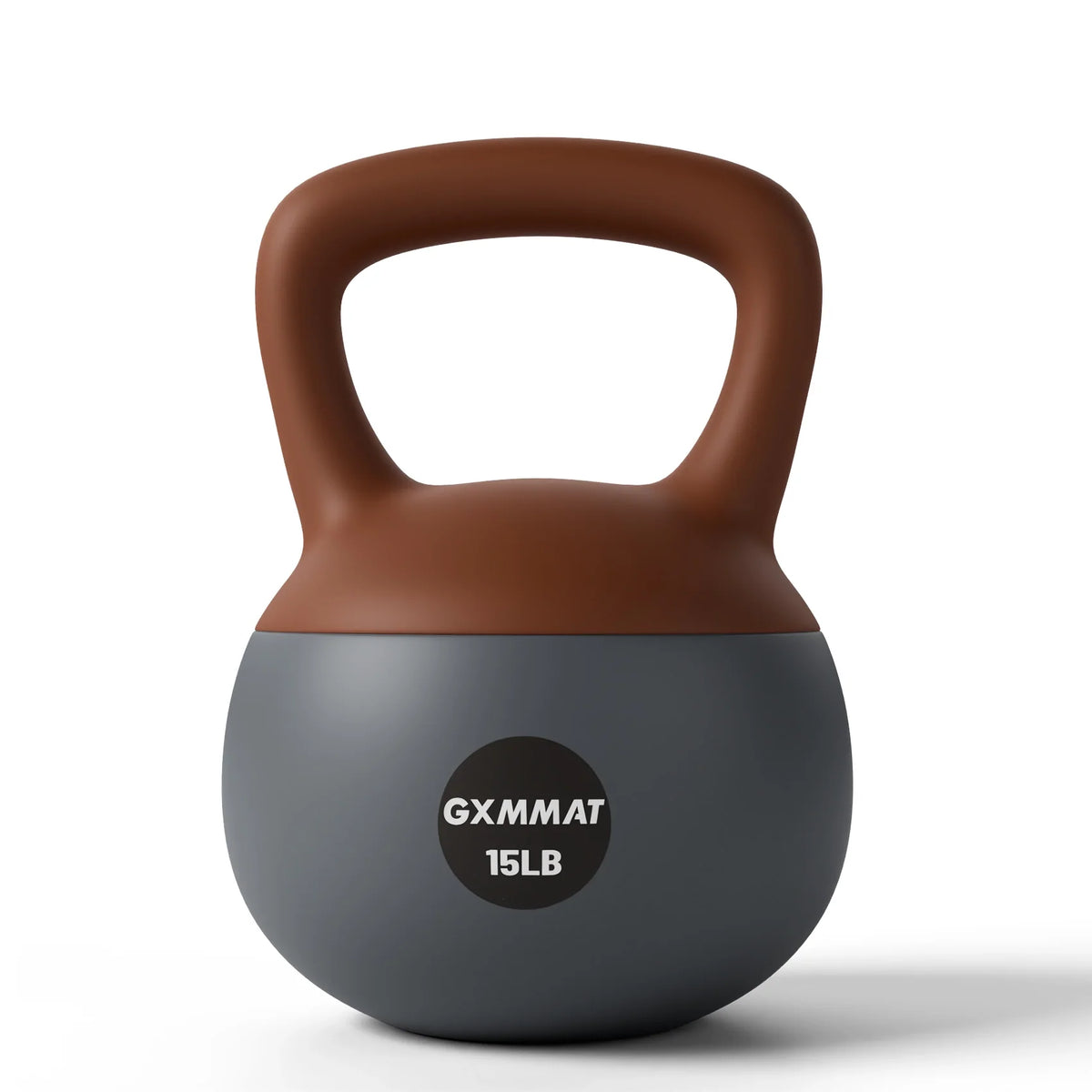
The GXMMAT soft kettlebell has a smooth, soft shell that's comfortable to squeeze with your palms, in 10, 15, 20 and 25 lb. Most people use 15–25 lb. Train on a large exercise mat for back and elbow comfort.
FAQ
What does the squeeze press work?
The chest, especially the inner chest, plus the triceps and front shoulders.
Is the squeeze press the same as a crush press?
Yes, both names describe pressing a weight while squeezing it between your palms.
What weight should I use?
Start with 15–20 lb; the squeeze makes light weights challenging.
Can I do it on the floor?
Yes. The floor version is simple and easy on the shoulders.
How many reps?
3 sets of 10–15 reps.
Written by Yuvien Royer for GXMMAT. This article is general fitness information, not medical advice.