
Kettlebell Pullover: How to Do It for Lats and Chest
Quick answer: To do a kettlebell pullover, lie on your back on a mat with your knees bent and feet flat. Hold a kettlebell by the horns (the sides of the handle) above your chest with arms nearly straight. Keeping your ribs down and lower back flat, slowly lower the bell back over your head in an arc until your arms are beside your ears or you feel a stretch in your lats and chest. Pull it back over your chest using your lats and core. Do 3 sets of 10–12 reps. The kettlebell pullover works the lats, chest, triceps and core, and it's a great way to open up the shoulders and ribcage.
Key takeaways
- Hold by the horns, elbows soft.
- Ribs down: don't let the lower back arch as the bell goes overhead.
- Lower only as far as you control with a flat back.
- Pull with the lats, not by bending the elbows.
- Light to moderate weight; range of motion matters more.
Muscles worked
| Muscle | Role |
|---|---|
| Lats | Pull the arms from overhead back to the chest |
| Chest (pecs) | Assist the pull and stretch at the bottom |
| Triceps (long head) | Stabilize the elbows and assist |
| Serratus anterior | Control the shoulder blades |
| Core | Keeps the ribs down and back flat |
Benefits
- Lats and chest in one move.
- Overhead mobility: trains the shoulders through a long range.
- Core control against back arching, similar to a dead bug.
- No bench needed in the floor version.
How to do a kettlebell pullover
- Lie down: on a mat, knees bent, feet flat.
- Hold: kettlebell by the horns above your chest, arms nearly straight.
- Brace: press your lower back gently into the floor, ribs down.
- Lower: 3 seconds, moving the bell back over your head in an arc.
- Stop when your arms are by your ears or your back starts to lift.
- Pull back: use your lats to bring the bell over your chest.
Variations
| Variation | Why |
|---|---|
| Floor pullover (above) | The floor limits range and supports the back |
| Pullover with legs in tabletop | More core challenge |
| Pullover to crunch | Bring the bell over and lift the shoulders |
| Bench pullover | Longer range across a bench; see the rack and bench packages |
| Straight-arm cable pulldown | Standing lat alternative on a cable |
Common mistakes
| Mistake | Fix |
|---|---|
| Lower back arching | Shorten the range and brace |
| Bending the elbows a lot | Keep a fixed, soft bend |
| Too heavy | Use 10–20 lb to start |
| Dropping fast | Lower slowly, 3 seconds |
Sample kettlebell upper body workout
| Exercise | Sets × reps |
|---|---|
| Kettlebell floor press | 4 × 10 |
| Kettlebell gorilla row | 4 × 10 per side |
| Kettlebell pullover | 3 × 12 |
| Kettlebell squeeze press | 3 × 12 |
Who should be careful
- Shoulder pain overhead: limit the range or skip the move.
- Lower back pain: keep the back flat and use a light bell.
Equipment
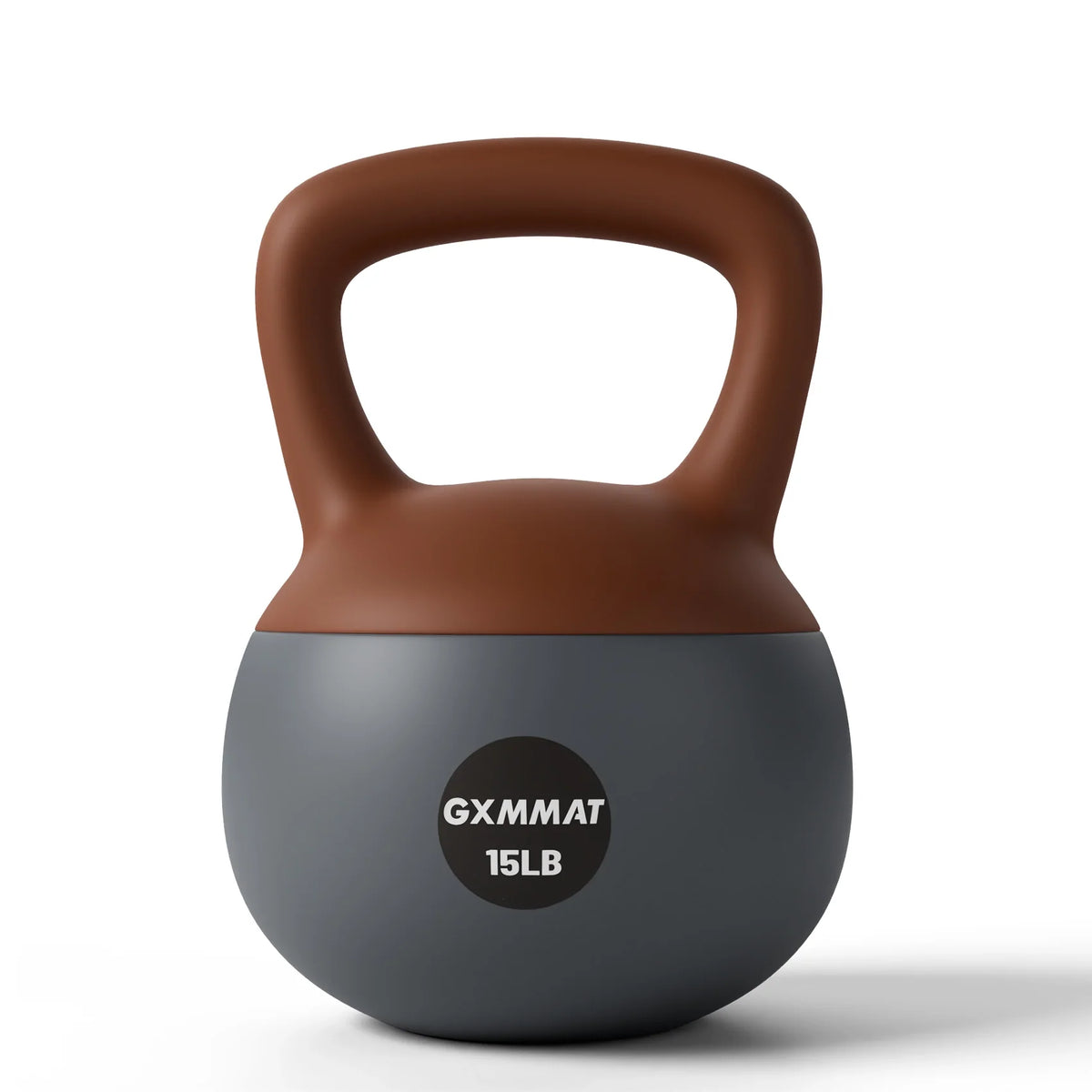
A GXMMAT soft kettlebell (10, 15, 20 or 25 lb) is comfortable to hold by the horns, and its soft shell is less likely to hurt if it brushes your head or the floor. Lie on a cushioned large exercise mat with room for your arms overhead. See what size kettlebell should I get.
FAQ
What does the kettlebell pullover work?
The lats, chest, triceps, serratus and core.
Is the pullover a chest or back exercise?
Both. It works the lats and chest together, with emphasis depending on arm position.
What weight should I use?
Start with 10–20 lb and focus on range and control.
Can I do pullovers on the floor?
Yes. The floor version is safe and great for core control.
How many reps should I do?
3 sets of 10–12 slow reps.
Written by Yuvien Royer for GXMMAT. This article is general fitness information, not medical advice.


