Joint Pain? Blame Your Daily Exercise Routine to Build Muscle
I remember the morning I couldn't grip my coffee mug because my elbows felt like they were filled with crushed glass. I'd been religiously following a grueling exercise routine to build muscle, thinking that if I wasn't under a barbell every 24 hours, I was shrinking. My garage gym was my sanctuary, but it was also becoming my torture chamber.
The truth is, your muscles don't grow while you're grinding out that fifth set of squats on a Tuesday. They grow when you're asleep or when you're sitting on the couch. If you keep hitting the gas without ever changing the oil, you're going to throw a rod. I had to learn the hard way that more isn't always better.
Quick Takeaways
- Muscle grows during recovery, not during the actual lift.
- CNS fatigue leads to sloppy form and inevitable injury.
- Bare concrete floors are brutal on joints without proper high-density padding.
- A 4-day split usually outperforms a 7-day daily grind for hypertrophy.
The Seductive Trap of the 'Everyday' Grind
Social media loves the 'no days off' mantra. It sounds hardcore until you're staring at your squat rack with the same enthusiasm you'd have for a root canal. I spent a year convinced that a daily exercise routine to build muscle was the only path to the 225-lb bench press. I was hitting the garage seven days a week, loading up the plates, and wondering why my progress had stalled harder than a cold engine.
Volume is a tool, but it's not a magic pill. When you train every single day, you never actually reach a state of full recovery. Your muscles stay inflamed, your glycogen stores never quite top off, and your mental focus starts to fray. I eventually reached a point where I was just going through the motions, moving 70% of my max because I was too beat up to push any harder. I finally had to swallow my pride and cut my exercise routine to build muscle in half just to see the scale move again.
The result? I actually started getting stronger. My 'off' days weren't lazy; they were strategic. By giving my body a 48-hour window between heavy sessions, I could actually attack the weights with the intensity required to force an adaptation. If you're dreading your gym, you're not 'weak'—you're just overcooked.
Why Your Central Nervous System Needs You to Back Off
When we talk about an exercise routine for muscle gain, we usually focus on the muscles. But your Central Nervous System (CNS) is the real quarterback. It's the electrical system that tells your muscles to fire. Every time you hit a heavy set of deadlifts or a high-rep set of squats to failure, you're taxing that electrical system. Unlike your muscles, which might recover in 48 hours, your CNS can take significantly longer to bounce back.
Attempting a daily exercise routine to build muscle often results in 'junk volume.' This is when you're doing sets just to do them, but the quality is garbage. Your bar speed drops, your back starts to round on those last few reps, and you're no longer stimulating growth—you're just accumulating fatigue. I've seen guys in their home gyms trying to hit PRs every afternoon. Within three months, they're usually nursing a rotator cuff tear or a cranky lower back.
True hypertrophy requires high-intensity effort. You can't give 100% intensity if your nervous system is still fried from yesterday's session. Real growth happens when you back off the frequency and ramp up the focus. If you can't walk into the gym feeling like you're ready to tear the bar apart, you probably shouldn't be there that day.
Structuring a Realistic Exercise Routine for Muscle Gain
The smartest move I ever made was switching from a 'daily' mindset to a 4-day split. This isn't about doing less work; it's about doing better work. In a home gym environment, where you don't have a row of fancy machines to isolate muscles, you're likely relying on big compound movements like rows, presses, and squats. These are demanding. A 4-day split allows you to hit the entire body twice a week while still giving you three full days of recovery.
I recommend a simple Upper/Lower split. Monday is heavy upper body, Tuesday is heavy lower body. Wednesday is a strict rest day—maybe some light walking or foam rolling. Thursday and Friday are your hypertrophy-focused days where you aim for higher reps and more time under tension. If you're looking for a template, this simple exercise routine for home gym setups is a great place to start. It focuses on the basics that actually build mass without requiring a 2,000-square-foot facility.
On those 3 rest days, don't just sit on the couch. Use them for mobility. If your hips are tight from sitting at a desk, spend 15 minutes on a mat working on your range of motion. This active recovery ensures that when Monday rolls around, you aren't fighting your own stiffness just to get into a squat transition.
Your Concrete Floor is Making the Pain Worse
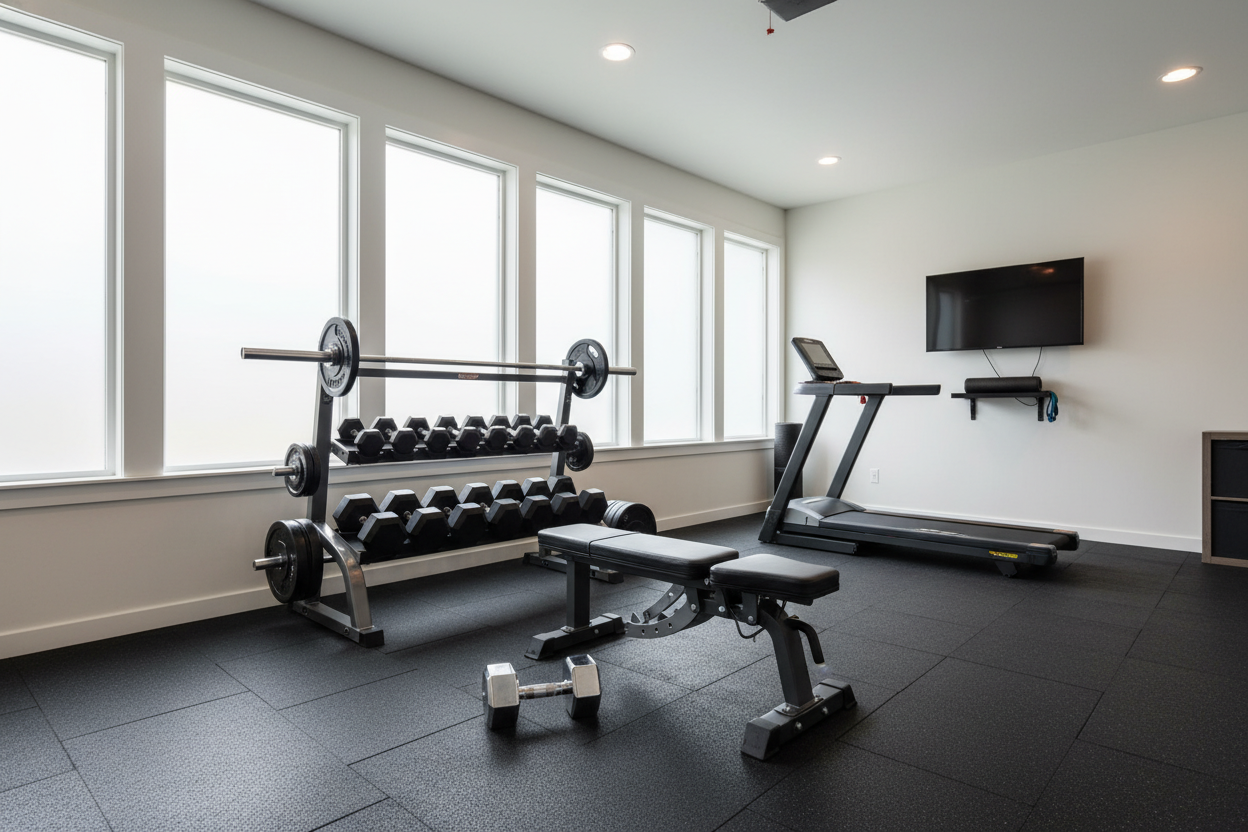
We need to talk about the physical environment of your garage. Most of us are training on bare concrete or maybe a thin layer of cheap foam. Concrete has zero give. When you're performing high-impact movements or even just standing for an hour under a heavy load, that force has nowhere to go but back into your ankles, knees, and lower back. Even if your programming is perfect, your floor might be sabotaging your joints.
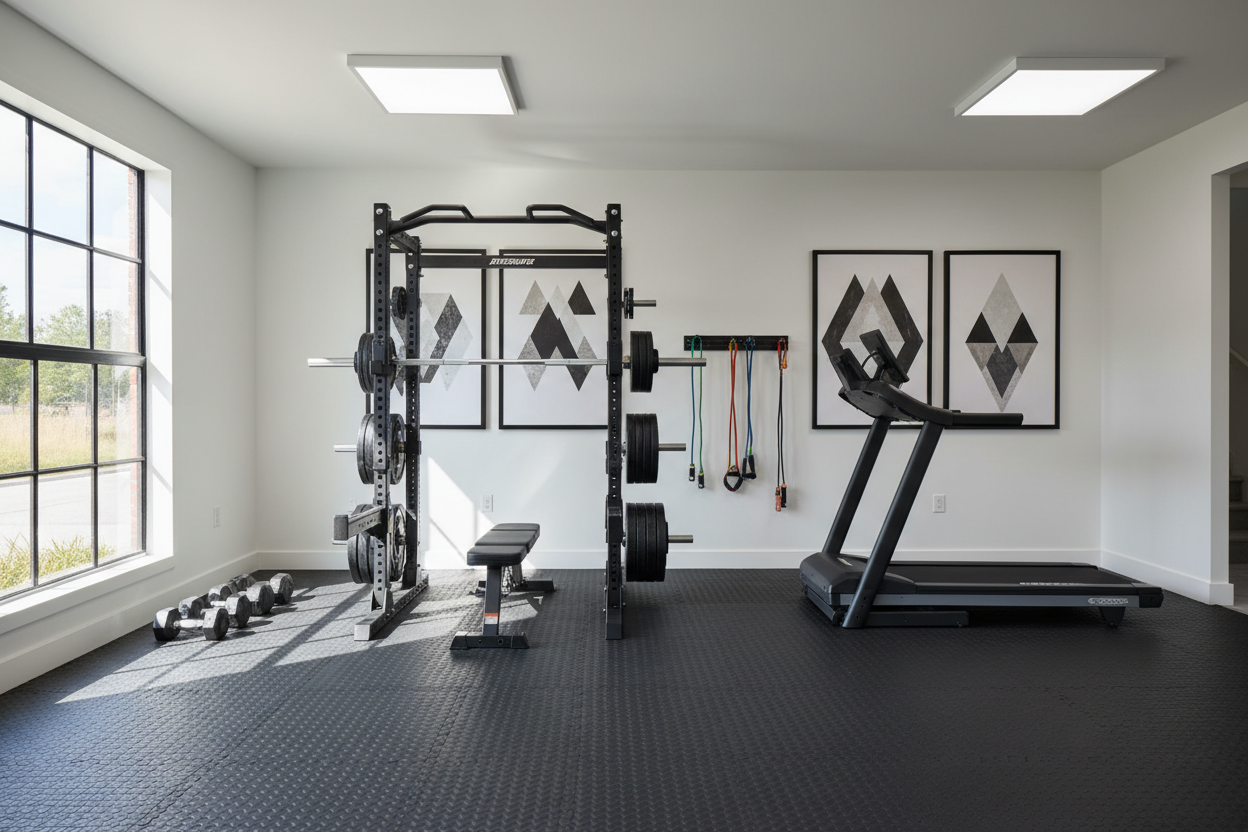
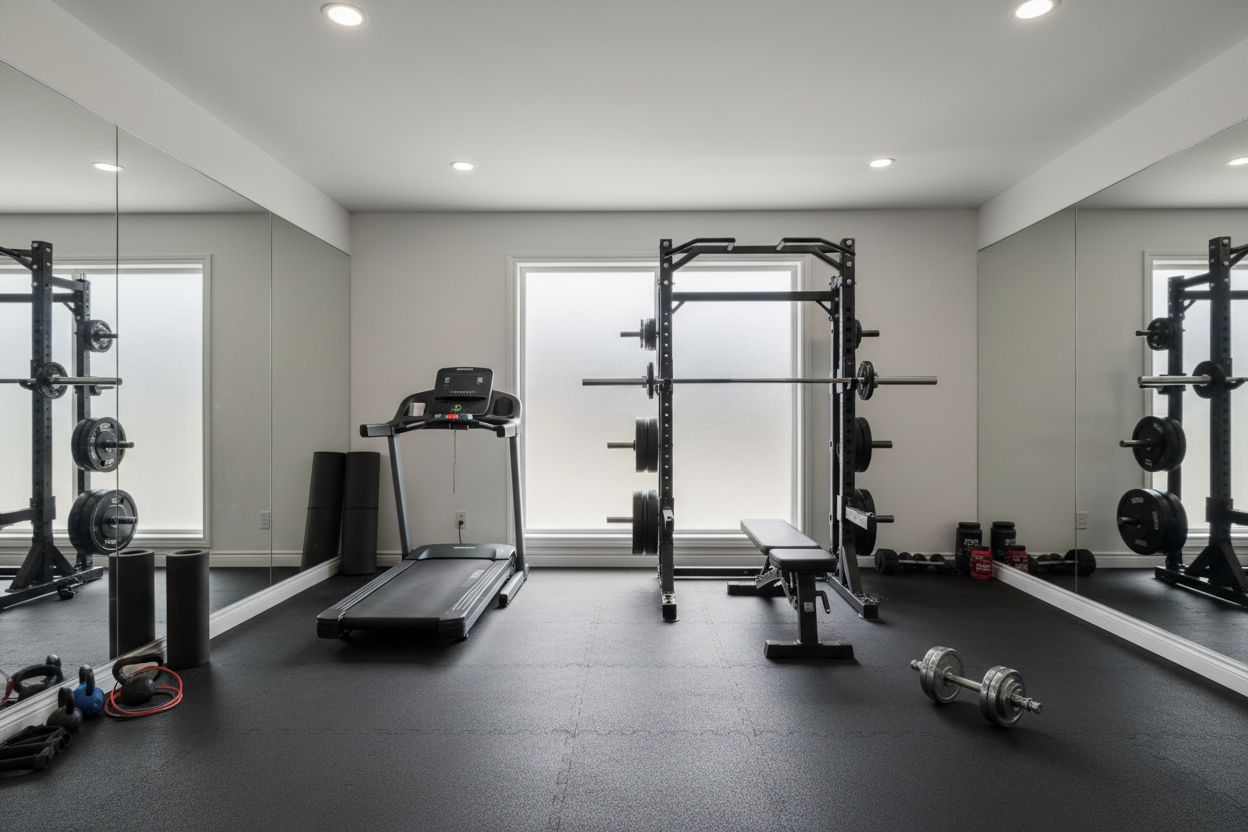
I spent years training on a bare garage floor and wondered why my knees felt like they were 80 years old. Upgrading to a high-density large exercise mat for home gym use was a literal lifesaver. You need something that can absorb the vibration of a dropped dumbbell and provide enough cushion so your joints aren't taking the brunt of every rep. A proper mat isn't just about protecting the floor; it's about protecting your longevity.
For most standard power rack setups, a 6x8ft exercise mat is the sweet spot. It's large enough to cover your lifting area but doesn't require you to wall-to-wall the entire garage with expensive rubber. It provides a stable, non-slip surface that actually feels better underfoot. If you're still lifting on bare cement, stop complaining about your joints until you've put some rubber between you and the earth.
The 'Not Quite Daily' Blueprint for Growth
To really see results, you have to treat your rest as seriously as your reps. Here is a sample layout that I've found to be the most effective for long-term progress. It keeps you in the gym enough to maintain momentum but out of the gym enough to actually heal. This is how you turn a daily exercise routine to build muscle into a sustainable lifestyle.
- Monday: Upper Body Power (Rows, Bench, Overhead Press)
- Tuesday: Lower Body Power (Squats, Deadlifts, Lunges)
- Wednesday: Full Rest / Mobility
- Thursday: Upper Body Hypertrophy (Higher reps, 10-15 range)
- Friday: Lower Body Hypertrophy (Accessory work, Calves, Core)
- Saturday: Active Recovery (Hike, long walk, or light cycling)
- Sunday: Full Rest
By following this, you're hitting the major muscle groups twice a week, which is the gold standard for hypertrophy. But you're also getting 72 hours of total rest and two days of active recovery. I've found that my 'pump' is actually better on this schedule because my muscles are fully hydrated and recovered. You'll stop feeling like a walking bruise and start feeling like an athlete again.
FAQ
Is it possible to build muscle training 3 days a week?
Absolutely. If you're doing full-body sessions with high intensity, 3 days a week is plenty for most people. The key is making sure those 3 days are high-quality and focus on compound lifts like the squat, bench, and deadlift.
How do I know if I'm overtraining?
Watch for the red flags: resting heart rate is higher than usual, you're having trouble sleeping, or your motivation has completely cratered. If the weights feel 20% heavier than they did last week for no reason, you need a deload week.
Do I really need a special mat for a garage gym?
Unless you want to pay for a physical therapist later, yes. Concrete is unforgiving. A high-density rubber mat absorbs impact and provides better traction, which is safer when you're moving heavy weight.