Is Your Home Gym a Mess? Here’s How to Reclaim Your Floor Space
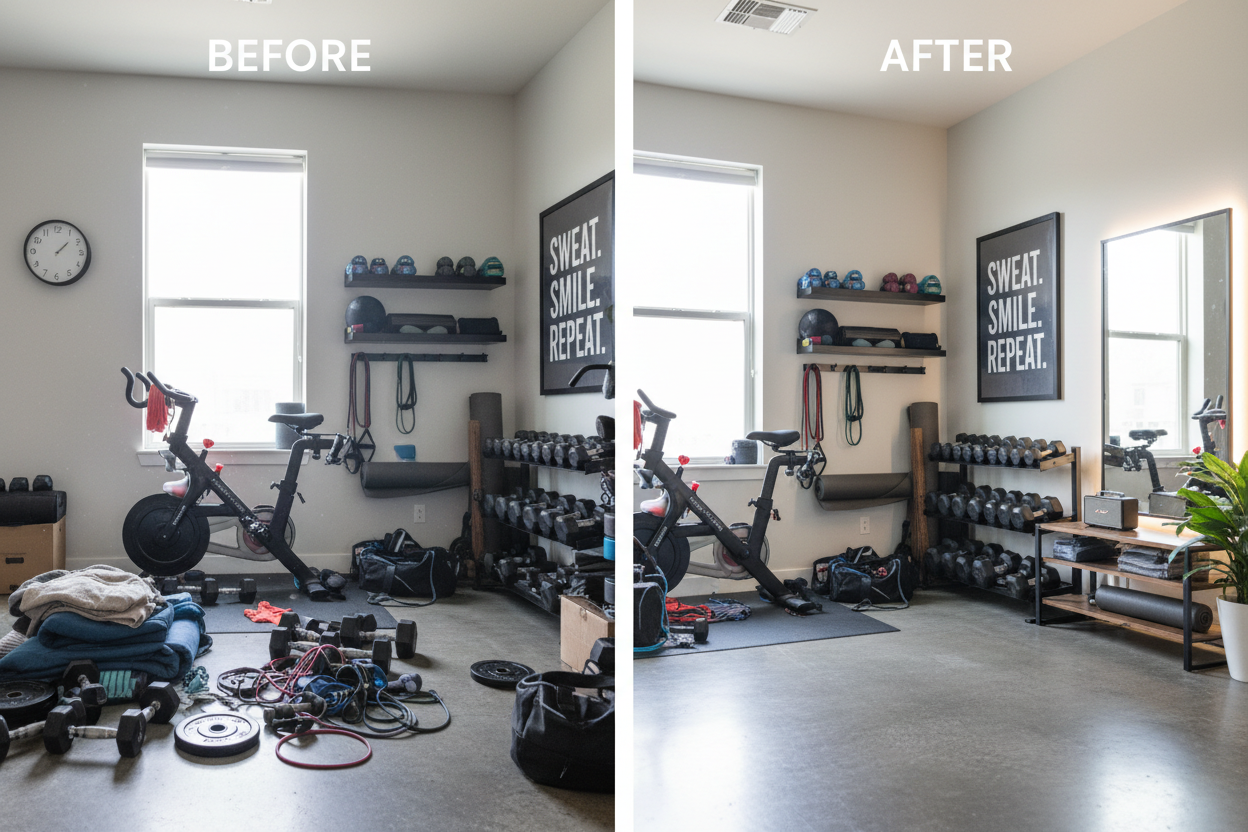
Nothing kills a workout vibe faster than tripping over a stray dumbbell before you’ve even started your warm-up. If you have been building a home gym, you likely started with a single pair of dumbbells or a kettlebell. But as you get stronger, the equipment piles up. Suddenly, that corner of the living room or garage looks less like a sanctuary for self-improvement and more like a hazard zone.
The solution isn't necessarily to stop buying gear, but to rethink how you house it. Effective organization does more than just clean up the floor; it streamlines your routine. When every plate, band, and bell has a home, your transition times drop, and your focus stays on the rep, not on locating the matching 20-pounder.
The Real Dangers of Gym Clutter
Leaving weights scattered on the floor is a recipe for injury that has nothing to do with muscle strain. Navigating a minefield of cast iron in your socks is risky, but the damage extends to your home as well. Heavy weights left on carpet can permanently crush fibers, and metal equipment sitting directly on hardwood or laminate can lead to scratches and dents that are expensive to fix.
Beyond the physical aspect, visual clutter creates mental friction. It is much harder to motivate yourself to train when the setup requires ten minutes of cleaning just to clear enough space to do a burpee. A dedicated system removes that barrier to entry.
My Battle with the Garage Floor
I learned this lesson the hard way a few years ago. My setup was basic: a barbell, some bumper plates, and a mix of kettlebells scattered along the wall of my garage. One evening, tired after a long shift, I went out for a late session. I didn't turn on the main overhead light, relying on the dim opener light instead. I stepped backward to set up for a lift and rolled my ankle directly onto a 35-pound kettlebell I had lazily left out the day before.
That sprain cost me three weeks of training. It was a stupid, preventable mistake. The very next weekend, I cleared out a corner and built a dedicated storage system. It wasn't fancy, but getting the gear off the floor changed the entire energy of the room. It felt professional, and more importantly, it was safe.
Why a Box Often Beats a Rack
When people think of gym storage, they usually picture the vertical tiered racks seen in commercial gyms. While those are great for a full set of hex dumbbells, they aren't always practical for a home setup that includes miscellaneous gear like ankle weights, resistance bands, yoga blocks, and ab wheels. Racks leave these awkward items exposed and messy.
This is where a weight storage box shines. Unlike open shelving, a box allows you to conceal the visual chaos of mismatched equipment. It provides a clean, uniform look that is especially valuable if your workout area is in a shared space like a living room or a bedroom. You can toss the ugly, tangled resistance bands and the oddly shaped accessories inside, close the lid, and the room instantly looks tidy.
Choosing the Right Storage Box for Weights
Not all containers are created equal. If you are storing yoga mats and foam rollers, a standard plastic bin might suffice. However, if you need a storage box for weights, you must prioritize structural integrity. Cast iron and rubber-coated weights are dense; a standard 30-gallon tote from a big-box store will crack under the pressure of a few kettlebells.
Look for heavy-duty construction. Reinforced wood chests or industrial-grade trunks are ideal. Some fitness brands now design specific chests that serve a dual purpose. These units are reinforced to hold hundreds of pounds of gear inside, while the exterior is padded and sturdy enough to be used as a plyometric box or a flat bench. This kind of multi-functionality is a game-changer for small apartments where every square inch counts.
Organization Strategies for Deep Storage
The one downside to a box format is the "bottomless pit" effect. If you just throw everything in, you will never find your collars or lacrosse balls. To make a weight storage box work efficiently, you need internal organization.
Use smaller, clear containers within the larger box to separate small items. Keep your collars, chalk, and grip trainers in one small bin. Coil your bands and ropes before placing them in. Heavier items like plates or dumbbells should always go on the bottom layer to anchor the box and prevent it from tipping over. If you are using a wooden chest, consider lining the bottom with a cut-to-size rubber stall mat. This protects the wood from getting chewed up by the knurling on your dumbbells and reduces the noise when you put equipment away.
Materials and Aesthetics
Your choice of material should depend on where the gym is located. For garage gyms, humidity is the enemy. A metal job-site box is incredibly durable and secure, but if your environment is damp, you need to ensure your gear is dry before storing it to prevent a rust ecosystem from forming inside the dark, enclosed space. Throwing a few silica gel packets into the box can help manage moisture.
For indoor gyms, aesthetics usually take priority. A nice wooden trunk can double as a coffee table or a bench at the foot of a bed. This allows you to keep your fitness lifestyle accessible without letting it dominate your home decor. The goal is friction-free living; if your gear is hidden away in a closet, you won't use it. If it's in a stylish box right in the living room, you are far more likely to get a quick workout in while watching TV.
Maintaining Your Gear in Storage
Out of sight shouldn't mean out of mind regarding maintenance. Enclosed storage can sometimes trap smells, especially if you toss in sweaty knee sleeves or wrist wraps. Never store soft, sweat-absorbent gear in the same airtight container as your iron without letting it dry out first. It is best to hang soft goods to dry and only store hard goods like plates, bells, and bands in the box.
Periodically empty the box to vacuum out the dust and chalk that inevitably settles at the bottom. This small habit keeps your workout space sanitary and prevents grit from getting into the mechanisms of adjustable dumbbells or the bearings of your equipment.
Frequently Asked Questions
Can I use a regular wooden chest for dumbbell storage?
You can, but you must check the weight capacity of the bottom panel. Most decorative chests are not built to hold concentrated heavy loads. You may need to reinforce the floor of the chest with extra plywood or support beams to prevent the weights from breaking through.
How do I prevent my weights from rusting inside a storage box?
Moisture control is key. Ensure all sweat is wiped off the equipment before storage, and consider adding moisture-absorbing desiccant packs or a small dehumidifier device inside the box. Lining the bottom with rubber also helps keep the weights off the potentially damp material of the box floor.
Is a rack or a box better for a small apartment?
For a small apartment, a heavy-duty box often wins because it reduces visual clutter and can double as furniture (like a bench or table). While a rack makes weights easier to grab, it takes up dedicated vertical space and can make a small room feel crowded and industrial.