Build Stronger Legs at Home: The Ultimate Guide to Training Without a Gym
You do not need a leg press, a squat rack, or a gym membership to build a powerful lower body. The common misconception that leg growth requires heavy iron stops many people from training consistently, but gravity and biomechanics offer everything necessary for results. A comprehensive no machine leg workout relies on increasing intensity through volume, tempo manipulation, and unilateral movements rather than simply adding metal plates.
To stimulate muscle growth without external weights, you must change the stimulus. In the gym, you rely on mechanical tension (heavy weight). At home, you must rely on metabolic stress (the burn) and increased time under tension. By shifting your weight onto one leg at a time, you effectively double the load on that limb, making bodyweight training surprisingly difficult even for experienced lifters.
The Reality of Training Without Iron
I remember a specific period when my local gym closed for renovations for three weeks. I was terrified of losing the squat strength I had spent years building. Forced to adapt, I switched to high-volume calisthenics. I underestimated it completely. The first time I attempted a serious session of Bulgarian split squats and walking lunges to failure, I woke up the next morning with more soreness than I had felt after heavy barbell sessions. That experience taught me that a leg exercise without machine assistance isn't just a backup plan; it is a legitimate way to correct imbalances and build endurance that heavy lifting often neglects.
The Principles of Bodyweight Leg Growth
Since you cannot infinitely add weight, you must exploit other variables to force your muscles to adapt. If you simply do ten air squats and stop, nothing will change. You need to apply specific techniques to make light weight feel heavy.
Focus on the eccentric phase. This is the lowering part of the movement. Instead of dropping down quickly, take three to four seconds to lower your body. This increases the time under tension and damages muscle fibers more effectively than speed reps. Additionally, use pause reps. Holding the bottom position of a squat or lunge removes the stretch reflex (the bounce) and forces your muscles to generate force from a dead stop.
Essential Compound Movements
The foundation of your routine should be compound movements that recruit the quads, hamstrings, and glutes simultaneously. These are the pillars of any effective lower body workout without equipment.
The Squat Hierarchy
Start with the standard air squat to warm up, but don't stay there. To progress, move toward the Jump Squat. The explosive nature of jumping recruits fast-twitch muscle fibers that are usually only activated by heavy lifting. Perform these with a soft landing to protect your joints, focusing on maximum height with every repetition.
For advanced lifters, the Pistol Squat is the gold standard of leg workouts no gym required. It requires immense balance, mobility, and strength. If you cannot do a full pistol squat yet, use a chair to support your hand or sit back onto a box (or couch) and stand up using only one leg.
The Unilateral Advantage
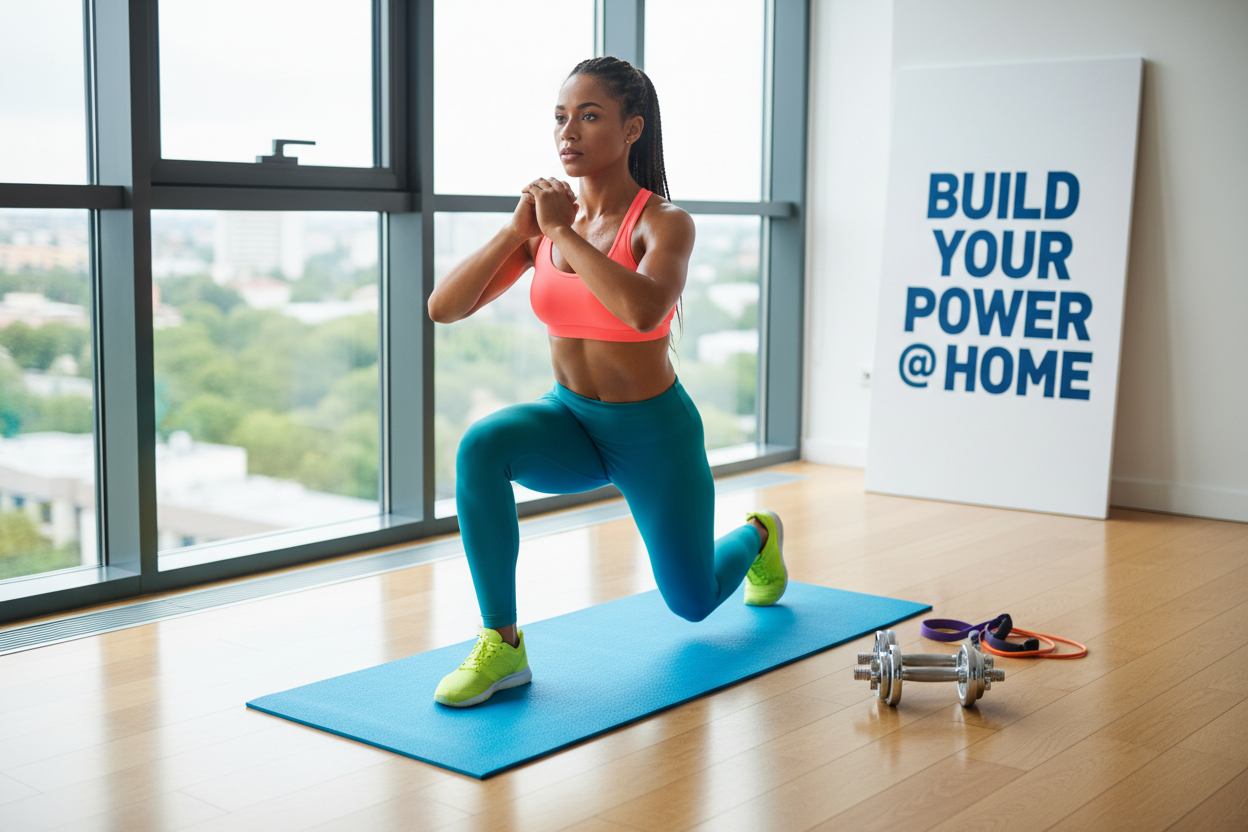
Unilateral exercises are the secret weapon for leg workouts no machine. When you train one leg at a time, you cannot hide strength imbalances. The Bulgarian Split Squat is arguably the most effective leg exercise you can do, weighted or unweighted. By elevating your rear foot on a couch or chair and squatting with the front leg, you place the vast majority of your body weight on a single quad and glute.
Walking lunges serve as a dynamic finisher. They challenge your stability and cardiovascular system. Aiming for high reps—50 to 100 steps total—creates a massive metabolic demand that triggers growth.
Targeting the Posterior Chain
Most home workouts neglect the hamstrings and glutes, leading to knee pain and poor posture. Your full leg workout no equipment routine must address the back of the legs.
The Single-Leg Romanian Deadlift (RDL) is vital. Stand on one leg with a slight bend in the knee, then hinge at the hips, reaching your hands toward the floor while extending your other leg straight back. This movement purely targets the hamstrings and glutes. If balance is an issue, hold onto a wall lightly.
Glute bridges are another staple. Lying on your back, drive your hips toward the ceiling. To increase the difficulty, perform this with one leg extended in the air. Squeeze hard at the top for two seconds. This ensures your glutes are firing and protects your lower back.
The "No Excuses" Leg Routine
Here is a structured routine designed to hit every muscle group in your lower body. Perform this circuit 3 to 4 times with minimal rest between exercises, and 90 seconds of rest between full rounds.
- Bodyweight Squats: 20 reps (Warm-up pace)
- Bulgarian Split Squats: 12-15 reps per leg (Slow eccentric tempo)
- Single-Leg Glute Bridges: 15 reps per leg (Hold the top squeeze)
- Reverse Lunges: 20 reps alternating legs
- Single-Leg RDL: 10 reps per leg (Focus on balance and stretch)
- Calf Raises: 25 reps (Use a step or ledge for full range of motion)
If this feels too easy, reduce the rest time to zero or add a backpack filled with books or water bottles. The goal of this leg workout without machine is to reach technical failure—the point where you cannot complete another rep with perfect form.
Consistency and Progression
The main reason people fail with leg exercises no machine involves a lack of progression. In the gym, you add 5 pounds. At home, you must add a rep, slow down the rep, or decrease rest time every single session. Keep a log on your phone. If you did 12 split squats last week, you must do 13 today, or do 12 with a slower tempo.
Your legs are resilient. They carry you all day. To change them, you have to challenge them significantly. By adhering to strict form and pushing through the burn, you can build an impressive set of legs right in your living room.
Frequently Asked Questions
Can I actually build muscle mass without weights?
Yes, but you have to train closer to failure. While heavy weights rely on mechanical tension, bodyweight training relies on metabolic stress and volume. You will need to perform higher repetitions and focus on unilateral movements to provide enough stimulus for hypertrophy.
How often should I do this home leg workout?
Since bodyweight exercises generally cause less central nervous system fatigue than heavy barbell squats, you can train legs more frequently. A frequency of 2 to 3 times per week is ideal, provided you allow at least 48 hours of recovery between sessions.
What if I have bad knees?
Focus on posterior chain exercises like glute bridges and RDLs first to build support strength. For squatting movements, limit the depth to a pain-free range and emphasize static holds (wall sits) which build strength without the grinding motion on the joint.