
Is This Beginners Free Weight Routine Enough to Actually Build Mass?
I remember my first six months in a commercial gym. I dutifully followed the little diagrams on the side of those selectorized weight lifting machines, thinking I was getting strong. Then I tried to help a buddy move a sleeper sofa. My legs felt like jelly, my back tweaked, and I realized my machine-grown muscles didn't know how to work together in the real world.
The truth is, a beginners free weight routine is often avoided because it looks intimidating. It’s much easier to sit in a padded chair than it is to balance a pair of dumbbells while your core screams for mercy. But if you want to actually build mass and functional strength that sticks, you have to ditch the tracks and grab the iron.
Quick Takeaways
- Free weights recruit more muscle fibers by forcing you to stabilize the load yourself.
- Compound movements (squats, presses, pulls) provide the most bang for your buck.
- You don't need a massive commercial gym; a solid bench and some dumbbells can take you far.
- Consistency and progressive overload beat complex 'muscle confusion' every single time.
Why I Stopped Trusting the Machine Circuit
Machines have their place for bodybuilders looking to isolate a specific peak, but for a novice weightlifting program, they can be a trap. When you use weight lifting machines, the equipment dictates the path of the weight. Your stabilizer muscles—the ones that keep your joints healthy—basically go to sleep. I found that my 'strength' on the chest press machine didn't translate to a single push-up.
Moving to unguided iron forces your body to recruit everything from your grip to your glutes just to keep the weight steady. This creates a much higher hormonal response and builds a foundation of real-world power. If you’re tired of feeling 'gym strong' but physically useless, it’s time to start an easy weight lifting workout that actually challenges your balance.
The Anatomy of a Proper Novice Lifting Program
A basic weight lifting plan for beginners shouldn't have 20 different exercises. You need to master four basic patterns: the squat, the hinge, the push, and the pull. If you do those four things, you've covered about 95% of your muscular needs. People often overcomplicate this by trying to mimic pro bodybuilders they see on Instagram, doing 15 variations of bicep curls.
One question I get constantly: Are Barbells Actually Required for a Beginners Weight Lifting Plan? Honestly, no—not at first. You can build an incredible amount of muscle with just dumbbells and a kettlebell. Dumbbells are actually better for beginners because they identify strength imbalances between your left and right sides before they become a problem.
The Beginners Free Weight Routine (The Actual Plan)
This is a simple strength training for beginners schedule. You’ll alternate between Workout A and Workout B, three days a week (e.g., Monday, Wednesday, Friday). This gives your central nervous system 48 hours to recover, which is where the actual growth happens. An easy lifting workout doesn't mean you aren't working hard; it just means the plan is easy to follow.
Workout A: Pressing and Squatting Mechanics
This session focuses on your anterior chain (the front of your body). You'll start with Goblet Squats, holding a weight at your chest to keep your torso upright. Next, move to the dumbbell bench press. I recommend using a sturdy Gxmmat Adjustable Weight Bench for this. Having a bench that doesn't wobble when you're pressing 50-lb bells is a safety requirement, not a luxury.
Finish with seated overhead presses on that same bench. Aim for 3 sets of 8-12 reps. If you can hit 12 reps with perfect form, the weight is too light. This simple weight training approach ensures you are hitting your quads, chest, and shoulders with maximum efficiency without needing a room full of gear.
Workout B: Pulling and Hinging Mechanics
Workout B is all about the posterior chain—your back, glutes, and hamstrings. Start with Romanian Deadlifts (RDLs). Focus on pushing your hips back until you feel a stretch in your hamstrings, then snap back up. Follow this with one-arm dumbbell rows to build a thick back and a strong grip.
End the session with a loaded carry. Pick up the heaviest weights you can hold and walk for 30 seconds. It sounds basic, but it’s a good weight workout for beginners because it builds core stability and trap size like nothing else. This weight room routine builds the 'armor' you need to prevent injury in daily life.
Transitioning from Hand Weights to Heavy Iron
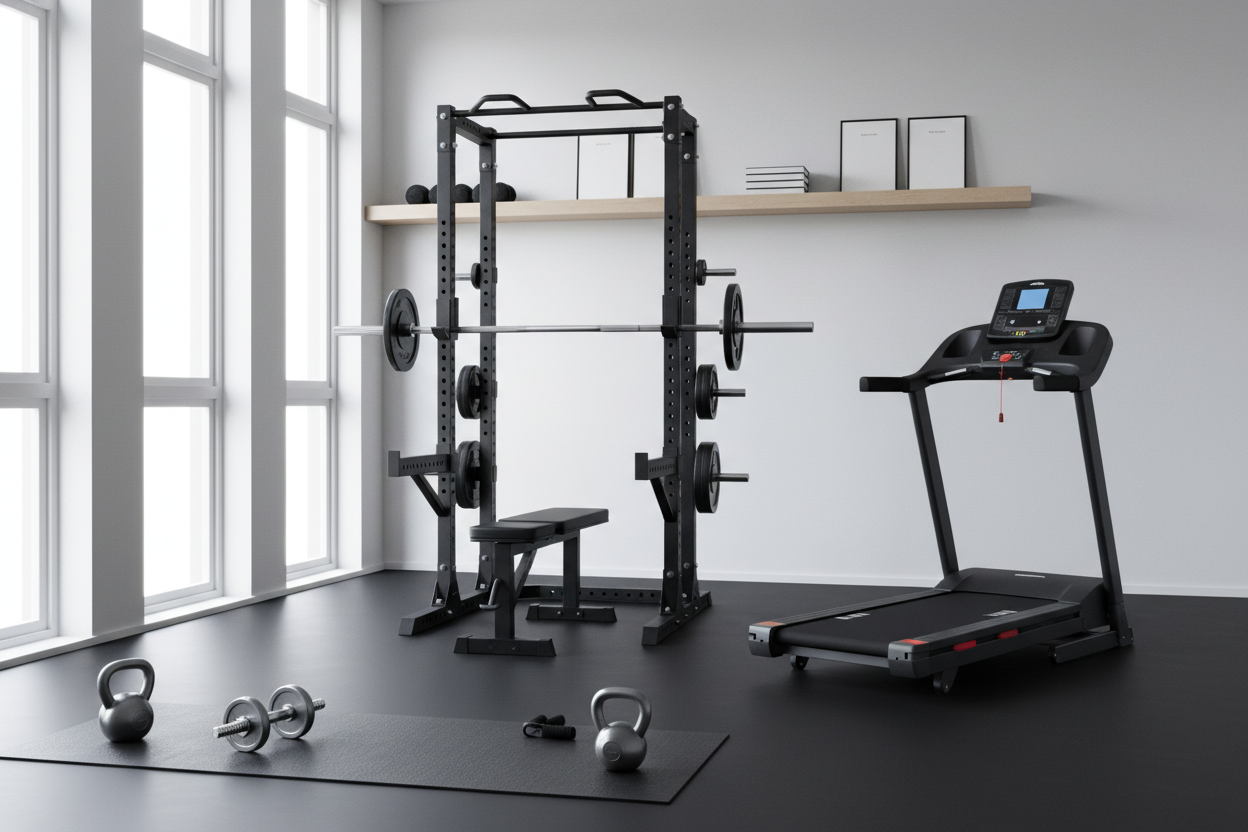
Eventually, those 50-lb dumbbells are going to feel like toys. That’s the goal. When you reach the point where you're maxing out your home equipment, it's time to look at the ultimate upgrade. For most of my readers, that means moving to a rack. The Gxmmat X6 Power Rack Weight Bench Package is the logical next step because it allows you to safely squat and bench press hundreds of pounds without a spotter.
A novice weightlifting program only stays 'novice' as long as the weights stay light. Once you start moving 135+ lbs on a barbell, your body composition will shift drastically. That’s when the 'beginner' tag drops and you start seeing the real mass gains you’ve been chasing.
How to Know When You've Outgrown This Starter Plan
Most lifters can stay on a lifting workout plan for beginners for 6 to 12 months. You’ll know you’ve outgrown it when you can no longer add weight to the movements every week. This is called 'linear progression,' and it’s the fastest way to get big. Once you stall for three weeks straight, it’s time to look into more advanced periodization.
If you're at that crossroads, check out our guide on Choosing The Best Strength And Weight Training Equipment For Your Goals. Whether you want to be a powerlifter or just look better at the beach, your gear needs to match your ambition. Don't be the person still doing the same 20-lb goblet squats two years from now.
Personal Experience: The 'Ego' Trap
When I first started, I thought I was too advanced for a 'simple' routine. I tried a high-volume split I found in a magazine. I was in the gym for two hours a day, doing 6 different types of curls. I stayed the same size for a year. It wasn't until I stripped everything back to a basic lifting plan—focusing on heavy rows, squats, and presses—that my shirt sleeves actually started getting tight. My biggest mistake was thinking more exercises equaled more growth. It doesn't. Intensity and recovery do.
FAQ
Do I need a spotter for this beginners free weight routine?
If you are using dumbbells, no. You can simply drop them to the side if you fail a rep. If you move to a barbell bench press later, you should absolutely use a rack with safety bars or have a partner nearby.
How heavy should my starting weights be?
Start lighter than you think. Your first week should be about learning the 'groove' of the movement. If you can't perform the rep with a 2-second controlled descent, the weight is too heavy for a novice weightlifting program.
Can I do this workout every day?
No. Muscle grows while you sleep and rest, not while you're lifting. For a gym weight workout for beginners, three days a week is the sweet spot. Doing more will likely lead to burnout or tendonitis before you see real results.


