Why I Cut My Bodybuilding Upper Body Routine Down to 4 Lifts
I remember standing in a big-box commercial gym three years ago, staring at a printed 12-page 'pro' program. It had six different types of chest flies and three variations of tricep kickbacks. I was spending two hours a day chasing a pump that disappeared by the time I reached the parking lot, yet my physique hadn't changed in months.
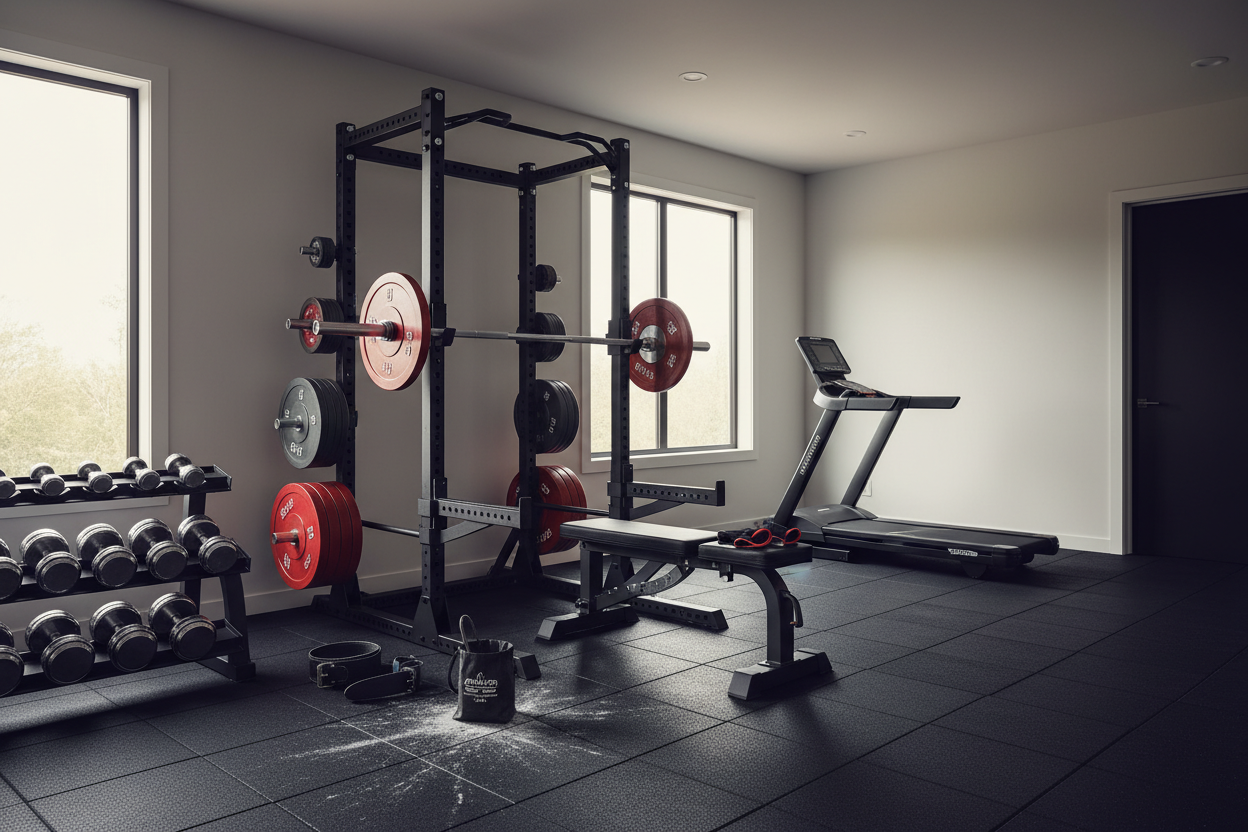
When I finally moved my training to my garage, I didn't have the luxury of twenty different machines. I had a rack, a bar, and some iron. I had to simplify my bodybuilding upper body routine out of necessity. What happened next surprised me: I actually started growing again. Stripping away the fluff didn't just save me time; it forced me to work harder on the movements that actually move the needle.
- Focusing on four heavy movements allows for maximum mechanical tension.
- Junk volume is the primary cause of recovery stalls in natural lifters.
- You can finish an elite-level workout in under 50 minutes.
- Progressive overload is easier to track when you aren't juggling ten exercises.
The Illusion of Being Busy in the Gym
Commercial gym culture thrives on the 'more is better' fallacy. They want you to feel like you need an upper body bodybuilding workout that utilizes every shiny piece of equipment they own to justify that monthly membership fee. You see guys doing eight to ten upper body exercises bodybuilding style, hitting the muscle from every conceivable 'angle' with 20-lb dumbbells.
The reality? Most of that is just burning calories and creating systemic fatigue without providing a real growth stimulus. If you're doing four sets of cable crossovers after three sets of pec deck, you aren't building a chest; you're just getting tired. True hypertrophy comes from high-intensity sets that challenge the muscle's capacity to produce force, not from seeing how much sweat you can leave on the upholstery.
Why Junk Volume is Killing Your Garage Gains
In a garage gym, efficiency is king. You don't have time to mess around with endless sets of isolation work that barely taxes your central nervous system. When you train at home, you realize that chasing a temporary pump with light weights is a poor substitute for heavy, meaningful tension. This is especially true if you are working with limited upper body workout machines for home, where you have to get creative to replicate the constant tension of a commercial cable stack.
Junk volume—those extra sets that don't add intensity but do add soreness—is the enemy of progress. If you can't add weight or a rep to your logbook because you're too burnt out from 'finishing' moves, you're spinning your wheels. I'd rather see you do two sets of soul-crushing presses than six sets of fluff. Your joints will thank you, and your T-shirt will fit tighter.
The 4-Lift Bodybuilding Upper Body Routine
This isn't a 'beginner' program. This is a high-intensity upper bodybuilding workout designed to maximize every second you spend under the bar. We are hitting the primary movers with massive weight and leaving the ego at the door. Here are the four horsemen of your new upper body development.
Lift 1: The Incline Press
I ditched the flat bench years ago for the 30-degree incline. It provides a better stretch at the bottom and hits the upper pec fibers that most lifters lack. Use a 2-inch Olympic bar and focus on a slow, controlled eccentric—about three seconds down. Pause for a split second at the chest to kill momentum, then drive it up. This is your primary mass builder. If this lift isn't going up, you aren't growing.
Lift 2: The Heavy Row
Thickness is built with heavy rows. Whether you prefer a Pendlay row or a heavy one-arm dumbbell row, the goal is the same: move heavy iron without turning it into a full-body seizure. I prefer using dumbbells that go up to at least 100 lbs for these. When you're grinding out that last rep and need to drop the weight, make sure you have solid home gym flooring to protect your concrete and your equipment. A 3/4-inch stall mat is the bare minimum here.
Lift 3: The Overhead Press
The upper body workout for bodybuilding isn't complete without boulders for shoulders. While standing OHP is great for 'functional' fans, I prefer a seated strict press for pure hypertrophy. It stabilizes the spine and lets you focus entirely on the anterior delts. Use a rack with adjustable spotter arms so you can safely push to absolute failure without a spotter. Don't arch your back into a standing incline press; keep your core locked.
Lift 4: The Arm Superset Finisher
We aren't ignoring arms; we're just being smart about it. Instead of four different curls, pick one heavy barbell curl and pair it with a skull crusher or overhead extension. Do these as a superset with zero rest between them. It’s a brutal way to cap off the session, driving blood into the limbs and providing that final metabolic stress without dragging the workout into its second hour.
How to Actually Program This Upper Body Bodybuilding Workout
To make this work, you need to treat every set like it's your last. I recommend two 'top sets' per exercise after a thorough warm-up. These sets should be taken to a RPE 9 or 10. If you're used to a high-volume upper body weight workout routine, this will feel strange at first. You'll feel like you should be doing more.
Don't. Rest three to five minutes between these heavy sets. You need your ATP stores to recover so you can move the same weight on the second set. Track every single rep. If you did 225 for 8 reps last week, you better hit 9 reps or 230 lbs this week. That is the only 'secret' to bodybuilding that actually works.
Time to Stop Overcomplicating Your Training
The best upper body workout for bodybuilding is the one that allows you to recover and consistently add weight to the bar. You don't need a 15-exercise circuit or a specialized machine for every muscle fiber. You need intensity, consistency, and a few pieces of high-quality gear. If you want to see more ways to optimize your setup, explore our workout hub for more programming guides. Stop exercising and start training.
FAQ
Can I really grow arms with just one superset?
Yes. Your biceps and triceps are heavily involved in your heavy presses and rows. That final superset is just the icing on the cake. If your rows are getting heavier, your biceps are getting bigger.
How many times a week should I do this?
Run this twice a week with at least 48 hours of rest between sessions. Because the intensity is so high, you need that recovery time for the muscle tissue to actually repair and grow.
Do I need a power rack for this?
For the incline and overhead press, a rack is essential for safety. Attempting to clean a heavy weight into position for an overhead press just wastes energy you should be using for the actual lift.