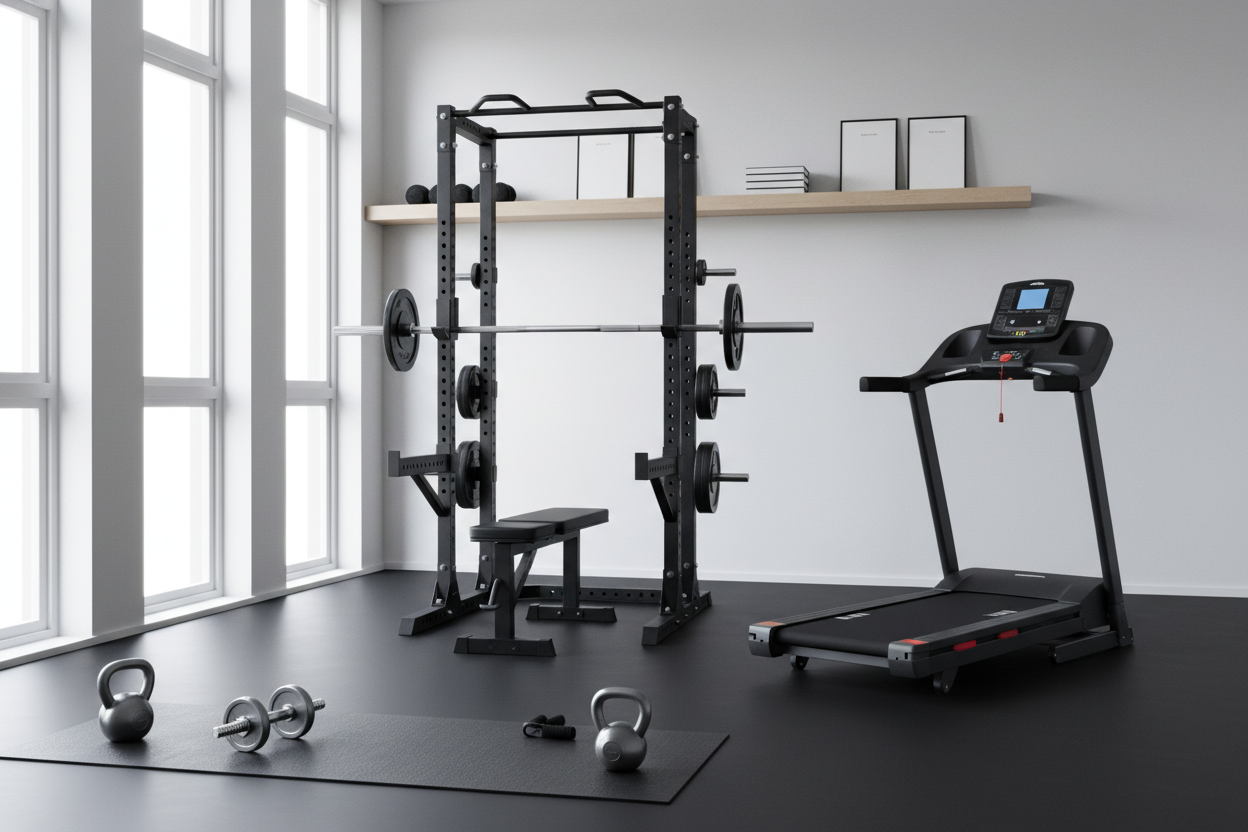
The best exercises to get lean and toned Are Done Standing Up
I spent years training in a garage that smelled like old rubber and diesel, chasing a specific look. I thought the path to getting 'ripped' involved high-rep isolation moves and sitting on every bench my local gym had to offer. It wasn't until I ditched the seat and started doing the best exercises to get lean and toned while standing on my own two feet that my physique actually changed.
Most people treat their gym time like a day at the office—they sit to press, sit to row, and sit to curl. If you want to look like an athlete, you have to train like one. That means engaging your entire kinetic chain from the floor up.
- Standing > Sitting: Standing exercises force your core to stabilize the load, burning more calories and building functional tension.
- Heavy Weights Matter: Toning is just muscle definition, and you can't define what isn't there.
- Core Integration: Every rep is an ab rep when you aren't leaning against a padded backrest.
- Efficiency: Compound standing movements hit more muscle groups in less time.
The Word 'Toned' Is Widely Misunderstood
Let’s be real: 'toned' is a marketing term. In the lifting world, what you’re actually looking for is a combination of myofibrillar hypertrophy (dense muscle) and a low enough body fat percentage to see it. You won’t get that by flinging 5-lb pink dumbbells for 50 reps. That just makes you good at flinging light weights.
To get that hard, athletic look, you need mechanical tension. You need to move weights that make you nervous. When you lift heavy while standing, your body recruits 'stabilizer' muscles—the tiny ones in your hips, spine, and ankles—that isolation machines completely ignore. This creates that 'resting tension' look where you actually look like you lift even when you aren't flexing.
Why Sitting on a Bench Kills Your Results
The moment your glutes hit a bench, your core goes on vacation. Benches are great for specialized bodybuilding or max-effort powerlifting, but for a workout to get lean and toned, they are often a crutch. When you stand up to perform an overhead press or a curl, your trunk has to stiffen to prevent you from folding like a lawn chair.
This 'ground-up stability' is the secret. You need a solid connection to the earth to generate power. I’ve found that using a large, slip-free exercise mat is non-negotiable here. If your feet are sliding on bare concrete or cheap foam, your nervous system will throttle your strength to keep you from falling. A dense, grippy surface allows you to 'screw' your feet into the floor, which instantly turns on your glutes and core.
The 4 Movements You Actually Need
If I had to strip a gym down to the bare essentials for a workout to get lean and toned, these are the four standing pillars I’d keep.
1. Strict Standing Overhead Press: Forget the seated version. Standing OHP is a full-body movement. Your quads, glutes, and abs have to be rock hard just to keep the bar moving in a straight line. It builds shoulders like boulders and a core like a tree trunk.
2. Front Squats: By placing the bar (or kettlebells) on the front of your body, you’re forced to stay upright. This torches the quads and demands an insane amount of upper-back and abdominal strength. It’s significantly harder than a back squat for most people, which is exactly why it works.
3. Renegade Rows: Get into a plank position on a pair of hex dumbbells and row one at a time. This is the ultimate 'anti-rotation' exercise. Your body wants to tip over; your core has to fight to stay level. It’s a back builder and an ab shredder in one.
4. Heavy Loaded Carries: Pick up the heaviest sandbag or pair of kettlebells you can handle and walk. 100 feet. 200 feet. It doesn't matter. Carries build 'work capacity' and grip strength that translates to every other lift. It’s the most 'functional' thing you can do.
How to Structure This Into a Routine
Stop chasing the 'burn' and start chasing the 'load.' For these movements, I recommend staying in the 5-8 rep range for 3-4 sets. This range is the sweet spot for building strength and muscle density without the excessive fatigue that comes from high-rep 'cardio lifting.'
Rest about 90 seconds between sets. You want your nervous system to recover so you can move the weight with intent. If you’re looking for a full template on how to rotate these lifts throughout the week, you can browse our workout hub for specific programming breakdowns. The goal is to get stronger at these four movements every single month.
What About Cardio and Conditioning?
You don't need to live on a treadmill. In fact, if you’re doing heavy standing compounds, your heart rate is already going to be pinned. I’ve tested four leaning-out programs over the last year, and the ones that relied on low-intensity steady state (LISS) were the most boring and least effective for body composition.
Instead, try a 'finisher.' After your main lifts, do five minutes of kettlebell swings or a few rounds of hill sprints. It’s short, it’s intense, and it preserves the muscle you’re working so hard to build. Save the long walks for your active recovery days.
Keep It Simple, Keep It Standing
The best workout to get lean and toned isn't found in a fancy new machine or a $3,000 smart-mirror. It’s found in the basics. Stand up, brace your core, and move something heavy. The stability required to lift while standing is the missing ingredient in most home gym routines. Ditch the bench for a month and see what happens to your midsection.
Personal Experience: The Bench Mistake
I used to be the guy who did seated dumbbell presses because I could use 10 lbs more than when I stood up. I thought more weight on the dumbbells meant more growth. But I noticed my lower back always felt 'tight' and my midsection looked soft despite my diet being on point. I switched to a standing strict press with a barbell and had to swallow my pride—I could barely move 115 lbs. But within six weeks, my core felt like armor and that 'soft' look vanished. I was moving less weight, but my body was doing way more work.
FAQ
Can I do these exercises every day?
No. These are high-demand movements. Give yourself at least 48 hours between sessions. Three full-body standing sessions a week is plenty for most people.
What if I have lower back pain?
Often, back pain comes from a weak core. However, start light. Focus on 'bracing'—act like someone is about to punch you in the gut—before you lift. If it hurts, stop and check your form.
Do I need a barbell for this?
Kettlebells or dumbbells work just fine for all of these. The key isn't the implement; it's the fact that you're standing and unsupported.