Is the Rock and Tone Exercise Machine Actually Effective?
We have all seen the infomercials. They promise a six-pack while you essentially sit in a chair. But when you strip away the marketing hype, does the **rock and tone exercise machine** actually deliver results, or is it just another piece of equipment destined to become a clothes rack?
As a coach, I see people looking for the path of least resistance. While this equipment isn't the miracle cure often advertised, it does serve a specific mechanical purpose that traditional floor exercises often miss. Let’s break down the biomechanics, the reality of the results, and who actually benefits from this gear.
Key Takeaways
- Assisted Movement: The rocking mechanism supports the spine, reducing the neck strain common in traditional crunches.
- Isolation Focus: It helps isolate the rectus abdominis but requires strict form to prevent momentum from taking over.
- Not a Fat Burner: While it strengthens muscles, it does not burn enough calories to reduce belly fat on its own.
- Best for Beginners: Ideal for those with limited mobility or back issues who cannot get down on the floor safely.
The Mechanics Behind the Motion
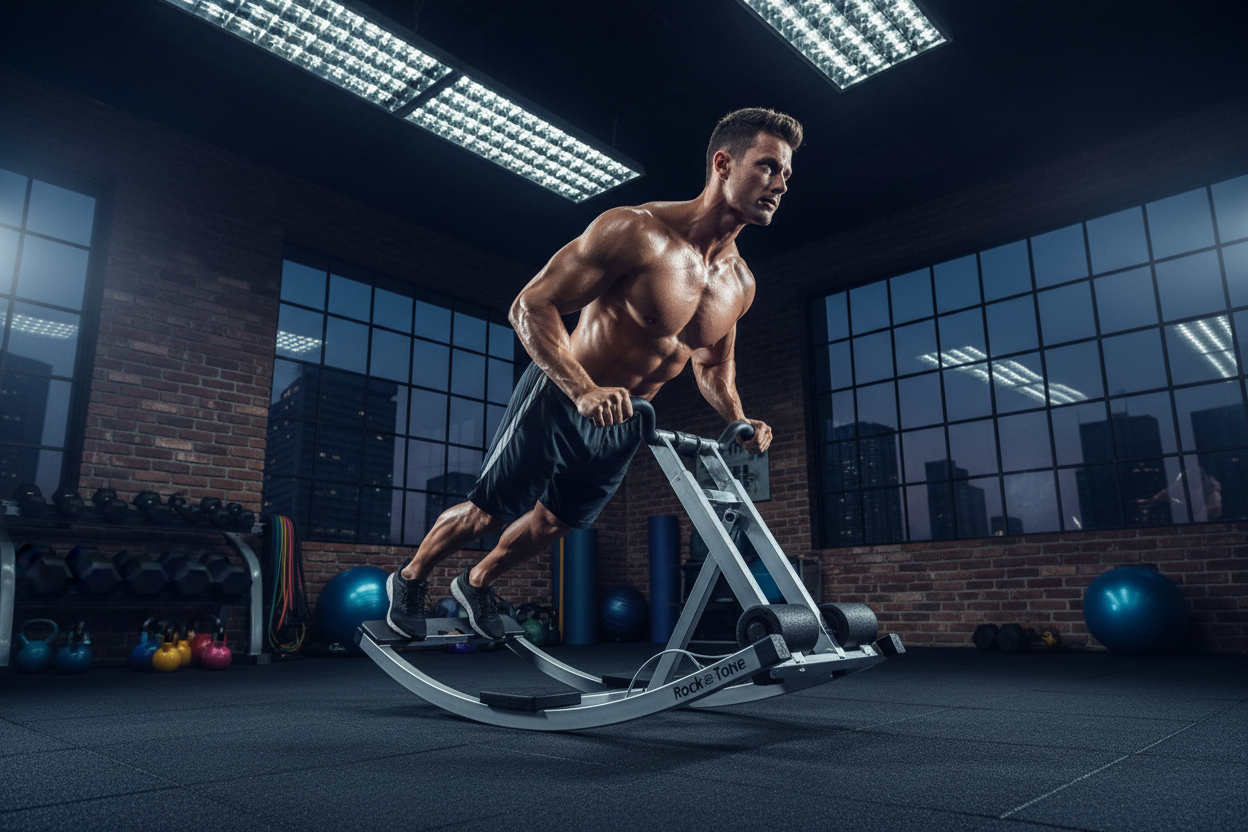
To understand if this equipment works, you have to look at the physics. A standard rocking exercise machine operates on the principle of assisted instability. Unlike a stable bench, the curved base or spring-loaded hinge forces your body to stabilize itself throughout the range of motion.
When you perform a crunch on the floor, gravity is your only resistance. However, many people cheat by pulling on their neck or using their hip flexors. This machine guides the path of motion. It creates a fixed pivot point, which theoretically forces the abdominal wall to contract to move the weight of your torso.
The "Momentum Trap"
Here is where the science gets tricky. The design that helps you can also hurt your progress. The rocking motion generates momentum. If you simply swing back and forth, inertia is doing the work, not your abs.
To get value out of this, you must perform what we call a "dead stop" rep. You rock back, pause for a second to kill the momentum, and then use your core to pull yourself forward. If you aren't pausing, you aren't training.
Targeting the Core Without the Strain
The biggest selling point of a rock and tone exercise machine isn't necessarily the intensity; it's the safety profile for specific populations. Floor crunches are notorious for causing cervical spine (neck) pain.
Because these machines usually include a headrest or high-back support, the neck remains neutral. This allows the user to focus the mind-muscle connection strictly on the midsection. For rehab patients or seniors, this support system is the difference between training the core and skipping the workout entirely.
Realistic Expectations: Strength vs. Definition
Let’s be honest about the aesthetics. No amount of rocking will spot-reduce fat from your stomach. That is a biological impossibility managed by nutrition, not specific movements.
This machine builds endurance and basic strength. It will not provide the progressive overload needed for massive hypertrophy (muscle growth) like a weighted cable crunch would. Think of it as a maintenance tool or a starter piece, rather than a bodybuilding essential.
My Training Log: Real Talk
I distinctly remember the first time I tested a rocking-style ab trainer at a local trade show. It looked comfortable, but the user experience was a mixed bag.
The first thing I noticed was the "dead spot" at the bottom of the movement. When I leaned all the way back, the machine offered a satisfying stretch, but the fabric backing was slippery. I found myself sliding down the seat every five or six reps, forcing me to stop and scoot back up. It broke my rhythm completely.
More importantly, there was a distinct mechanical "clunk" if I rocked back too aggressively. It didn't feel like a smooth gym cable machine; it felt like plastic hitting a stopper. I realized quickly that to actually feel a burn, I had to move in slow motion—taking three full seconds to crunch up. If I moved at a normal pace, the spring assistance made the rep feel weightless. It works, but only if you actively fight against the machine's desire to help you.
Conclusion
The rock and tone exercise machine is not a scam, but it is often misunderstood. If you are an advanced athlete, this won't challenge you. However, if you struggle with neck pain during floor exercises or need a low-impact way to engage your core, it is a viable tool. Just remember: control the rock, don't let the rock control you.
Frequently Asked Questions
Does the rock and tone machine burn belly fat?
No. The machine strengthens the abdominal muscles underneath the fat, but it does not burn enough calories to reduce fat stores. Fat loss is achieved through a calorie deficit in your diet.
Is a rocking exercise machine bad for your back?
Generally, no. It is designed to support the spine and reduce strain compared to floor crunches. However, if you have existing lumbar issues, you should consult a physical therapist before using any core equipment.
How many reps should I do on a rocker machine?
Because the resistance is low, aim for higher volume. Try 3 to 4 sets of 15–20 slow, controlled repetitions. Focus on the contraction at the top rather than just the number of reps.