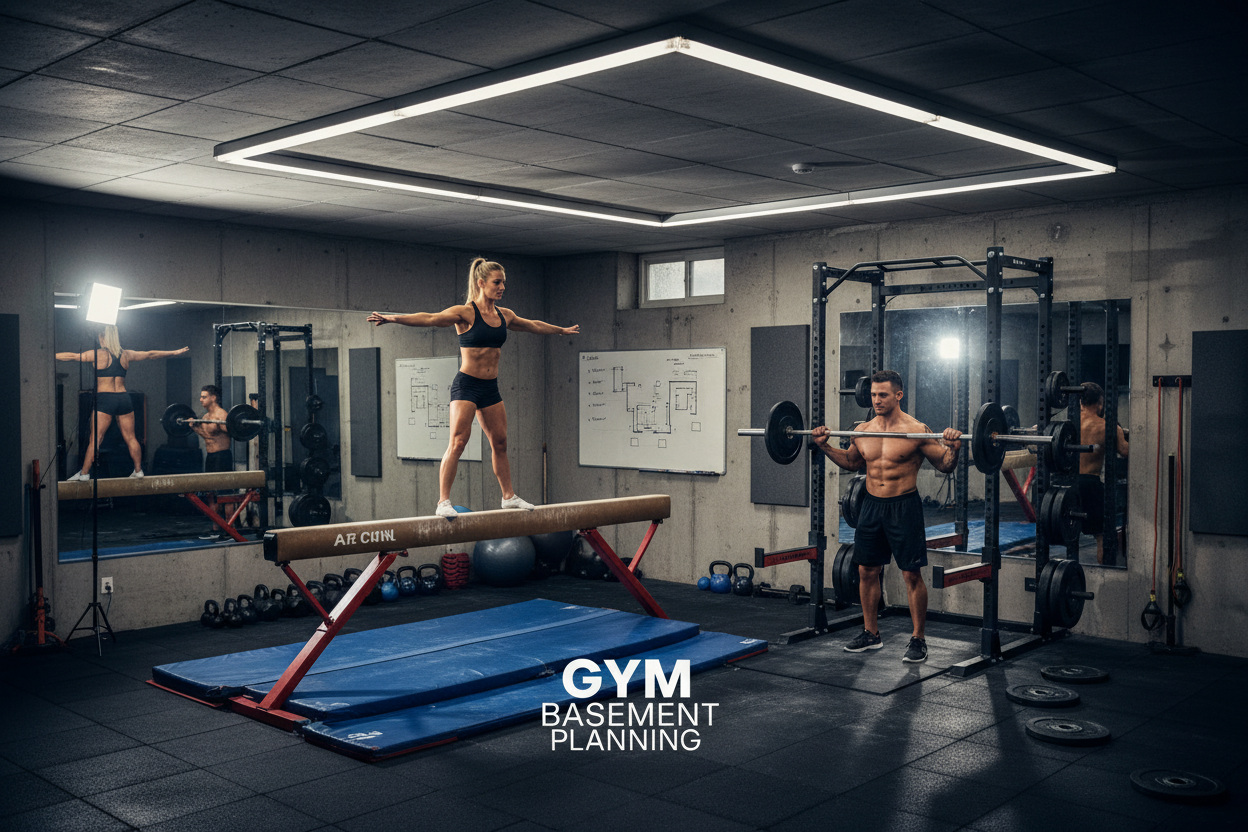
Gym Basement Planning: What You Must Know Before Building
Let's face it: commuting to a crowded commercial facility during peak hours is the fastest way to kill your workout motivation. If you have subterranean square footage gathering dust, transforming it into a dedicated gym basement is one of the highest-ROI investments you can make for your health and home value. Whether you are dreaming of a modern, fully finished basement exercise room complete with wall-to-wall mirrors, or a gritty unfinished basement home gym designed for heavy powerlifting, this space offers the ultimate private training sanctuary.
However, building an underground workout room comes with unique challenges—from low ceilings and uneven concrete floors to moisture control. In this guide, we will walk you through the essential steps to design, equip, and optimize your basement gym setup so you can train safely and effectively without leaving your house.
Key Takeaways
- Measure Vertical Clearance: Floor-to-joist ceiling height dictates your equipment choices, especially for power racks and cardio machines.
- Moisture Control is Mandatory: Basements are prone to humidity; a quality dehumidifier prevents your barbells and racks from rusting.
- Flooring Matters: Thick rubber flooring protects both your equipment and your foundation from heavy drops.
- Embrace the Unfinished Look: You don't need drywall to have an incredible space; an unfinished basement workout room can look highly professional with strategic LED lighting and blacked-out ceilings.
Space Planning: Mapping Out Your Basement Gym Design
Before you buy a single dumbbell, you need a cohesive basement home gym design. The layout will dictate the flow of your workouts and prevent the space from feeling like a cramped storage closet.
Tackling the Unfinished Basement Gym
Creating a home gym in an unfinished basement is incredibly popular because it is cost-effective and highly customizable. Exposed joists can actually be an advantage, allowing you to easily mount pull-up bars, suspension trainers, or heavy bags. When browsing unfinished basement gym ideas, consider painting the exposed ceiling black or dark grey. This simple trick hides ductwork and wiring, instantly giving your unfinished basement workout room a sleek, industrial commercial gym vibe.
Maximizing a Small Basement Workout Room
If you are working with limited square footage, small basement gym ideas should focus on multi-functional, space-saving gear. Wall-mounted folding power racks, adjustable dumbbells, and functional cable trainers are perfect for a small basement home gym. Ensure you leave at least 24 to 36 inches of clearance around your main lifting area so you can load and unload barbell plates safely.
Essential Upgrades for a Basement Exercise Room
Turning a dark, damp space into an inviting basement workout area requires a few foundational upgrades to ensure comfort and longevity.
Flooring and Climate Control
The foundation of any great gym in the basement is the flooring. Standard concrete is too hard on your joints and will destroy dropped weights. We recommend 3/4-inch vulcanized rubber stall mats or high-density interlocking gym tiles. Additionally, to protect your investment, climate control is non-negotiable. Running a dehumidifier year-round is the best way to keep your basement weight room free from rust and musty odors.
Lighting and Wall Aesthetics
Subterranean spaces notoriously lack natural light. For a modern basement gym, swap out dim bulbs for bright, 5000K LED shop lights or hex lighting to mimic natural daylight. If you are looking for basement gym wall ideas, adding large, shatter-resistant acrylic mirrors can make a small basement gym room feel twice as large while helping you monitor your lifting form.
Building on a Budget: DIY Basement Gym Strategies
You do not need a massive budget to turn your basement into a gym. A highly functional space can be built incrementally.
Cost-Effective Equipment Choices
When exploring basement gym ideas on a budget, prioritize the big three: a flat utility bench, a barbell with bumper plates, and a squat stand. These three items allow you to perform hundreds of exercises. As your budget grows, you can expand your diy basement gym with specialty bars, a cable pulley system, or cardio equipment. If you want a hybrid space, a basement gym and tv room combo is a great way to justify the renovation costs to the whole family.
From Our Gym: Honest Take
When I built my first home gym in the basement, I completely underestimated the slope of my concrete floor. Basements are graded toward a central drain, meaning my squat rack had a noticeable wobble. I had to use heavy-duty rubber shims under the rack's uprights to level it out—a crucial step for safe heavy lifting.
Also, at 6'1", doing standing overhead presses in a room with 84-inch ceilings meant my plates were constantly scraping the drywall above. I had to switch to seated presses and eventually invested in a specialized short power rack. Always measure your wingspan and overhead reach before ordering a rack for your home gym basement setup! Product pages rarely warn you about how much clearance you need for a standard 45-pound plate at the top of a military press.
Frequently Asked Questions
How much ceiling height do I need for a basement gym?
Ideally, you want at least 8 to 9 feet of vertical clearance for overhead lifting and full-sized power racks. If you have low ceilings (under 84 inches), look for short racks, cambered bars, and plan to perform overhead movements from a seated position.
What is the best flooring for an exercise room in basement?
For heavy weightlifting, 3/4-inch rubber stall mats are the gold standard due to their durability and impact absorption. For a basement gymnastics room, lighter cardio, or yoga, high-density EVA foam or 8mm interlocking rubber tiles are sufficient.
Can I build a home gym in an unfinished basement?
Absolutely. An unfinished basement home gym is highly practical. As long as the space is dry and free of mold, you can easily set up your equipment on rubber flooring. Many lifters prefer the rugged, industrial feel of a gym in an unfinished basement.