Is the Best Home Gym Fitness Equipment Actually Just a Barbell and Rack?
I remember the exact moment I decided to quit my local big-box gym. I was waiting ten minutes for a squat rack while some guy used it as a tripod for his phone. I went home, cleared out the spiderwebs in my garage, and started hunting for the best home gym fitness equipment. I almost made the classic rookie mistake: trying to buy every machine I used at the commercial gym.
- Prioritize the footprint-to-versatility ratio; if it only does one thing, it doesn't belong in your garage.
- Invest in 11-gauge steel racks; thin 14-gauge 'home' racks will wobble the moment you cross 200 lbs.
- Protect your foundation with high-density rubber before you buy your first plate.
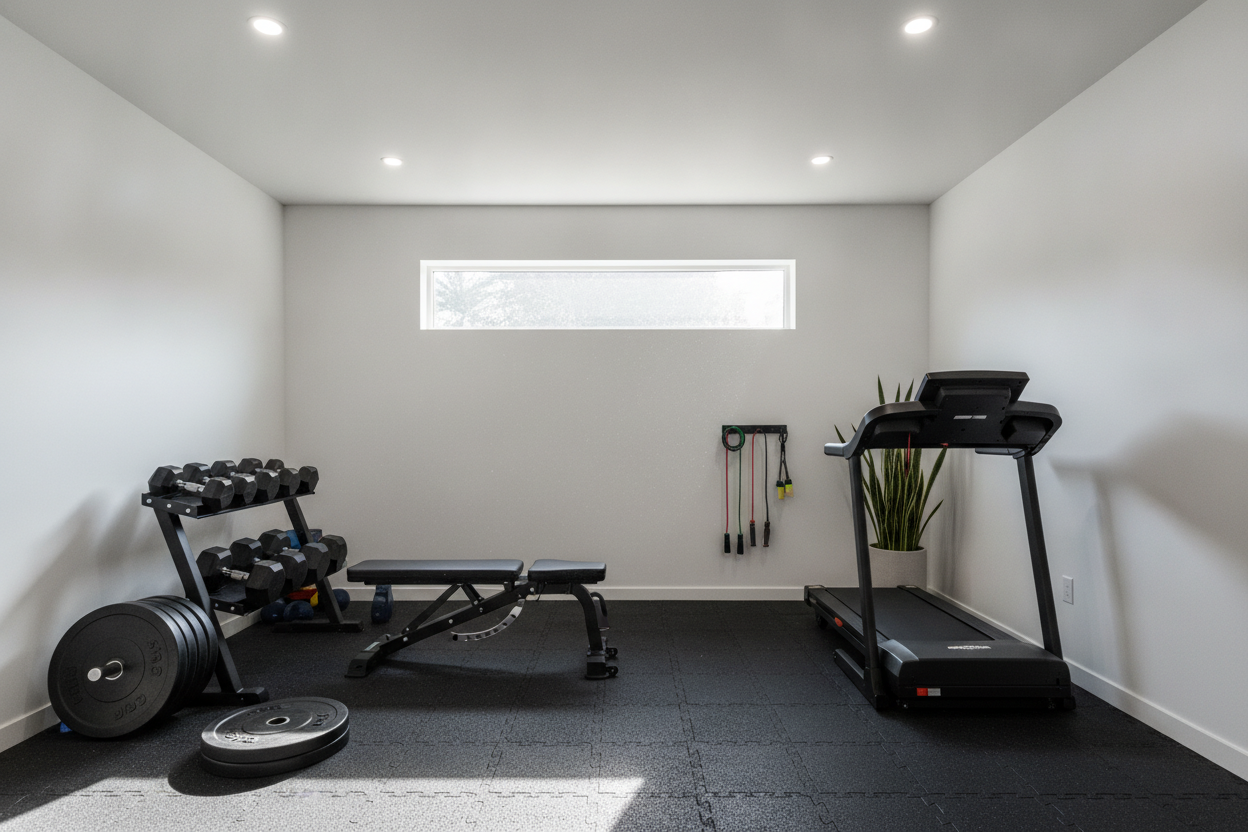
- Adjustable dumbbells and a solid bench are the ultimate space-savers for small rooms.
The Commercial Gym Trap (And Why We Fall For It)
When you walk into a commercial gym, you see rows of shiny leg presses, cable crossovers, and chest press machines. It’s easy to think you need all of that to see results. But in a home setting, those single-use machines are a massive waste of square footage and cash. A leg press takes up about 25 square feet. You know what else takes up 25 square feet? A power rack where you can squat, bench, press, and do pull-ups.
The best home gym weight equipment isn't the stuff that looks the coolest in a catalog. It's the gear that allows you to move heavy loads through a full range of motion. If you’re spending $1,000 on a machine that only works your quads, you’re doing it wrong. Focus on the big rocks first. You can build a world-class physique with a barbell and a rack, but you'll struggle to do it with a pec deck and a treadmill.
What Actually Makes the Best Home Equipment Different?
The golden rule for home lifters is the footprint-to-versatility ratio. In a commercial gym, space is infinite. In your garage or spare bedroom, every inch is a premium. You have to evaluate the best home equipment based on how many movements it allows. An Olympic barbell is the king here—you can use it for hundreds of different exercises. A dedicated bicep curl machine? Not so much.
I’ve spent years swapping gear in and out of my own space. I Tested the Best Weight Equipment for Home Gym Setups (Most Failed) because they tried to be too clever. They had plastic pulleys that snapped or frames that felt like they were made of soda cans. When you’re looking for the best home gym workout equipment, look for durability specs like 3x3 inch steel uprights and a weight capacity that is at least double what you currently lift. You want gear that grows with you, not gear you break in six months.
Versatility vs. Single-Use Machines
Free weights generally beat machines every time in a garage. Why? Because a set of dumbbells allows for multi-planar movement, whereas a machine locks you into a fixed path. This is crucial for joint health and functional strength. However, I get it—sometimes you want that machine-gun pump. If you have the space, there are a few best weight training machines for every home gym that actually make sense, like a plate-loaded lat pulldown or a compact functional trainer.
For most of us, the best home weight training equipment will be things like adjustable kettlebells or a sandbag. These tools take up almost no room but offer a level of metabolic conditioning and strength work that a stationary bike just can't touch. If it doesn't help you get stronger or move better, it’s just an expensive clothes rack.
Building Your Core Setup (Without Wasting Space)
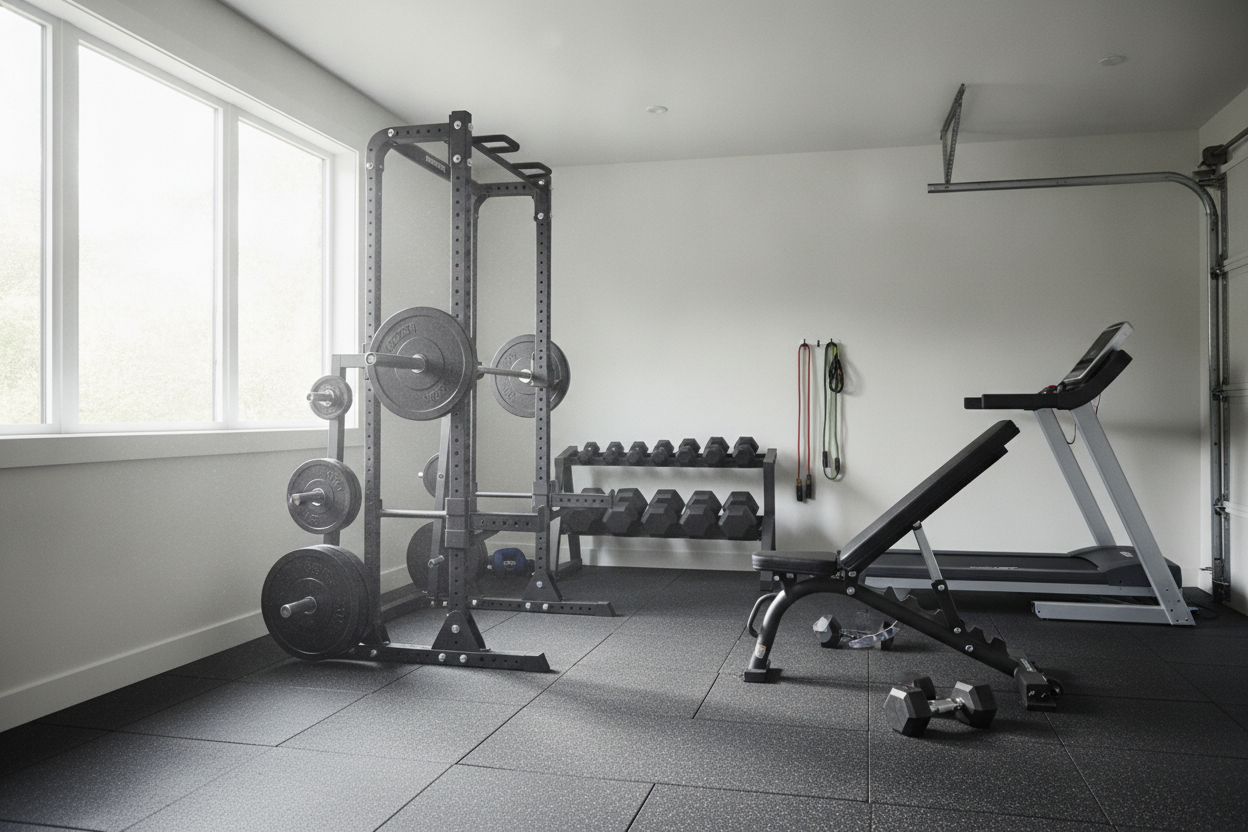
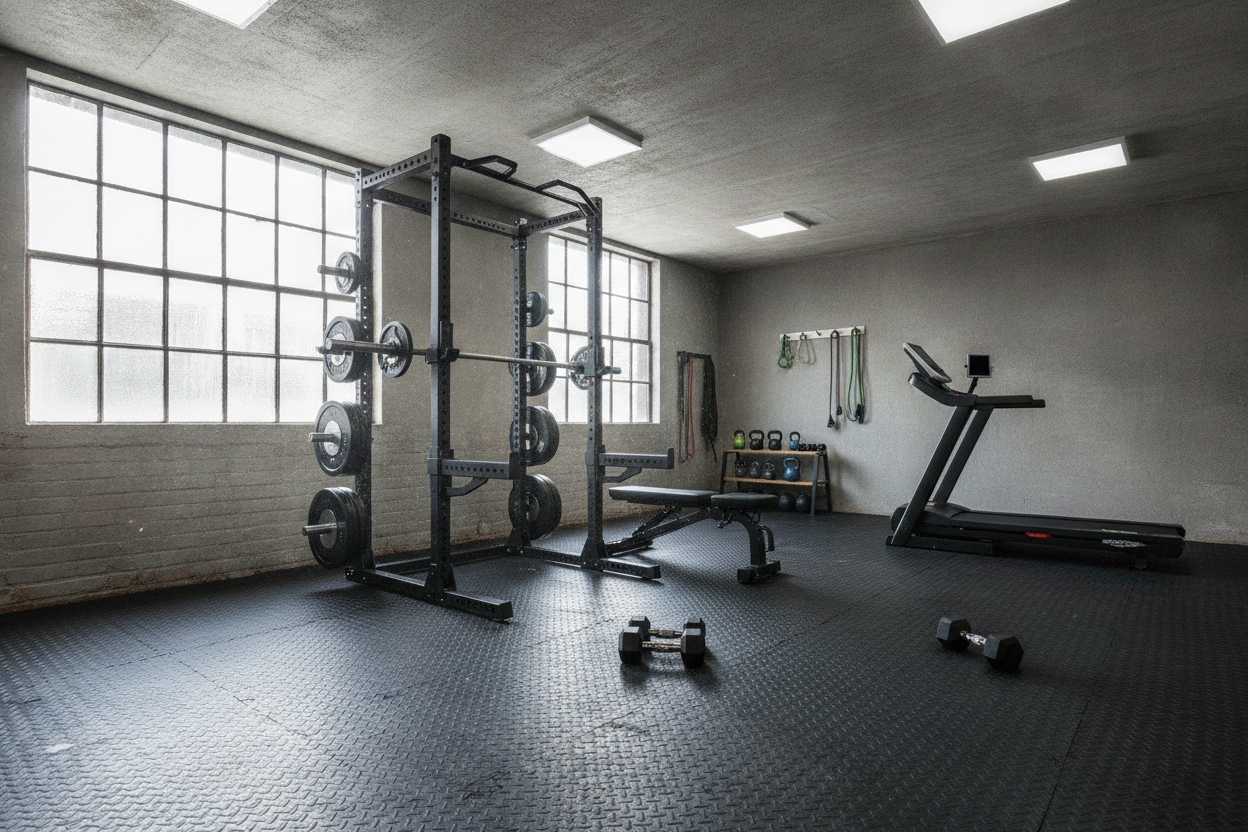
If I were starting over today with a blank slab of concrete, I’d start with a power rack. Not a 'squat stand,' but a full cage. It’s the safest way to lift heavy alone. Pair that with an adjustable bench that doesn't have a massive gap between the seat and the backrest. You want a bench rated for at least 1,000 lbs. That might sound like overkill, but that rating accounts for the dynamic force of you dropping a heavy set of dumbbells onto it.
This core setup is the heart of the best home strength training equipment. Add a 20kg Olympic bar with decent knurling—something that won't tear your hands apart but won't slip when you're sweaty. For plates, iron is classic and thinner, allowing you to fit more weight on the bar, but bumpers are better if you plan on doing any overhead work or cleans. It’s about building a foundation that handles 90% of your training needs.
Don't Forget What Goes Under the Iron
I once dropped a 45-lb plate on my bare garage floor and chipped a chunk of concrete the size of a dinner plate. It was a stupid mistake. Even the best home gym weight equipment will destroy your house if you don't have a dedicated gym flooring for home workout. You need high-impact rubber mats. Don't use those foam puzzle pieces—they'll compress and slide around the moment you try to squat. Get the heavy-duty stuff that stays put.
The Best Home Gym Equipment to Have When You're on a Budget
You don't need to take out a second mortgage to get fit at home. The best home resistance training equipment, like a high-quality set of latex loops or fabric glute bands, can provide a brutal workout for under fifty bucks. Start small. Buy a pair of adjustable dumbbells that go up to 50 or 80 lbs. That alone covers your upper body for a long time.
As you get stronger, keep an eye out for home gym equipment deals during the big holiday sales. That’s when I snagged my high-end barbell for 30% off. The best home gym equipment to have is the stuff you actually use. Don't buy a rower because you think you 'should' do cardio; if you hate rowing, it’ll just collect dust. Buy the gear that excites you to walk into the garage at 6:00 AM.
FAQ
Is 14-gauge steel okay for a home rack?
Only if you never plan on lifting more than 200 lbs. For anyone serious about strength, 11-gauge is the standard. It's thicker, safer, and won't flex when you rack a heavy bar.
Do I really need an Olympic barbell?
Yes. Standard 1-inch bars are flimsy and the plates are harder to find. An Olympic bar (2-inch sleeves) is the industry standard for a reason—it's built to last a lifetime.
How do I stop my gym from smelling like rubber?
New rubber mats off-gas. The trick is to mop them with a mixture of Dawn soap and water, then leave your garage door open for a few days. The smell fades, I promise.