Why Most Workout Home Gyms Turn Into $2,000 Clothes Hangers
I remember staring at my first 'all-in-one' machine—a tangled mess of cables and plastic pulleys that felt about as sturdy as a lawn chair. I’d spent $800 thinking it would replace my commercial membership, but three months later, it was just a place to hang my damp hoodies. Most workout home gyms fail because they try to be everything to everyone and end up being good at absolutely nothing.
- Function over Flash: A rack and a barbell will always out-train a shiny cardio machine.
- Flooring is Safety: Concrete ruins joints and equipment; don't skip the mats.
- Buy Once, Cry Once: Cheap 1-inch plates are a waste; stick to 2-inch Olympic standards.
- Space Efficiency: You only need a 8x8 foot patch of floor to build an elite physique.
The 'Expensive Clothes Hanger' Phenomenon
Walk into any suburban garage and you’ll likely find a treadmill covered in laundry. We buy these things because they represent the person we want to be, but they usually ignore the person we actually are. Home gyms that work are built around movements you enjoy, not machines you feel obligated to use. If you hate running, that $2,000 NordicTrack is just a very expensive piece of furniture.
The difference between a graveyard of iron and a functional training space is friction. If you have to move three boxes and a bicycle just to get to your pull-up bar, you aren't going to train. Successful setups prioritize immediate access and durability over high-tech screens and monthly subscriptions.
Stop Buying What You Think You 'Should' Buy
The biggest mistake I see is people trying to replicate a 15,000-square-foot commercial gym in a 200-square-foot garage. You don't need a leg press machine, a cable crossover, and five different cardio bikes. A functional personal gym at home should be a curated collection of tools that fit your specific goals.
Think about your actual habits. If you’ve spent the last three years doing compound lifts, why are you suddenly looking at a rowing machine? Stick to what you know. Your space should be an environment that forces you to work, not a showroom for the latest fitness trends that will be obsolete by next Christmas.
The Trap of the 'Do-It-All' Machine
Those massive multi-station contraptions look great in brochures, but they are the death of a work out gym for home. The cables are often jerky, the weight stacks are too light for serious progress, and the '200 exercises in one' claim usually includes 190 movements you’ll never do. When one part breaks, the whole machine is often useless. Stick to modular equipment that you can grow with.
The Non-Negotiables for Strength Training Home Gyms
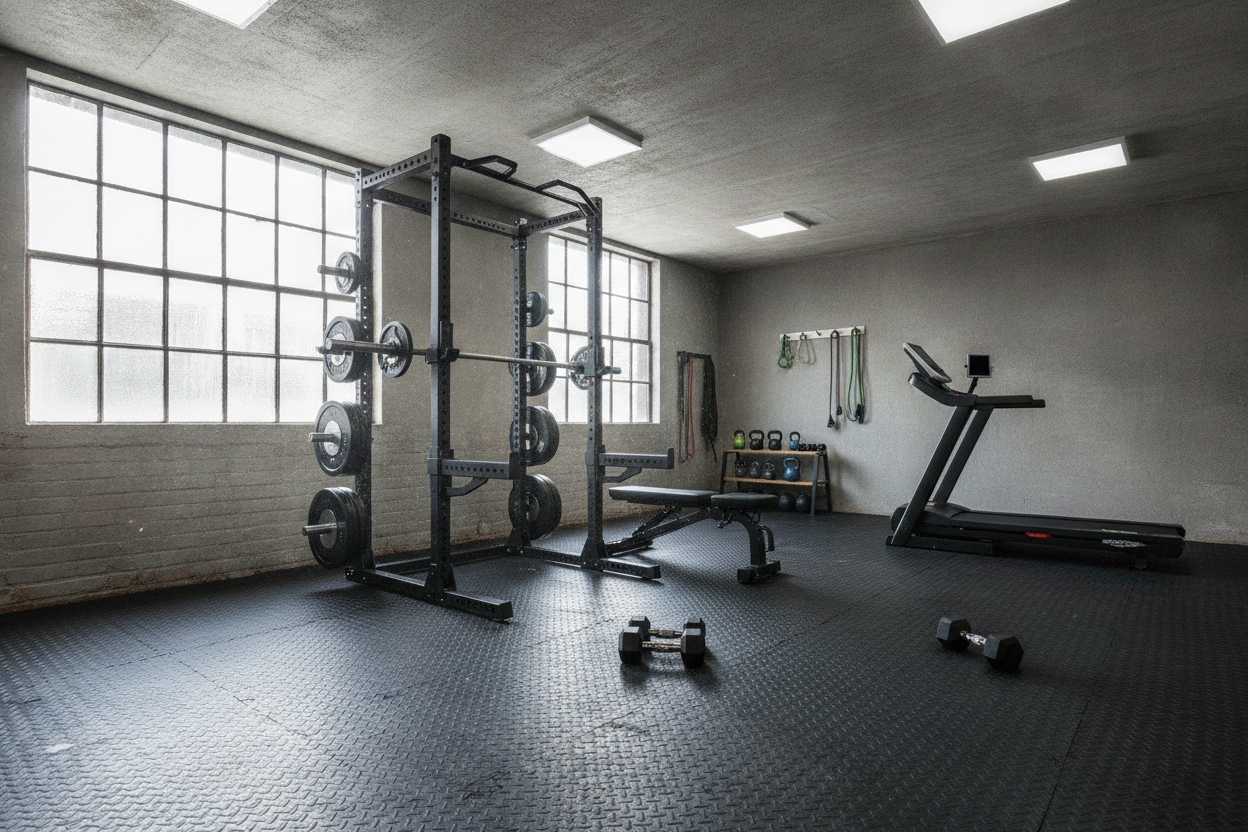
If you want results, you need heavy things to pick up. For strength training home gyms, the hierarchy is simple: a power rack, a 20kg Olympic barbell, and a stack of iron or bumper plates. This setup allows for squats, presses, and pulls—the bread and butter of any real program.
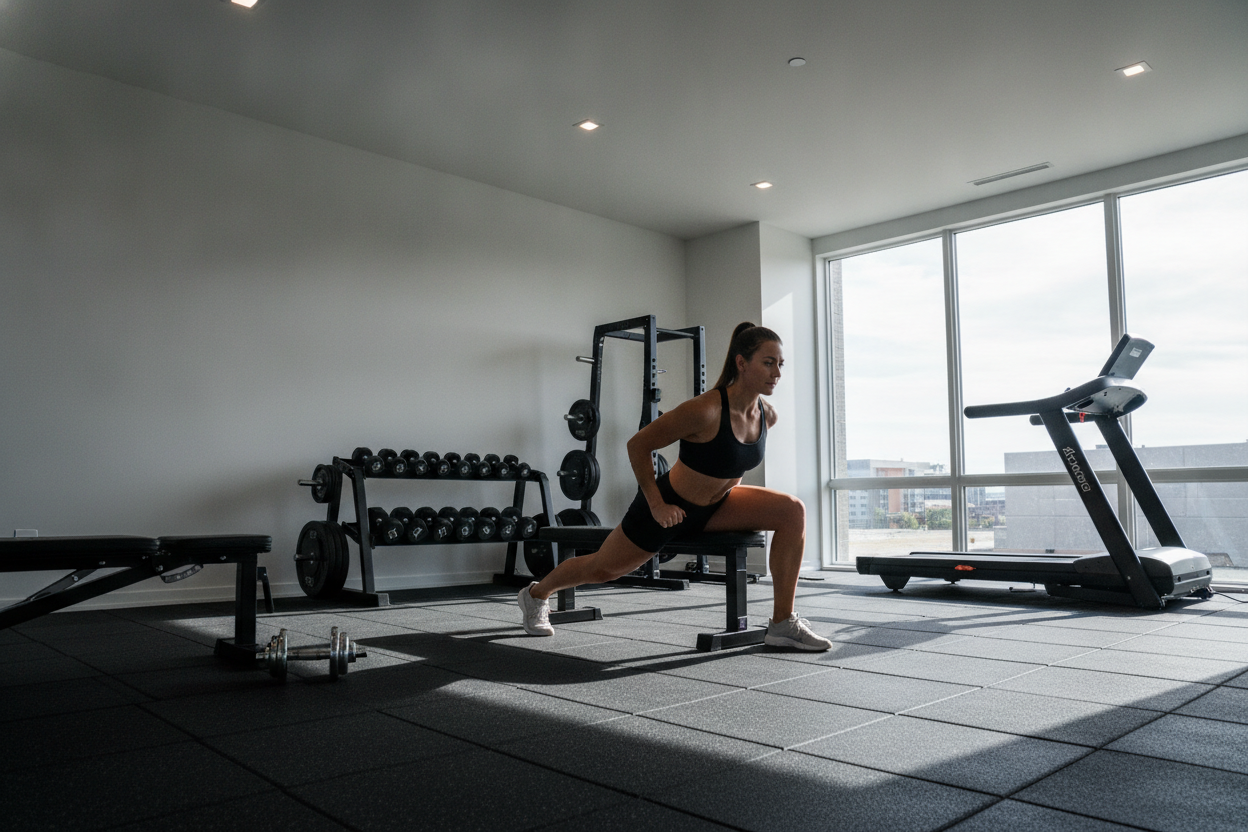
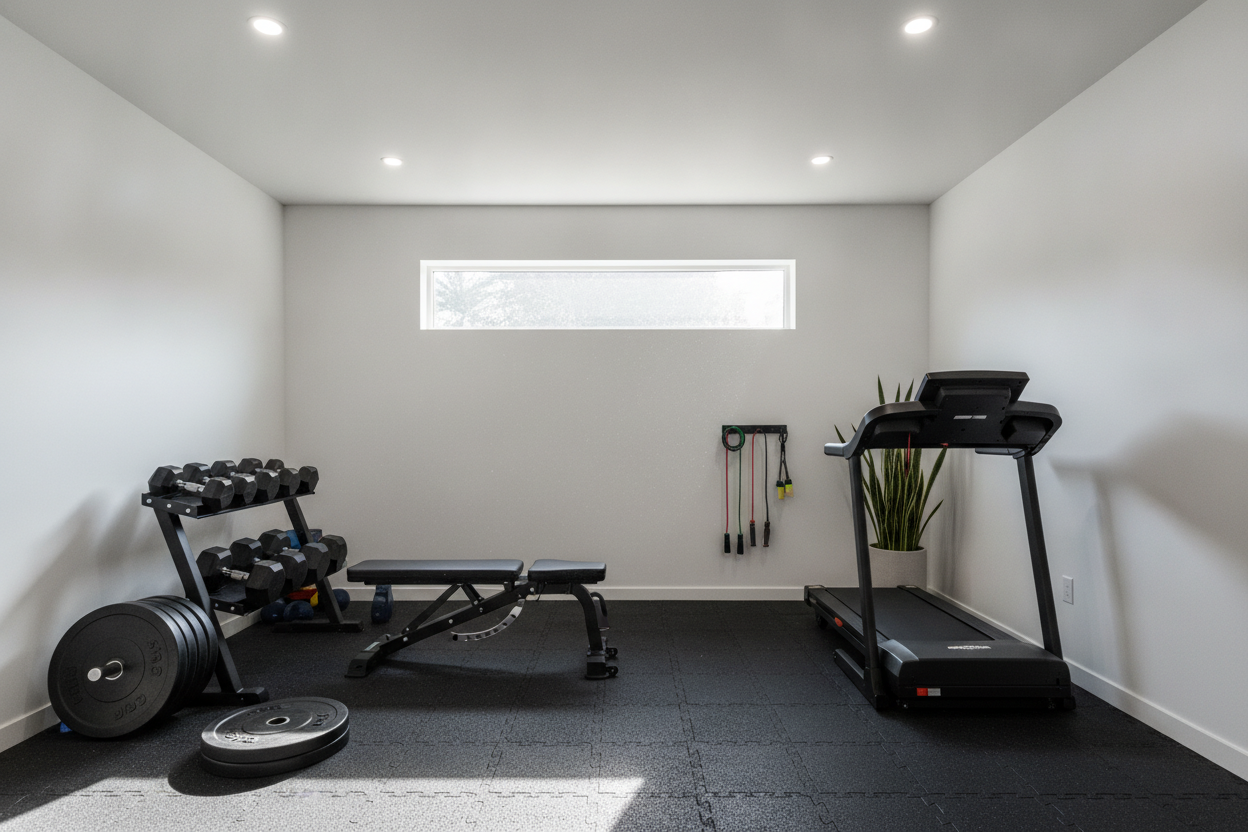
You don't need a massive footprint to get strong. A minimal free weight setup is surprisingly versatile. For example, a strength workout for women at home can be incredibly effective with just a pair of adjustable dumbbells and a solid bench. Don't let the lack of a cable machine stop you from building real-world power.
Protecting Your Joints (and Your Foundation)
Lifting on bare concrete is a recipe for a meniscus tear and a cracked foundation. Every time you set a deadlift down, that shock has to go somewhere. If it’s not absorbed by the floor, it’s going into your ankles and knees. I’ve seen guys ruin beautiful hardwood floors because they thought a thin yoga mat was enough protection.
At the very least, you need a large exercise mat for home gym use to create a designated 'work zone.' If you plan on dropping weights or doing high-intensity movements, invest in high-density gym flooring for home workout. It saves your joints, dampens the noise so your neighbors don't hate you, and keeps your expensive plates from chipping.
How to Spot a Real Home Gym Deal (and Dodge the Scams)
When you see a home gym deal that looks too good to be true, it usually is. Look at the steel gauge. 11-gauge steel is the gold standard for racks; if a company doesn't list the gauge, it’s probably thin 14-gauge junk that will wobble the moment you put 200 pounds on it. Avoid 'sand-filled' weights at all costs—they leak, they’re bulky, and they feel unbalanced.
Check the knurling on the bars. A cheap bar will have knurling that feels like smooth plastic, making it impossible to grip once your hands get sweaty. A real bar has a bite to it. I’d rather buy a used, high-quality barbell from a local marketplace than a brand-new, low-grade bar from a big-box retailer.
Your First Week: A Bare-Bones Routine That Actually Works
Once your gear arrives at your at home workout gyms, don't overcomplicate it. Spend the first week just getting comfortable with the space. Focus on the basics: squats, hinges, pushes, and pulls. You don't need a 2-hour session to be effective.
If you're short on time or just getting started, try an at home upper body strength workout. It’s a fast way to test your new equipment and get a feel for the mechanics of your space. Consistency beats intensity every single time.
My Personal Lesson in Cheap Iron
I once bought a set of 'bargain' adjustable dumbbells from a sketchy site. On my third set of overhead presses, the locking mechanism failed. A 5-pound plate slid off and missed my skull by an inch, denting my floor instead. I sold them for scrap the next day. Now, I only buy gear with heavy-duty steel hardware. My safety is worth more than the $50 I saved.
FAQ
Do I need a squat rack if I only use dumbbells?
Not immediately, but a rack provides a pull-up station and a safe way to bench press alone. If you plan on getting strong, you'll eventually outgrow dumbbells.
Is 80-lb flooring enough for deadlifts?
For most people, 3/4 inch rubber stall mats or high-density gym mats are the minimum. Anything thinner and you risk damaging the subfloor.
How do I stop my equipment from rusting in a garage?
Keep a dehumidifier running and wipe your bars down with 3-in-1 oil once a month. Sweat is corrosive; don't let it sit on the steel.