I Cut 20 Weight Exercises from My Routine (Here's Why)
I used to spend two hours every Monday night in my garage, sweating through sixteen different variations of the bench press and flyes. My logic was simple: if one chest exercise was good, six must be better. I was wrong. My joints hurt, my progress stalled, and I was spending more time moving pins on my rack than actually lifting.
Cutting the fat from my routine was the hardest thing I’ve done as a lifter. We’re conditioned to think weight exercises need to be complicated to work. But after slashing my program down to the bare essentials, my strength numbers finally started moving again. I stopped chasing a 'pump' and started chasing performance.
- Redundancy is the enemy of recovery.
- Compound movements should make up 90% of your volume.
- If you can't track it easily, it’s probably junk volume.
- Intensity beats variety every single time.
The Trap of the 'More Lifts' Mentality
Social media has ruined how we view strength exercises weights. You see influencers cycling through twenty different 'hacks' for their triceps, and you feel like you're missing out if you only do close-grip bench and dips. This leads to what I call the 'menu' approach—trying to eat everything instead of focusing on the steak. I fell for it too, thinking I needed a different angle for every single muscle fiber.
When you add five different angles for every muscle group, you aren't actually working harder. You're just accumulating fatigue. I found that my third and fourth variations were always low-effort. I was just going through the motions. Real growth comes from high-quality sets, not a high quantity of mediocre ones. If you're doing four types of curls in one session, you’re just wasting time that could be spent on heavy rows.
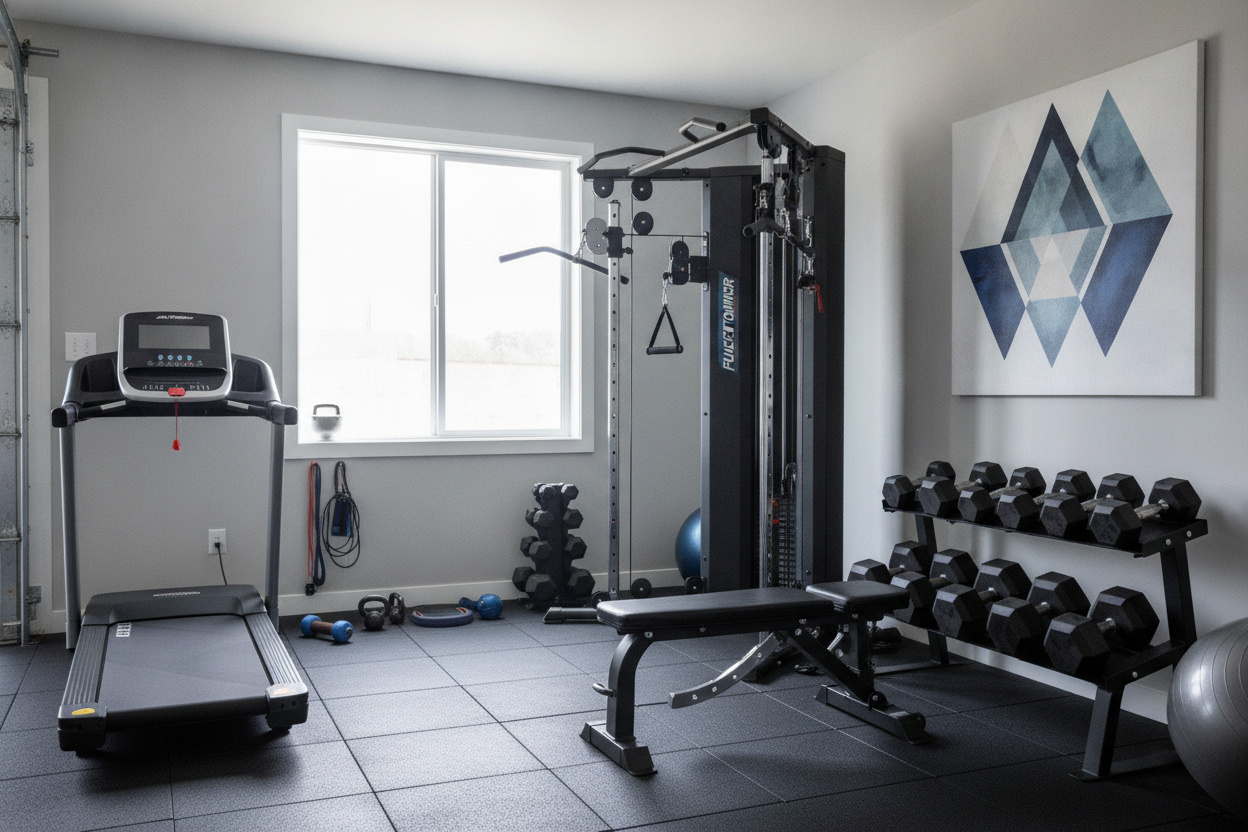
Why I Audited My Entire Garage Gym Routine
My breaking point came during a Tuesday leg session. I had six different free weight training exercises on the list, and by the time I got to the lunges, I was so gassed I couldn't even maintain proper form. I was just moving weight to check a box. My recovery was in the gutter, and I was waking up with that 'hit by a truck' feeling every single day. My 45lb plates started feeling like 100lb plates before I even started my first set.
I had to be honest about why free weight training outperforms machines and how I was wasting that advantage. Machines are great for isolation, but in a home gym, your time and space are limited. I realized that if a lift didn't allow me to load heavy or move through a full range of motion with stability, it had to go. I looked at my logbook and realized I hadn't added a single pound to my squat in three months because I was too busy doing 'accessory' work.
The 'Big Rocks' vs. The Gravel
Think of your training like a jar. If you fill it with gravel (isolation fluff) first, the big rocks (squats, deadlifts, presses) won't fit. I decided to prioritize resistance exercises with weights that give the most bang for the buck. These are the lifts that require the most coordination and recruit the most muscle fibers. If an exercise didn't make me want to sit down for two minutes afterward, it probably wasn't a 'big rock.'
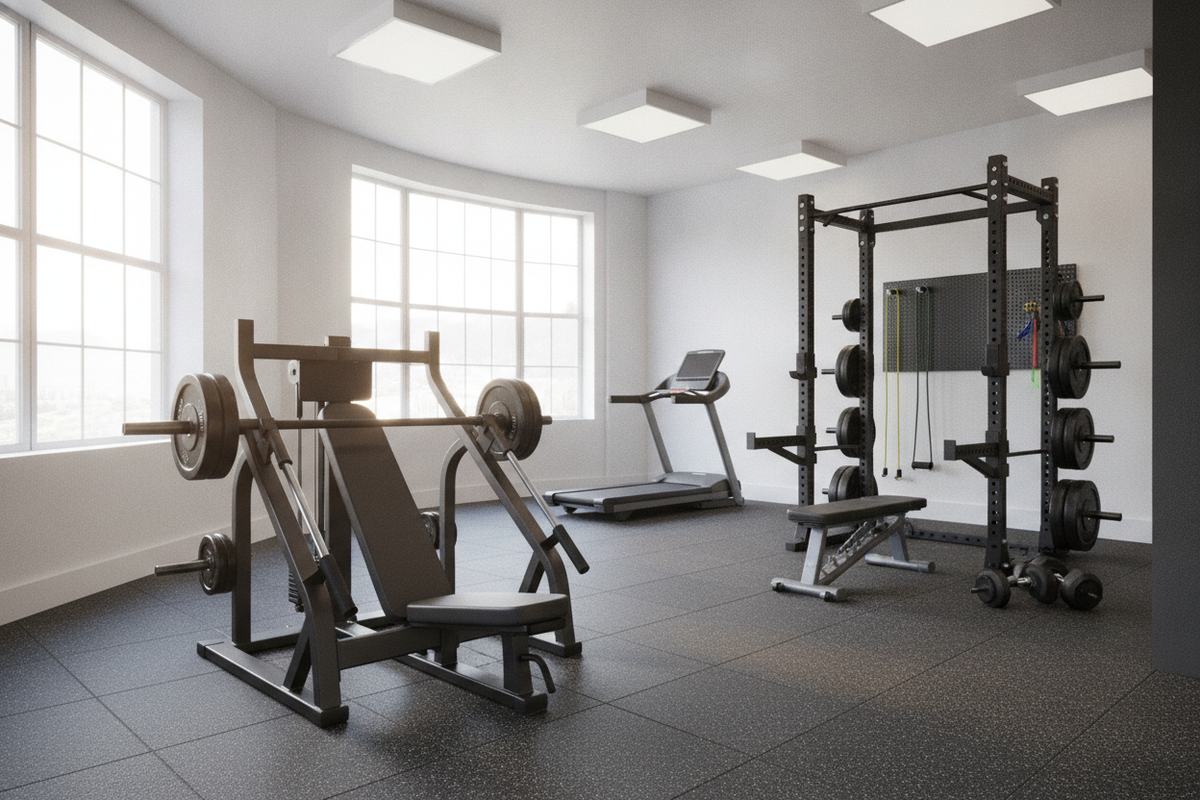
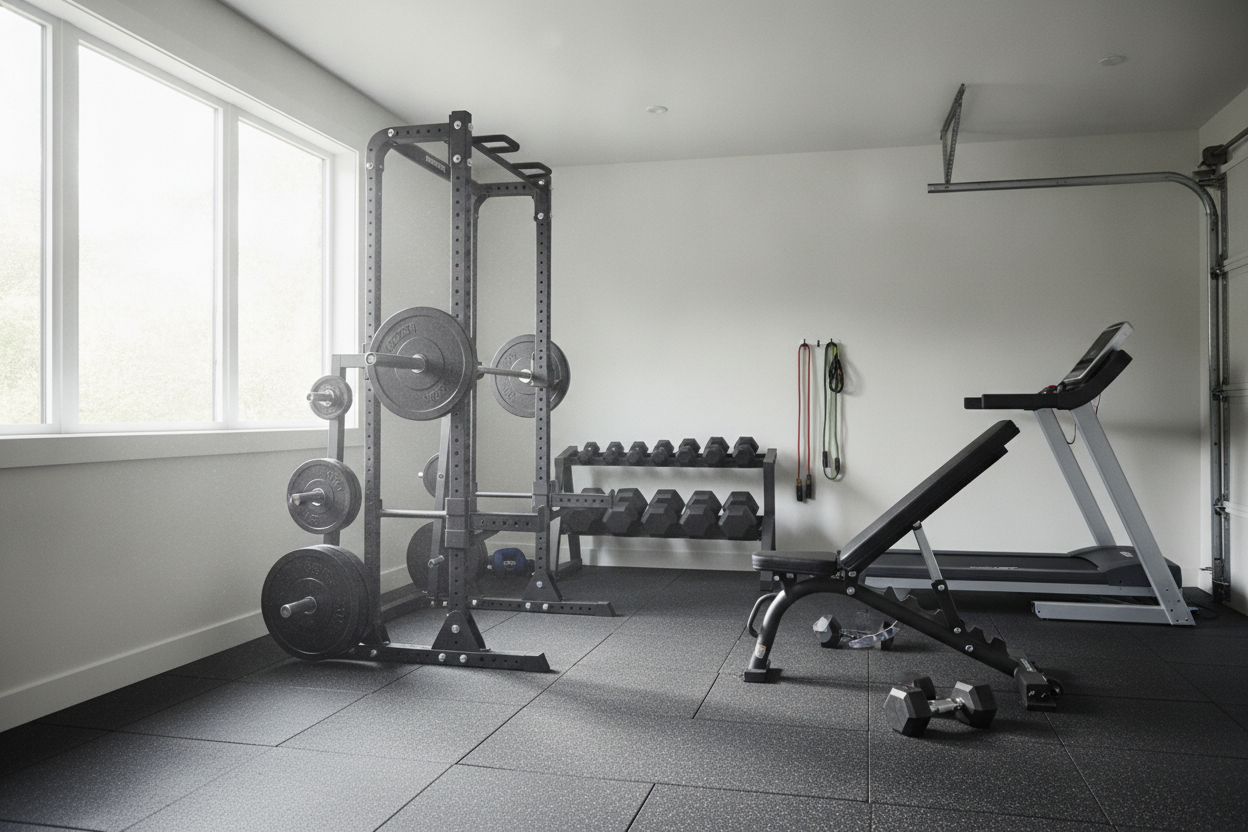
You don't need a dozen specialized pieces of equipment. Honestly, a sturdy rack and bench package is all you need to build a world-class physique. I evaluated my strength exercises weights based on mechanical tension. If I couldn't safely push a lift to near-failure without a spotter or complex setup, it was out. I traded my fancy cable crossovers for heavy weighted dips and never looked back.
The 5 Core Movements That Survived the Cut
After the audit, I was left with five pillars: a squat variation, a hinge (like a deadlift), a vertical pull, a horizontal pull, and a press. By narrowing my focus, I could actually put 100% effort into my resistance training exercises with weights. I wasn't saving energy for the next six moves; I was emptying the tank on the ones that mattered. My workouts became shorter, but significantly more intense.
For my pressing, I kept the flat bench and added an incline variation. Having a solid adjustable weight bench allowed me to hit the upper chest without needing a separate machine or a dedicated incline rack. I found that my muscle recruitment was actually higher because I wasn't mentally fatigued from a dozen previous sets. My workouts dropped from 90 minutes to 45, and my PRs started climbing again. I went from struggling with 225 on the bench to hitting 275 for reps just by cutting out the fluff.
What to Do When You Actually Need Variety
Variety isn't bad, but you shouldn't get it by adding more weight exercises. When I feel a plateau coming on, I don't add a new movement. Instead, I change the stimulus of the ones I already have. I'll add a three-second pause at the bottom of a squat or slow down the eccentric phase of a row to four seconds. This forces the muscle to adapt without requiring me to learn a new movement pattern or clutter my program.
I also started looking at making bodyweight movements harder through tempo and unilateral work. A Bulgarian split squat with a 2-second pause is harder than any leg extension machine I've ever used. This keeps the routine fresh without bloating the schedule or requiring me to buy more gear for the garage. It turns out, I didn't need more exercises; I just needed to make the ones I was doing more difficult.
How many exercises should be in a single workout?
For most people, 4 to 6 high-quality movements is the sweet spot. If you're doing 10 or 12, you're likely not training with enough intensity on the first few. Quality always trumps quantity.
Can I build muscle with just five exercises?
Absolutely. Some of the strongest people in history built their foundations on a handful of lifts. As long as you are progressively overloading those movements—adding weight, reps, or slowing the tempo—you will grow.
Should I ever do isolation work?
Sure, but treat it like dessert. Do your heavy compound work first. If you have 10 minutes left and some energy, hit some curls or lateral raises. Just don't let them cut into your main lifts or your recovery time.