Is the Best Exercise Routine to Gain Muscle Actually Just 4 Moves?
I spent my early twenties scrolling through forums at 2 a.m., convinced that the reason my chest wasn't growing was because I hadn't found the right 'angle' of incline flyes. I bought the PDFs, tried the 6-day-a-week body part splits, and even messed around with those weird 'centurion' sets that just left me tired rather than muscular. The reality is that the best exercise routine to gain muscle isn't a complex secret; it’s usually the most boring thing you can imagine.
Quick Takeaways
- Progression matters more than exercise variety.
- Double progression is the most reliable engine for hypertrophy.
- Stick to four primary movement patterns to avoid 'junk volume.'
- Stable equipment like power racks is essential for safety at home.
Stop Agonizing Over Exercise Selection
Most home gym owners are chronic program hoppers. You see a guy on Instagram with 18-inch arms doing some specific cable variation, and suddenly your whole Tuesday changes. This is a trap. The best gym plan to gain muscle doesn't require forty different exercises. It requires you to pick a handful of movements and get brutally strong at them over a period of years, not weeks.
When you constantly switch exercises, you never move past the 'neurological adaptation' phase. You aren't actually building muscle; you're just getting better at the skill of the new movement. To see real hypertrophy, you need a movement to become so familiar that the only way your body can handle the stress is to physically grow larger muscle fibers. Stop searching for the 'perfect' lift and start focusing on the mechanism of growth.
The Magic of the Double Progression Model
If you want the best weight lifting program to gain muscle, you have to understand double progression. It’s a simple two-step math problem. First, you set a rep range—let's say 8 to 12 reps. You stick with a specific weight until you can hit 12 reps on every single set with perfect form. That is the first progression: reps.
Once you hit that ceiling, you increase the weight by the smallest increment possible (usually 5 lbs) and drop back to the bottom of your rep range (8 reps). Now you start the climb again. This creates a predictable, measurable path to growth. It’s not flashy, but it’s the undisputed biological driver behind every best routine to gain muscle. It forces the muscle to adapt to increasing tension without the ego-lifting that leads to snapped tendons.
Why Basic Lifts Win in a Garage Gym
Commercial gyms are great for variety, but in a garage, you lack the floor space for fifteen different machines. This is actually a blessing in disguise. Complex movements with high stability requirements—like a standard barbell squat or a bench press—allow you to move the most weight and create the most systemic fatigue. This is the backbone of the best weight training program to build muscle safely at home.
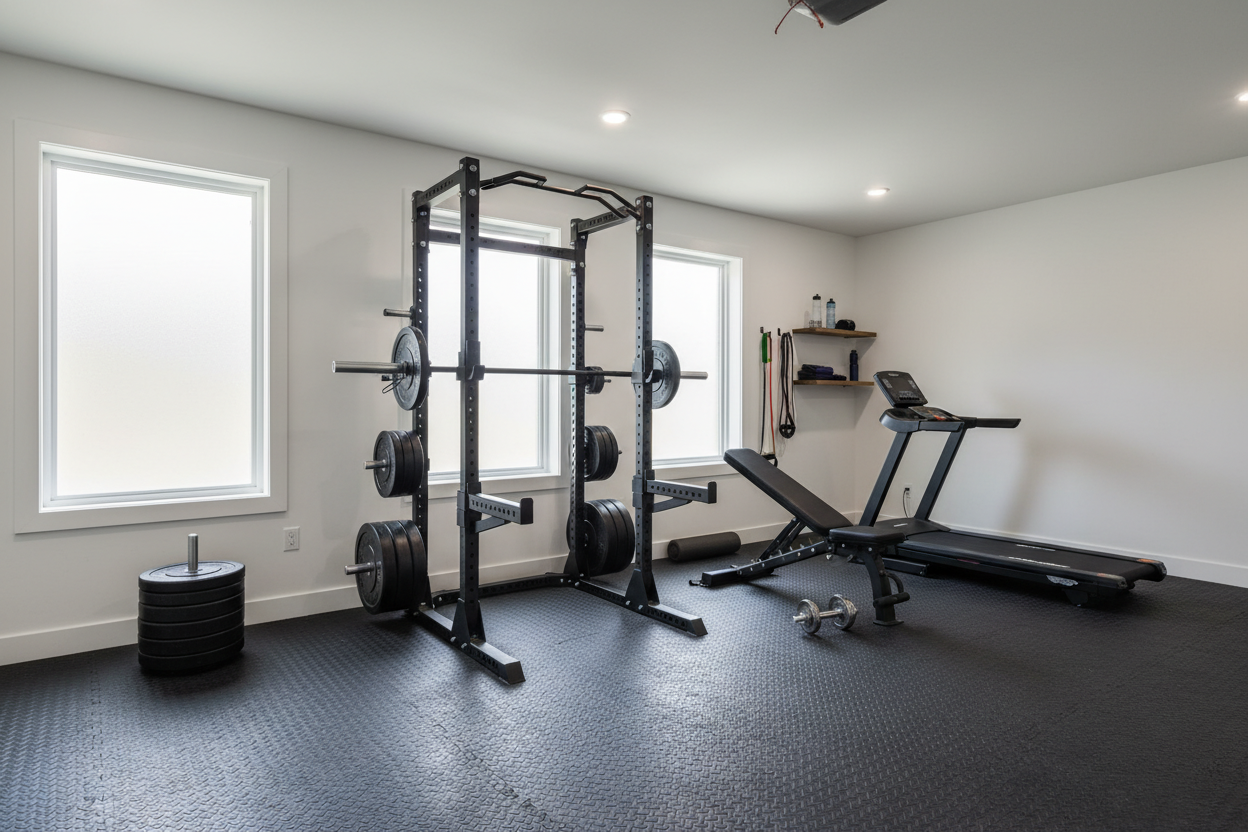
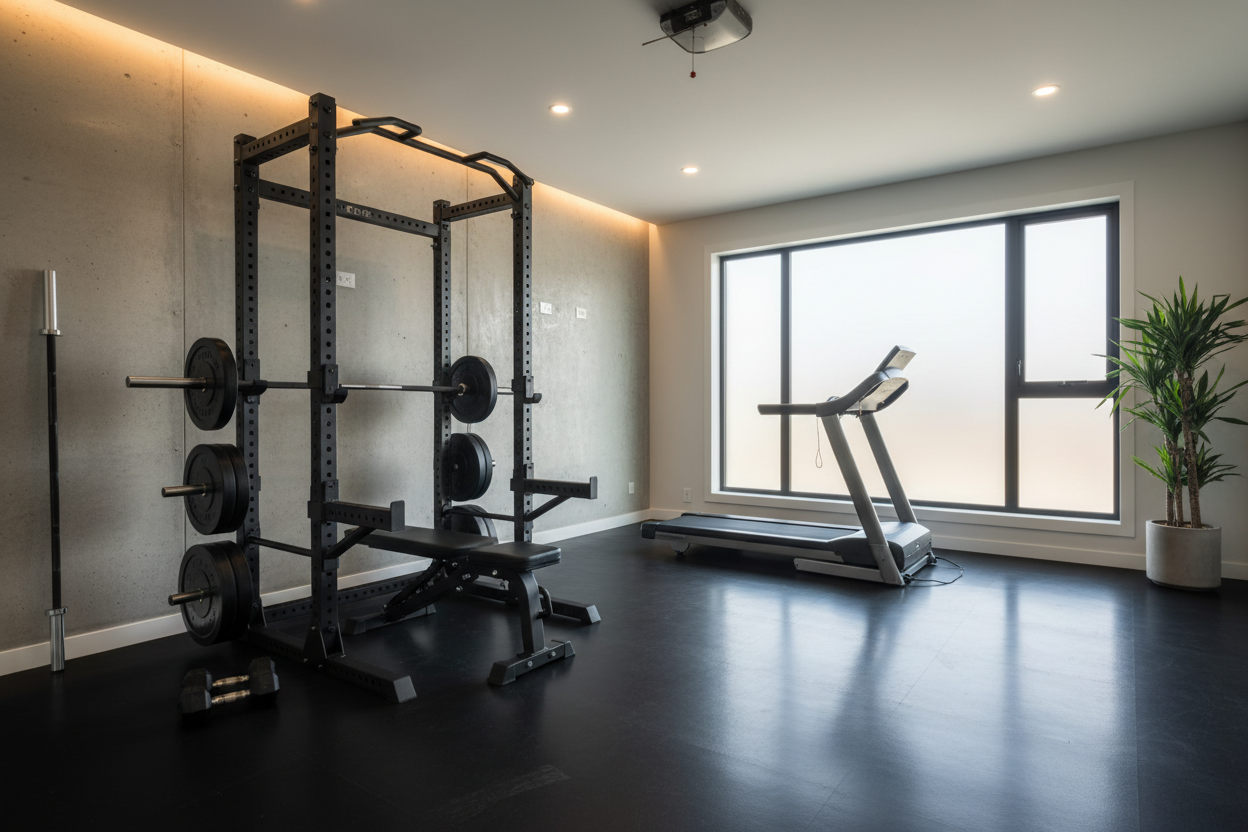
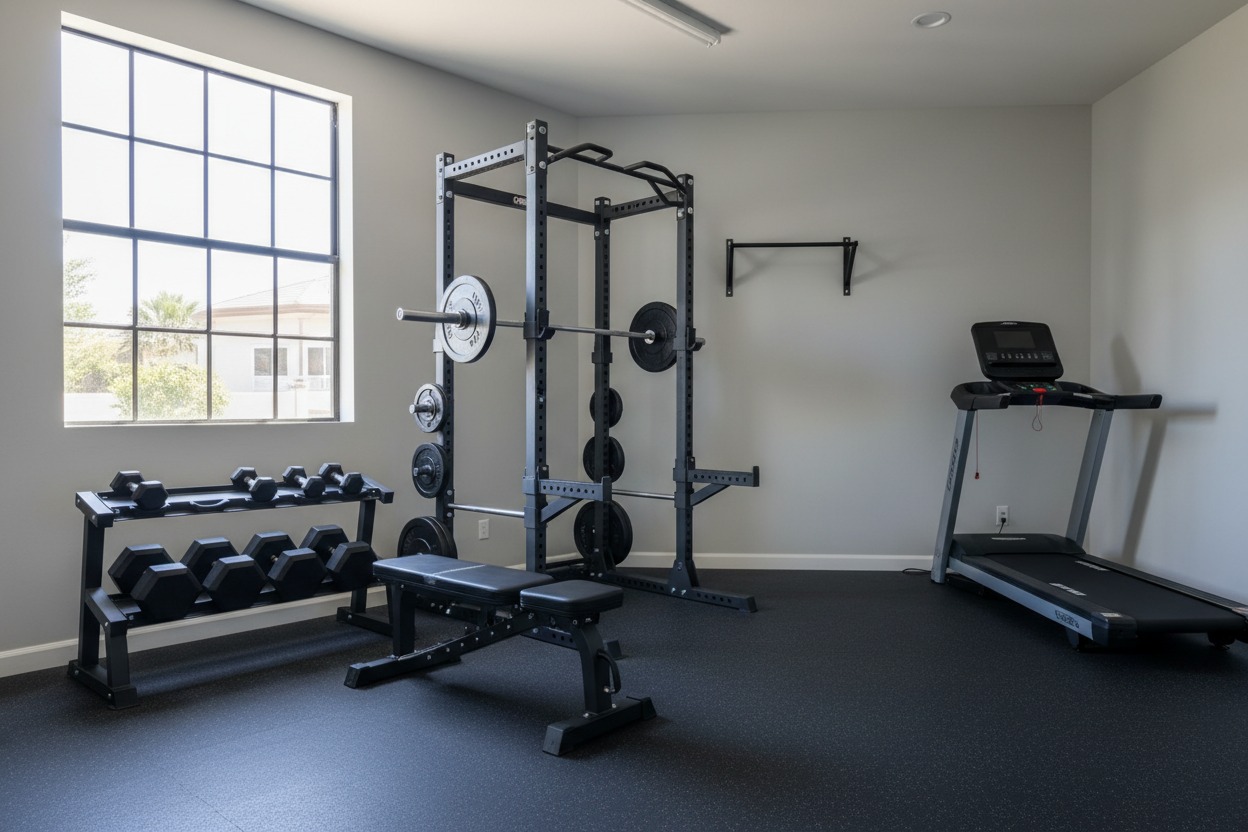
To do this right, you need a stable base. You can't push your limits on a squat if you're worried about the rack tipping over. Investing in a solid setup like the Gxmmat X6 Power Rack Weight Bench Package ensures you have the safety spotters and the 11-gauge steel stability to actually reach that failure point in your double progression. When the equipment is stable, your brain allows your muscles to fire at 100% capacity.
The 'Boring' 4-Move Blueprint
I’ve found that the best training regimen for building muscle usually boils down to four movements: a horizontal push (bench press), a vertical pull (weighted pull-ups), a hip hinge (RDL or deadlift), and a squat pattern. If you do nothing but these four moves three times a week, you will out-gain 90% of the people at your local commercial gym.
By limiting your selection, you eliminate 'junk volume'—those extra sets that make you sweat but don't actually trigger growth. You can find more detail on how to execute these patterns in our guide on Building Real Muscle With The Best At Home Weight Training Equipment. Remember, intensity on four moves beats mediocrity on fourteen moves every single time. My best gains came when I stopped trying to 'hit the muscle from every angle' and just focused on adding 5 lbs to my RDL every two weeks.
When to Finally Add Accessory Work
Curls and lateral raises aren't 'bad,' but they are the icing, not the cake. You should only add isolation work once you’ve mastered your double progression on the big four. If you can’t do 10 strict pull-ups, you have no business doing three different types of bicep curls. Your lats and biceps will grow more from heavy rows than they ever will from pink dumbbells.
Once you are ready for that targeted work, that’s when specialized Weight Lifting Machines or cable attachments become useful. They allow you to isolate a muscle that might be lagging without taxing your entire central nervous system. Use them sparingly to 'fill in the gaps' of your physique, but never let them replace the heavy lifting that actually moves the needle.
Personal Experience: The 6-Month Plateau
Two years ago, I got obsessed with 'functional' training. I was doing single-leg squats on bosu balls and weird rotational cable chops. My strength plummeted, and I actually lost muscle mass. I looked 'fit' but I wasn't big. I had to swallow my pride, go back to a basic 4-day split of heavy compounds, and use a simple notebook to track my double progression. Within three months, I'd put back on the 5 lbs of muscle I lost. The lesson? Don't be too smart for the basics.
FAQ
How many days a week should I train?
For most people, 3 to 4 days is the sweet spot. This allows for 48 to 72 hours of recovery between sessions, which is when the actual muscle growth happens. Any more than that and you usually start sacrificing intensity on your main lifts.
What if I stop making progress on a lift?
If you've hit the same weight and reps for three workouts in a row, it's time for a 'deload.' Drop the weight by 20% for one week, focus on explosive speed, then come back the following week and try to smash your old record. It works like a reset button for your nervous system.
Can I gain muscle with just dumbbells?
Yes, but it's harder to apply double progression because dumbbell jumps are usually 5 lbs per hand (a 10 lb total jump). Barbell plates go down to 1.25 lbs, which allows for much smoother, more consistent growth over the long term.