How I Finally Stuck to a Strength Training Routine at Home
I remember the exact moment I decided to quit my commercial gym. It was a Tuesday at 6:00 PM, and I was fourth in line for a squat rack that looked like it hadn't been greased since the Bush administration. I went home, cleared out a 10x10 space in my garage, and started researching my first strength tr setup. I spent the first year making every mistake possible—buying flimsy gear and trying to follow programs meant for people with zero responsibilities.
Quick Takeaways
- Prioritize 11-gauge steel for racks to ensure stability and safety.
- Start with three full-body sessions a week to avoid burnout.
- Horse stall mats are the best budget flooring for heavy lifting.
- Focus on a high-quality barbell before buying any fancy machines.
Why Instagram Makes Lifting Look Impossible
Social media has convinced everyone that you need a $10,000 climate-controlled facility with custom-branded plates and neon lighting just to get a decent workout. It makes strength and fitness training look like a luxury lifestyle rather than a physical necessity. You see influencers in perfectly matching outfits using machines that cost more than a used Honda Civic, and it's easy to feel like your corner of the basement isn't enough.
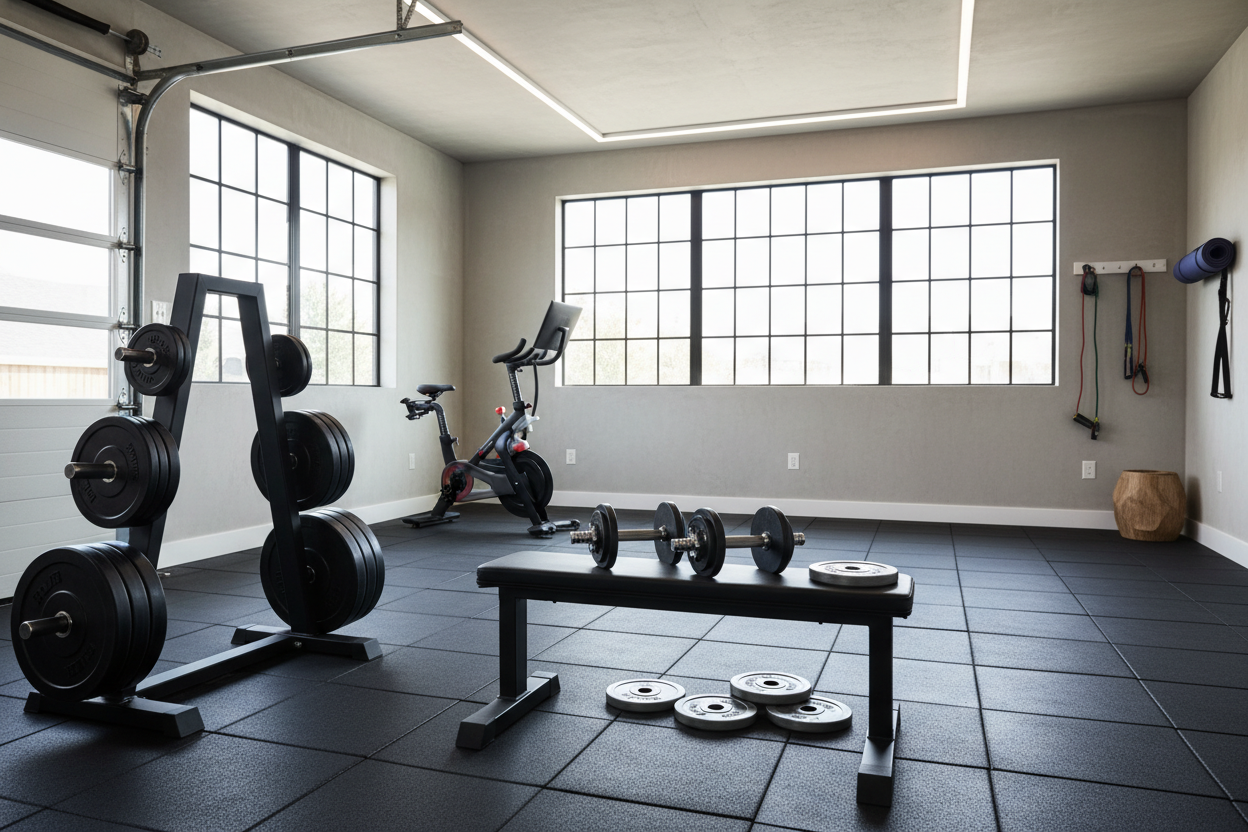
The reality is much grittier. Most of the strongest people I know train in garages that are freezing in the winter and sweltering in the summer. They don't have synchronized lighting; they have a barbell and a drive to get better. Don't let the lack of an aesthetic setup stop you from moving heavy weight. Muscle doesn't know if your plates are color-coded or rusty.
Stripping Down to the Absolute Basics
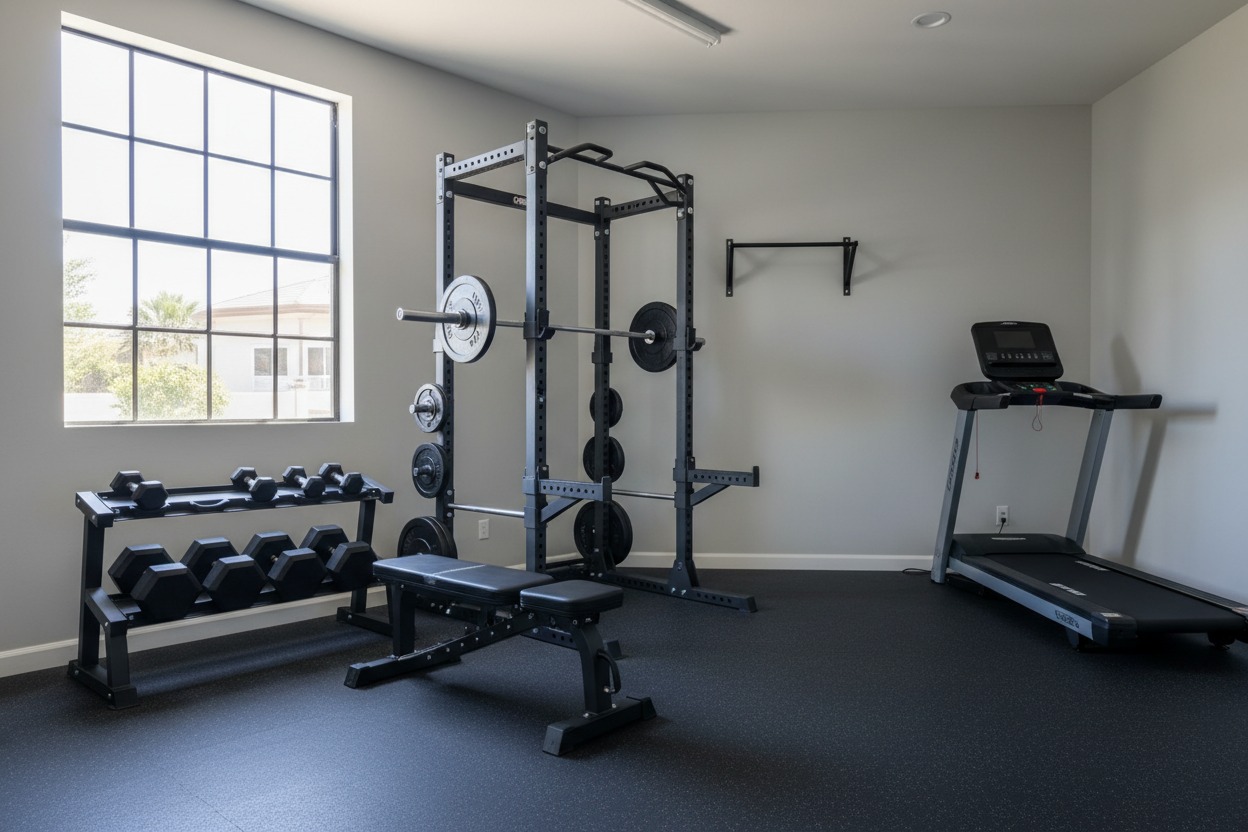
You don't need a 20-piece circuit to see results. To trigger real muscle adaptation, you need to hit the big movements: squats, hinges, pushes, and pulls. Investing in a few core pieces of heavy-duty strength equipment is the most efficient way to replace a commercial gym without losing your floor space. I started with a solid 20kg bar and about 300 lbs of iron plates, which fits easily in a 6x8 ft footprint.
If you're tight on space, adjustable dumbbells are a solid secondary move, but the barbell remains the king of strength training fitness. It allows for the finest increments of progression. I've found that having a dedicated space—even if it's just a single mat and a rack—removes the mental barrier of 'going' to the gym. When the gear is five feet away, you run out of excuses pretty fast.
The Truth About Buying Your First Rack
I once bought a cheap squat stand from a big-box retailer because it was $120 and promised a 500-lb capacity. The first time I racked 225 lbs, the whole frame swayed like a palm tree in a hurricane. There is a massive difference between a budget stand and professional-grade strength training frames that use 3x3 inch steel tubing and 5/8-inch hardware.
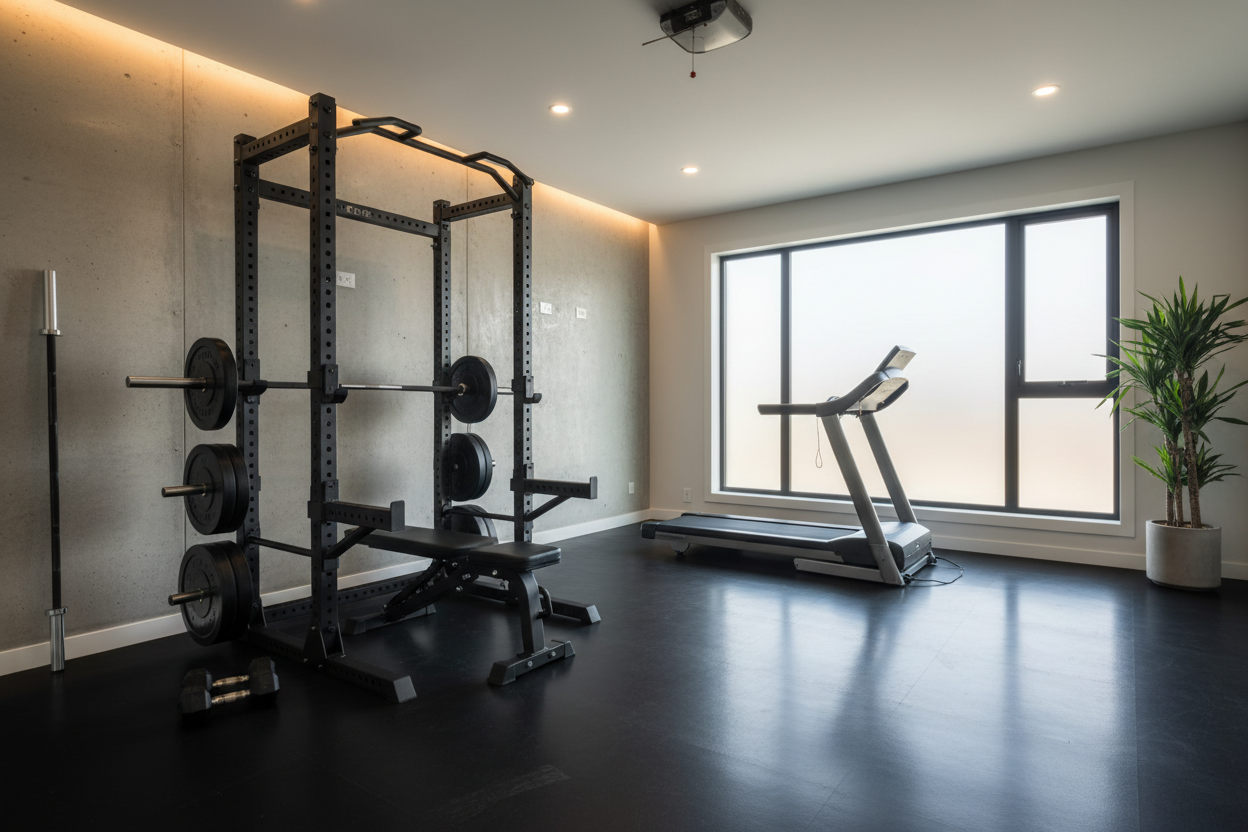
When choosing your frame, measure your ceiling height twice. I've seen guys buy a full power cage only to realize they can't do a pull-up without hitting their head on the rafters. A short-height rack or a half-rack is often a better play for basement lifters. It provides the safety of spotter arms without requiring a vaulted ceiling. This is where your fitness strength is built—on a foundation that won't collapse when you're tired.
Building a Lifting Schedule You Won't Actually Hate
The fastest way to fail is to try training like a professional powerlifter on day one. I used to think I needed two-hour sessions five days a week. I lasted two weeks. Now, I structure my fitness strength training around a 45-minute window, three times a week. It’s manageable, it’s sustainable, and it actually allows for recovery.
Pairing a realistic schedule with the right training fitness equipment makes the process frictionless. If I know my rack is ready and my program is pinned to the wall, I can get in and out before my kids even wake up. Consistency beats intensity every single time. Stop looking for the 'perfect' program and start doing the one you can actually finish on a stressful Wednesday. Fitness strength training is a marathon, not a sprint to injury.
The Only Gadgets Worth Keeping in Your Gym Bag
My gym bag used to be full of junk—vibrating foam rollers, grip strengtheners, and three different types of chalk. Most of it stayed at the bottom of the bag. Now, I only carry a few select strength training accessories that serve a specific purpose. A 10mm leather lever belt and a pair of stiff wrist wraps are non-negotiable for me once the weights get north of 80% of my max.
These items aren't crutches; they are tools to protect your joints and provide tactile feedback during heavy sets. Avoid the cheap velcro belts that pop open under pressure. Real strength training training demands gear that can take a beating. I’ve had the same leather belt for six years, and it’s only gotten better with age. Buy once, cry once.
FAQ
Is it cheaper to build a home gym or keep a membership?
Initially, the home gym is a bigger hit to the wallet. However, when you factor in gas, membership fees, and the value of your time, most setups pay for themselves within 18 to 24 months. Plus, it never closes.
What is the best flooring for a garage gym?
Skip the interlocking foam tiles from the toy aisle. Go to a farm supply store and buy 3/4-inch thick rubber horse stall mats. They are indestructible, deaden noise, and protect your concrete from cracking during deadlifts.
Can I get strong with just dumbbells?
You can definitely build muscle and stay fit, but for absolute peak strength, the barbell is superior because it's easier to load heavy and has more specialized equipment available for safety.