Is Buying a Commercial Hip Thrust Machine for Home Just Insane?
I have spent more time than I care to admit chasing a rolling barbell across my garage floor. You know the drill: you try to wedge a bench against the wall, stack some plates to keep it from sliding, and then spend five minutes shimmying under a loaded bar while trying not to bruise your pelvis. It is a massive pain in the neck—and the hips. That is usually when the late-night scrolling begins, looking at a commercial hip thrust machine and wondering if your car really needs to park inside.
The temptation is real. When you use a club-grade unit at a premium gym, the movement feels buttery smooth. There is no setup, no balancing act, and no awkward roll-of-shame when you hit failure. But bringing that same experience home is a different beast entirely. It is a commitment of both cash and floor space that most people underprepare for.
Quick Takeaways
- Commercial units use 11-gauge steel and oversized bearings that feel significantly more stable than home-grade pivots.
- The footprint is massive; expect to lose at least 25-30 square feet of floor space for a single machine.
- Assembly is a multi-hour job, and these units are nearly impossible to move once they are bolted together.
- Unless you are pushing 400+ pounds regularly, a high-end bench and a dedicated bar might be a smarter investment.
Chasing That Big Box Gym Glute Pump at Home
We have all been there. You finish a heavy set of squats and you want to move straight into accessories, but the thought of dragging the 45-pound bar over to the bench makes you want to skip it entirely. This friction is the number one reason glute gains stall in home gyms. You want the efficiency of a machine where you just sit, strap in, and go.
The problem is that most 'affordable' home versions feel like toys. They wobble, the padding is thin, and the pivot point feels like it was made from a screen door hinge. You start craving that heavy-duty, rock-solid feel of the equipment at the big box gyms. You want something that doesn't shift when you're driving through your heels. But before you pull the trigger, you need to understand exactly what you are paying for.
What Actually Makes It 'Commercial' Grade Anyway?
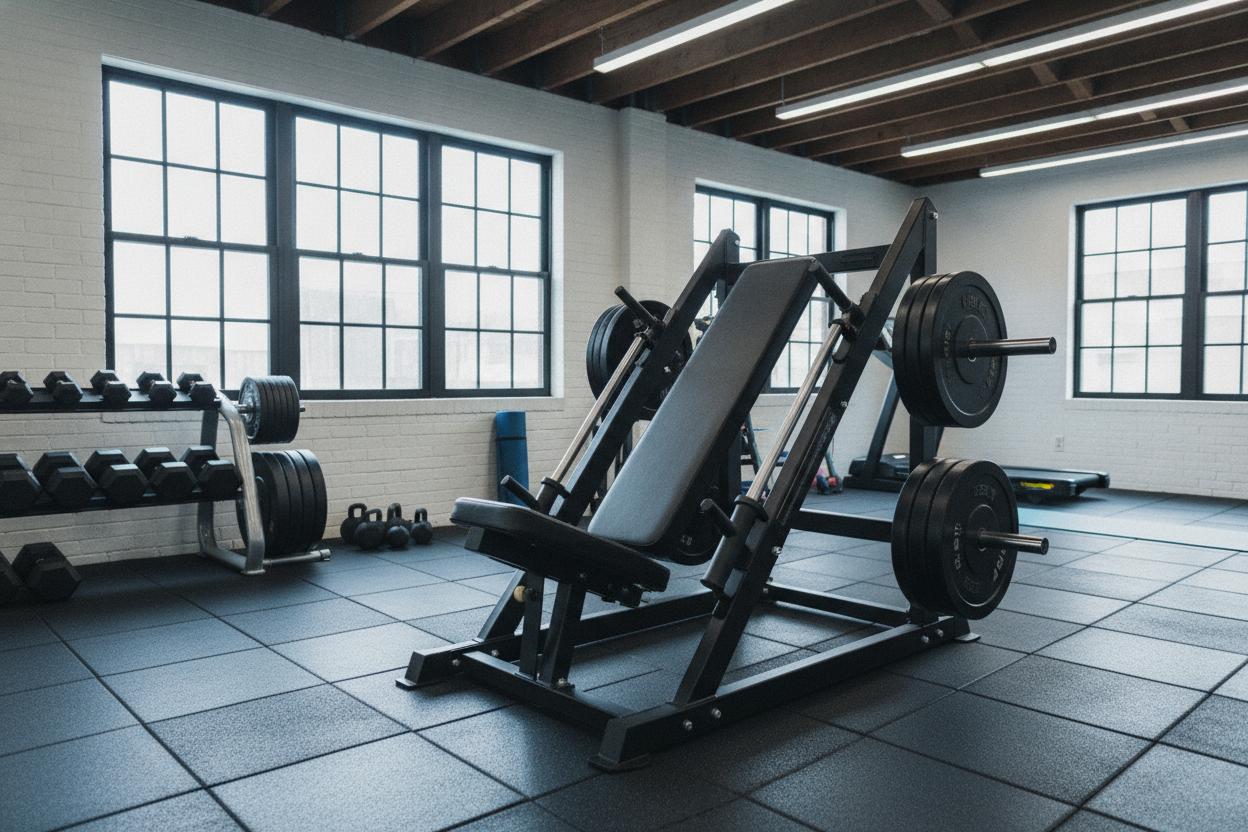
When we talk about a hip thrust machine commercial build, we are talking about overkill. In a gym setting, that machine might see 50 different users a day, some of whom will absolutely abuse it. To survive that, manufacturers use 11-gauge steel—that is the thick, heavy stuff that doesn't flex under a 600-pound load. If you buy a cheap unit and see the frame twisting as you lock out, you'll wish you had spent the extra money.
Then there are the pivot points. A true commercial machine uses oversized industrial bearings, often the same kind you'd find in heavy-duty leg machines designed for abuse. These bearings ensure the arc of the movement stays consistent. If the pivot point is just a bolt through a hole, it will eventually grind down and feel 'crunchy.' A commercial unit stays smooth for decades.
The belt or lap bar is another major differentiator. Commercial units usually feature a thick, heavy-duty pelvic belt or a padded swing arm that can handle 500+ pounds without digging into your hip bones. Cheaper home units often use thin nylon straps that feel like they are trying to saw you in half once the weight gets heavy. You aren't just paying for the steel; you're paying for the comfort that allows you to actually reach true failure.
The Nightmare of Fitting This Beast in Your Garage
Here is the reality check: these machines are absolute floor-space hogs. A standard commercial hip thrust unit is roughly 60 to 70 inches long and about 40 to 50 inches wide. In a standard two-car garage, that is a massive chunk of real estate. Unlike a power rack, which is vertical and versatile, a hip thrust machine is a single-use monolith. It does one thing, and it does it in a way that makes it impossible to park a car or even store a lawnmower nearby.
And don't get me started on the weight. These units often weigh between 300 and 500 pounds unassembled. When the freight truck drops it off in your driveway, you better have a friend (or three) ready to help. Moving those heavy steel components through a standard 32-inch door frame is a puzzle I wouldn't wish on my worst enemy. Once it's assembled and bolted down, it stays there. If you realize three months later that you want to move your rack to that corner, you are in for a very long weekend of disassembly.
Alternatives That Won't Eat Your Entire Floor Plan
If you don't have the space for a 500-pound dedicated unit, you aren't out of luck. There are ways to get that stable, guided feel without the commercial footprint. One of my favorite methods is setting up a smith machine hip thrust. If you already have a Smith machine or a functional trainer with a Smith attachment, you get about 90% of the stability of a dedicated machine with 0% extra footprint.
Another option is using a dedicated standalone hip thrust bench. These are much smaller than full machines. They usually feature a fixed back pad and a footplate, but you still use a free barbell. It solves the 'bench sliding' problem and the 'awkward back angle' problem without requiring a freight delivery. It's the middle ground for people who want a better setup but still need to fit their gym in a single parking stall.
For those on a budget, look for 'hip thrust attachments' that connect to your power rack. These use your rack's uprights for stability. While they aren't as 'set it and forget it' as a standalone machine, they offer a much better experience than a standard flat bench and don't require any extra floor space when they aren't in use.
When You Have No Choice But to Improvise
Sometimes the budget or the space just isn't there, and you have to get creative. If you find yourself training glutes without dedicated machines, focus on stability. The biggest downside to DIY setups is the mental energy spent balancing the bar. Use sandbags, heavy dumbbells, or even a leg extension machine (if you have one) to mimic the movement.
I have seen people use the edge of a sturdy couch or even a low-set adjustable bench with a heavy dumbbell in the lap. It isn't perfect, and it isn't as satisfying as a 11-gauge steel commercial unit, but the muscle doesn't know the price tag of the equipment. It only knows tension. If you can create enough tension without the bar rolling away, you are winning.
The Final Verdict: Overkill or Essential?
So, is it insane? For 90% of home gym owners, yes. It is a lot of money and space for one movement. If you are a casual lifter who just wants to stay in shape, stick to the barbell or a specialized bench. You don't need a 400-pound machine to get a good workout.
However, if you are a competitive powerlifter, a bikini competitor, or someone whose entire training philosophy revolves around lower body posterior chain strength, it might be the best money you ever spend. The lack of friction in your workout routine means you will actually do the work. If a machine makes you 20% more likely to finish your accessory work, that is an investment that pays off in the mirror.
Personal Experience: The Bolt That Got Away
I once bought a used commercial-grade leg unit from a closing gym. I thought I got a steal. When I got it home, I realized it wouldn't fit through my basement door without being completely stripped down. I spent six hours taking it apart, lost a specialized nylon-locking nut in the process, and had to wait ten days for a replacement part from the manufacturer. My advice? Measure your doors, measure your ceiling height, and then measure them again. These machines do not forgive a lack of planning.
FAQ
Do I need to bolt a commercial hip thrust machine to the floor?
Most commercial units are heavy enough to stay put under normal use, but if you are an explosive lifter or using heavy resistance bands, bolting it down is a safety must. It prevents the frame from 'walking' across the floor during heavy sets.
Are plate-loaded or selectorized (weight stack) machines better?
Plate-loaded is almost always better for home gyms. They are cheaper, easier to move, and you can use the plates you already own. Selectorized machines are convenient but significantly more expensive and a nightmare to repair if a cable snaps.
Can I use a commercial hip thrust machine for other exercises?
Not really. Some people try to do single-leg variations or even calf raises on the footplate, but they are very much 'one-trick ponies.' If you buy one, you are buying it specifically for hip thrusts and nothing else.