Is a Williams Strength Rack Actually Overkill for a Garage?
I remember the first time I walked into a high-end collegiate weight room. It wasn't just the smell of chalk and ammonia that hit me; it was the sheer mass of the iron. williams strength racks stood there like armored vehicles, looking like they could survive a direct hit from a meteor without a scratch. Naturally, as I sat in my own garage later that night staring at my wobbling bolt-together rack, I started wondering if I needed that kind of overkill in my life.
Quick Takeaways
- Williams Strength is built for D1 athletes, meaning it uses 7-gauge steel that is significantly thicker than standard home gym gear.
- The footprint is massive; these racks are designed for open facilities, not tight 12x12 garage corners.
- You are paying for American-made welds and a legacy of durability that will outlive your grandchildren.
- For 99% of home lifters, this is a luxury purchase, not a performance necessity.
The Allure of Collegiate-Grade Steel
There is a specific kind of madness that takes over when you start building a home gym. You start with a basic squat stand, and three months later, you are looking at 4-way hole spacing and custom powder coating. We want our garages to feel like the training grounds of the elites. Williams Strength equipment carries that specific aura because it is literally what the biggest guys on the field are using to prep for Saturdays.
But let’s be real for a second. Most of us are not 300-pound linemen. We are guys trying to hit a 405 squat before our joints give out. The appeal of industrial gear is the 'buy once, cry once' mentality. You want to know that if you have to dump a heavy bar, the rack isn't going to fold like a lawn chair. Williams gives you that peace of mind, but it comes with a level of bulk that most residential spaces simply aren't prepared to handle.
What Makes Williams Strength Equipment Different?
When you compare Williams to standard consumer strength equipment, the first thing you notice is the steel. While most high-end home racks use 11-gauge steel (about 1/8th of an inch thick), Williams often steps up to 7-gauge. That is nearly 3/16ths of an inch. It sounds like a small difference until you try to move a single upright and realize it weighs as much as a small child.
The hardware is another story. We’re talking 1-inch bolts that look like they belong on a bridge. The welds aren't just functional; they are clean, stacked-dime works of art. Most consumer brands mass-produce in overseas factories where QC can be hit or miss. With Williams, you’re getting something fabricated in South Carolina. The tolerance on the holes is tighter, meaning your J-cups don't jiggle when you're trying to re-rack a heavy triple. It feels like a single, solid piece of earth rather than a collection of bolted parts.
The Brutal Reality of Footprints and Floor Space
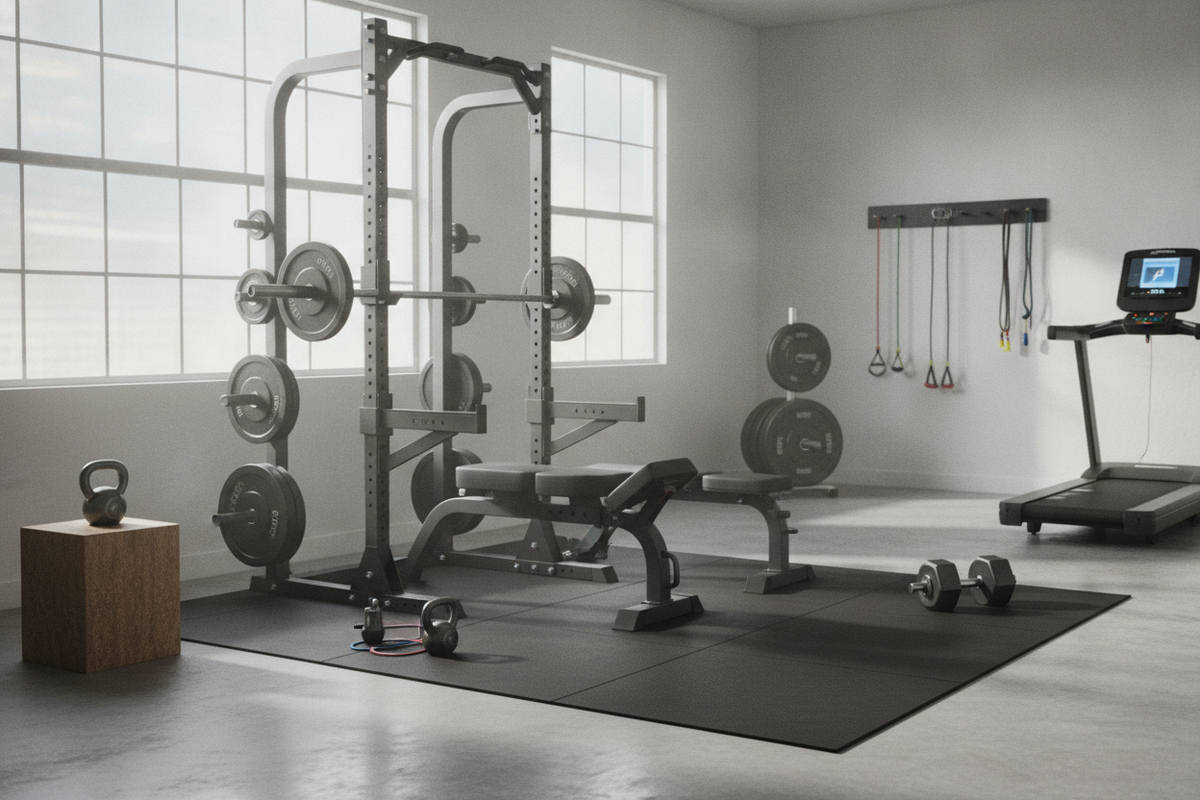
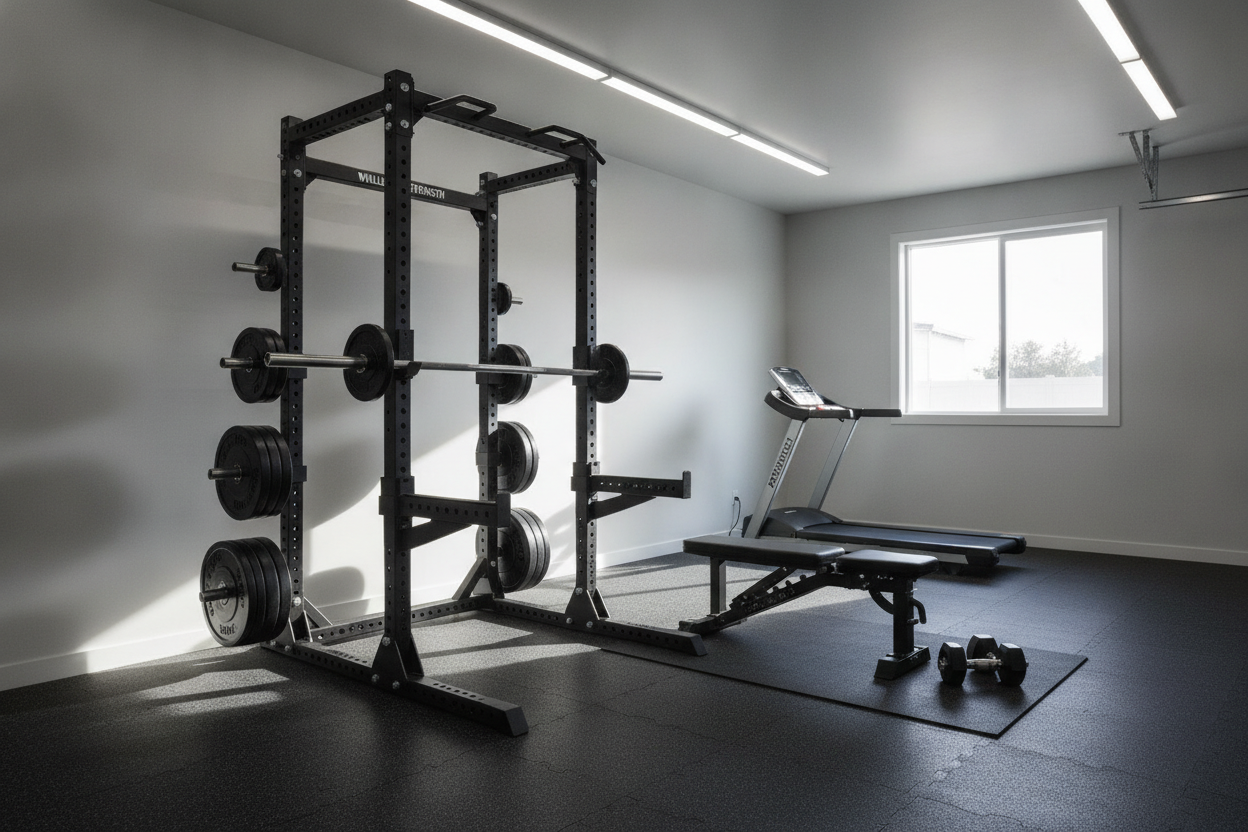
Here is where the dream usually dies for the average garage dweller. A Williams Signature Rack isn't just an upright cage; it often includes integrated platforms, massive plate storage wings, and extended base supports. If you're working with a standard two-car garage, one of these setups can easily eat 40% of your usable floor space. I’ve seen guys buy these only to realize they can no longer open their lawnmower shed or, heaven forbid, park a car.
Before you pull the trigger, you need to map out your floor plan. I highly recommend checking out a practical equipment guide for home spaces to see how much clearance you actually need for bar sleeves and movement. A rack that looks manageable in a 10,000-square-foot facility looks like a mountain in a garage with 8-foot ceilings. You don't want to be the person who can't do pull-ups because the top crossmember is three inches from the drywall.
Will Your Concrete Slab Actually Survive?
Weight is a double-edged sword. A fully loaded Williams rack with a few hundred pounds of plates stored on it can easily tip the scales at 1,200 to 1,500 pounds. That weight is concentrated on four or six small footplates. If your garage slab was poured thin or has existing spiderweb cracks, dropping a heavy deadlift nearby could be the finishing blow. I always suggest industrial-grade stall mats—at least 3/4 inch—to distribute that load, but even then, you're testing the limits of residential concrete.
Cost vs. Benefit for the Average Lifter
Let's talk about the bill. You are going to pay a premium for that 'Made in the USA' sticker and the heavy-gauge steel. For the price of a single Williams rack, you could often outfit an entire home gym with a rack, bar, and plates from a consumer-tier brand. If you are hunting for home gym equipment deals, Williams is rarely going to be on your radar. They don't do 'Black Friday' blowouts like the big box retailers.
Is the extra $2,000 worth it? If you're a competitive powerlifter or someone who just appreciates over-engineered machinery, maybe. But if you're a hobbyist, you are paying for a level of durability you will never actually test. An 11-gauge rack is rated for 1,000+ pounds. Unless you're squatting more than a literal horse, you aren't going to break it. You're paying for the 'feel' and the aesthetic, which is fine—just be honest with yourself about why you're buying it.
The Final Verdict: Who Actually Needs This Stuff?
Williams Strength is for the lifter who wants the absolute best and has the space (and the floor thickness) to support it. It’s for the person who wants their gym to be a statement piece. If you’re tight on space or budget, you’re better off looking at high-end consumer lines and spending the leftover cash on better strength training accessories like high-quality specialty bars or better flooring.
Personally? I love the gear. It feels indestructible. But for my two-car garage, I’d probably stick to something with a smaller footprint and spend the savings on a calibrated set of plates. There is such a thing as 'too much rack' for a small space.
Personal Experience: My Over-Engineered Mistake
A few years back, I bought a commercial-grade half rack from a local college auction. It was a beast. I got it home, bolted it down, and realized I couldn't actually fit my barbell on the rack because the storage pegs for the plates were so wide they hit the side walls. I ended up having to sell it at a loss because I didn't account for the 'wing span' of a collegiate rig. Measure twice, buy once.
FAQ
Do Williams Strength racks need to be bolted down?
Absolutely. Because of the height and the potential for heavy swing on pull-up bars or attachment use, these are designed to be anchored to a concrete slab for safety.
Can I get custom colors?
Yes, that is one of their biggest selling points. They offer a wide range of powder coat options, but keep in mind that custom work usually adds a few weeks to the lead time.
Is the shipping expensive?
Yes. This stuff doesn't come in a few UPS boxes. It arrives on a freight pallet, and because of the weight, the shipping costs can be a significant percentage of the total price.