Building Your Home Strength Sanctuary: A Practical Guide
Walking into a commercial gym can be intimidating. The clanging of heavy weights, the wait for popular machines, and the sheer crowdedness can be enough to make anyone reconsider their fitness goals. This is exactly what led me to transform a spare corner of my garage into my personal strength training haven. The journey taught me that creating an effective home gym isn't about replicating a commercial facility; it's about choosing the right tools for your space, budget, and ambitions.
Laying the Foundation: Essential Free Weight Equipment
The cornerstone of any serious home strength setup is, without a doubt, free weights. They engage stabilizing muscles, offer unmatched versatility, and form the basis of countless compound movements. When I started, I made the common mistake of buying a cheap, vinyl-coated weight set. I quickly learned that investing in quality from the beginning saves money and frustration in the long run.
A pair of adjustable dumbbells is arguably the single most valuable piece of home weight training equipment. Modern versions allow you to change the load with a twist of a dial, replacing an entire rack of fixed dumbbells. This space-saving miracle was a game-changer for my home workouts, enabling everything from shoulder presses and lunges to bent-over rows without constant equipment swapping.
Next, a solid barbell and a set of weight plates are non-negotiable for foundational lifts like squats, deadlifts, and bench presses. An Olympic barbell (7 feet long, 45 lbs) and bumper plates are ideal as they are durable and designed for heavy lifting. If your space or budget is limited, a smaller, 5-foot barbell set can be a perfect starting point for home weightlifting equipment.
Choosing Your Support System: Racks, Benches, and Platforms
Safety is paramount when lifting heavy weights alone. A power rack or squat stand is the most critical safety purchase you can make. It provides secure catch bars for failed lifts, a stable structure for pull-ups, and anchor points for resistance bands. My power rack is the centerpiece of my home gym; it gives me the confidence to push my limits safely.
Pair your rack with an adjustable bench. A good bench that can incline, decline, and lay flat opens up a world of exercises for your chest, shoulders, and arms. Look for one with a sturdy frame and comfortable, durable padding. This single accessory dramatically increases the utility of your dumbbells and barbell.
To protect your floors and dampen sound, consider a lifting platform or interlocking rubber gym tiles. When I dropped a 45-pound plate on my bare concrete floor, the resulting chip was a loud and clear reminder to invest in floor protection. A simple platform made from plywood and horse stall mats is an affordable and highly effective solution for home weight training systems.
Beyond the Barbell: Smart Resistance and Accessory Tools
While free weights are king, incorporating other forms of resistance can create a well-rounded and sustainable home strength training routine. Resistance bands are incredibly versatile, portable, and affordable strength training accessories. I use them for warm-ups, adding tension to bodyweight exercises, and even assisting with challenging pull-ups.
Kettlebells offer a unique dynamic that combines strength, cardio, and mobility. The ballistic movements, like swings and snatches, build explosive power and grip strength in a way that dumbbells often cannot. A single 16kg or 20kg kettlebell can deliver a brutally effective full-body workout.
Don't overlook a simple pull-up bar. Whether mounted in a doorway or on your power rack, it's fundamental for developing upper back and arm strength. If you're not yet able to do a full pull-up, resistance bands can provide the assistance needed to build up to it progressively.
Maximizing a Small Space: My Personal Garage Gym Evolution
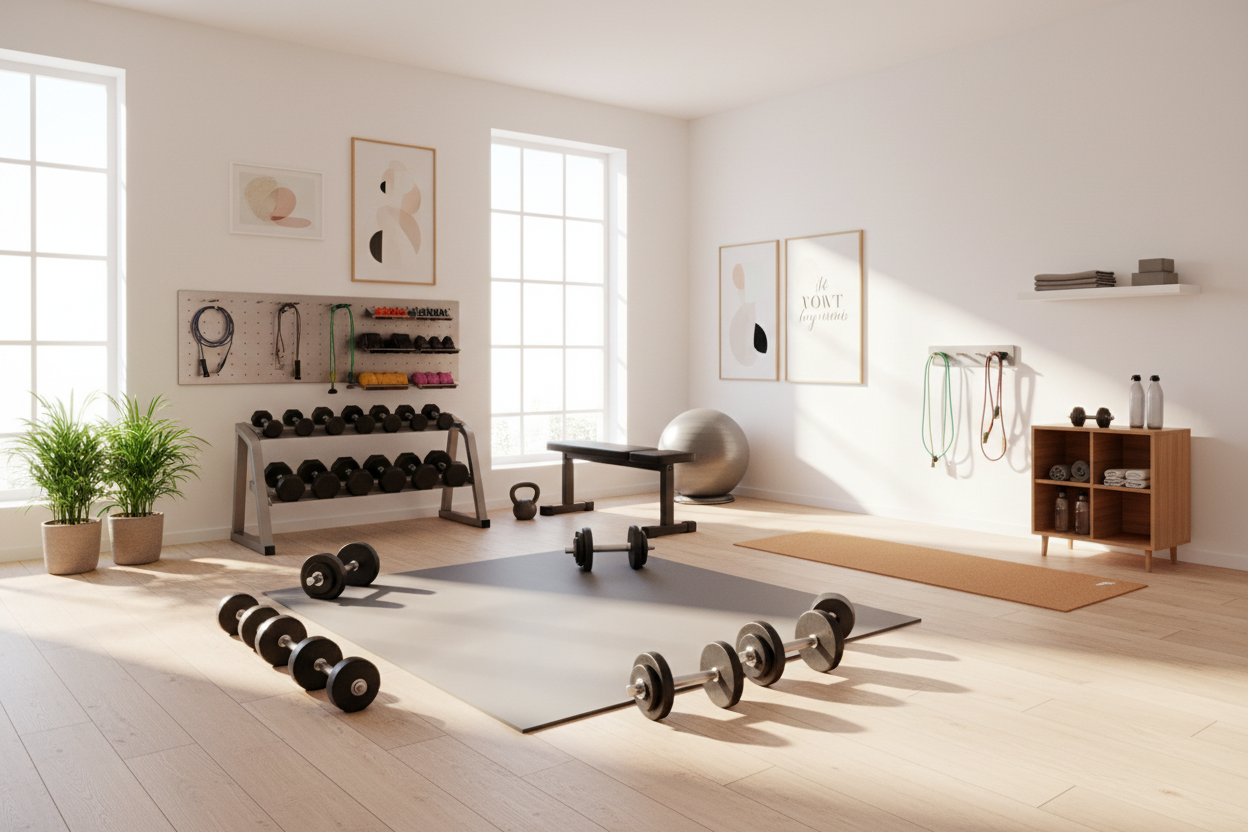
My own home strength equipment journey began in a 6x8-foot space. I started with just a pair of adjustable dumbbells, a foldable bench, and a yoga mat. This minimalist setup was surprisingly effective for building a solid fitness base. As my strength and commitment grew, so did my collection. I saved up for a power rack, which then necessitated the barbell and plates. The key was adding pieces strategically, ensuring each new item filled a specific gap in my training capabilities.
The biggest lesson I learned was to prioritize multi-functional equipment for weight training at home. Every piece I brought in had to justify its footprint. A dip station that also works for back extensions, a bench with multiple angles, a rack with multiple attachment points—these choices prevented my sanctuary from becoming a cluttered storage room.
Crafting Your Perfect Home Weight Training System
Building your home gym is a personal project. Your ideal setup will depend on your training style, available space, and budget. A bodybuilder might prioritize a full dumbbell rack and a cable machine, while a powerlifter will focus on a heavy-duty rack and a deadlift platform. Someone focused on general fitness might find that a set of resistance bands, kettlebells, and a suspension trainer meets all their needs for resistance training at home.
Start with the essentials—a way to add resistance (dumbbells or bands) and a stable surface (a bench or the floor). From there, listen to your training. What movement do you consistently find yourself wanting to do? What limitation is holding you back? Let your practice guide your purchases, and you'll build a home strength training equipment collection that is perfectly tailored to help you achieve your goals, one rep at a time.