Is 15 Minutes a Day the Best Way to Workout for Beginners?
I remember my first real gym membership. I spent sixty bucks a month to feel like a confused tourist in a room full of chrome machines I didn't understand. I would grind for an hour, wake up unable to sit on the toilet, and quit by Tuesday. If you are currently staring at a pair of dusty sneakers, I am here to tell you that the best way to workout for beginners isn't a marathon—it is a sprint.
Quick Takeaways
- Consistency beats intensity every single time for long-term fat loss and muscle gain.
- 15 minutes is the psychological sweet spot for building a permanent habit.
- Compound bodyweight movements provide the highest return on investment.
- A dedicated, high-traction floor space is the only essential piece of gear.
Why Your Hour-Long Fitness Routine Is Doomed to Fail
The biggest mistake I see novices make is trying to train like they are preparing for a bodybuilding show. You see a pro’s sixty-minute leg day and think that is the entry fee. It is not; it is a trap. When you go from zero to sixty, you aren't just building muscle; you are building massive amounts of systemic fatigue and soreness that your brain eventually associates with pain, not progress.
Most beginners quit within three weeks because they cannot sustain the all-or-nothing mentality. If your workout requires a pre-workout drink, a twenty-minute commute, and a fifteen-minute shower afterward, you have turned a quick session into a two-hour ordeal. Life will get in the way of that. The best way to workout for beginners is to lower the barrier to entry so far that it is actually harder to skip the workout than it is to just do it.
The 'Micro-Dose' Concept: Why Shorter Is Better
I am a massive advocate of the Micro-Dose. Instead of one soul-crushing workout on a Saturday, you do fifteen minutes every single day. Why? Because the hardest part of training isn't the heavy lifting—it is the act of starting. When you tell yourself it is only fifteen minutes, you eliminate the dread. It is a psychological win that keeps you coming back.
Neurologically, you are also winning. You are teaching your nervous system to fire those muscle fibers daily, which builds technique much faster than sporadic, long sessions. If you are looking for structure, some of the best at home workout programs for beginners use this exact philosophy. They focus on high-frequency, low-friction movement. You do not need to be gasping for air on the floor. You just need to move your body through a full range of motion, get your heart rate up, and finish feeling better than when you started.
Which Workout Is Best for Beginners When Time Is Short?
If you have only got fifteen minutes, you cannot waste ten of them doing bicep curls or calf raises. You need the big movers. When people ask me which workout is best for beginners, I always point them toward a total-body circuit that hits every major muscle group in one go.
You want movements that recruit multiple joints simultaneously. Think squats for your legs, push-ups for your upper body, and planks for your core. If you do three rounds of five basic movements with thirty seconds of rest between them, you have done more for your metabolism and mobility than an hour of wandering around a commercial gym looking for an open treadmill. Keep it simple. Complexity is the enemy of the beginner.
The Minimalist Home Setup You Actually Need
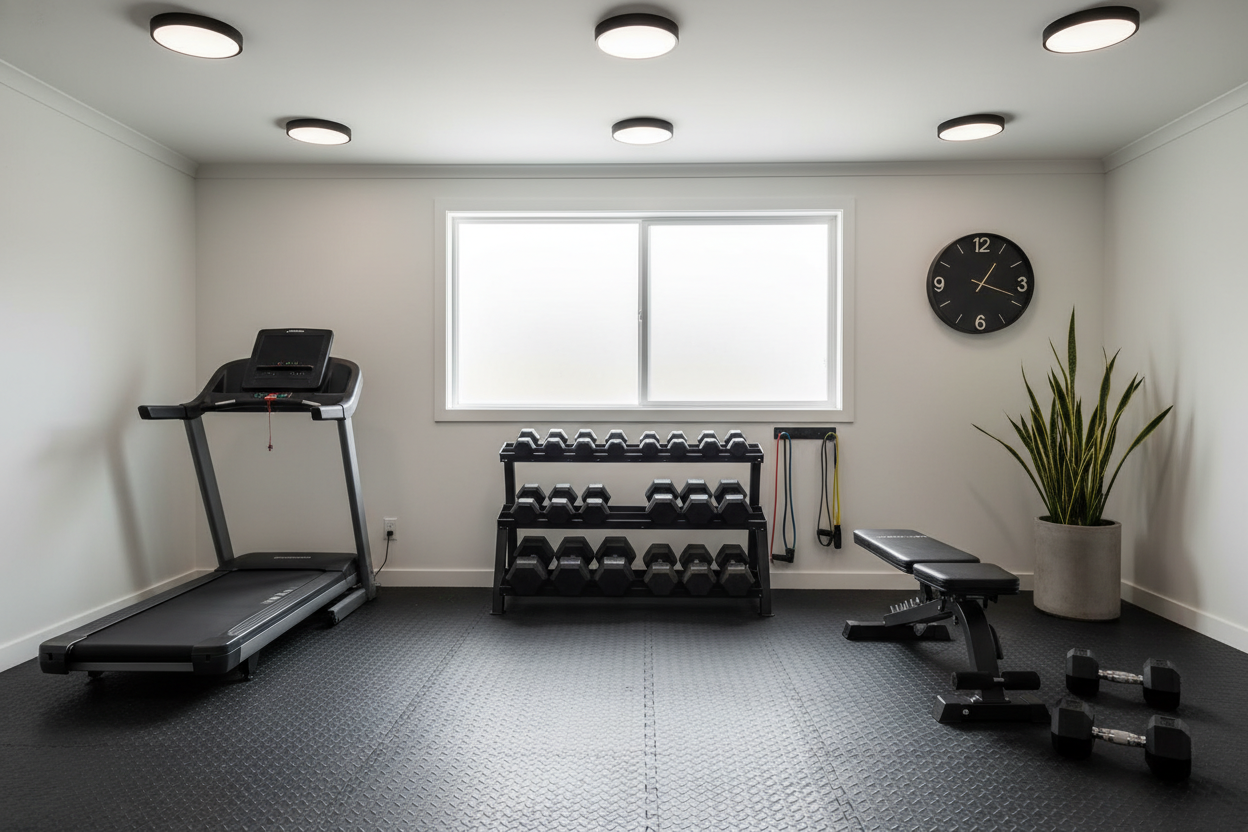
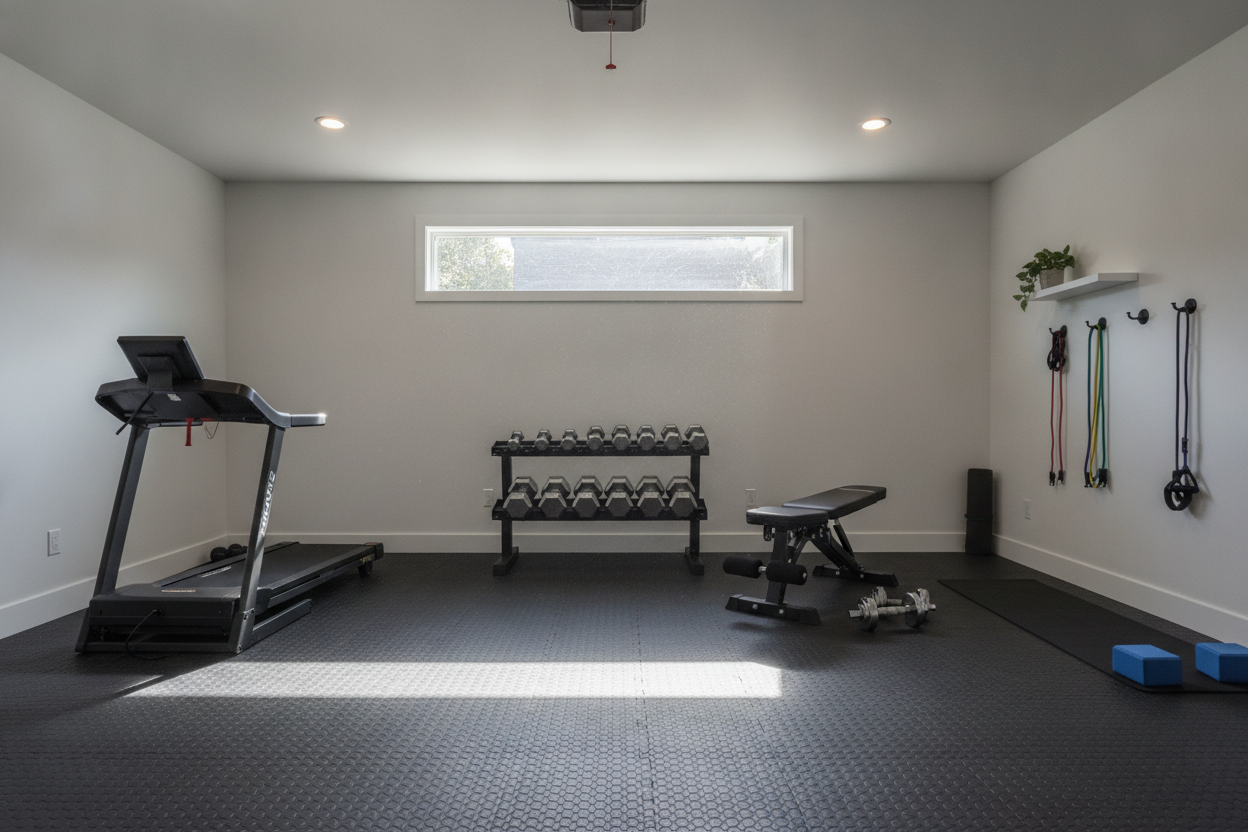
You do not need a three-thousand-dollar power rack or a set of adjustable dumbbells that cost as much as a used car. In fact, too much gear early on is just a distraction. What you actually need is a dedicated space where you won't slip, trip, or bruise your knees on cold concrete or hardwood floors. I have seen people try to do burpees on a cheap yoga mat only to have it slide across the floor like a slip-and-slide.
I tell everyone to start with a large exercise mat for home gym use. This isn't just about comfort; it is about defining your zone. When you step on that mat, it is go-time. If you have the space in a garage or living room, a heavy-duty 6x8 mat is the gold standard. It is big enough that you can do lateral lunges or sprawl out for burpees without your hands ending up on the carpet. It stays put, it muffles noise, and it is way more durable than those flimsy foam tiles that pull apart like a jigsaw puzzle.
Simple Exercise Instructions for Beginners (No Equipment Required)
Let's get practical. Here are three exercise instructions for beginners that form the backbone of a fifteen-minute micro-dose:
- The Air Squat: Stand with feet shoulder-width apart. Imagine sitting back into a chair that is just a bit too far behind you. Keep your chest up and your heels glued to the floor. If your heels lift, you have gone too deep for your current mobility. Stop, reset, and go again.
- The Incline Push-Up: If a floor push-up feels impossible, do not do them on your knees. Put your hands on a sturdy couch or a kitchen counter. Keep your body in a straight line from head to heels. Lower your chest to the surface, then push back up. This builds better core tension.
- The Bird-Dog: Get on all fours. Extend your right arm forward and your left leg back simultaneously. Hold for two seconds, feeling your core stabilize. Switch sides. This is the secret sauce for back health and core strength without the neck strain of sit-ups.
How to Know When You're Ready to Graduate to Weights
Do not buy a single kettlebell or dumbbell until you have hit thirty consecutive days of your fifteen-minute routine. Seriously. Use that month to prove to yourself that you can show up. Most people buy gear as a way to buy motivation, but motivation is a feeling—discipline is a habit. Once you can move through fifteen minutes of bodyweight squats and push-ups with perfect form and zero drama, then you have earned the right to start adding weight. Your joints will thank you, and your wallet will too.
My Honest Experience
When I first started my garage gym, I bought a cheap three-hundred-pound barbell set from a big-box store. I hadn't even mastered a bodyweight hinge yet. I ended up tweaking my lower back in week two because I was chasing weight instead of movement quality. I spent the next month staring at that barbell while I recovered. I would have been much better off spending those four weeks on a decent mat just learning how to move my own body. Learn from my ego—master the micro-dose first.
FAQ
Can I really see results in 15 minutes?
Yes. Fifteen minutes of high-quality movement won't out-train a terrible diet, but it will kickstart your metabolism and, more importantly, change your identity from someone who sits to someone who moves.
Do I need to do cardio too?
If you keep your rest periods short during your fifteen-minute circuit, your heart rate will stay elevated. That is your cardio. Do not overcomplicate it by adding boring treadmill sessions yet.
What if I am too sore to move?
That is the beauty of the micro-dose—you shouldn't be. If you are so sore you cannot walk, you went too hard. Scale back the intensity so you can show up again tomorrow. The goal is frequency, not failure.