If You Could Only Choose One Exercise for Legs, This Is It
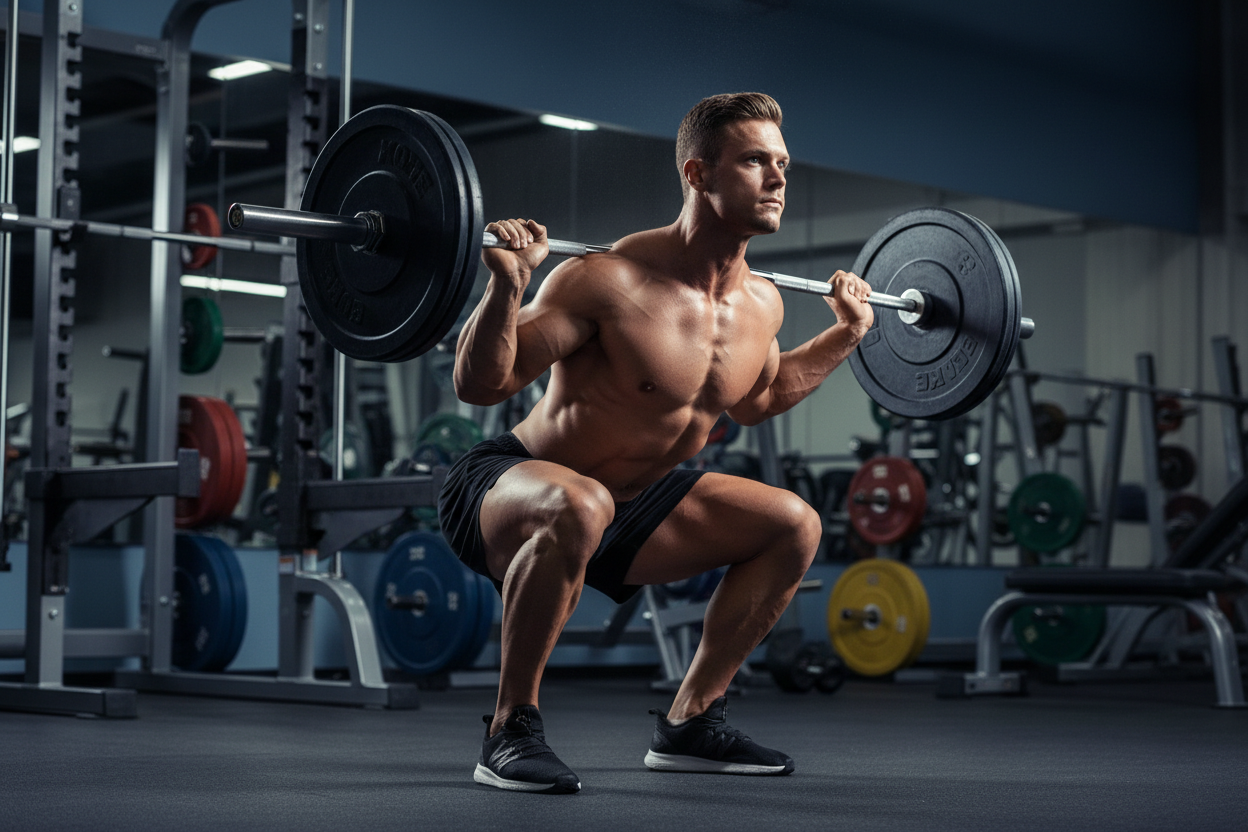
We all face the same dilemma eventually. You are short on time, the gym is packed, or you simply want the absolute highest return on investment for your physical effort. The debate over the king of lower body movements usually ends with the barbell back squat. While the back squat is undeniably effective for raw power, it has limitations regarding symmetry and functional balance. If you are forced to select just one exercise for legs that builds muscle, corrects imbalances, and bulletproofs your joints, the crown actually belongs to the Bulgarian Split Squat (Rear Foot Elevated Split Squat).
This movement is often the one people love to hate. It is uncomfortable and demanding, but the payoff is unmatched. Unlike bilateral movements where your stronger side can compensate for the weaker one, this exercise forces every muscle fiber to account for itself. It provides the heavy loading capacity of a squat with the athletic benefits of a lunge.
Why Unilateral Training Beats the Barbell Squat
Most lifters spend years under a heavy barbell trying to drive their numbers up. I spent a good portion of my lifting career obsessed with the classic back squat. I chased a double-bodyweight squat for years, but I kept running into a recurring issue: nagging lower back tightness and a right knee that felt unstable during hikes or runs. I was strong, but I wasn't functional.
I decided to strip the weight off the bar and focus exclusively on single-leg work for eight weeks. The humility was instant. I could squat 300 pounds, but I couldn't balance with 40-pound dumbbells on one leg. By forcing each leg to work independently, I exposed a massive strength deficit in my left glute. Once I corrected that asymmetry, not only did the knee pain vanish, but my bilateral squat numbers eventually went up. The lesson was clear: strength built on an asymmetrical foundation is just an injury waiting to happen.
When you perform a standard squat, your lower back takes a significant beating. The spinal compression is high. With the Bulgarian Split Squat, you can achieve similar levels of muscle activation in the quads and glutes with a fraction of the spinal load. You get the hypertrophy without the lower back hangover the next morning.
The Hidden Benefit: Stability and Joint Health
Aesthetics and raw strength are usually the primary goals, but longevity requires stability. This is where the Bulgarian Split Squat separates itself from machines like the leg press. It is arguably the most effective movement among all leg stabilizer exercises because it removes your base of support.
When you stand on one leg, your body naturally wants to tip over. To prevent this, a complex network of smaller muscles must fire aggressively. Your gluteus medius (the side of your hip), your adductors (inner thigh), and the intricate muscles around the ankle joint work overtime to keep you upright. These are the stabilizers. In a leg press or a Smith machine squat, these muscles essentially go to sleep because the machine stabilizes the weight for you.
Neglecting these stabilizers is why many strong gym-goers blow out a knee during a pickup basketball game. They have the horsepower (quad strength) but lack the steering and suspension (stabilizer strength). By mastering the split squat, you integrate the prime movers with the stabilizers, creating a leg that is as functional as it is muscular.
Anatomy of the Perfect Rep
Executing this move requires more focus than simply sitting down and standing up. The setup dictates the muscle recruitment. If you are too close to the bench, you might experience knee pain. Too far, and you stretch the hip flexor of the rear leg too aggressively.
The Setup
Find a bench or a sturdy box that is roughly knee-height. If the surface is too high, you will likely arch your lower back, which defeats the purpose. Sit on the edge of the bench with your legs extended straight out. Where your heels touch the ground is roughly where your front foot should be planted when you stand up. This is a good starting benchmark.
The Descent
Place one foot back on the bench, laces down. Keep your chest proud but allow a slight forward lean of the torso. This lean engages the glutes. Lower your hips straight down—think of it as an elevator, not an escalator. Your back knee should almost touch the floor. At the bottom, your front thigh should be parallel to the ground.
The Drive
Push through the mid-foot and heel of the front leg to return to the top. Do not lock out the knee completely; keep tension on the muscle. Ensure your front knee tracks over your toes and doesn't cave inward. That inward collapse is exactly what we are trying to fix.
Common Mistakes to Avoid
Despite its benefits, this exercise is frequently butchered. The most common error is placing the rear foot too high. This locks the pelvis in an anterior tilt and jams the lumbar spine. If you feel a sharp pinch in your lower back, lower the surface for your back foot.
Another issue is the "tightrope walk." If you align your front foot directly in front of your back foot, you will have zero balance. Think of your foot placement like train tracks, not a tightrope. Keep some width between your feet to maintain a solid base.
Rushing the rep tempo is also a mistake. Because balance is a factor, bouncing out of the bottom position uses momentum rather than muscle tension and increases the risk of a groin strain. Control the descent for a count of two or three seconds, pause briefly, and then drive up.
Programming This into Your Routine
If you are treating this as your primary leg movement, it needs to be performed early in the workout when your central nervous system is fresh. Doing these at the end of a session when you are fatigued leads to sloppy form and balance failure.
For strength, aim for 3 to 4 sets of 6 to 8 repetitions with heavier dumbbells or a kettlebell. If your goal is muscle growth, 3 sets of 10 to 12 reps usually creates a massive metabolic demand. You will likely find yourself winded; the cardiovascular demand of working one large limb at a time is surprisingly high.
You can hold weights in several ways. Holding two dumbbells at your sides is the standard. Holding one dumbbell in the opposite hand of the working leg (contralateral loading) increases the demand on the glute medius, making it an even more potent stabilizer drill. For advanced lifters, a barbell across the back allows for maximum loading, though bail-out options are limited if you lose balance.
The Verdict
We often overcomplicate training with complex machines and intricate splits. However, if you were stranded with limited equipment and could perform only one exercise for legs, the Bulgarian Split Squat covers every base. It builds size, enhances athletic potential, and fixes the structural flaws that bilateral squats hide. It is the ultimate insurance policy for your knees and hips, wrapped in a painful but productive package.
Frequently Asked Questions
Can I really build big legs without heavy back squats?
Yes, absolutely. While back squats allow for the heaviest total load, the Bulgarian Split Squat places a tremendous amount of tension on the target muscles. Because the load is concentrated on one leg, the relative intensity is high enough to stimulate significant hypertrophy without needing 400 pounds on your back.
What should I do if I keep losing my balance?
Start by performing the movement next to a wall or a squat rack that you can lightly touch for support. Focus on staring at a fixed point on the floor about six feet in front of you rather than looking in the mirror. Also, ensure your feet are hip-width apart rather than on a single line.
Is this exercise safe for people with bad knees?
Generally, yes, and it is often used in rehabilitation settings. Because the shin stays relatively vertical and the load is lower than a back squat, there is often less shear force on the knee joint. However, you should start with body weight and control the depth to ensure it is pain-free before adding load.