I Tried to Combine Workout Routine Styles and Totally Crashed
I remember standing in my garage at 6:00 AM, staring at a 315-pound barbell and feeling like I’d been hit by a freight train. I had spent the previous three weeks trying to combine workout routine styles from two different elite programs. I wanted the legs of a track cyclist and the back of a powerlifter, but all I ended up with was a twitching eyelid and a deadlift that had regressed by twenty pounds.
The DIY home gym crowd is notorious for this. We buy the rack, the plates, and the fancy cardio gear, then we try to use it all at once. We think more is better, but in the world of physiology, more is often just a shortcut to an injury that keeps you off the platform for six months.
Quick Takeaways
- The 'Interference Effect' is real; your body struggles to adapt to opposing signals like maximum strength and high-volume endurance simultaneously.
- Use a 'High-Low' model to stagger central nervous system (CNS) stress across your week.
- Recovery isn't just 'not lifting'; it's actively managing the signals you send your muscles.
- Quality flooring is non-negotiable when switching between heavy iron and high-impact conditioning.
The Day I Realized Two Programs Don't Make One
I used to think I was an outlier. I’d pull a solid program from a trusted source like the Workout Hub, see another 'Spartan-style' conditioning plan, and decide to run them concurrently. I figured if one program was good, two must be twice as good. I was dead wrong.
Within a month, my morning resting heart rate had spiked by ten beats. My joints felt like they were filled with dry sand. I wasn’t getting faster, and I certainly wasn’t getting stronger. I was just getting tired. This is the trap of the hybrid athlete: trying to serve two masters without a plan. You can't just smash a powerlifting block into a marathon prep and expect your body to say 'thanks.' It will revolt.
The Biological Reason Your 'Do It All' Plan Is Failing
When you try to force a heavy combine workout routine, you run into the interference effect. At a cellular level, strength training triggers the mTOR pathway, which is all about protein synthesis and building muscle. Long-duration cardio triggers the AMPK pathway, which focuses on energy efficiency and mitochondrial density. These two pathways often act like a seesaw; when one is slammed down, the other is hard to lift.
If you're following a Complete Guide To Building A Strong Chest Workout Routine, your body needs resources to repair those micro-tears in your pectorals. If you immediately go out and run a grueling five miles, you’re diverting those resources away from repair and toward fuel. You end up in a catabolic state where you’re breaking down more than you’re building. You aren't 'hacking' your fitness; you're just spinning your wheels in the mud.
How to Actually Combine Workout Routine Goals
To avoid the crash, you need to adopt the 'High-Low' method. This means you group your high-intensity, high-CNS-demand work together. If you’re going to hit heavy triples on squats or do max-effort sprints, do them on the same day or within the same 24-hour window. Then, follow that with a 'Low' day—walking, light mobility, or very easy recovery rowing.
This gives your nervous system a chance to actually reset. If every day is a 'medium-hard' day because you're trying to do everything, your CNS never recovers. You stay in a perpetual state of 'gray zone' training where you're too tired to get truly strong and too heavy-legged to get truly fast. Focus on one primary goal per block, and let the other goal sit in 'maintenance' mode.
Drafting a Realistic Combine Workout Schedule
A sustainable combine workout schedule in a home gym should look like a wave, not a flat line of exhaustion. For most people with a job and a life, a 5-day split is the sweet spot. Monday might be heavy lower body and short sprints (High), Tuesday is a long walk and foam rolling (Low), Wednesday is heavy upper body (High), Thursday is active recovery (Low), and Friday is a full-body 'metcon' or circuit.
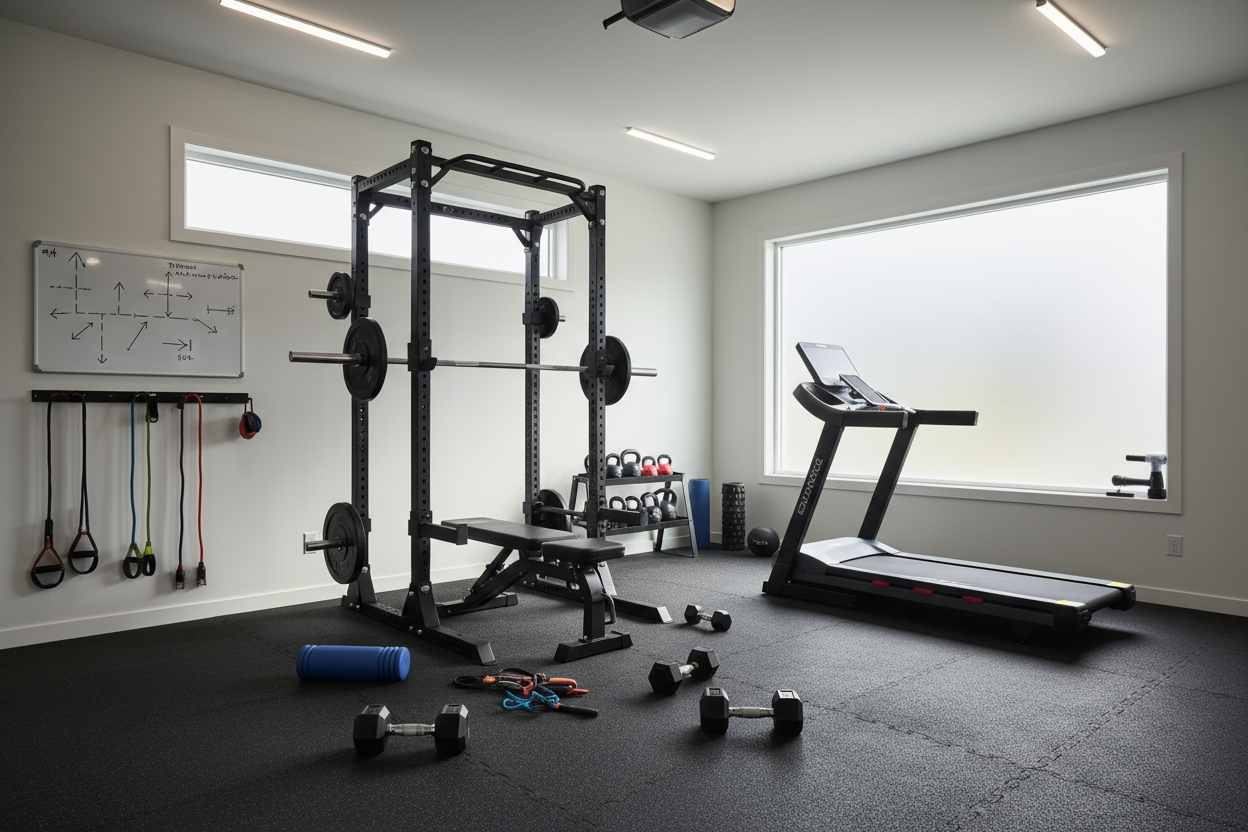
Having the right setup makes this transition easier. I’ve found that having the Top Equipment To Enhance Your At Home Workout Routine—like adjustable dumbbells and a solid pull-up bar—allows you to pivot from strength to conditioning without wasting time. You want to spend your energy on the lift, not on hunting for a missing spring collar or clearing space in a cluttered garage.
Why Your Floor Dictates Your Hybrid Success
If you're going to be a hybrid athlete, your floor takes a beating. One minute you're dropping 225-lb deadlifts, and the next you're doing burpees or lateral bounds. You can't do that on bare concrete without destroying your shins or cracking your slab. Most thin yoga mats are useless here; they slide around the moment you start moving fast.
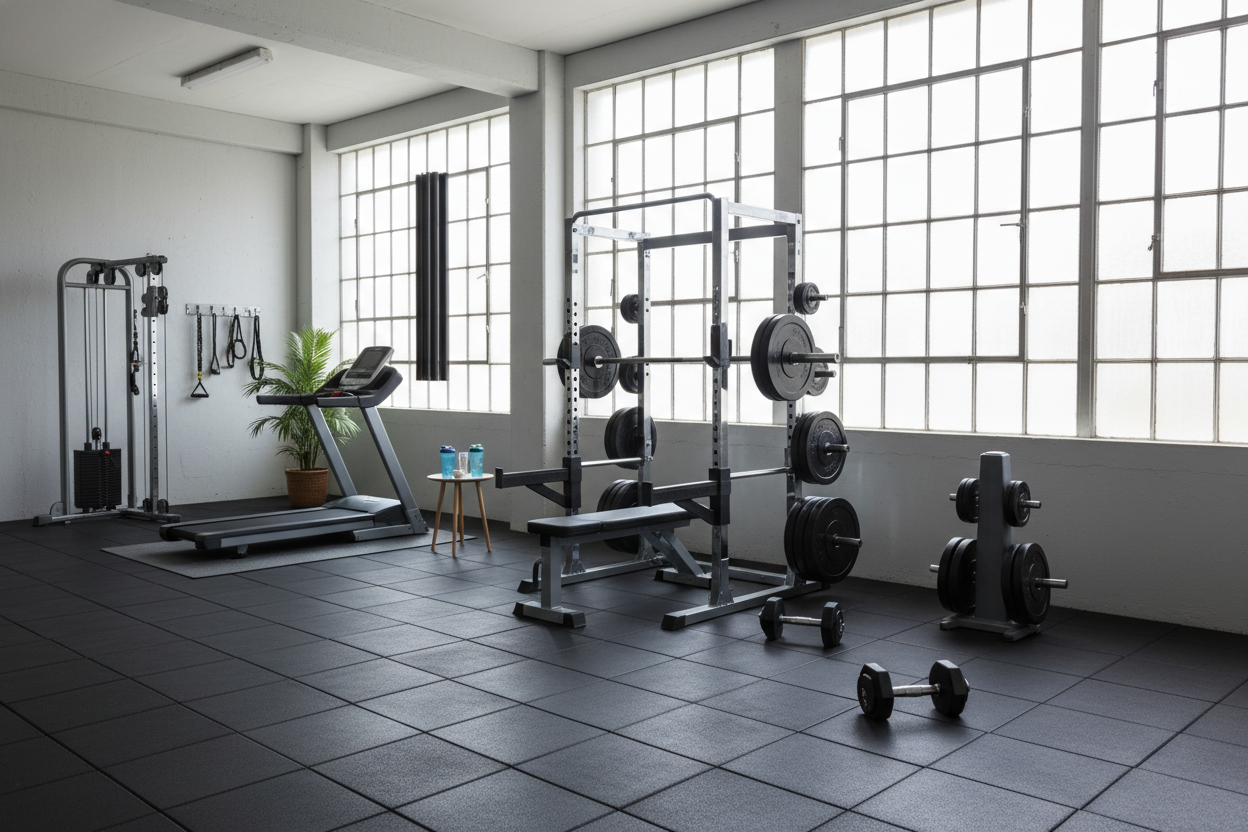
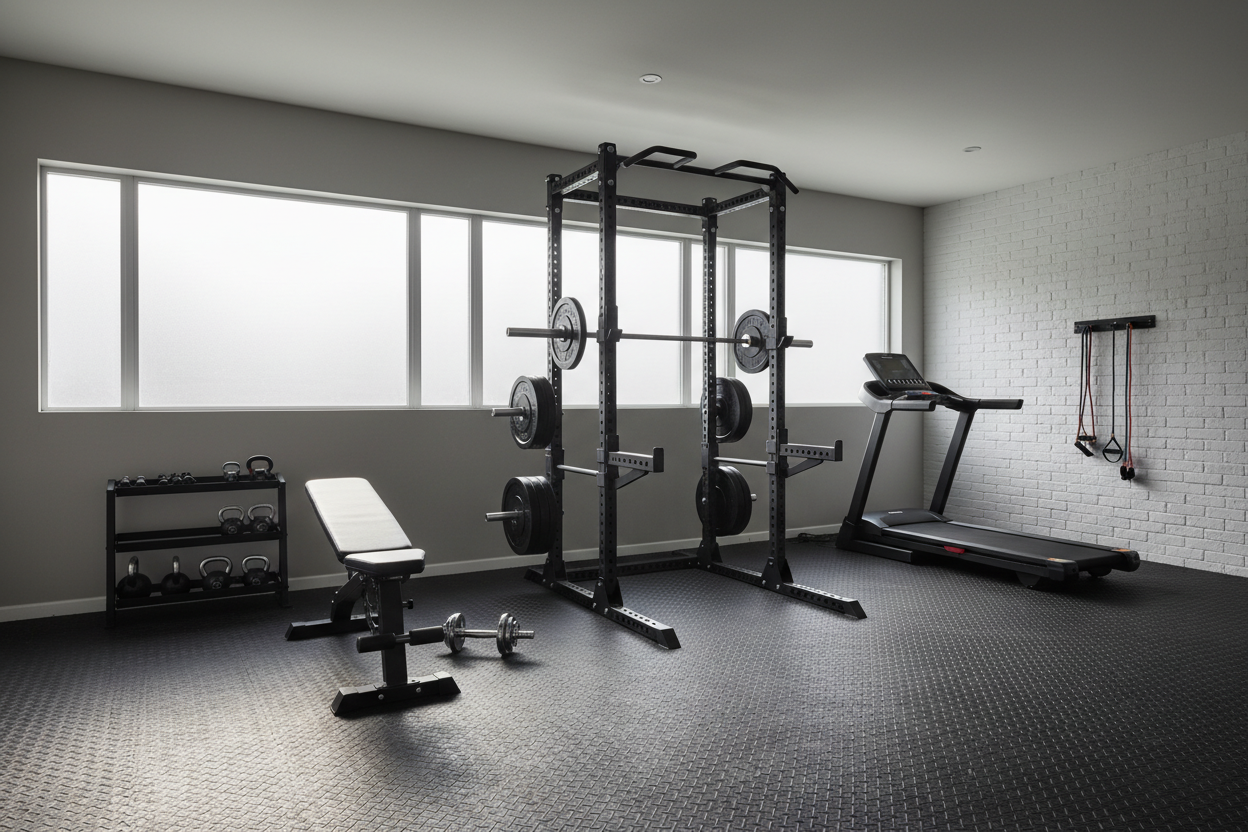
I eventually invested in a 6X8Ft Exercise Mat Yoga Mat Gym Flooring For Home Workout, and it changed the vibe of my garage entirely. It’s dense enough that my rack doesn't leave permanent divots, but it has enough 'give' for high-impact plyometrics. If you're serious about a hybrid routine, you need a dedicated space that supports both the heavy iron and the sweaty floor work. Don't cheap out on the foundation of your gym.
FAQ
Can I do cardio and weights on the same day?
Yes, but try to space them by at least six to eight hours. If you have to do them back-to-back, do the one that is your highest priority first. If you want to get strong, lift first. If you're training for a race, run first.
How do I know if I'm overtraining?
Look for 'non-functional overreaching' signs: poor sleep quality, a loss of appetite, and a lack of motivation to train. If the thought of going into your gym makes you want to nap instead, you've probably pushed the interference effect too far.
Is a hybrid routine better than a specialized one?
It depends on your 'why.' You will never be the strongest person in the world or the fastest runner using a hybrid plan. But for 95% of us who just want to look good, feel capable, and carry all the groceries in one trip, it’s the most rewarding way to train.