I Stopped Chasing the Pump and Finally Built Strength Training Muscle Mass
I spent years chasing the 'burn.' I’d spend ninety minutes in my garage doing high-rep sets of isolation moves, sweating through my shirt and feeling like a hero because my biceps were swollen. But when I looked in the mirror a month later, I looked exactly the same. I was exhausted, but I wasn't growing. It wasn't until I stopped trying to get tired and started trying to get strong that I finally saw real **strength training muscle mass** appearing on my frame.
Quick Takeaways
- Mechanical tension is the primary driver of growth, not just feeling 'the burn.'
- Your body only builds muscle as a survival response to a perceived physical threat.
- Stop training to absolute failure; leave 1-2 reps in the tank for better recovery.
- Quality gear like a stable bench is non-negotiable for heavy home lifting.
The Difference Between Getting Tired and Getting Bigger
Most people confuse metabolic stress with progress. You can get a massive pump and feel like your skin is going to tear just by doing fifty air squats, but that doesn't mean you're forcing an adaptation. Your body is incredibly stingy. It doesn't want to carry extra muscle because muscle is metabolically expensive to maintain.
To trigger **strength training muscle growth**, you have to present your central nervous system with a mechanical threat it hasn't seen before. This is the 'adaptation demand.' If the weight isn't heavy enough to signal to your brain that your current muscle fibers are inadequate, your body will simply recover to its previous state rather than building new tissue.
How Does Strength Training Build Muscle Without a Gym?
You don't need a 20,000-square-foot commercial facility to trigger hypertrophy. The biological mechanism is the same whether you're in a dungeon gym or a luxury club: mechanical tension, muscle damage, and metabolic stress. When you lift a heavy load, you create micro-tears in the muscle fibers. During rest, your body doesn't just 'fix' these tears; it overcompensates by making the fibers thicker and stronger.
The secret is maintaining that tension throughout the entire range of motion. If you're bouncing the bar off your chest or using momentum, you're leaking the very tension that signals growth. Understanding Why 'Tension Leaks' Are Ruining Your Muscle Mass Strength Training is the first step toward making 20-pound dumbbells feel like 40-pounders.
You Can't Fake Mechanical Tension (The Setup)
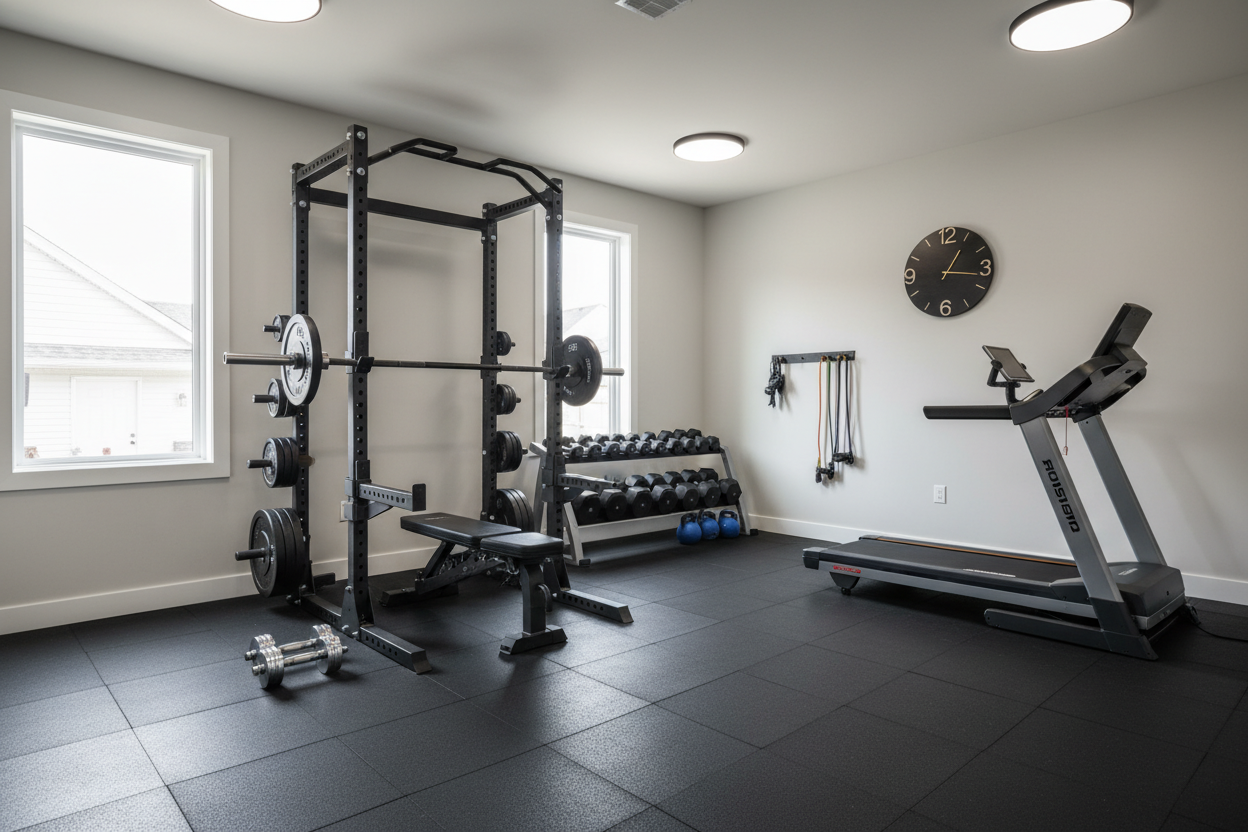
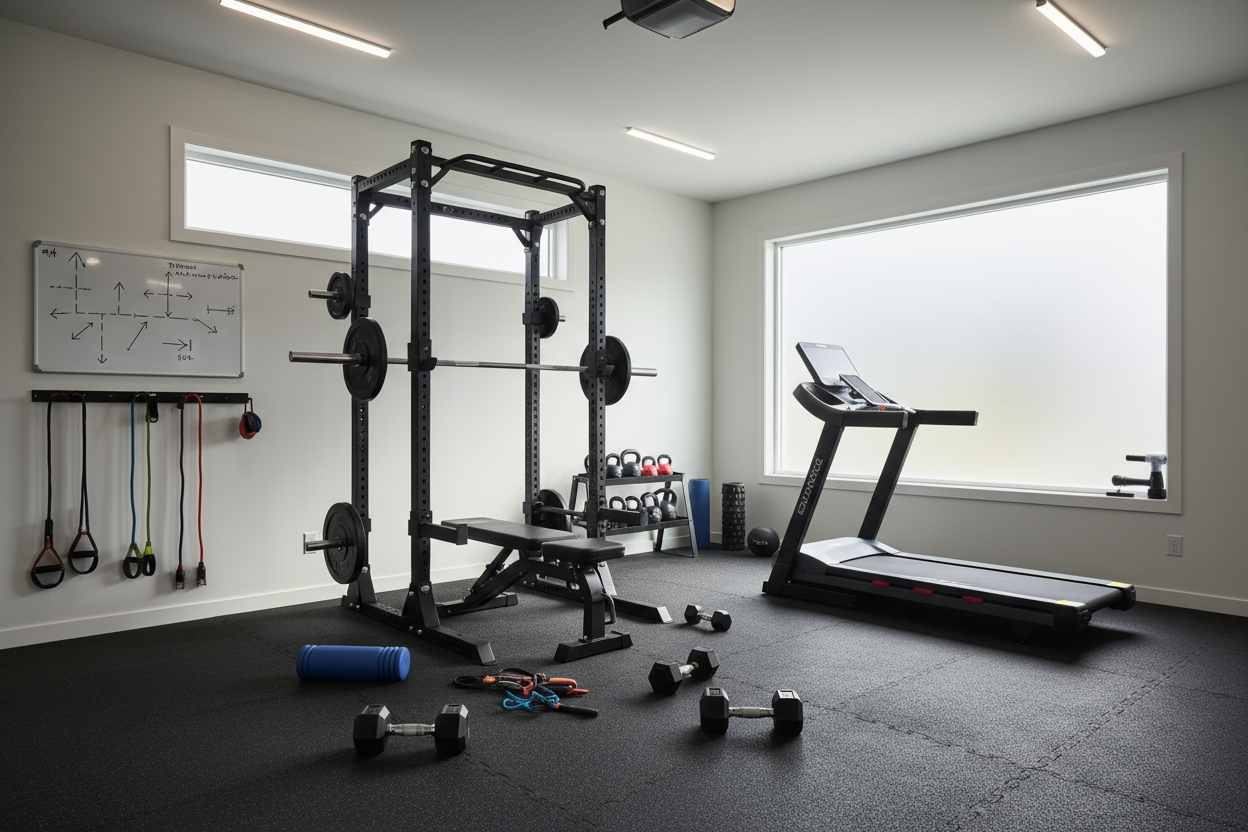
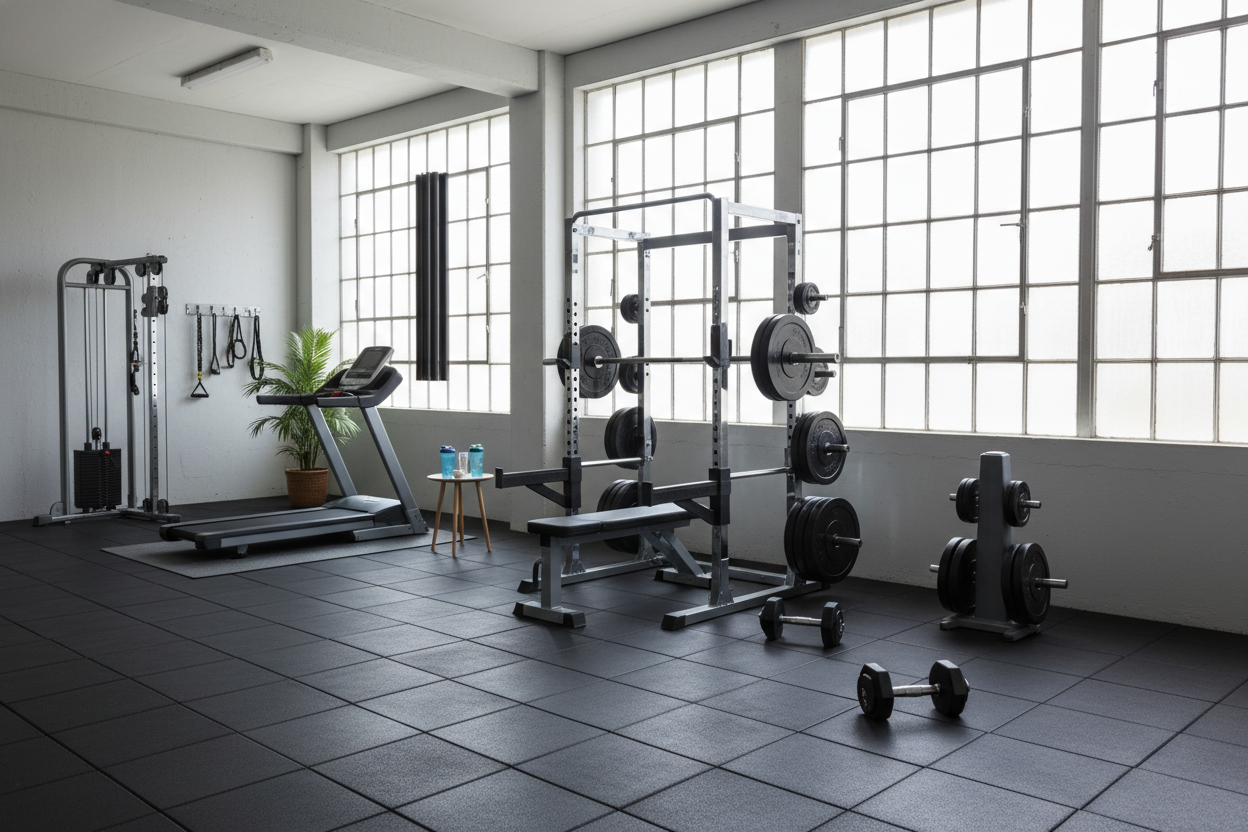
At some point, 'doing more reps' stops working. To continue building **strength training muscle mass**, you eventually need to move heavier objects. For home lifters, this is where the equipment reality check happens. You can't safely press 80-pound dumbbells on a cheap, wobbly bench you found for fifty bucks on a clearance rack.
I personally look for gear that can handle at least 600 lbs of total capacity. A rock-solid Gxmmat Adjustable Weight Bench is a foundational piece because it allows you to hit different angles—incline, flat, and decline—without worrying about the frame buckling. Once you have a stable base, you can invest in the rest of your Strength Equipment, like adjustable dumbbells or a power rack, to ensure you can progressively overload your muscles for years.
Can Strength Training Build Muscle If You Never Hit Failure?
There is a persistent myth that if you don't drop the weight in a heap of exhaustion, the set didn't count. This is a fast track to central nervous system burnout. Research shows that **does strength training build muscle** effectively even if you stop short of failure? Absolutely. In fact, it often works better for long-term mass.
I use the 'Reps in Reserve' (RIR) method. If I think I could do 10 reps of an overhead press before my form breaks, I stop at 8 or 9. This provides enough stimulus to trigger growth without frying my nervous system so badly that I can't train again for four days. Consistency beats intensity every single time.
Organizing Your Week to Maximize the Growth Signal
If you're only hitting chest on Mondays, you're leaving gains on the table. The muscle protein synthesis window usually closes after about 48 to 72 hours. If you wait a full week to hit that muscle again, you’re spending four days of that week in a neutral state rather than a growth state.
The most effective way to ensure **does strength training build muscle mass** is to hit each muscle group twice a week. I highly recommend you Ditch the Bro Split in Your Strength Training Program for Muscle Growth and move to an Upper/Lower or Push/Pull/Legs routine. This keeps the growth signal 'on' almost constantly while allowing for enough recovery between sessions.
My Honest Mistake
Early on, I bought a cheap barbell with 'bolt-on' ends instead of actual sleeves with bearings. Every time I tried to do a heavy row or clean, the weights wouldn't rotate, and the torque almost snapped my wrists. I was so frustrated by the gear that I stopped lifting heavy altogether and went back to light 'pump' work. My progress died for six months. Don't let bad equipment dictate your training intensity. Buy the right tool once.
FAQ
Do strength training build muscle faster than bodyweight exercises?
Usually, yes. It's much easier to incrementally add 5 lbs to a barbell than it is to find a slightly harder version of a push-up. External weights allow for more precise progressive overload.
How does weight training build muscle if I'm on a diet?
It acts as a 'muscle sparing' signal. By lifting heavy, you tell your body that it needs to keep its muscle tissue even while calories are low, forcing it to burn fat for energy instead.
Will strength training build muscle if I only have 30 minutes?
Yes. Focus on 'big' moves like squats, deadlifts, and presses. Two sets of heavy compounds are worth more than ten sets of tricep kickbacks when you're short on time.