I Tried These 3 Weird Floor Exercises for Shoulder Stability
I spent years chasing a 225-lb overhead press, only to end up with shoulders that clicked like a socket wrench every time I reached for the top shelf. We're all searching for the ultimate exercises for shoulder development, but most of us just keep stacking plates on a barbell until something snaps. I've spent enough time in my garage gym to know that sometimes the best way to get stronger isn't to add more weight, but to change how you move.
Quick Takeaways
- Closed-chain floor movements (hands fixed) offer better joint stability than traditional presses.
- Floor-based drills recruit the rotator cuff and serratus anterior more effectively.
- A high-density surface is mandatory to prevent wrist and palm bruising.
- These exercises can be used as heavy finishers or standalone stability sessions.
Why You Need to Rethink What Works Out Shoulders
Most lifters get stuck in the overhead press rut. We think if we aren't shoving a heavy barbell toward the ceiling, we aren't doing what works out shoulders. I used to be that guy. I'd spend forty minutes on military presses and lateral raises, wondering why my joints felt like they were full of gravel. The problem is that these are 'open-chain' movements—your body is fixed, and the weight moves freely. This puts a massive amount of shear force on the glenohumeral joint.
When you shift to closed-chain movements, your hands are the fixed point and your body moves around them. This forces a completely different neurological response. If you've been scouring the web for the best exercise to strengthen shoulders, you've probably seen a dozen variations of the dumbbell press. But moving your own 200-lb frame through space requires a level of stability that a 50-lb dumbbell simply can't replicate. It’s about teaching the deltoid to work in harmony with the scapula, rather than just firing in isolation.
The Physics of Closed-Chain Shoulder Training
Here is the science without the lab coat: when your hand is planted on the floor, your brain prioritizes stability. In a standard press, your rotator cuff is just trying to keep the arm from falling out of the socket. On the floor, those tiny stabilizing muscles have to fire at 100% just to keep you from collapsing. This creates a 'co-contraction' around the joint that makes it feel rock-solid.
I noticed that when I started incorporating floor-based shoulder strengthening workout drills, my bench press actually went up. Why? Because my stabilizers were finally strong enough to support the prime movers. You aren't just hitting the lateral head of the delt; you're hitting the serratus anterior and the lower traps, which are the real architects of a healthy shoulder. This constant tension is a different kind of burn—it’s not the sharp pump of a lateral raise, but a deep, structural fatigue that tells you you’re building something that’s going to last.
3 Brutally Effective Mat-Based Exercises for Shoulder Strength
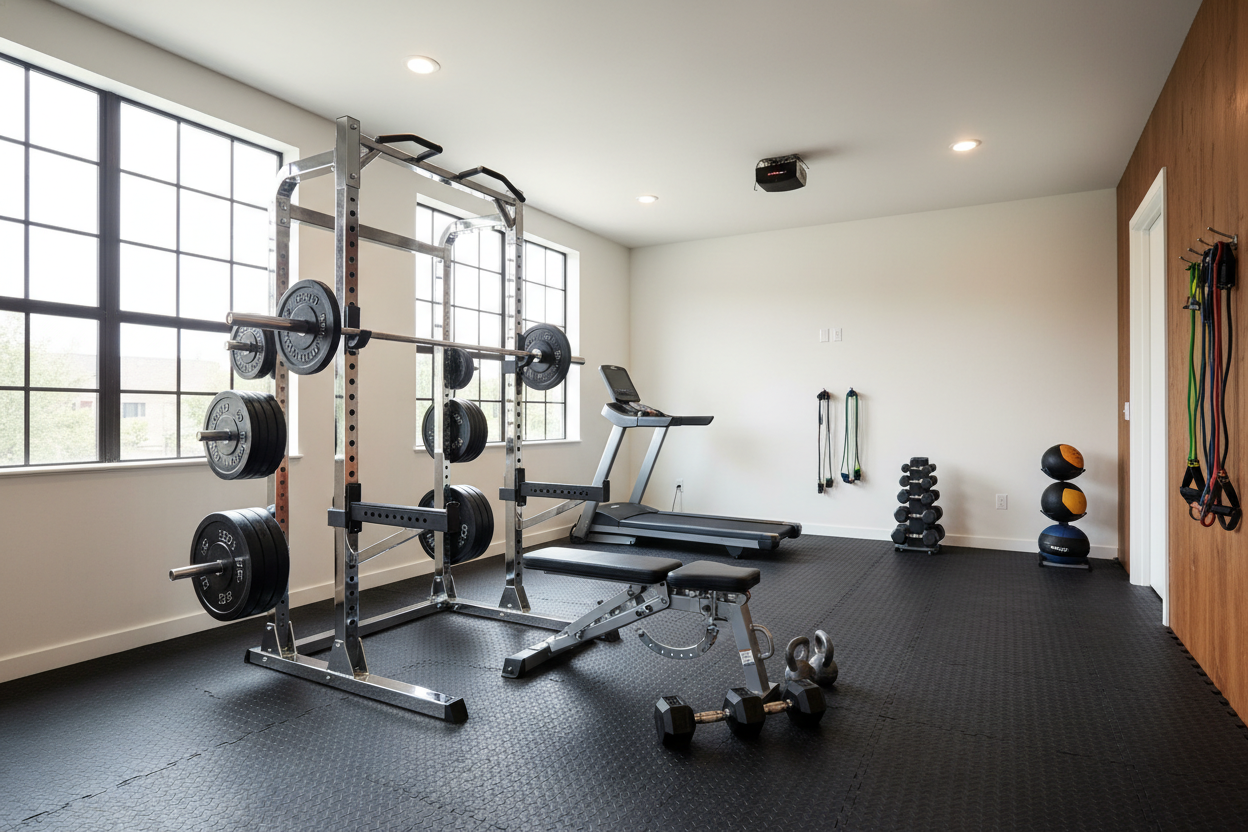
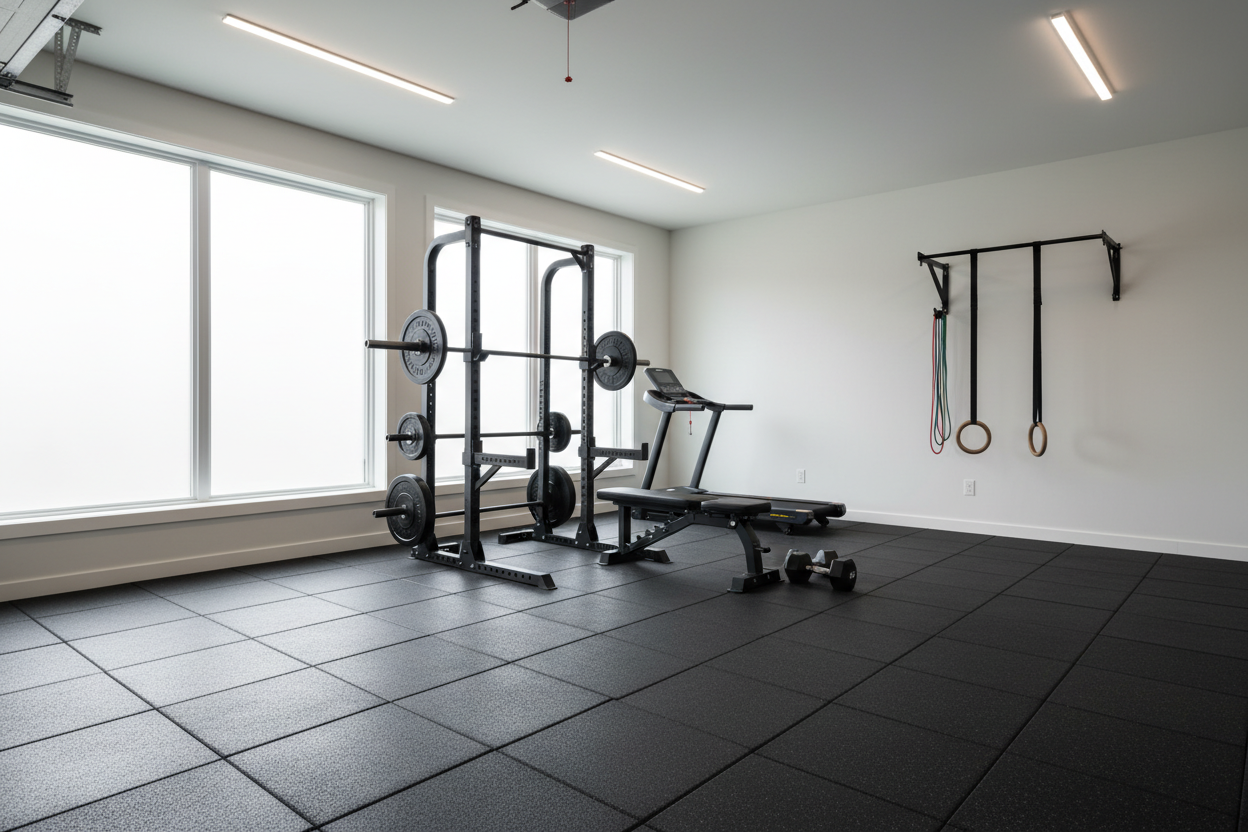
You don't need a $3,000 rack for these, but you do need space. I clear out a spot on my dense 6x8ft exercise mat to make sure I have enough runway for these movements without hitting the edge of my power rack or the lawnmower.
First up: Loaded Bear Crawls. Get on all fours, lift your knees two inches off the ground, and move forward. If it’s too easy, throw a 25-lb bumper plate on your back. This is arguably the best shoulder exercise for strength because it forces the shoulder to support your weight while the joint is in motion. It’s dynamic, it’s heavy, and it’s exhausting.
Second: Plank Walk-Outs. From a push-up position, slowly walk your hands as far past your head as you can without your back arching, then walk them back. This hits the overhead stability range without the vertical compression of a barbell. Finally, try Pike Push-Up Isometric Holds. Get into a V-shape, lower your head until it’s an inch off the floor, and just stay there for 45 seconds. It’s a best shoulder strengthening exercises staple that builds the kind of 'bracing' power you need for heavy lifts.
How to Build a Complete Shoulder Strengthening Workout
Don't just toss these in at random. I like to use these floor drills as a 'stability sandwich.' I’ll do a heavy pressing movement, then immediately hit a set of bear crawls. It reinforces the joint after it’s been taxed by the heavy iron. If you’re dealing with a tweak or just want a break from the bar, you can run these as a standalone circuit: 3 rounds of 40-foot crawls, 10 walk-outs, and a 60-second pike hold.
Integrating these with the best shoulder strengthening exercises you’re already doing creates a more well-rounded athlete. You’ll find that your 'show' muscles (the delts) start to look fuller because the 'go' muscles underneath are actually doing their job. It’s the difference between a house built on sand and one built on a concrete slab.
Protecting Your Wrists and Joints on the Floor
The biggest complaint people have with floor work is wrist pain. If you try to do bear crawls on a thin, cheap yoga mat or bare concrete, your wrists will quit long before your shoulders do. I learned this the hard way after a week of 'garage floor' training left me unable to even hold a coffee mug. You need a surface that offers enough compression to save your joints but enough density that you don't sink in and lose your balance.
Investing in the best large exercise mat you can find is a literal joint-saver. You want something at least 6mm to 8mm thick. The cushioning supports the heel of your palm during those heavy isometric holds, allowing you to focus on the shoulder tension rather than the stabbing pain in your carpal bones. If you're going to put your full body weight through your hands, don't be cheap about what's underneath them.
Personal Experience: The Day I Put Down the Barbell
Last winter, my right shoulder was so cranky I couldn't even empty-bar press without a wince. I spent six weeks doing nothing but these floor movements. I felt like a bit of a clown crawling around my garage while my neighbor watched, but the results were undeniable. When I finally went back to the barbell, the 'clicking' was gone and my stability felt 2x better. The downside? These moves are boring as hell compared to a heavy set of five. But if you want to be lifting when you're 60, boring is often the way to go.
FAQ
Do floor exercises build actual muscle size?
Absolutely. The time under tension during a bear crawl or a pike hold is significantly higher than a standard 10-rep set of presses. Your delts will stay under load for 45-60 seconds, which is a massive stimulus for hypertrophy.
Can I do these every day?
I wouldn't. Your rotator cuff is a group of small muscles that need recovery just like your quads or chest. Stick to 2-3 times a week as part of a structured program.
What if my wrists still hurt on a mat?
Try using 'parallettes' or even a pair of hex dumbbells as handles. This keeps your wrists in a neutral position instead of being forced into 90 degrees of extension.