I Tried Ancient Strength Training and My Fancy Gym Felt Pointless
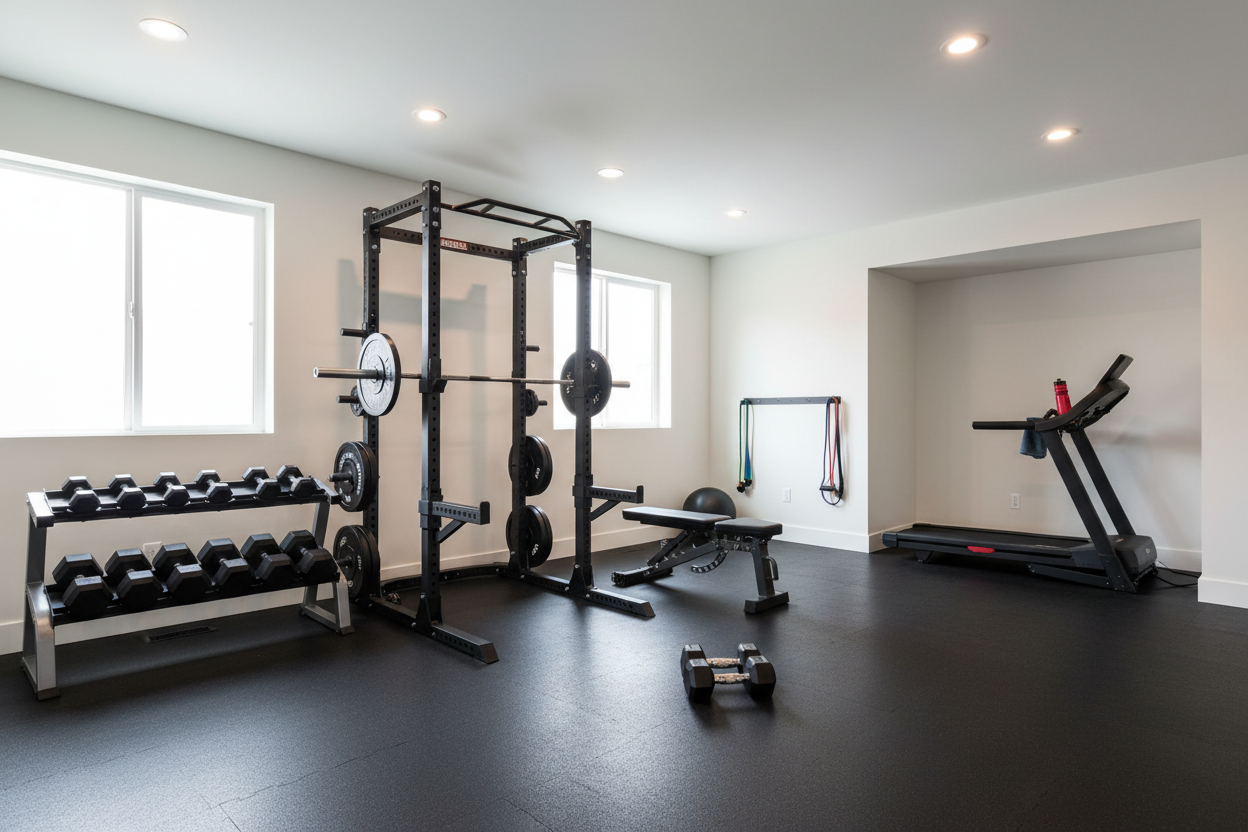
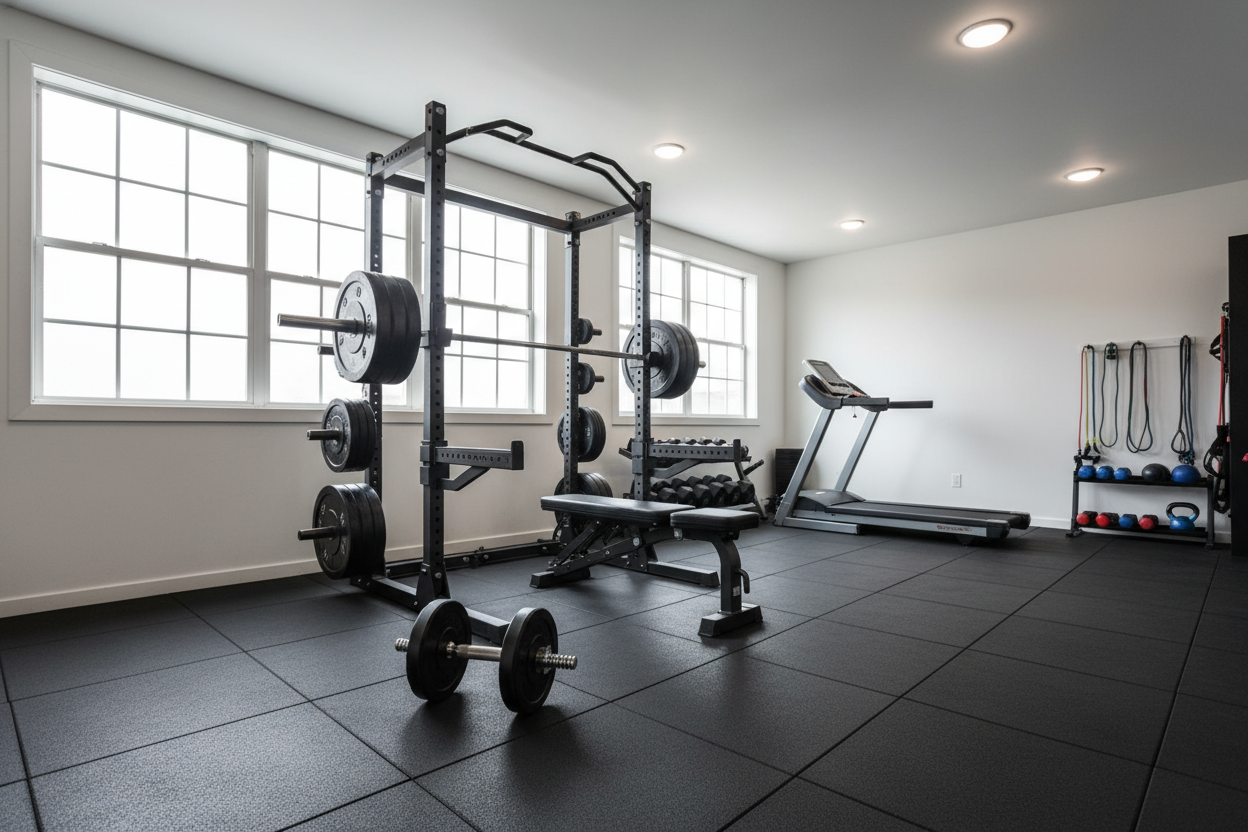
I was standing in my garage last Tuesday, staring at a $1,200 stainless steel barbell with perfect knurling and buttery-smooth sleeve rotation, and I felt like a fraud. Everything in my gym is designed to make lifting easier—the grips are ergonomic, the weights are calibrated to the gram, and the floor is level. But real life isn't level, and real strength isn't balanced. I decided to strip it all back and spend a month exploring ancient strength training to see if our ancestors knew something we've forgotten.
Quick Takeaways
- Modern barbells are designed to be easy to hold; ancient tools are designed to fight you.
- Lifting 'odd objects' builds stabilizer muscles that machines and standard bars completely ignore.
- You don't need a massive budget—sandbags and stones are the ultimate low-cost strength builders.
- Ancient methods focus on 'combat-ready' power rather than aesthetic muscle isolation.
The Problem With Perfectly Balanced Barbells
We’ve sanitized the act of lifting. When you grab a high-end barbell, you’re interacting with a masterpiece of engineering. The center of mass is predictable. The knurling is designed to stick to your palms without tearing. This is great for hitting a new PR in the deadlift, but it creates a specific kind of 'sterile' strength. You become very good at moving a balanced load in a straight line, but you lose the ability to handle the chaos of the real world.
Think about the last time you had to move a sleeper sofa or carry a struggling 60-pound dog. That weight shifts. It pulls you out of position. Modern isolation machines are even worse; they lock you into a fixed plane of motion where your stabilizers can effectively go to sleep. Ancient athletes didn't have the luxury of a 20kg IWF-spec bar. They lifted things that were actively trying to fall out of their hands.
By removing the 'awkwardness' from our training, we've created a gap between gym strength and functional power. I noticed this most when I tried to clean a 150-pound sandbag. On a barbell, 150 pounds is a warm-up. With a sandbag, I was gasping for air and my forearms were screaming within three reps. That’s the difference between lifting a tool and lifting a weight.
What Actually Is Ancient Strength Training?
Ancient strength training wasn't a hobby; it was a survival strategy. Whether you were a Spartan hoplite or a Roman gladiator, your training was designed to ensure you didn't collapse under the weight of your armor or get overpowered in a clinch. They didn't care about the lateral head of their triceps. They cared about the 'hinge' power required to throw a spear and the rotational strength to swing a heavy shield for hours.
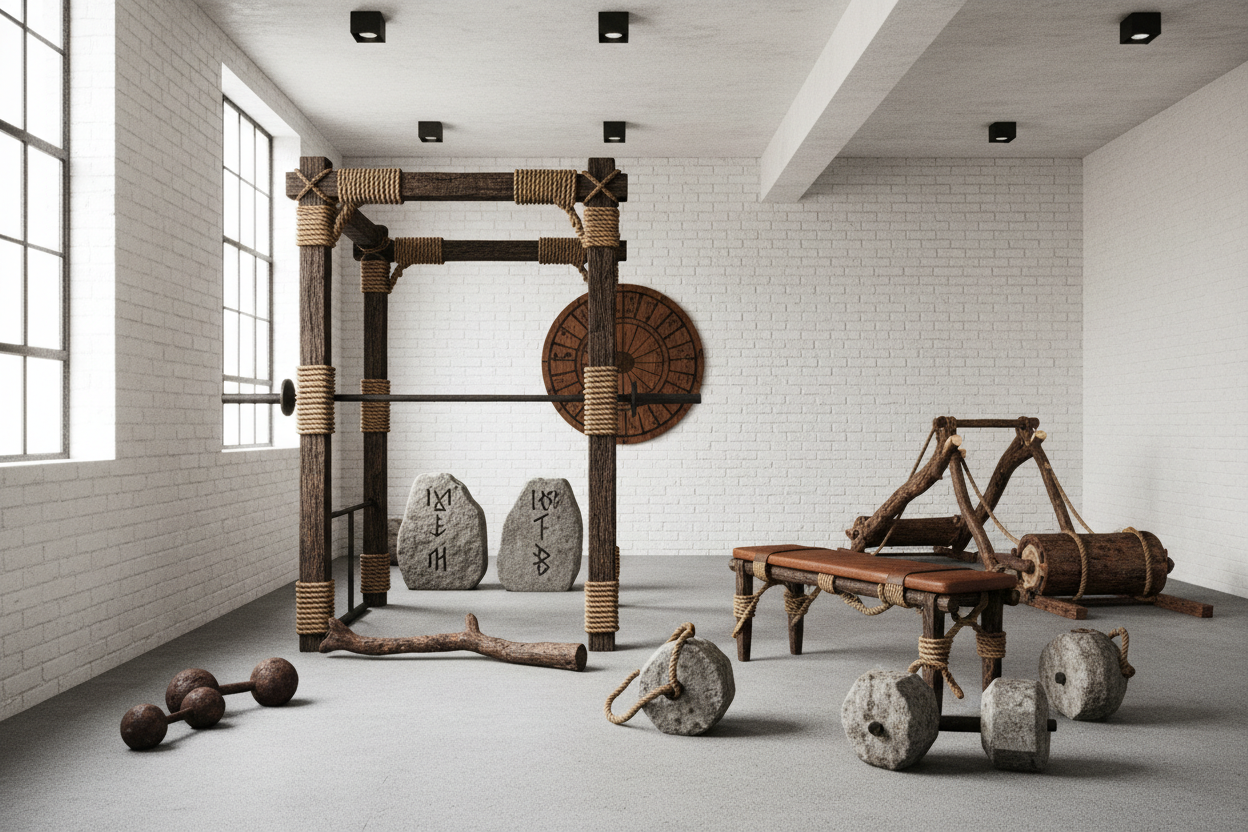
The Greeks used 'halteres'—basically stone or metal hand weights—not just for curls, but to increase their momentum during long jumps. They wrestled in deep sand to build explosive leg power. These methods were brutal, raw, and highly effective at building a physique that was as durable as it was powerful. Contrast these rough stones and logs against the hyper-engineered modern strength equipment we use today, and you start to see why modern lifters often complain about 'nagging' joint pain while ancient statues depict athletes with thick, resilient midsections and iron-clad joints.
Lifting a stone requires you to wrap your entire body around the object. There is no 'optimal' grip. You have to find a way to make it move, which forces your core, your lats, and your grip to work in a way that a lat pulldown machine simply cannot replicate. It’s about building a body that functions as a single, unbreakable unit.
Ancient Workout Equipment You Can Replicate
You don't have to raid a museum to start this. You can mimic most ancient workout equipment with a few simple additions to your garage. The Persian meel, for example, is a heavy wooden club used for centuries by wrestlers in the Zurkhaneh (House of Strength). These clubs build incredible shoulder mobility and grip strength. You can replicate this today with steel maces or heavy clubs, which are far more effective for 'bulletproofing' your shoulders than standard dumbbell lateral raises.
Then there are the Greek halteres. While we use dumbbells today, the ancient version was often used in dynamic, swinging motions that challenged the nervous system. If you look at modern strength training accessories, you’ll see that things like fat grips and thick-handled kettlebells are really just direct descendants of these ancient combat tools. They all share one goal: making the weight harder to hold.
Sandbags are perhaps the best modern proxy for the 'odd objects' of antiquity. A sandbag never feels the same way twice. Every time you pick it up, the sand shifts, forcing your smaller stabilizer muscles to fire constantly. It’s the ultimate tool for building 'old man strength'—that deceptive, wiry power that doesn't necessarily look huge in a t-shirt but feels like granite when you try to move it.
Surviving the Transition (Without Breaking Your Back)
If you've spent the last five years doing nothing but bench presses and leg extensions, jumping straight into stone lifting is a recipe for a herniated disc. Ancient lifting is 'anti-ergonomic,' which means you need to have your bracing and hinge mechanics dialed in before you start. You have to learn how to lift with a rounded back safely—a concept called 'Jefferson curls' or 'Sandbag loads'—where the spine learns to handle tension in non-neutral positions.
Start small. Replace one of your accessory blocks with a sandbag carry or a mace swing. Your nervous system will likely be fried much faster than usual because the demand for coordination is so much higher. Also, be mindful of your environment. Dropping a 100-pound stone or a heavy-duty sandbag on bare concrete will eventually crack the floor (and the weight). I highly recommend laying down a thick 6x8ft exercise mat to absorb the impact and protect your joints when you're doing high-rep ground-to-overhead work.
I made the mistake of trying to 'ego lift' a heavy log early on. I tried to muscle it up like a clean-and-press, and the log rolled back and nearly took out my teeth. Ancient training requires respect for the object. You don't dictate terms to a log; you negotiate with it.
A Brutal, No-Tech Workout Plan
To train like a warrior, you need to combine raw strength with high-intensity endurance. The ancients didn't do 3 sets of 10 with 2 minutes of rest. They worked until the job was done. If you don't have access to stones or logs yet, a grueling total body strength training HIIT workout is the closest modern equivalent to the stamina required for ancient combat conditioning.
Try this 'Ancient Baseline' circuit once a week:
- The Stone Load: Pick up a heavy sandbag or stone from the floor and lap it. Stand up and shoulder it. 5 reps per side.
- The Spartan Carry: Carry that same object for 100 yards. Do not set it down.
- The Meel Swing: 50 swings per arm with a heavy club or mace.
- The Wrestler’s Push: Find a wall or a heavy sled and push with everything you have for 30 seconds.
Repeat this circuit four times. It’s not about the weight on the bar; it’s about the total time under tension and the demand on your heart and lungs.
The Verdict: Should You Lift Like a Spartan?
After a month of this, my 'fancy' gym equipment started to feel a bit like a playground. Don't get me wrong—I’m not selling my power rack. Barbells are still the king of progressive overload. But adding ancient strength training to my routine filled gaps I didn't know I had. My grip feels unbreakable, my lower back feels more resilient, and my 'real world' power has shot through the roof.
You don't need to go full caveman. Just take one day a week to lift something awkward, something heavy, and something that doesn't want to be lifted. Your body will thank you for the challenge, and your 'gym strength' will finally start to mean something outside the weight room.
FAQ
Is ancient strength training safe for older lifters?
Yes, provided you scale the weight. The focus on joint mobility and stabilizer strength is actually great for longevity, but you must prioritize form over ego. Start with light sandbags before moving to stones.
Do I need a lot of space for this?
Not at all. A mace and a sandbag can be used in a 6x8 foot area. It’s actually more space-efficient than a full rack and cable machine setup.
Can I build muscle with these methods?
Absolutely. You’ll build a different 'look'—more thickness in the core, traps, and forearms—but the sheer time under tension involved in moving odd objects is a massive stimulus for hypertrophy.