Stop Chasing Novelty: The Boring Exercises That Build Muscle
I remember scrolling through social media at 11:00 PM, watching a guy perform a bicep curl while balanced on a BOSU ball with one leg. It looked impressive, I guess, but the guy had the physique of a distance runner. If you are actually looking for exercises that build muscle, you need to stop looking for variety and start embracing the boring stuff. I have spent a decade in my garage testing every piece of gear and every 'secret' program, and the truth is always the same: the flashy stuff is a distraction.
Quick Takeaways
- Muscles respond to mechanical tension, not 'confusion.'
- Stability is the foundation of force production; if you are wobbling, you aren't growing.
- Mastering four basic movement patterns beats a 20-exercise circuit every time.
- Progressive overload on stable lifts is the only way to ensure long-term hypertrophy.
Why 'Muscle Confusion' is Keeping You Small
The fitness industry is built on selling you something new every month. They want you to believe your body is a complex puzzle that needs constant 'surprising' to trigger growth. It is total nonsense. Your muscles do not have brains; they have mechanoreceptors. They detect load, stretch, and tension. When you rotate your lifts every week to 'keep the body guessing,' you never get proficient enough at a movement to actually push it to the limit.
You end up practicing new skills instead of building mass. Real hypertrophy comes from doing the same movements so often they become second nature, allowing you to focus entirely on the quality of the contraction and the intensity of the effort. If you are constantly changing your routine, you are just a professional beginner. Stop 'confusing' your muscles and start demanding they adapt to a heavy, consistent load.
The Biomechanics of Hypertrophy in a Garage Gym
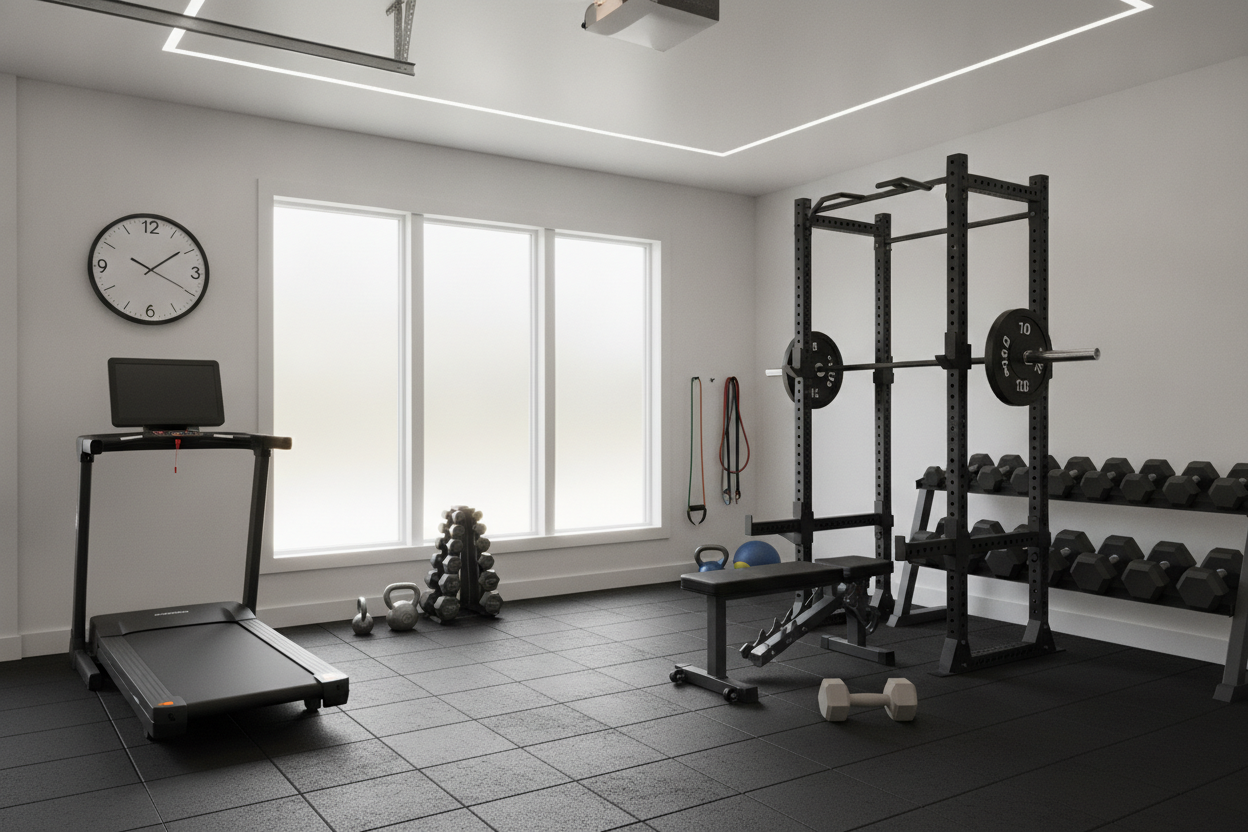
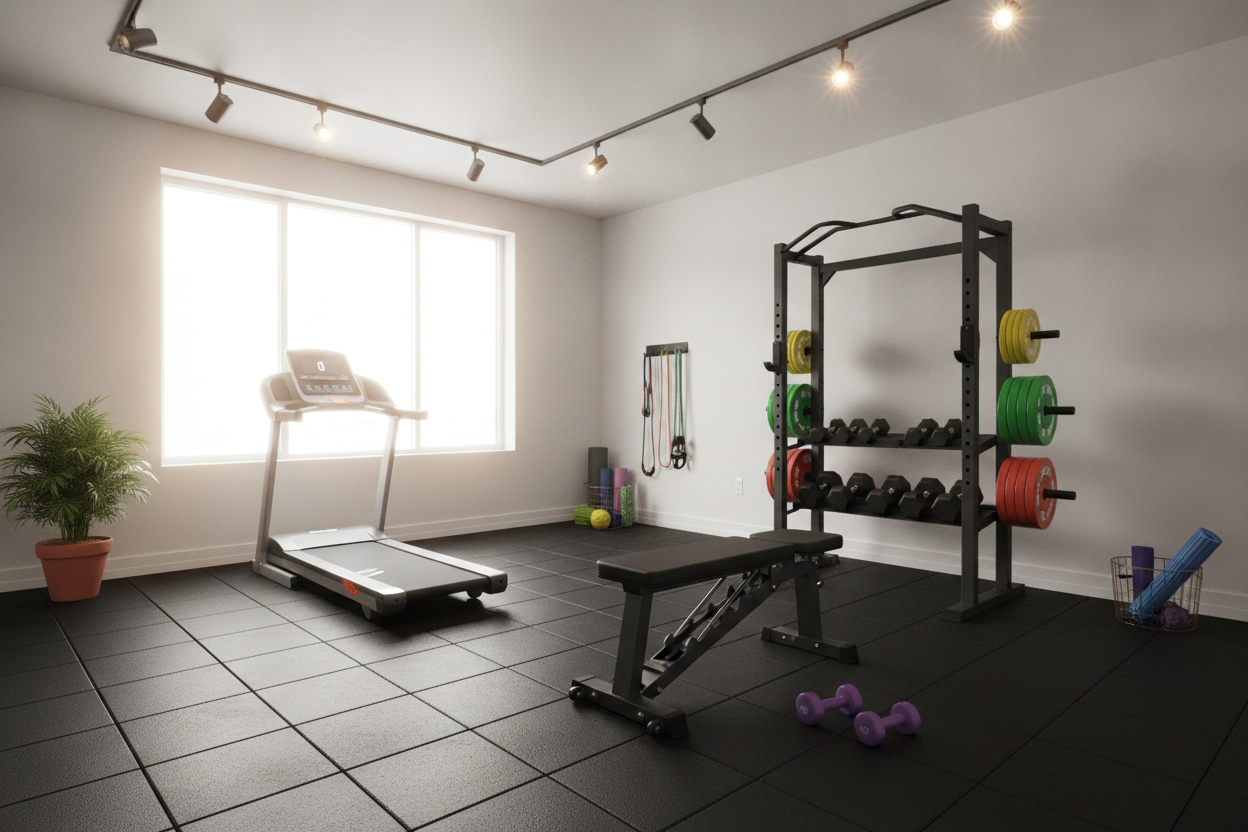
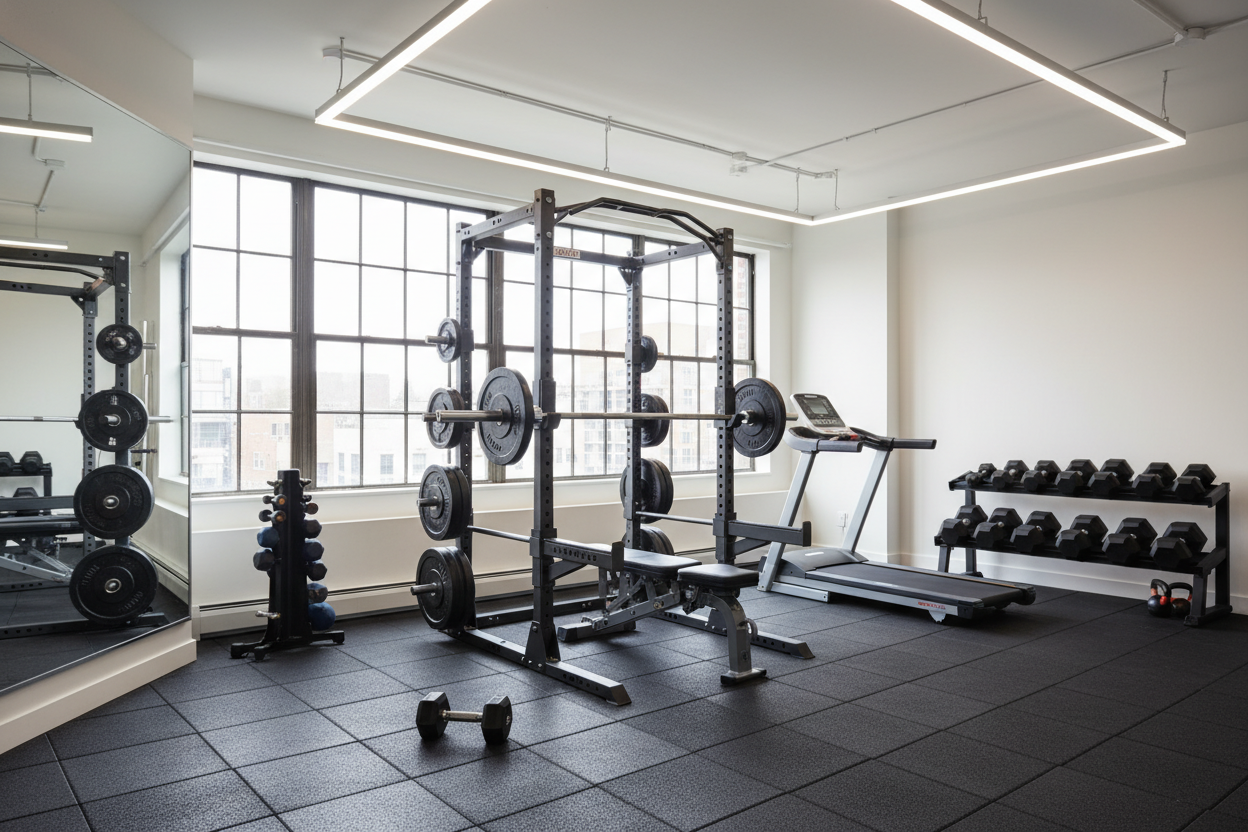
In my garage, space is a premium. I do not have room for a dozen specialized machines. I have a power rack, a barbell, and some plates. This forced me to learn that stable, highly repeatable movements are infinitely better for growth than complex balance acts. When your body feels unstable, your nervous system dampens the signal to your muscles to protect your joints. This is why you can't bench press as much on a Swiss ball as you can on a solid flat bench.
To maximize your exercises to build muscle mass, you need to own the bottom of every rep. That deep stretch under load is where the most muscle damage and subsequent growth occurs. If you are cutting reps short because the weight feels 'awkward' or the movement is too complex to balance, you are leaving gains on the table. Stability allows you to apply maximum force through a full range of motion without your brain hitting the 'emergency brake.'
The Foundational Patterns You Actually Need
You do not need a PhD in kinesiology to get big. You need to master four patterns: the horizontal push, the vertical pull, the squat, and the hinge. That is it. People ask me for the best exercise routine to gain muscle all the time, expecting a complex spreadsheet with 15 different variations. I give them those four moves. If you can't grow on a diet of heavy rows, presses, and squats, adding a cable fly variation isn't going to save you.
Mastering these basics eliminates the need for endless isolation work. A heavy row hits the lats, the traps, and the biceps simultaneously. A deep squat builds the quads and the core. By focusing your energy on these high-ROI movements, you can get in and out of the gym in 45 minutes while seeing better results than the guy spending two hours doing 'finisher' sets of lateral raises.
Creating Machine-Like Stability at Home
One common complaint about home training is that free weights lack the stability of commercial gym machines. While true, you can bridge that gap with better technique. Brace your core like someone is about to punch you. Squeeze the bar until your knuckles turn white. Most importantly, look at your floor. If you are lifting on dusty concrete or a cheap, squishy yoga mat, your base is compromised.
I always recommend investing in a best large exercise mat or high-density stall mats. You need a high-traction, non-compressible surface so you can drive your heels into the ground without sliding. Once your feet are locked in and your bracing is solid, you can produce the kind of force that actually forces a muscle to grow. Stability starts from the ground up.
How to Progress When the Moves Stay the Same
If you aren't changing the exercises every week, how do you force growth? You lean into the reality of progressive overload. This isn't just about adding 5 lbs to the bar—though that is the primary goal. It is about doing more work in the same amount of time, or doing the same work with better control and shorter rest periods. I track every single set in a beat-up notebook. If I did 225 lbs for 8 reps last week, I am hunting for 9 reps this week. No excuses.
Over a 12-week block, you should be pushing closer and closer to muscular failure on those same basic lifts. You don't need a new 'angle' for your chest; you need to add 20 lbs to your bench press. It is a slow, grinding process, but it is the only one that actually works for natural lifters. The 'boring' consistency of a logbook is the most effective muscle-building tool I own.
My Personal Experience with the 'Boring' Method
I spent three years doing those 'extreme' home workout DVDs where I never did the same thing twice. I got 'fit,' sure, but I looked exactly the same in the mirror. My mistake was thinking that being tired and sweaty was the same thing as being productive. It wasn't until I ditched the variety and sat in a power rack doing nothing but heavy squats, presses, and rows for six months straight that my shirt sleeves actually started getting tight. My biggest mistake was thinking I was 'too advanced' for the basics. Nobody is too advanced for a heavy set of 10 on the squat.
Frequently Asked Questions
How often should I change my exercises?
Try to stick with the same main lifts for at least 12 to 16 weeks. Only swap an exercise if your progress has completely stalled for three weeks straight or if a movement is causing joint pain. Consistency is your best friend.
Are isolation exercises like curls a waste of time?
No, but they are the garnish, not the steak. Use them at the end of your workout after you have finished your heavy compound lifts. If you have energy left for 3 sets of curls after heavy rows, go for it.
Can I build muscle with just dumbbells at home?
Absolutely, provided the dumbbells are heavy enough to challenge you in the 6-12 rep range. The same rules of stability and progressive overload apply regardless of the tool you are using.