I Traded Gym Time for These 3 Brutal Sports for Upper Body Mass
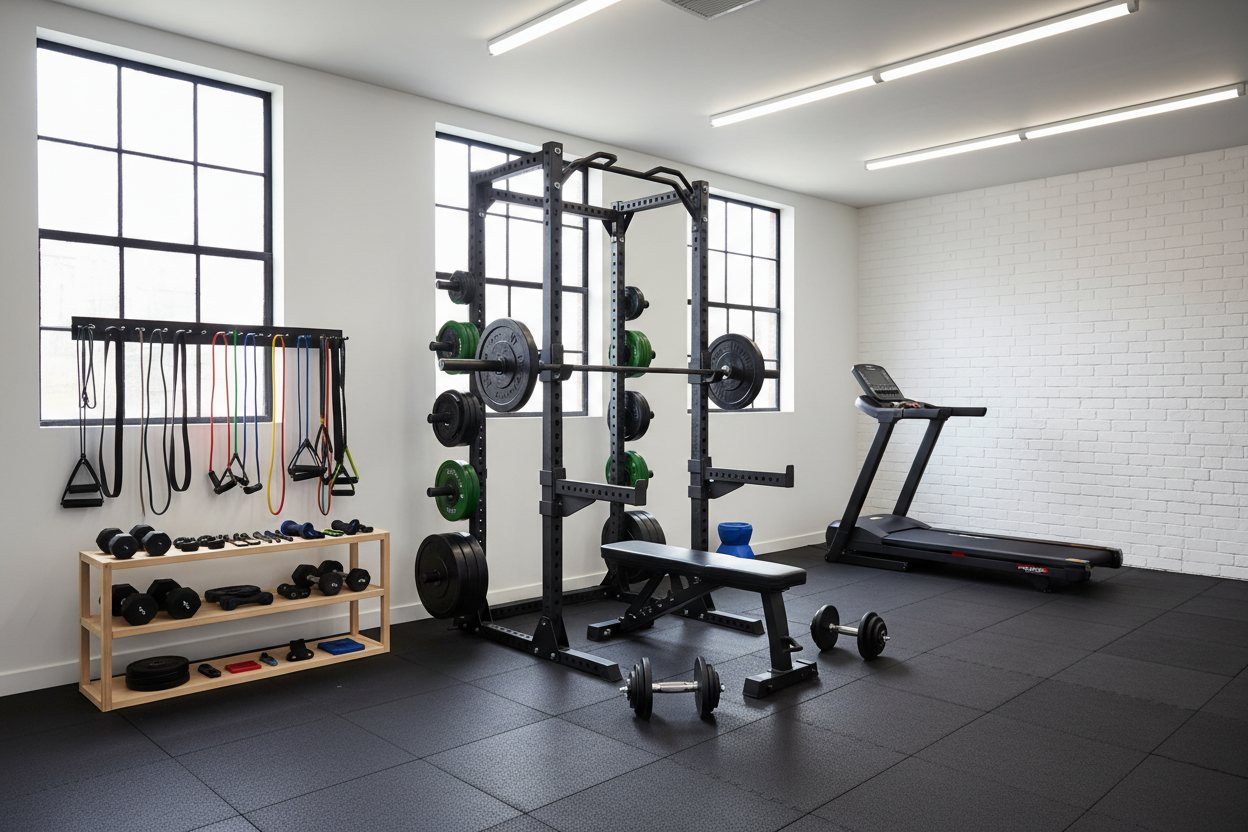
I spent four years staring at the same oil stain on my garage floor while grinding out overhead presses and rows. My progress hadn't just slowed down; it had parked itself in a ditch. I had the 1,000-lb total, the 7-gauge steel power rack, and enough iron to sink a small boat, but my physique looked like it was stuck in a 'good enough' holding pattern. I realized that my body had perfectly adapted to the 30-second window of a barbell set. To break the plateau, I had to stop thinking in reps and start thinking in sports for upper body mass.
Quick Takeaways
- Barbells are great for peak mechanical tension, but sports provide relentless isometric strain.
- Rock climbing builds lat width and grip strength that cable machines cannot replicate.
- Grappling creates dense, 'armored' shoulders through constant resistance.
- Rowing offers high-volume metabolic stress for the upper back without the joint wear of heavy deadlifts.
- Swap one 'accessory day' per week for a sport to spark new growth.
Bored of the Barbell? The Case for Leaving the Garage
Linear progression is a beautiful thing until it isn't. When you first start out, adding five pounds to the bar every week feels like magic. But eventually, you hit a wall where the central nervous system fatigue outweighs the muscular stimulus. I found myself dreading my Friday 'pull' session because I knew exactly how 4x10 rows felt, and my body knew exactly how to cheat the movement to save energy.
The garage gym is an incredible tool, but it can also be a vacuum. You lose the element of unpredictable resistance. When you're fighting a 200-lb human or trying to hold onto a tiny granite crimp, you can't just 'reset' or drop the bar. You have to endure. That endurance is exactly what forces the muscle fibers to thicken in ways a standard bodybuilding split fails to address. Stepping away from the iron for one or two days a week isn't heresy; it's a strategic retreat that allows your joints to recover while your muscles face a completely different type of hell.
Why the Best Sports for Upper Body Rival Heavy Iron
If you look at the back of a competitive gymnast or a high-level wrestler, they have a level of muscular density that most gym rats would kill for. Why? It comes down to time under tension. A standard set of 10 rows takes about 30 to 40 seconds. Once you rack the bar, the tension is gone. In upper body sports, that tension is often unbroken for three to five minutes at a time.
This creates massive metabolic stress. Your muscles are flooded with lactate, and your heart is pumping blood into the tissues to keep up with the demand. This 'pump' isn't just for aesthetics; it's a signal for sarcoplasmic hypertrophy. While the barbell builds the foundation of strength, these sports add the 'armor'—the thickness in the traps, the flare in the lats, and the forearm girth that makes people ask if you've been swinging a sledgehammer for a living.
Rock Climbing: The Ultimate Back and Grip Builder
Bouldering changed my physique more in three months than three years of lat pulldowns did. When you are hanging off a 45-degree wall, your lats aren't just 'engaged'—they are fighting for your life. Every pull is a max-effort contraction, and because you're moving your own body weight through space, the functional hypertrophy is real. Your forearms will grow because they have no choice; you can't use straps on a rock wall.
I noticed that my pull-up strength skyrocketed after I started climbing twice a week. I went from struggling with three plates on a weighted pull-up to repping them out. The sheer variety of angles you hit in climbing ensures there are no 'weak links' in your posterior chain. Your lats become wider, your rhomboids become thicker, and your grip becomes like a vise grip.
Grappling: Isometric Hell for Your Shoulders
Wrestling or Brazilian Jiu-Jitsu (BJJ) is essentially a high-stakes game of push-and-pull. If you've never tried to move a resisting human being who doesn't want to be moved, you haven't experienced true isometric tension. Your shoulders and core are constantly under fire as you fight for underhooks or defend a takedown. This builds a type of shoulder density that is incredibly hard to get from lateral raises.
If you decide to take this path, you will need a dedicated space to recover or drill. I ended up putting down a 6X8Ft Exercise Mat Yoga Mat Gym Flooring For Home Workout in my garage just to work on my mobility and basic shots. Having that extra padding is a lifesaver for your knees and elbows when you're not at the gym. The constant 'shrugging' motion in grappling also blows up your traps, giving you that powerful, athletic look that screams strength.
Rowing: Zero-Impact, High-Yield Hypertrophy
Rowing is the middle ground between cardio and lifting. Whether you're on the water or using a high-end air ergometer, every stroke is a full-body explosion. For the upper body, the finish of the stroke—where you pull the handle to your chest—is a high-rep row that targets the traps and rear delts. Because there is no eccentric load (the 'lowering' phase), you don't get as sore as you do from lifting, meaning you can do it more often.
I like to use the rower for 'sprint intervals.' Ten rounds of 500 meters with a minute of rest in between. By the end, your upper back will feel like it’s about to burst out of your shirt. It’s a brutal way to build work capacity while simultaneously adding slabs of meat to your mid-back.
How to Program Athletic Play Without Losing Your Gains
The biggest mistake I made was trying to add these sports on top of a 5-day-a-week heavy lifting program. I burned out in three weeks. The trick is to replace, not just add. If you're going to start climbing or grappling, drop one of your 'back' or 'accessory' days. Keep your heavy compounds—squats, benches, and deadlifts—but cut out the fluff like curls and face pulls. The sport will handle that volume for you.
Since most of these sports are heavily pull-dominant, you need to be careful about your structural balance. You don't want your shoulders rolling forward because your lats are too tight. Make sure you are still hitting effective alternative chest exercises for a stronger upper body to keep your posture in check. A good rule of thumb is to keep one heavy pressing day and one heavy squat day, and let the sports take care of the rest.
Personal Experience: The Reality Check
I’ll be honest: the first time I went bouldering, I felt like a fraud. I could bench 315 lbs, but I couldn't finish a 'beginner' V1 route because my grip gave out in thirty seconds. It was a massive ego hit. I realized my 'gym strength' was very specific to a knurled bar. It took about six weeks for my tendons to catch up to my muscles. Don't go in thinking you'll dominate just because you're the strongest guy in your garage. Be the student, take it slow, and let the hypertrophy come naturally.
FAQ
Will these sports make me lose my lifting strength?
Quite the opposite. As long as you keep your main compound lifts in your program once a week, the increased grip strength and core stability from these sports usually lead to a PR in the deadlift and overhead press.
How many days a week should I do these sports?
Start with one day. These sports tax your tendons and nervous system differently than lifting. Once you've adapted after a month, you can move to two days, but I wouldn't recommend more than that if you still want to move heavy weight in the gym.
Do I need special equipment for home training?
For climbing, a simple doorway pull-up bar or a hangboard is plenty. For grappling, a thick 6x8 ft mat is essential for mobility work. For rowing, obviously, you need an erg, but you can also find great deals on used ones if you look around.