I Thought I Was Strong Until I Tried These 1 Leg Exercises
I spent years chasing a 400-pound squat in my garage, thinking my legs were bulletproof. I finally hit the milestone, but the video playback told a different story: a nasty hip shift to the right that made my left leg look like a passive observer. I realized my strength was built on a lie, and that is when I started obsessing over 1 leg exercises to fix the imbalance before my knees gave out.
- Unilateral work exposes hidden weaknesses that bilateral lifts mask.
- Stability is the foundation of force—if you are wobbling, you are not building max muscle.
- Single leg moves reduce spinal loading while maximizing quad engagement.
- Leading with your weaker side is the only way to achieve true symmetry.
The Day I Realized My Barbell Squat Was a Lie
I was plateaued at a 405-pound squat for six months, and my right knee felt like it was being poked with a hot needle every time I hit depth. I finally filmed a heavy set from behind and saw my right hip doing about 70% of the heavy lifting. My left side was essentially just along for the ride. I had to swallow my pride and start using single-leg exercises for glutes to force my lazy side to actually fire.
It was a humbling experience. I could squat four plates, but I struggled to do ten clean reps of a Bulgarian split squat with a 30-pound dumbbell. That discrepancy is exactly why single limb exercises are the ultimate truth-teller in the gym. If you cannot move your own body weight gracefully on one leg, you have no business putting a heavy bar on your back.
Why You Can't Hide Weaknesses on One Leg
A single leg workout is a diagnostic tool and a muscle builder rolled into one. When you remove the support of the dominant limb, your nervous system has to work overtime to stabilize the pelvis and knee. This prevents the 'overcompensation' that happens during a standard squat or deadlift. Unilateral leg training forces the stabilizer muscles—like the glute medius—to actually do their job.
Targeting the Lagging Quad
If you look in the mirror and notice one thigh is visibly smaller than the other, you have a classic muscle imbalance. I found that my left vastus medialis (the teardrop muscle) was almost non-existent compared to my right. By implementing the best single leg quad exercises, I was able to isolate that specific atrophy. Movements like the elevated lunge or single-leg press ensure the dominant leg cannot 'help' when the set gets tough.
My Go-To Unilateral Leg Workout for Real Power
When I train for power, I stop worrying about balance and start worrying about load. I am not interested in standing on a foam pad or doing circus acts. I want to move heavy weight. I shifted my focus to movements where I could safely push to failure. For example, using a Gxmmat Leg Extension Curl Machine allowed me to hammer my quads and hamstrings one at a time without my lower back being the limiting factor.
A typical session for me now involves a heavy unilateral squat variation followed by isolated machine work. This ensures I am hitting the big prime movers while also addressing the smaller, single-joint leg exercises that help with knee tracking and overall joint health. If you are not sweating through your shirt by the second set, you are not training with enough intensity.
Why the Setup Makes or Breaks the Movement
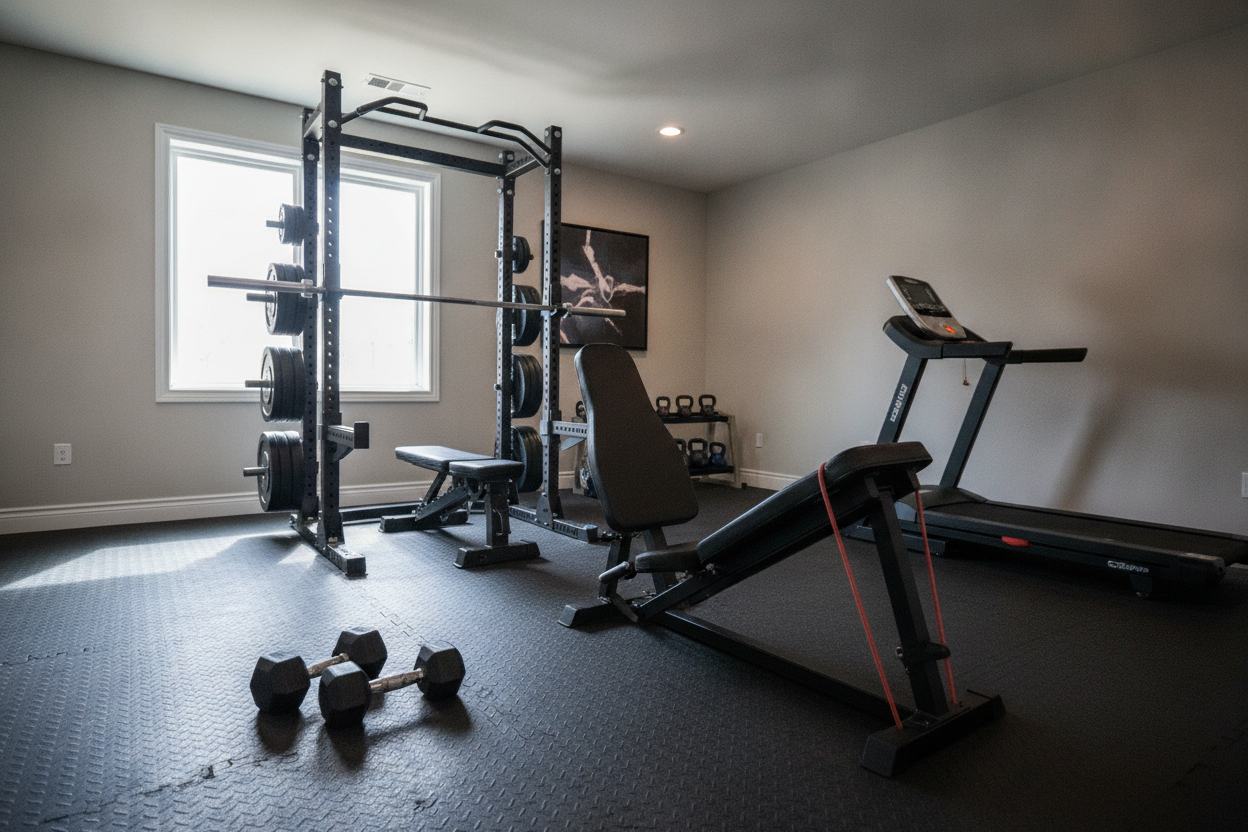
The biggest mistake I see in home gyms is people trying to balance in the middle of the floor with zero support. If you are falling over, you are not building strength; you are just practicing balance. I always recommend using a dedicated leg machine or at least holding onto a power rack for stability. When you remove the 'balance' component, you can actually load the muscle enough to trigger hypertrophy.
How I Program Single Leg Work Without Burning Out
I do not treat a single leg lower body exercise as an afterthought. I put it right at the start of my workout when my CNS is fresh. I lead with my left leg—the weak one—and whatever reps I get there, I match with the right. This prevents the gap from widening. I typically aim for 3 sets of 8-12 reps, focusing on a slow eccentric phase to really tear down the muscle fibers.
FAQ
Why are single leg exercises harder than bilateral ones?
Your brain has to manage more stability demands, and you lose the 'bilateral deficit' advantage where the two sides of your body work together to move a single load. It is simply more demanding per square inch of muscle.
Should I do my weak leg first?
Yes, always. Your energy levels drop as the set progresses. By starting with your weak side, you ensure it gets the highest quality of effort and focus.
Can unilateral work replace the barbell squat?
For many people, yes. If you have lower back issues or severe imbalances, you can build massive, powerful legs using only unilateral movements while sparing your spine the heavy compression of a barbell.