I Tell Every Rookie to Use This 4-Move Beginner Compound Workout
I remember my first day in a commercial gym. I spent forty minutes doing wrist curls and Pec Deck reps because I was too intimidated to touch the squat rack. I wasted months chasing a 'pump' that disappeared by the time I hit the parking lot. If I could go back, I’d tell my younger self to stop overcomplicating things and start a beginner compound workout.
- Focus on movement patterns, not individual muscles.
- Three days a week is the sweet spot for recovery.
- Compound lifts provide the highest metabolic and strength return.
- You only need basic equipment like dumbbells and a solid floor.
Why You Should Ignore the Arm Curls (For Now)
Isolation movements like bicep curls or calf raises are the dessert of the fitness world. They are fine to have, but you cannot build a physique on them. A compound workout for beginners focuses on multi-joint lifts that recruit several muscle groups at once. Instead of hitting just your biceps, a row hits your lats, traps, and forearms simultaneously.
This efficiency is why I advocate for the 'Core Four.' When you are just starting, your central nervous system is learning how to move weight. By sticking to beginner compound exercises, you get more 'practice' with heavy loads, which leads to faster strength gains. Plus, you’ll be out of the gym in 45 minutes rather than two hours. You don't need to burn out on sixteen different machines to see a change in the mirror.
The Core Four: Your New Foundation
Forget the 5-day body part split. Your first six months should be about mastering four specific movement patterns: the push, the pull, the squat, and the hinge. These are the compound exercises for beginners that build a frame capable of handling serious weight later on. If you can't do these well, you have no business doing cable flyes.
The Squat (Pushing the Floor Away)
The squat is the king of lower body movements. For rookies, I always suggest the goblet squat. Hold a dumbbell or kettlebell against your chest; this acts as a counterbalance that keeps your torso upright. It’s a foolproof way to Build Massive Legs Using Only Compound Exercises For Quads without needing a massive power rack right away. Focus on sitting 'between' your knees, not just sitting back, and keep your heels glued to the floor.
The Push (Pressing Weight Away)
I see too many beginners go straight to a shaky bench press. Start with an overhead press or a high-quality push-up. These movements require your core to stabilize your entire spine while your shoulders and triceps do the heavy lifting. Once you have that stability, you can move toward Mastering Compound Chest Exercises For Maximum Strength on a flat bench. For now, keep the weight controlled and your ribs tucked down.
The Pull (Rowing for Posture)
Most of us walk into the gym with 'office worker posture'—shoulders rolled forward from staring at a screen. The dumbbell row is the antidote. Pull the weight toward your hip, not your chest, and feel your shoulder blade wrap around your spine. This builds the thickness in your back that makes you look wider and stand taller. It is the most underrated part of any beginner compound workout.
The Hinge (Waking Up Your Glutes)
The hinge is the hardest pattern to learn but the most important for your back health. Think of the Romanian Deadlift (RDL). You aren't squatting the weight down; you are pushing your hips back as if you're trying to close a car door with your butt. Keep the weights tight against your legs. If they drift away, your lower back takes the hit. Master this, and you'll build hamstrings that look like steel cables.
Setting Up Your Space for Success
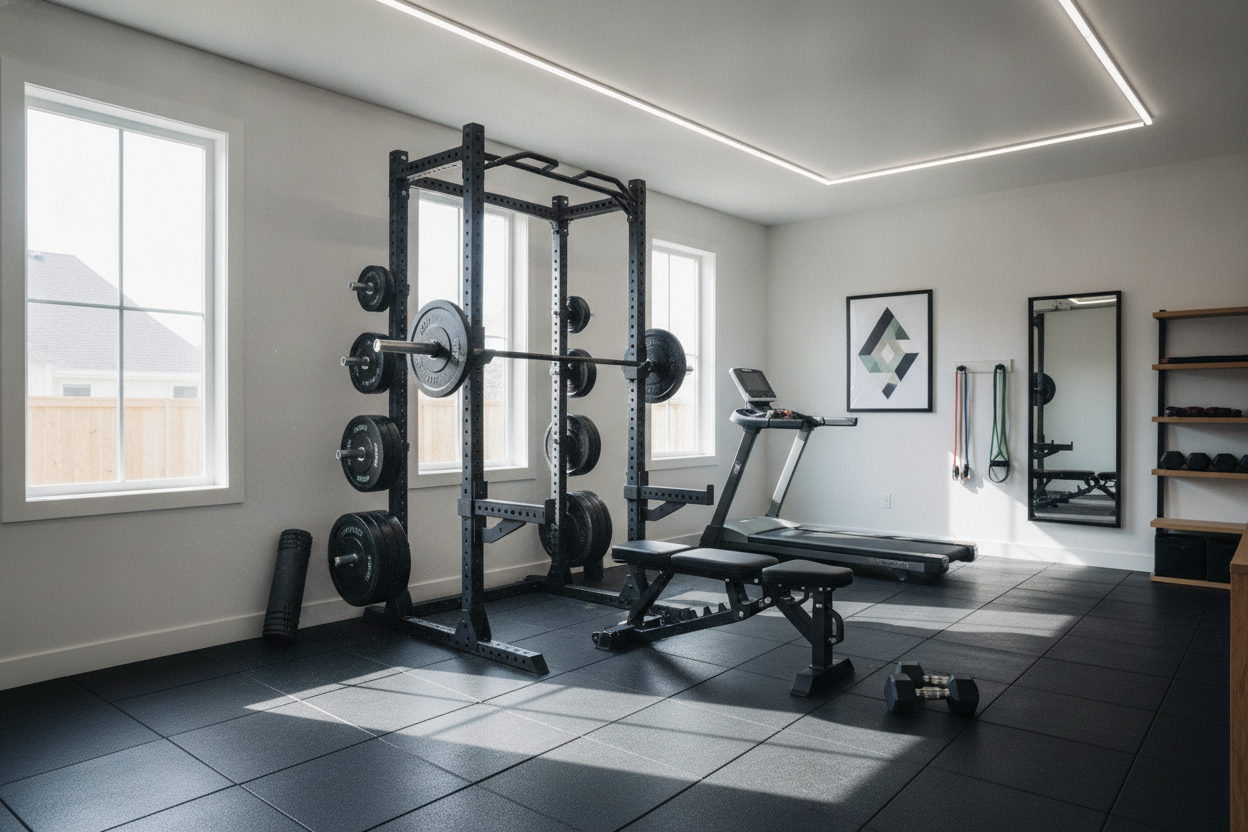
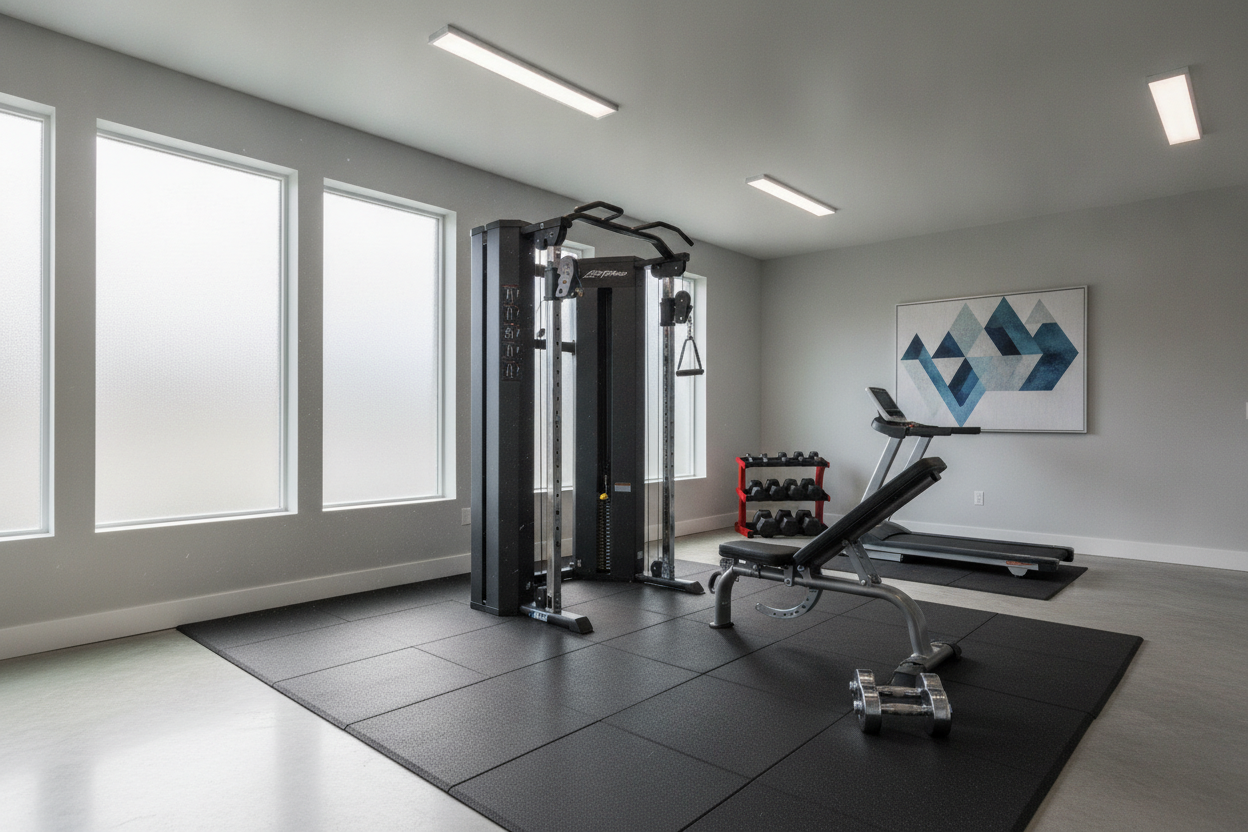
You don't need a $50-a-month membership to do this. A set of adjustable dumbbells and a small corner of your garage will suffice. I always tell people to invest in a 6X4Ft Yoga Mat Exercise Mat Gym Flooring For Home Workout before they buy anything else. Having a dedicated, non-slip surface protects your floor from dropped weights and gives your joints some much-needed cushion during those high-volume sessions.
Structuring Your Week (Without Living at the Gym)
Consistency beats intensity every single time. Perform this full-body routine three days a week—Monday, Wednesday, and Friday is the classic schedule. This gives your muscles 48 hours to recover and grow. On your off days, go for a walk or do some light mobility work. If you need a visual guide on form or want to see how to progress these moves, head over to the Workout Hub for detailed templates.
My Biggest Rookie Mistake
When I started, I thought more was always better. I tried to add five pounds to the bar every single session, even when my form looked like a folding lawn chair. I ended up with a strained lower back that sidelined me for a month. Don't be me. If your form breaks down, the set is over. The weight will come in time, but your joints only have so many 'bad reps' in them before they quit.
FAQ
Can I do this workout every day?
No. You build muscle while you sleep and rest, not while you're lifting. Lifting every day as a beginner is a fast track to tendonitis and burnout. Stick to three days a week.
What if I don't have dumbbells?
You can use gallon jugs of water, a heavy backpack, or even just your body weight to start. The movement pattern is more important than the specific tool you use in the beginning.
How long should I stick to this routine?
At least three to six months. You need time to build a neurological 'map' of these movements. Once you can move significant weight with perfect form, then you can think about adding more variety.