I Swapped Heavy Triples for a Stretch and Tone Workout
I used to stare at my power rack like it was the only piece of equipment in the house that mattered. If I wasn't grinding out a heavy triple or making the garage floor shake with a 400-pound deadlift, I felt like I was wasting my time. I would see people talking about a stretch and tone routine and honestly, I would roll my eyes. I thought it was code for 'I don't want to work hard.'
Quick Takeaways
- It is not just passive stretching; it is active strength at your physical limits.
- Fixes the 'Tin Man' syndrome common in heavy lifters.
- Builds genuine muscle definition through controlled eccentric movements.
- A high-quality mat is non-negotiable for floor-based work.
Confession: I Used to Hate the Phrase 'Stretch and Tone'
Let’s be real: in the world of garage gyms and plate-clanking bravado, 'stretch and tone' sounds soft. It conjures up images of 90s aerobics videos and those tiny 2-lb plastic dumbbells that look more like toys than tools. For years, my recovery strategy was just sitting on the couch and complaining about how tight my hamstrings were.
I was wrong. After a particularly nasty bout of lower back stiffness that made even unweighted squats feel like a chore, I realized my 'immovable object' status was just a lack of mobility disguised as strength. I started experimenting with a stretch and tone workout on my off-days, and the results were annoying—mostly because I had to admit I’d been missing out for a decade.
The reality is that active lengthening under tension is exactly what a stiff lifter needs. It isn't about being 'zen.' It's about making sure your muscles can actually produce force through a full range of motion without something snapping like a dry twig.
What 'Toning Stretches' Actually Look Like for Lifters
When we talk about stretches for toning, we aren't talking about sitting on the floor and reaching for your toes while scrolling through your phone. For a lifter, this is loaded mobility. You are actively engaging the muscle at its end range, which creates that 'hard' look—otherwise known as muscle tone.
Think of it as isometric holds meets eccentric control. You are teaching your nervous system that it is safe to be in deep positions. Building muscle tone at end ranges is a much better fix for neck and shoulder pain than mindlessly yanking on tight traps with a lacrosse ball or a massage gun that barely scratches the surface.
When you perform stretching and toning movements, you are essentially strengthening the connective tissue and the muscle fibers in their weakest, most vulnerable states. This doesn't just make you look leaner; it makes you harder to break when you go back to the heavy barbell work on Monday.
3 Stretch and Tone Exercises I Actually Do in My Garage Gym
I don't do fluff. If I’m spending 30 minutes on a stretching and toning workout, it has to have a high ROI. These are the three stretching and toning exercises that earned a permanent spot in my rotation:
- The Cossack Squat: This is the king of toning stretches for the lower body. It targets the adductors and hips like nothing else. I hold a light 15-lb kettlebell to help counterbalance, sinking deep into one side while keeping the other leg straight. It’s a brutal test of both flexibility and leg strength.
- Deficit Bulgarian Split Squats: By elevating both the front and back foot, you get an incredible stretch in the hip flexor and a deep contraction in the glute. This is stretching and toning at its most effective. The 'stretch' at the bottom is where the muscle growth happens.
- Loaded Dead Bugs: These are the ultimate stretch and tone exercises for the core. Hold a light medicine ball or a pair of dumbbells behind your head while you cycle your legs. It forces your abs to stay 'toned' and tight while your limbs are at full extension.
I usually pair these with my baseline 5 muscle stretching exercises to ensure I'm hitting every major group. The goal is to move with intention. If you aren't shaking a little bit by the end of the hold, you aren't doing it right.
The Floor Matters: Why You Can't Do This on Concrete
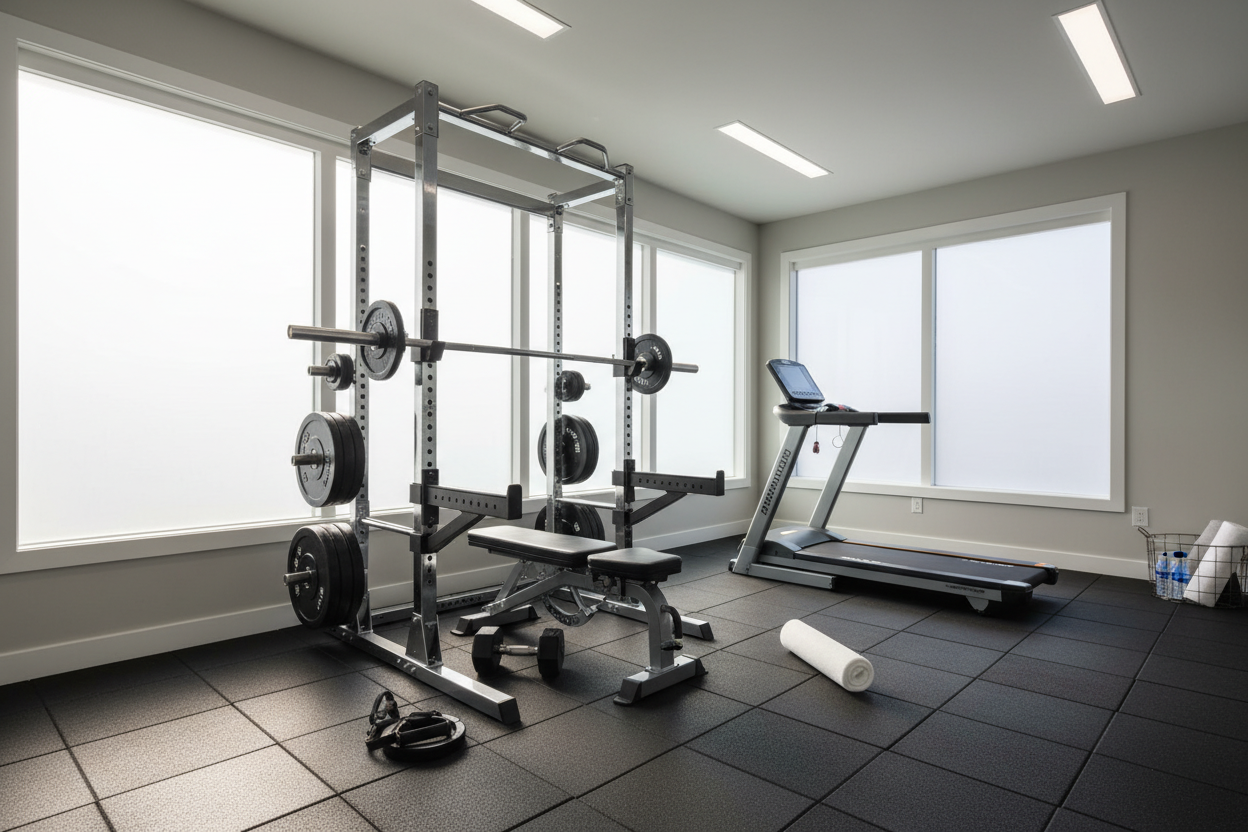
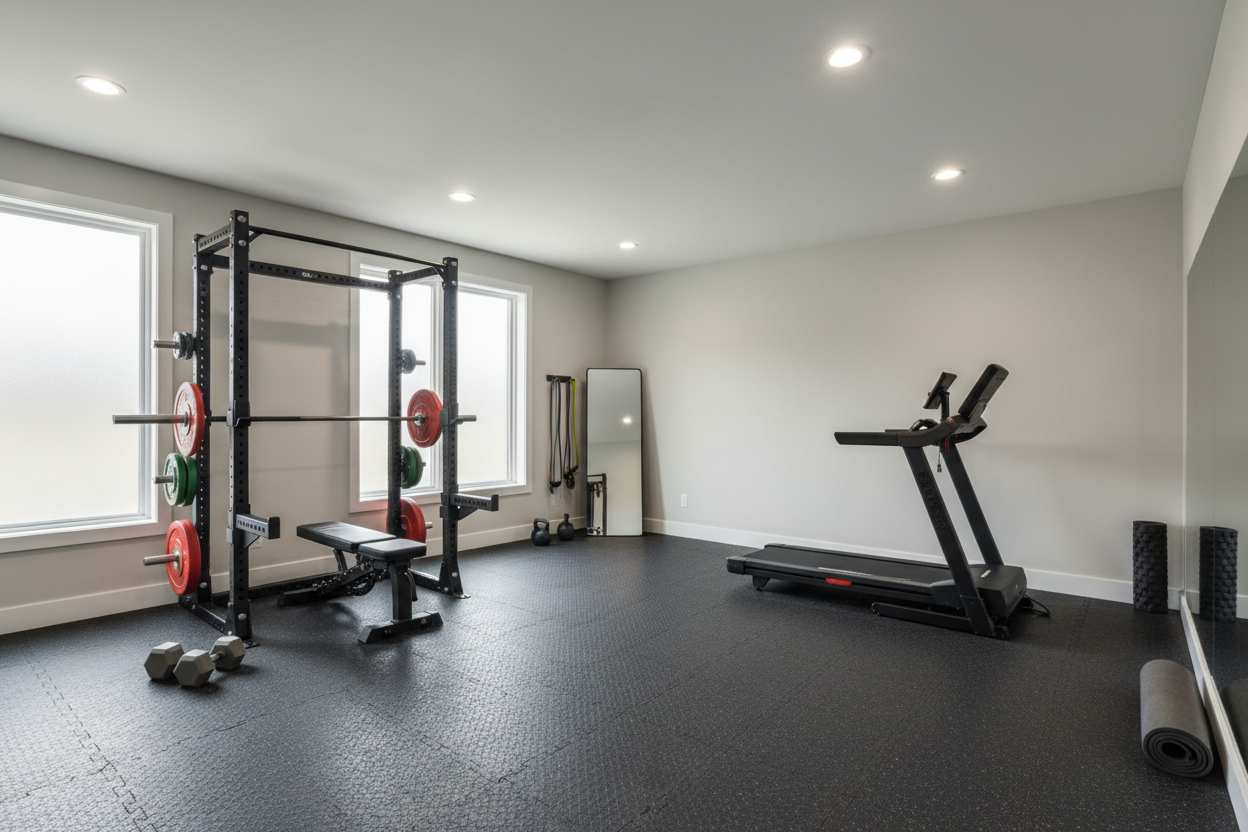
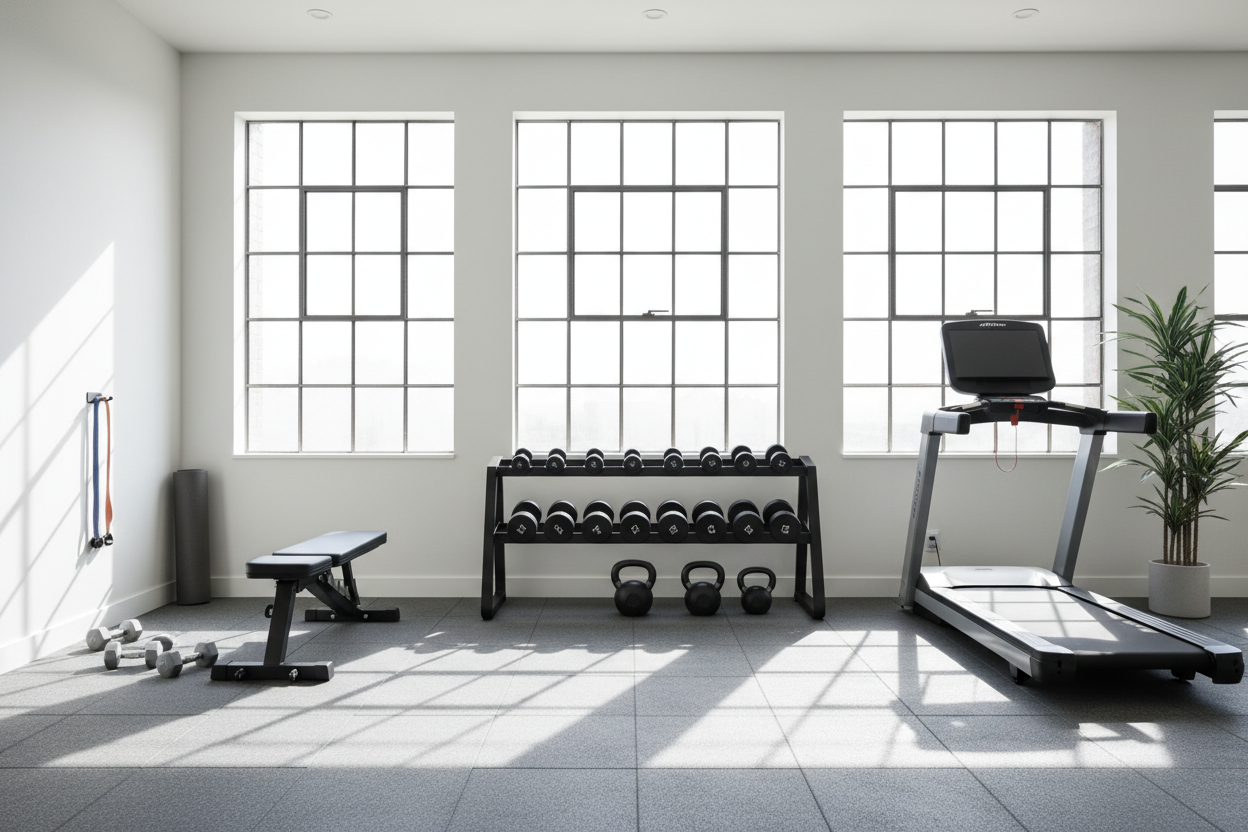
Here is a mistake I made early on: trying to do a stretching and toning workout on my standard 3/4-inch horse stall mats. Those mats are great for protecting the slab from a dropped barbell, but they are unforgiving on the knees and spine. They are also usually covered in a fine layer of gym dust that makes any 'active' stretching feel like you're being sandpapered.
If you’re going to take this seriously, you need a dedicated surface. Holding a deep, active stretch for 60 seconds is hard enough without your kneecap screaming at the concrete beneath you. Throwing down a large exercise mat over your garage floor is a massive quality-of-life upgrade. It gives you the grip you need to stay stable and the cushioning to actually focus on the muscle contraction instead of the pain in your joints.
I’ve found that having a 6x8 ft space designated for this work makes me 50% more likely to actually do it. If I have to clear a space and lay down a tiny, flimsy yoga mat, I’ll probably just skip it and go back to the bench press.
How to Sneak Stretching and Toning Into a Heavy Lifting Schedule
You don't need to quit your powerlifting program to reap the benefits of a stretch and tone workout. In fact, you shouldn't. The best way to program this is to replace your 'junk volume' days. We all have that one day a week where we go to the gym and just kind of mess around with accessory movements that don't really move the needle.
Swap that day for a 30-minute session focused on stretching and toning exercises. Or, use these movements as a dynamic warm-up. Five minutes of Cossack squats and loaded dead bugs will prime your nervous system for heavy squats way better than five minutes on a stationary bike ever will. It’s about being an athlete, not just a weight-mover.
FAQ
Is 'stretch and tone' just yoga?
Not exactly. While there is overlap, a stretch and tone workout focuses more on muscular endurance and active tension than the spiritual or purely flexibility-based aspects of traditional yoga. Think of it as 'strength-based' mobility.
Will this make me lose my strength?
The opposite. By improving your range of motion and strengthening your end-ranges, you'll likely see your main lifts increase because you're no longer fighting your own internal resistance.
Do I need heavy weights for this?
No. Most stretches for toning are done with bodyweight or very light external resistance (5-15 lbs). The 'weight' comes from the tension you create within your own body.