I Spent Years Just Sweating Before Learning What Is Strength Training
I spent my twenties doing 'HIIT' classes that promised 'strength' but just left me gasping for air on a yoga mat. I was skinny-fat and frustrated despite working out five days a week. It took a 45-lb barbell and a bruised ego to finally understand what is strength training and why my 'toning' class was actually just high-speed cardio. I was chasing the burn, but I wasn't building a lick of muscle.
- Sweat is a byproduct, not the primary goal of a strength session.
- True strength requires external resistance (iron, not just air).
- Progressive overload is the only way to actually grow muscle tissue.
- You need a barbell, a rack, and heavy plates—not fancy apps.
The Illusion of the 'Tough' Workout
Most people think if they're puking in a bucket, they've had a 'strength' session. That's metabolic conditioning. Getting Sweaty Isn't Strength Exercise Training (Here's What Is) because real strength work requires rest. If you're doing burpees for 60 seconds, you aren't building raw power; you're just getting better at suffering. Chasing fatigue is a completely different physiological adaptation than building dense, functional muscle.
Building muscle is an expensive process for your body. It doesn't want to do it unless it's forced. Chasing a high heart rate just tells your body to get better at oxygen management. To get stronger, you need to create mechanical tension that actually disrupts the muscle tissue. If you aren't resting at least two minutes between heavy sets, you're doing cardio in disguise.
Let's Clear the Air: What Is Strength Training, Really?
The technical definition of strength training is using resistance to induce muscular contraction, which builds the strength, anaerobic endurance, and size of skeletal muscles. But in plain English? It's moving heavy stuff, resting, and then moving slightly heavier stuff next week. This is the core meaning of strength training.
The 'what is strength training exercise' question usually gets answered with vague talk about 'being healthy.' Let's be specific: it means putting your muscles under enough stress that they are forced to adapt. This requires progressive overload. If you lift the same 10-lb dumbbell for three years, you aren't strength training anymore; you're just maintaining a very specific, very low level of fitness. Strength training causes a systemic response that thickens tendons and increases bone density, but only if the load is significant.
The Real-World Strength Training Definition and Examples
Think of a barbell squat versus a jumping jack. The squat puts massive mechanical tension on your muscle fibers, forcing them to repair and grow thicker. That is the practical strength training definition and examples in action. Other examples include deadlifts, overhead presses, and weighted pull-ups. If you can do 50 reps of something without stopping, it’s cardio. If you’re struggling to maintain form at 5 to 8 reps, that’s a strength exercise.
Don't confuse 'moving a lot' with 'moving a lot of weight.' One burns calories in the moment; the other changes your metabolic baseline by adding dense tissue. When you ask what does strength training mean in a gym setting, it means focusing on compound movements that use multiple joints at once. Isolation moves like bicep curls have their place, but the heavy hitters are what actually move the needle on your strength fitness definition.
The Hardware You Actually Need to Force Adaptation
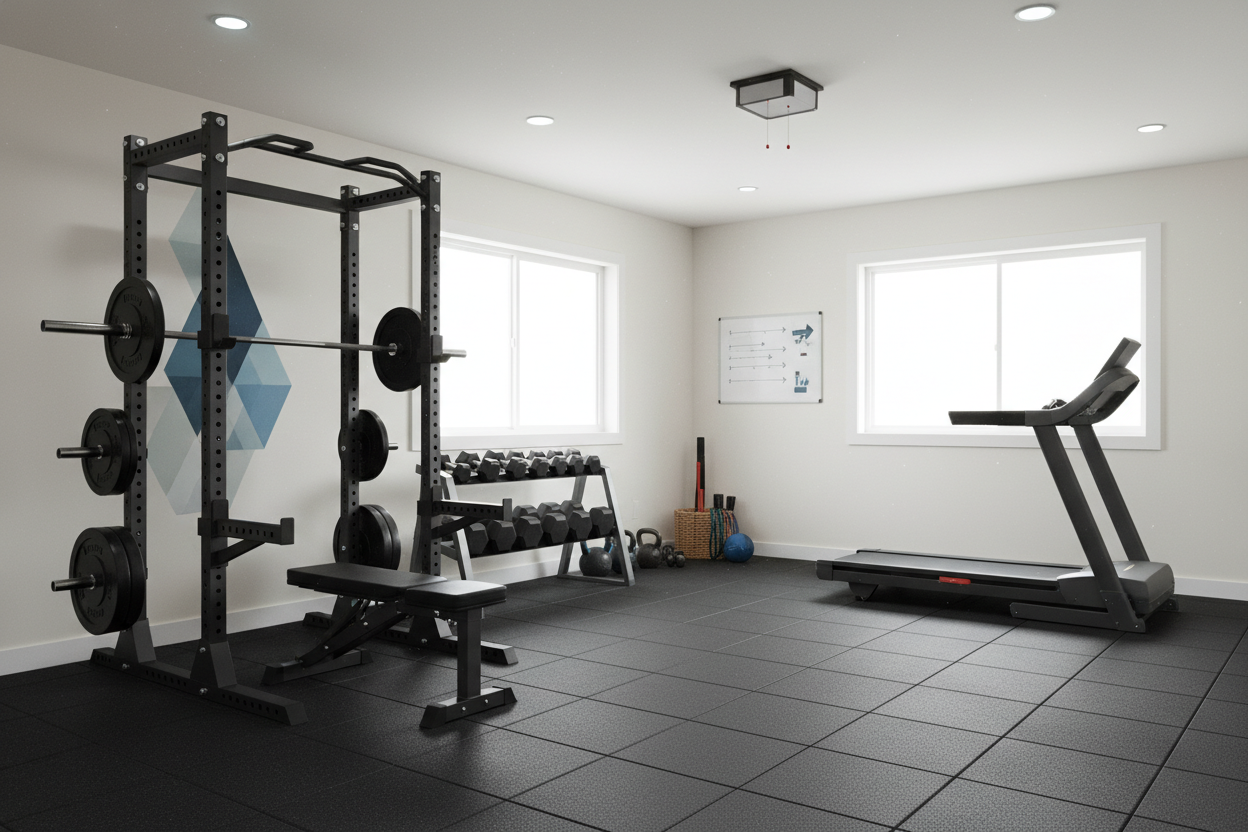
You can't 'strength train' effectively with 2-lb pink dumbbells forever. To apply the definition of strength exercise to your life, you need Strength Equipment that scales. I’m talking about a power rack with a 1,000-lb capacity, a 20kg Olympic barbell, and iron plates. You need the ability to add 2.5-lb 'micro-plates' to the bar every session to keep the adaptation signal alive.
I see people waste thousands on vibrating plates or 'smart' mirrors that don't let you lift more than 50 lbs. If you want to see what strength training means in a practical sense, look at a squat rack. It’s a tool that allows you to safely handle loads that would otherwise crush you. Resistance bands are fine for warm-ups, but for the meat and potatoes of your training, nothing beats gravity and iron.
Your First 30 Days: How to Start Without Overcomplicating It
Stop chasing 'muscle confusion.' Your muscles aren't confused; they're just weak. Pick five compound movements: Squat, Bench, Deadlift, Press, and Row. Do them three times a week. Before you start, read up on Beginner Gym Strength Training What To Know Before You Lift so you don't blow out your back on day one trying to ego lift.
Track every single set in a notebook. If you lifted 100 lbs today, your goal is to lift 105 lbs next time. That is the only 'secret' to strength. Forget the fancy supplements and the 45-minute mobility flows. Move the iron, eat some protein, and sleep. Everything else is just marketing noise designed to separate you from your money.
My First Big Mistake
I once bought one of those 'all-in-one' home gyms with the cables and the plastic weight stacks. It looked great in the catalog, but the 150-lb stack felt like 50 lbs because of the pulley ratios. I spent six months 'maxing out' that machine and wondered why my chest still looked like a pancake. The day I switched to a real flat bench and a barbell was the day I actually started training. The weight didn't lie. If I couldn't move it, I wasn't strong enough. That honesty is what's missing from most modern fitness gadgets.
What is the definition of strength training?
It is any form of physical exercise that uses resistance to induce muscular contraction, specifically to build strength, anaerobic endurance, and skeletal muscle size.
How is it different from cardio?
Cardio focuses on your heart and lungs' ability to deliver oxygen. Strength training focuses on the muscle's ability to generate force against an external load. One makes you a better runner; the other makes you harder to break.
Do I need a gym for strength training?
Not necessarily, but you need a way to increase resistance. While bodyweight exercises work initially, a home gym with a barbell and plates is the most efficient way to ensure you never hit a plateau.