Beginner Gym Strength Training: What to Know Before You Lift
Walking into a fitness center for the first time can feel like stepping onto an alien planet. Rows of complex machines, clanking iron, and seasoned lifters can quickly turn excitement into intimidation. If you are tired of wandering aimlessly from the treadmill to the dumbbell rack, mastering beginner gym strength training is your ticket to building confidence, muscle, and lasting health.
Whether you are setting up a garage sanctuary or commuting to a local commercial facility, having a structured plan separates a frustrating plateau from a successful fitness journey. This guide will walk you through the essential equipment, fundamental movements, and realistic expectations to kickstart your progress.
Key Takeaways
- Start with compound movements (squats, deadlifts, presses) to maximize full-body muscle recruitment.
- Prioritize form over heavy loads to build a safe foundation for long-term progress.
- Understand the difference between free weights and selectorized machines to structure your routine effectively.
- Commit to 2-3 days per week of consistent lifting rather than burning out with daily sessions.
Navigating the Equipment Landscape
When approaching gym weight training for beginners, the sheer volume of gear is overwhelming. Understanding what each piece of equipment does will help you build a balanced routine and avoid wasting time on ineffective exercises.
Free Weights vs. Selectorized Machines
Selectorized machines (the ones with weight stacks and pins) are excellent for isolating specific muscles and safely guiding your range of motion. They are highly recommended when you first explore strength training for beginners at gym environments. However, free weights—like barbells, dumbbells, and kettlebells—force you to engage stabilizing muscles. A smart beginner program utilizes both: machines to safely build baseline strength, and free weights to develop coordination and functional power.
Structuring Your First Routine
You do not need a complex, six-day split to see results. In fact, gym strength training for beginners thrives on simplicity. Focusing on fundamental movement patterns ensures you hit every major muscle group without spending three hours on the floor.
The Core Movement Patterns
When selecting weights at the gym for beginners, categorize your exercises into four main buckets: push (bench press, overhead press), pull (rows, pulldowns), squat (goblet squats, leg press), and hinge (Romanian deadlifts, kettlebell swings). Picking one exercise from each category creates a highly effective, full-body workout that can be completed in under 45 minutes.
Essential Gear and Etiquette
While you do not need to spend a fortune on accessories to start weight training for beginners at gym facilities, a few smart investments can improve your experience. Flat-soled shoes provide a stable base for heavy lifts, unlike squishy running shoes. Additionally, learning basic etiquette—like wiping down benches and re-racking your weights—will instantly make you feel like a respected regular.
From Our Gym: Honest Take
I still remember my first few weeks transitioning from bodyweight workouts to actual barbell training. I walked up to a commercial power rack, loaded up what I thought was a reasonable weight, and immediately realized I had no idea how to adjust the J-hooks or safety pins. It was humbling.
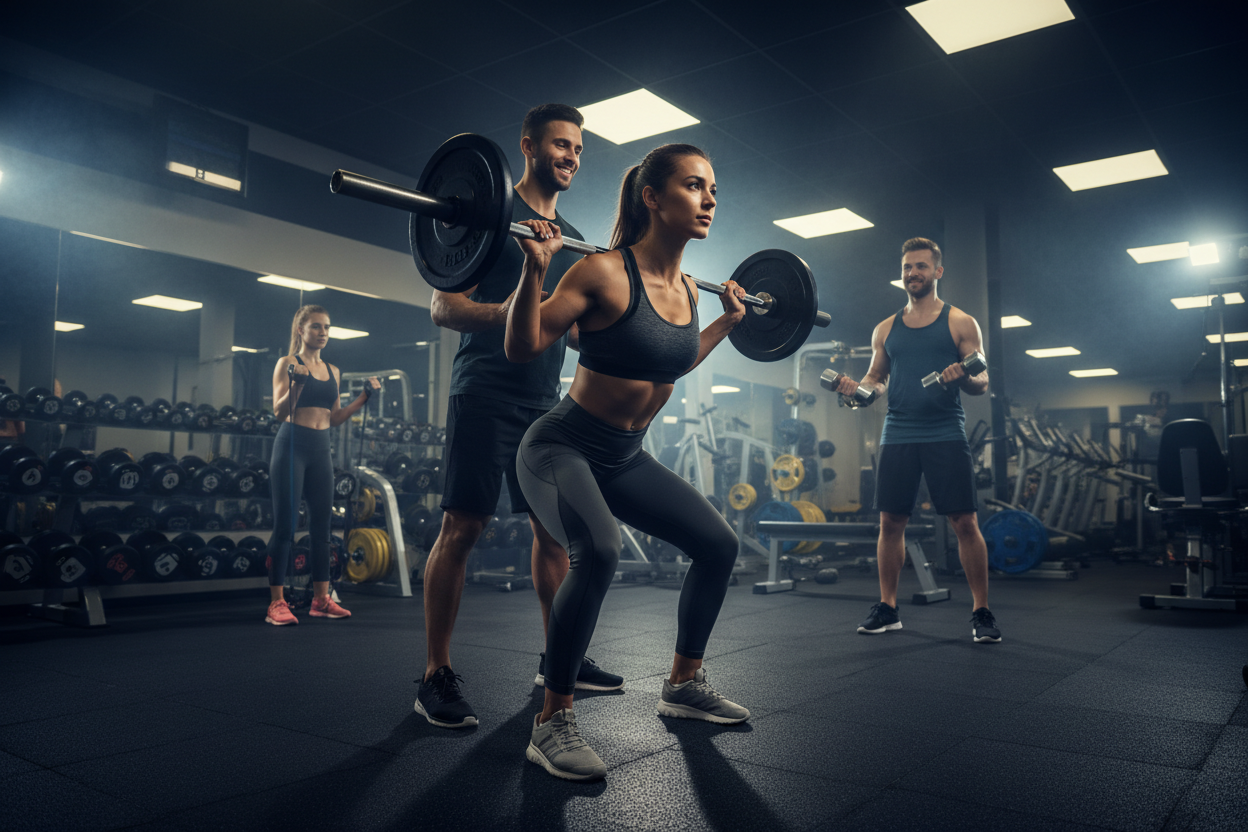
Here is my honest advice: do not be afraid to just use the empty 45-pound barbell for your first few weeks. The knurling on a standard bar can be tough on uncalloused hands, and mastering the bar path is critical. When we test new barbells for our home gym setups, we always evaluate the knurling grip and spin—but as a beginner, your only focus should be keeping that bar moving in a straight, controlled line. Skip the lifting belts and wrist wraps for now; let your natural grip and core strength develop first.
Frequently Asked Questions
How many days a week should I lift as a beginner?
Aim for 2 to 3 days per week. This provides enough stimulus to trigger muscle growth while allowing your central nervous system and muscles ample time to recover between sessions.
How heavy should my starting weights be?
Choose a weight that allows you to complete 8 to 12 repetitions with perfect form. The last two reps should feel challenging, but not so difficult that your technique breaks down.
Are free weights dangerous for beginners?
Not if used correctly. Start light, focus on technique, and always use the safety spotter arms if you are lifting inside a power rack. If you are unsure, booking a single session with a trainer to learn the basic barbell lifts is a worthwhile investment.