I Pieced My Gym Together for $1K (I Should've Bought a Weight Set)
I remember the exact moment I realized I’d screwed up. I was staring at a Craigslist haul: two rusty 45-pounders, a 'standard' bar that I didn't realize was only one inch thick, and a pair of adjustable dumbbells that rattled like a box of loose nails. I thought I was being savvy, hunting for deals like a garage gym detective. I spent months scrolling Marketplace at 11:00 PM, driving 40 minutes one way for a single pair of 25s, and paying retail for the 'missing pieces' I couldn't find used.
By the time I actually had enough gear to run a basic linear progression program, I had spent over $1,100. My gym looked like a scrap metal yard. Nothing matched, the bar felt like it was made of wet pasta, and I had spent more on gas and individual shipping fees than I would have on a high-end, brand-new weight set. I learned the hard way that 'saving money' piece-by-piece is often just an expensive way to buy a headache.
Quick Takeaways
- Bundled kits typically save 15-25% compared to buying components individually.
- Shipping a single 45lb plate is a logistical nightmare; freighting a whole pallet is the pro move.
- Mismatched plate diameters ruin your deadlift setup and barbell mechanics.
- A unified weight kit ensures your bar knurling and plate tolerances are consistent.
The Frankenstein Gym Trap I Fell Into
The allure of the 'Frankenstein Gym' is strong. You see a pair of iron plates for fifty cents a pound and think you've struck gold. But here’s what nobody tells you: iron is heavy, and heavy is expensive to move. I spent three weekends in a row driving to different suburbs to pick up random plates. One guy sold me '45s' that actually weighed 42 and 48 pounds respectively. Another lady sold me a 'weight kit' that turned out to be for a 1-inch standard bar, which is useless if you ever plan on lifting more than 150 pounds without the bar snapping.
I ended up with five different brands of plates. Some were deep-dish, some were thin, and some had handles. When I tried to stack them on a bar, they didn't fit together snugly. They rattled, they shifted, and they made the lift feel unstable. I also didn't account for the 'convenience tax.' Every time I realized I was missing a specific increment—like a pair of 10s—I had to go back out or pay $30 in shipping for a $20 item. My time has a dollar value, and I burned hundreds of hours trying to save pennies.
The worst part? The bar. I bought a cheap, unnamed bar because I’d spent my budget on the plates. The knurling was so passive it felt like holding a greasy pipe, and the sleeves didn't rotate. Every time I cleaned the bar, the torque went straight into my wrists. If I had just bought a comprehensive set from the jump, I would have had a 28.5mm Olympic bar with actual bearings and plates that were actually round.
The Hidden Costs of Buying Iron A La Carte
Let’s talk about the 'shipping tax.' If you buy a 45lb plate from an online retailer, they’re going to bake the shipping cost into the price or hit you with a $40 delivery fee. Do that four or five times, and you’ve just paid for a whole extra set of plates in shipping alone. When you buy a bundled weight set, it usually ships via LTL (Less Than Truckload) freight. It comes on a pallet, wrapped in plastic, and delivered to your driveway. The cost per pound to ship 300lbs at once is significantly lower than shipping six 50lb boxes via FedEx.
There’s also the cost of the 'temporary' gear. Most people who piece things together buy a cheap flat bench first, then realize they need an incline, then realize the cheap bench isn't stable. They buy a cheap squat stand, then realize they want a full rack for safety. You end up buying everything twice. When you buy a kit, you’re usually getting a rack, a bar, and plates that are designed to work together. The tolerances are tight, the heights are standardized, and you aren't left wondering if your mismatched J-cups will actually fit the uprights you bought from a different vendor.
Why Mismatched Plates Actually Ruin Your Lifts
Consistency is the mother of progress. If you’re serious about buying the right weight set for home, you have to look at the mechanical specs. Most high-quality Olympic plates have a standard diameter of 450mm. However, cheap 'store-brand' plates are often 440mm or even smaller. If you mix a 450mm plate with a 440mm plate on the same side of the bar, the larger plate takes 100% of the impact when you drop it. This leads to cracked plates, bent bars, and a floor that looks like it’s been hit by a sledgehammer.
It’s even worse for deadlifts. If your plates aren't uniform, the bar starts at a different height every time you reset. You can't build a consistent pull if the bar is an inch lower on the left side than the right. I once spent a month wondering why my lower back was tweaked after every heavy session. I finally pulled out a tape measure and realized my mismatched 'bargain' plates were off by nearly 3/4 of an inch in height. That’s not a workout; that’s a recipe for a physical therapist visit. A unified set ensures that every time you step up to the platform, the geometry is identical.
What a Solid Weight Set Actually Looks Like
If I were starting over today with a clean slate and a $1,500 budget, I wouldn't spend a dime on Marketplace. I’d look for a foundational weight set and bench combo that covers the big three: Squat, Bench, and Deadlift. You need a rack that won't tip over when you're re-racking a heavy set, a bar that can handle at least 1,000 lbs of static weight, and plates that are within a 2% weight tolerance.
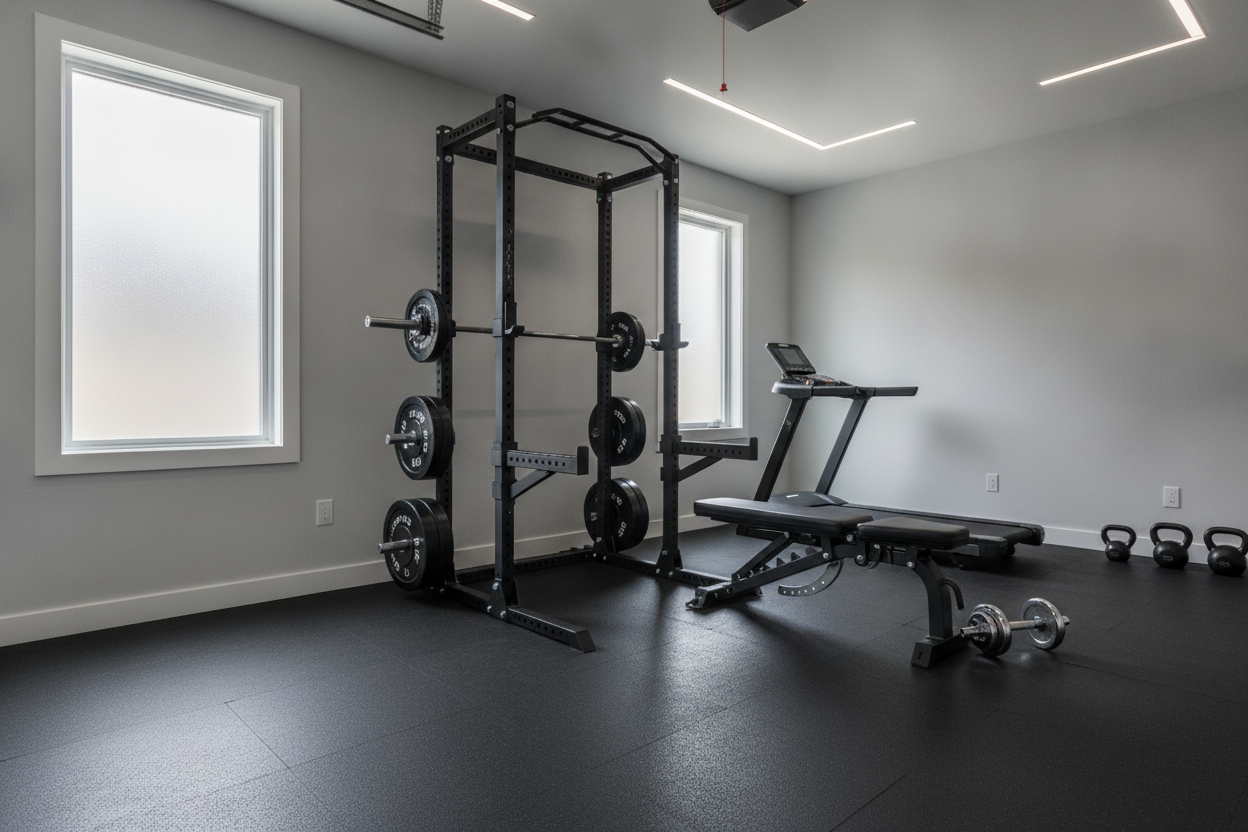
A prime example of this 'one-and-done' philosophy is the Gxmmat X6 Power Rack Weight Bench Barbell Bumper Plate Set. It’s a 230lb package that actually gives you the heavy-duty 11-gauge steel you need. It includes the rack, the bar, and the bumpers. Bumper plates are a massive upgrade over iron if you’re training in a garage; they’re quieter, they don't rust as easily, and they won't shatter your concrete floor if you have to bail on a lift. Plus, having a rack with integrated storage keeps your space from looking like a disaster zone.
Don't skimp on the bench, either. I’ve used benches that felt like they were made of cardboard. You want an adjustable weight bench with a high weight capacity—at least 600-800 lbs including your body weight. Look for dense foam padding and a wide base. If the bench wobbles when you’re holding 80lb dumbbells over your face, get rid of it. Buying these pieces as a set ensures the bench height is compatible with the rack’s safety pins and J-cup levels.
Is There Any Reason to Buy Gear Piece by Piece?
There are only two scenarios where buying piece-by-piece makes sense. First, if you are a competitive, elite-level powerlifter or weightlifter who needs highly specialized, calibrated gear. If you need Ivanko plates and an Eleiko bar for competition prep, you aren't buying a bundle at a local shop. You’re paying the premium for the name and the precision.
Second, if you literally have zero dollars and are scavenging. If you find a bar in a ditch and plates in a dumpster, then sure, piece it together. But for 95% of people building a garage gym, the 'bundle' is the superior play. It saves you the shipping nightmare, it guarantees mechanical consistency, and it gets you training on day one. I wasted six months 'building' my gym when I could have been using it. Invest in the kit, save your gas money, and spend that extra time actually lifting the weights.
FAQ
Is it cheaper to buy weights individually or in a set?
Almost always a set. Retailers offer deep discounts on bundles because they can ship everything at once on a single pallet, which drastically lowers their logistics costs compared to shipping ten separate boxes via a parcel carrier.
What should be included in a starter weight set?
A true starter set should include a 7-foot Olympic bar (20kg or 45lb), at least 160-230lbs of plates (a mix of 45s, 25s, 10s, and 5s), and a sturdy rack or squat stand. If it includes a bench, make sure it's rated for at least 600lbs.
Are bumper plates better than iron plates for a home gym?
For most garage gym owners, yes. Bumpers are the same diameter regardless of weight, which protects your bar and floor. They also run much quieter, which your neighbors and family will appreciate during early morning sessions.