Your Knees Hate Burpees (Try HIIT Training Dumbbells Instead)
I remember waking up after a 'cardio day' a few years back feeling like my kneecaps were filled with crushed glass. I spent a decade thinking that if I wasn't doing 100 burpees or jumping onto a 24-inch box until I saw stars, I wasn't really doing conditioning. That is a lie that leads straight to the physical therapist's office. If you are a heavy lifter, your joints are already under significant load; adding high-impact plyometrics on top of that is just asking for a meniscus tear.
The Problem With How Most Guys Do Intervals
Most guys think conditioning requires mimicking a caffeinated rabbit. They spend thirty minutes jumping around their living room, slamming their heels into the floor and wondering why their lower back screams the next morning. The reality? If you weigh over 200 lbs, the sheer force of landing from a jump is massive. It is high-impact trash that wears down your connective tissue before you even reach your target heart rate.
Standard plyometric circuits often prioritize 'movement for the sake of movement.' You end up doing sloppy reps because you are tired, and sloppy jumps are where injuries happen. Using hiit training dumbbells allows you to keep your feet planted while still forcing your heart to work like a freight train. You get the metabolic stimulus without the orthopedic cost.
- Save Your Joints: No more high-impact landings that rattle your spine.
- Build Real Muscle: Bodyweight jumps don't build a thick back or strong shoulders; heavy iron does.
- Scalable Intensity: You can't make a burpee much harder, but you can always grab a heavier bell.
- Space Efficient: You only need a 6x8 foot space to get a world-class sweat.
Why I Replaced Plyometrics With Iron
I ditched the box jumps for heavy iron about three years ago and my recovery has never been better. Moving a pair of 50-lb dumbbells from the floor to overhead requires way more 'engine' than a bodyweight squat. This is the secret to high intensity interval training with dumbbells: it creates massive mechanical tension and metabolic stress simultaneously. You are essentially doing a strength workout at sprint speeds.
When you move moderate weights quickly, your oxygen demand skyrockets. Your body has to work overtime to clear lactic acid while maintaining the stability required to hold the weights. This preserves your hard-earned muscle mass instead of burning it off like long-distance running often does. If you want to see how we structure these sessions for maximum output, check out our Workout Hub for more of our favorite conditioning and strength routines.
The Best Moves for a High Intensity Dumbbell Workout
Stop doing bicep curls and lateral raises during your intervals. Those are isolation moves and they won't spike your heart rate. For a high intensity dumbbell workout, you need compound, multi-joint movements that use every muscle you own. These are the big hitters that turn a 15-minute session into a total-body smoker.
My top pick is the Devil Press. It is essentially a burpee where you are holding dumbbells, transitioning into a double-dumbbell snatch in one fluid motion. It is miserable, effective, and builds a massive upper back. Next is the Dumbbell Thruster—a deep front squat into an overhead press. It forces your heart to pump blood from your legs to your shoulders instantly. Finally, the Alternating Snatch. It is a pure power move that builds explosive hips and forces you to breathe like a bellows. These hiit exercises dumbbell style are about efficiency and raw output, not looking pretty in the mirror.
My Go-To 15-Minute Full Body HIIT Dumbbell Workout
This is my personal 'I don't have time to train' routine. It is a 5-movement circuit designed to be performed for 3 rounds. We use a 40/20 work-to-rest ratio. That means 40 seconds of flat-out effort followed by 20 seconds to breathe and transition. Do not sandbag the 40 seconds; the goal is to be gasping by the end of the interval.
- Movement 1: Alternating Dumbbell Snatches
- Movement 2: Dumbbell Goblet Squats
- Movement 3: Renegade Rows (Push-up, then row each arm)
- Movement 4: Dumbbell Push Press
- Movement 5: Devil Presses
The beauty of this is that you don't need a massive commercial gym rack. Even a beginner full body weight workout can be scaled into a brutal HIIT session with just one or two heavy bells. If the weight feels too light, move faster. If it's too heavy, focus on the quality of the hinge.
Don't Destroy Your House When You Drop the Weights
Here is a reality check: when you are on round three of a 15-minute full body hiit dumbbell workout, you are going to reach failure. Your grip will go, and you will drop those weights. If you are training on bare concrete or thin carpet, you are going to crack your foundation or ruin your floor. I learned this the hard way when I chipped a chunk out of my garage floor with a 70-lb hex bell.
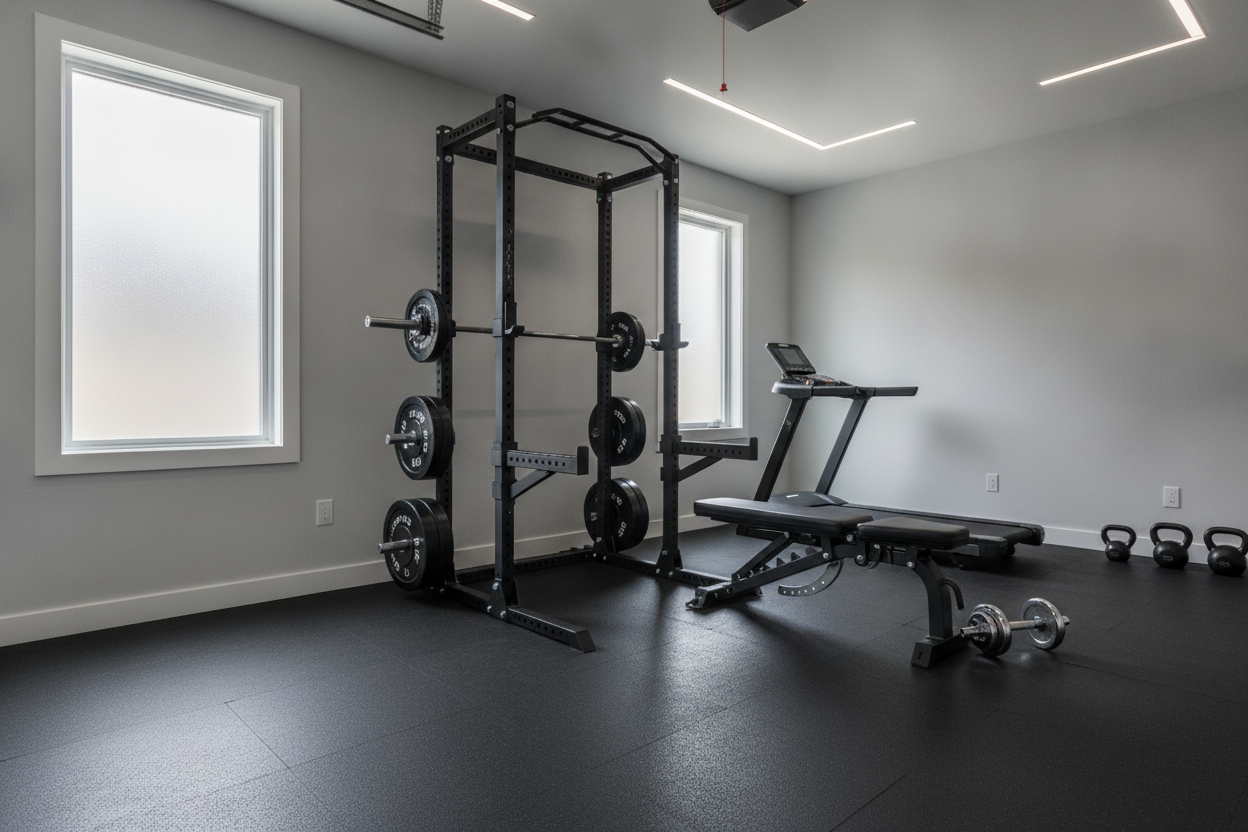
You need to prep your space. Investing in high-quality gym flooring for home workout setups is the only way to protect your gear and your home. A thick rubber mat absorbs the shock and dampens the noise, which is especially important if you are training in a second-floor apartment or while the kids are asleep. Don't let a dropped weight turn into a $500 floor repair bill.
How heavy should my HIIT dumbbells be?
For most men, a pair of 35-lb or 50-lb dumbbells is the sweet spot. For women, 15-lb to 25-lb bells usually work best. You want a weight that you could overhead press for 10-12 reps when fresh, but feels like a mountain by the end of a 40-second interval.
Are hex dumbbells better than adjustable ones for HIIT?
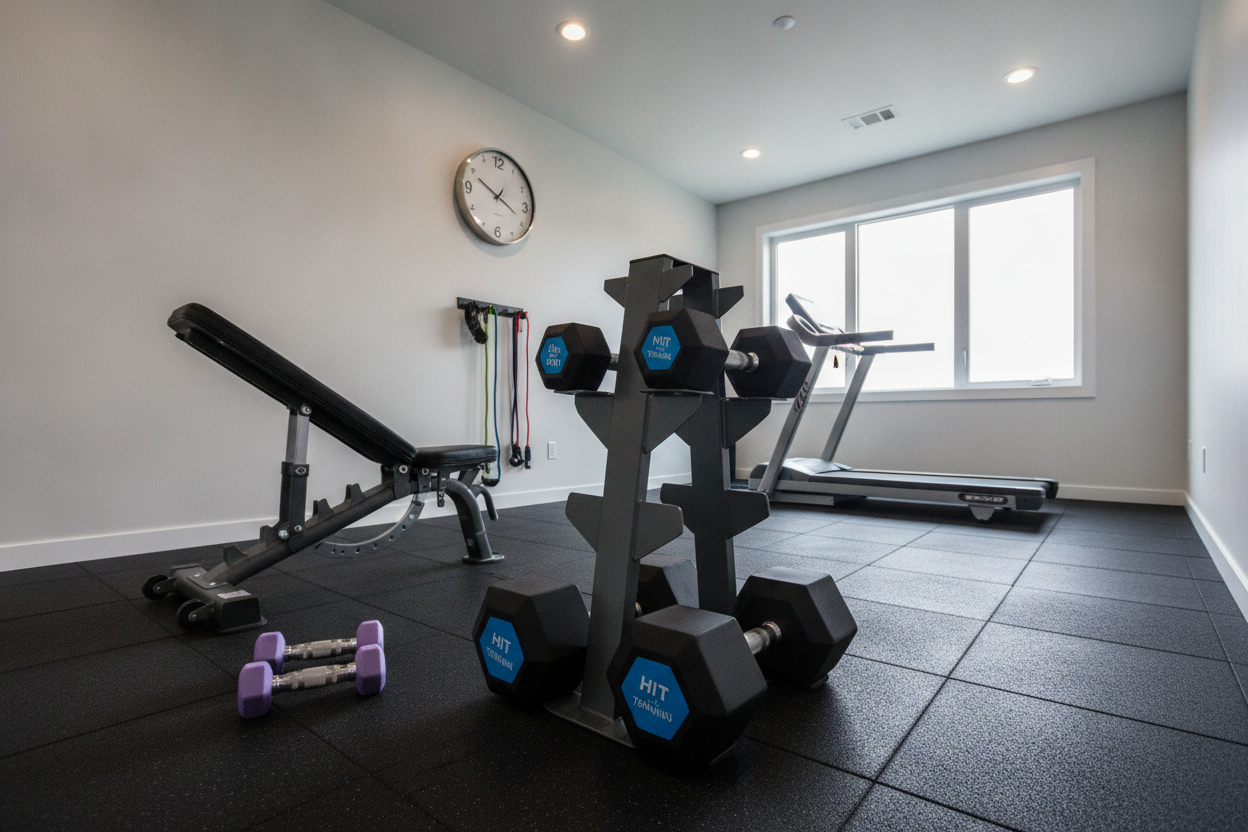
For HIIT, I prefer fixed hex dumbbells. They don't roll during renegade rows or devil presses, and there are no locking mechanisms to rattle loose when you're moving fast. Adjustable bells are great for space, but they can be clunky during high-speed circuits.
How many times a week can I do dumbbell HIIT?
Treat this like a heavy lifting session. Your central nervous system needs time to recover from the intensity. Twice a week is plenty if you are also doing traditional strength work. Any more and you'll likely see your main lifts start to stall.