I Lift Alone: The Reality of Heavy Home Weightlifting
I remember the first time I missed a squat in my garage. It was 10 PM, the neighbors were asleep, and I had 315 pounds pinned across my upper back. In a commercial gym, three guys would have rushed over. In my garage, I was just a guy in a cold room about to find out if my equipment was as good as the marketing claimed. home weightlifting isn't just about the PRs; it is about the logistics of not dying when things go wrong.
Quick Takeaways
- Never lift without mechanical safeties (spotter arms or pins).
- Standard flooring will shatter; use high-density rubber to protect your subfloor.
- Lateral clearance is more important than the length of your barbell.
- Stop training to absolute technical failure when you are solo.
The Fear of Getting Pinned (And How to Beat It)
The biggest hurdle to how to lift heavy at home is the mental block of training alone. When you know there is no one to pull the bar off your chest, you tend to sandbag your sets. That stops the moment you invest in a power rack. You need a cage that can handle the static load of a dropped bar without tipping or buckling.
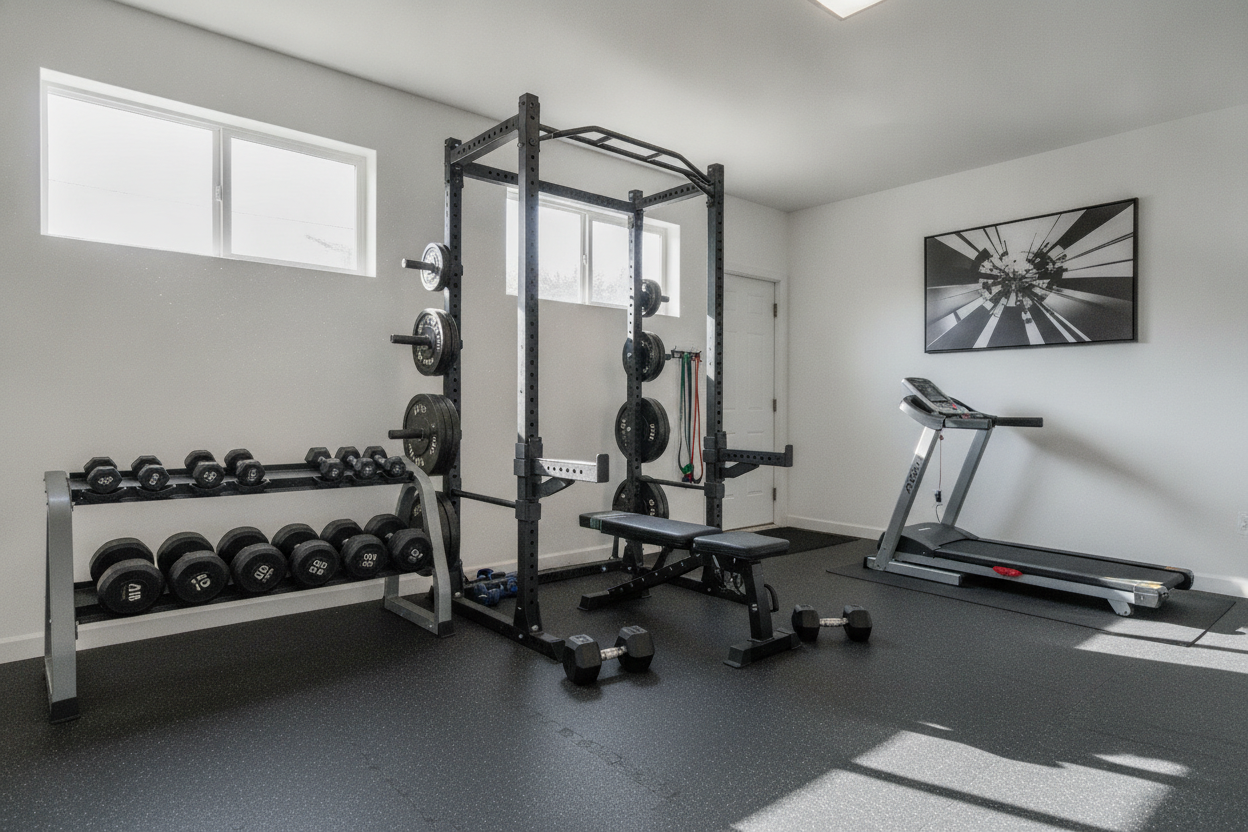
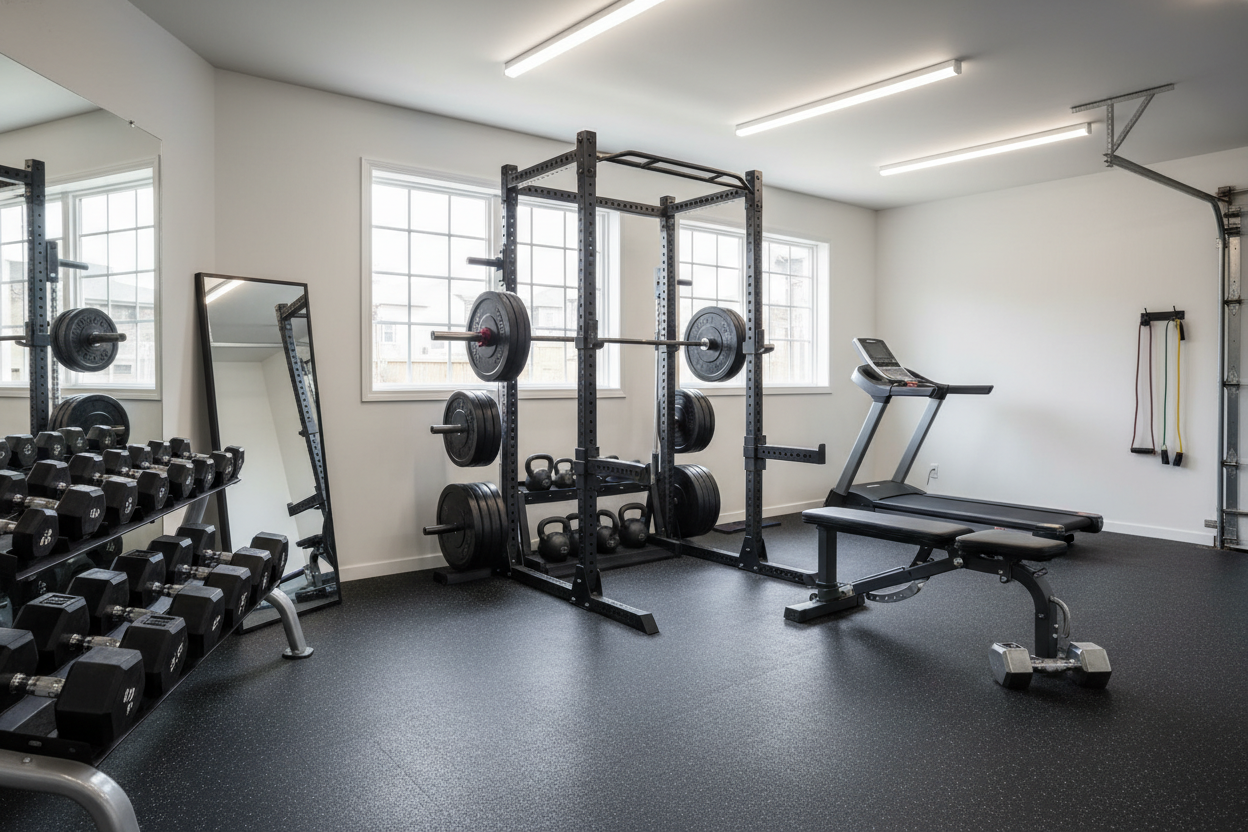
I have tested cheap racks that wobble when you rack 135. Avoid those. You want 11-gauge steel and spotter arms that extend far enough to catch a forward-leaning squat. This is the most important piece of equipment you need to lift heavy safely. Once you set those pins an inch below your depth, the fear disappears. You can push to the edge because the floor (and the rack) has your back.
Stop Treating Your Floor Like a Commercial Gym
If you lift heavy at home, you are eventually going to drop something. A 400-pound deadlift doesn't just make noise; it sends a shockwave through your foundation. I have seen guys crack their garage slabs because they thought a thin layer of carpet was enough. It is not.
You need a dedicated impact layer. I recommend starting with a 6X8Ft Exercise Mat as your base. It provides enough density to distribute the force of a dropped plate. If you are pulling truly heavy, sandwich that mat between the concrete and a layer of 3/4-inch horse stall mats. Your foundation—and your security deposit—will thank you.
The Geometry of a Safe Lifting Space
Most people measure their room and think, 'A 7-foot bar fits here, I am good.' They forget about the 'bail zone.' If you have to dump a snatch or jump back from a failed squat, you need lateral clearance. If your plates are inches away from a glass window or a water heater, you are going to hesitate during the lift.
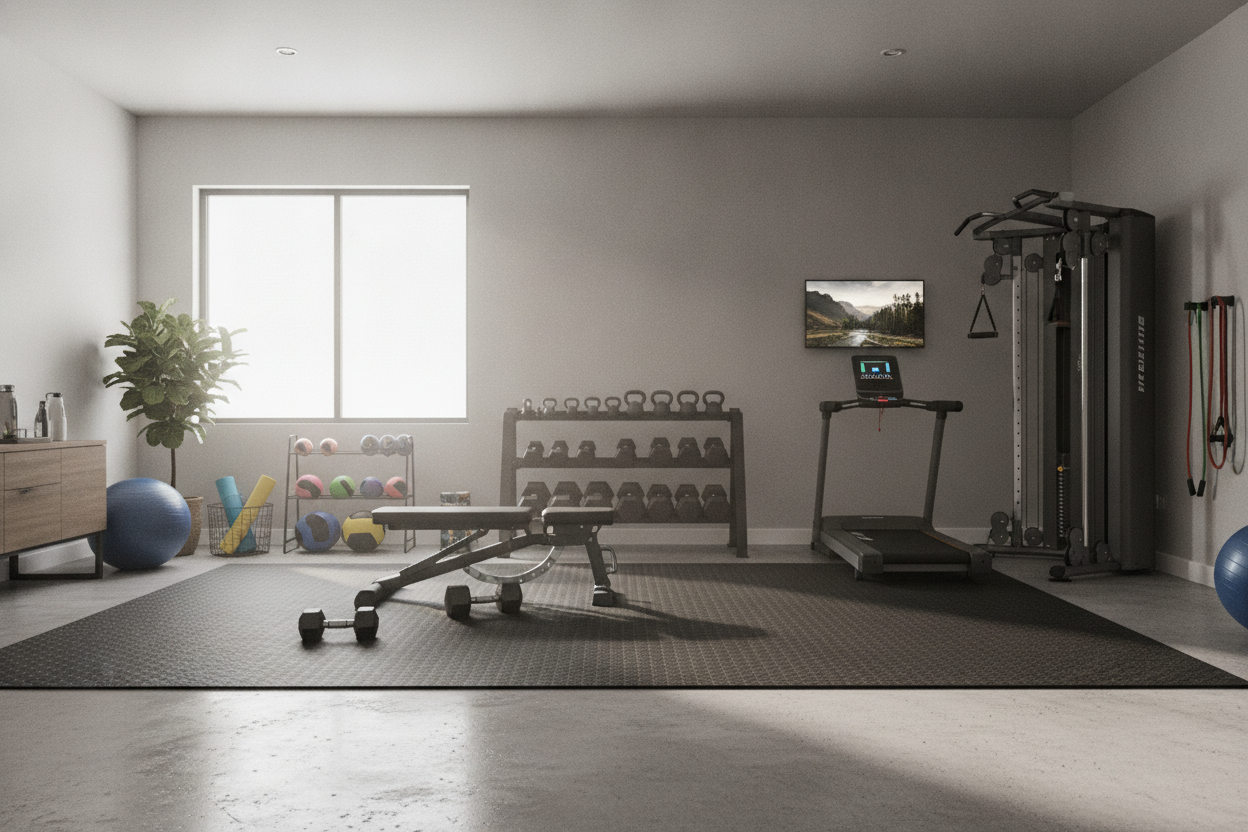
A large exercise mat for home gym use does more than protect the floor; it defines your safe territory. You need at least two feet of clearance on either side of the bar sleeves just to load plates comfortably. Don't cram your rack into a corner. Give yourself the room to fail safely without taking out a wall.
Re-Thinking Your Rep Schemes for Solo Lifting
The way you train changes when you are alone. In a gym, you might grind out 12 reps of bench press until your arms turn to jelly. At home, that is a recipe for a 'roll of shame.' High-rep fatigue is where form breaks down and accidents happen. how to lift at home effectively means prioritizing quality over absolute exhaustion.
I shifted my programming to lower reps with higher intensity. It is much easier to maintain form and control over a heavy set of 3 or 5 than it is to survive a shaky set of 15. Learning how to actually lift for strength at home involves keeping a 'rep in reserve.' If you aren't 100% sure you can nail the next rep with perfect form, you rack the bar. The safeties are there for accidents, not for lazy programming.
My Honest Mistake
Early on, I tried to save money by using standard 1-inch plates on a cheap threaded bar for heavy rows. During a heavy set, the collar loosened, and a 25-pound plate slid off, sending the other side of the bar flying into my shins. It was a stupid, avoidable injury. If you are going heavy, buy a real Olympic bar with 2-inch sleeves and actual collars. Cutting corners on the interface between you and the weight is never worth the $50 savings.
FAQ
Is it safe to bench press alone?
Only if you use a rack with safety pins set just below your chest height or 'flip-down' safeties. Never use collars when benching alone without safeties, so you can tilt the bar and dump the plates if you get stuck.
How do I stop the noise from bothering my family?
Use bumper plates instead of iron and invest in 'silencer pads' or thick rubber flooring. Iron plates clanging at 6 AM is a fast way to get your home gym privileges revoked.
Do I really need a full power rack?
If you plan on squatting or pressing over 200 pounds, yes. A half-rack or squat stands can work, but they are less stable during a 'hard' fail compared to a four-post cage.