I Fixed My Squat With a Single Leg Hip Thrust Machine
I spent years grinding out 400-pound barbell hip thrusts, thinking my posterior chain was bulletproof. Then I filmed a heavy squat session from behind and realized I was shifting my hips three inches to the right every time I hit the hole. My left glute was basically a passenger, letting my right side and lower back do all the heavy lifting. I finally swallowed my pride and started using a single leg hip thrust machine to fix the wreckage.
- Bilateral thrusts often hide massive strength gaps between legs.
- Machines provide the stability needed to actually hit failure without falling over.
- Isolating one side forces the glute medius to stabilize your pelvis properly.
- Expect a massive carryover to your squat and deadlift stability.
The Problem With Chasing Heavy Bilateral PRs
Chasing big numbers on a barbell hip thrust is a dopamine hit, but it is also a great way to hide a lazy glute. When you have a heavy bar across your hips, your nervous system is smart—it will recruit your dominant side to move the weight at all costs. Over time, that 60/40 strength split becomes your new normal. You end up with one glute that looks like a grapefruit and another that looks like a pancake. Your lower back starts screaming because it is compensating for the pelvic tilt during every other lift.
I found that my right side was doing about 70% of the work on heavy sets. By the time I switched to unilateral work, the strength deficit was embarrassing. If you cannot move 40% of your max bilateral weight on a single leg, you have a problem that no amount of heavy back squats will fix.
Why This Machine Changes the Game
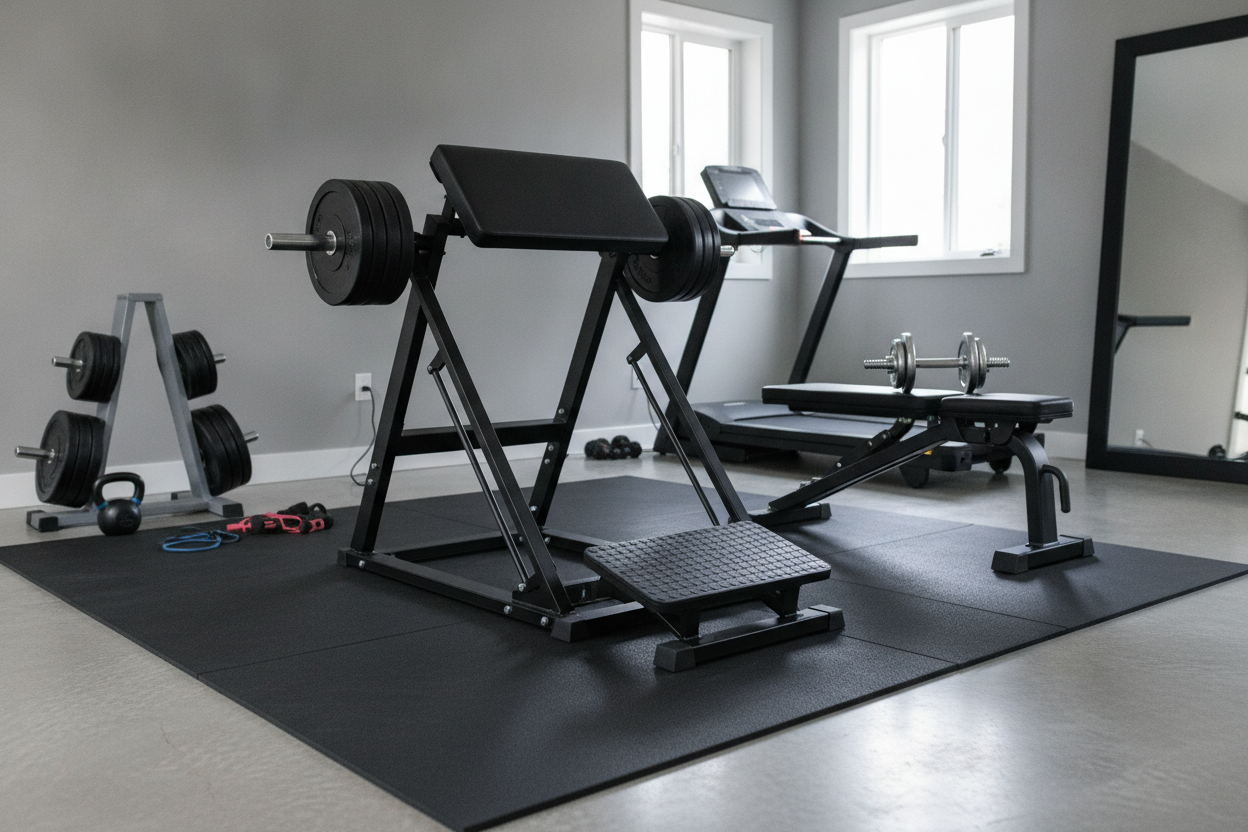
Trying to do a single-leg thrust with a barbell is a circus act. You are wobbling, the bar is tilting, and you are spending more energy on balance than on the actual contraction. Moving to a dedicated leg machine changes the math entirely. You have a fixed path of motion and a stable back pad that does not slide across the floor mid-set.
This stability allows you to treat it like a single leg glute bridge machine, where you can actually focus on the mind-muscle connection rather than not dying. Your glute medius has to fire like crazy to keep your pelvis level against the resistance. This is exactly what is missing when your squat starts to helicopter on the way up. The machine lets you push to absolute failure safely, which is nearly impossible with a loose barbell on one leg.
Stop Slipping: The Perfect Unilateral Setup
To get the most out of a single leg hip thrust on machine, stop thinking about moving the weight and start thinking about your pelvis. Plant your working foot so your shin is vertical at the top of the movement. If your foot is too far out, your hamstrings take over; if it is too close, your knees will take the brunt of the load. I usually aim for a 90-degree angle at the peak of the squeeze.
Tuck your chin and keep your ribs down. If you arch your back at the top, you are just training your lumbar spine to hurt. I like to keep my non-working leg bent at the hip to help keep my spine neutral. If you are traveling and stuck in a hotel gym with no specialized gear, you can try a leg extension machine hack, but nothing beats the leverage and footplate angle of a real thrust unit. The way a dedicated machine loads the weight directly over the hips makes the peak contraction feel twice as intense.
Programming Unilateral Gains Into Your Leg Day
Do not lead your workout with these. Hit your heavy compound move first—like a squat or deadlift—then use the unilateral thrust as your primary accessory. I recommend 3 sets of 10-12 reps per side. Always start with your weaker leg first and match that rep count with your strong leg. Do not let the strong side pull further ahead just because it can.
For a complete posterior chain overhaul, I usually pair these with a single leg curl machine. Balancing the hamstrings alongside the glutes is the secret to getting rid of that nagging 'butt wink' at the bottom of your squats. After six weeks of this, my squat shift completely disappeared, and my hip stability felt like I was bolted to the floor.
FAQ
Why not just do single leg bridges on the floor?
Floor bridges have a very short range of motion. A machine allows your hips to drop below the level of your feet, creating a massive stretch that triggers way more muscle growth.
How do I stop my hamstring from cramping?
Move your foot slightly closer to the machine. A vertical shin usually fixes hamstring dominance. Also, make sure you are driving through your heel, not your toes.
Is the machine better than a smith machine?
Yes. A smith machine has a straight vertical path, which does not match the natural arc of a hip thrust. A dedicated thrust machine is angled to keep the tension where it belongs.