Master the Single-Leg Curl Machine for Balanced Hamstring Growth
Let’s be honest about leg day. Most lifters spend all their energy on squats and deadlifts, treating hamstrings as an afterthought. If you are dealing with knee pain or notice one leg looks smaller than the other, heavy compounds aren't enough. This is where the single-leg curl machine becomes mandatory, not optional.
It isn't just an accessory movement; it is the primary tool for correcting the imbalances that bilateral movements often hide. If you want to build legs that are as functional as they are aesthetic, you need to isolate each side.
Key Takeaways: Quick Summary
- Fixes Imbalances: Unilateral training prevents your dominant leg from taking over, ensuring symmetrical growth.
- Peak Contraction: Allows for a greater range of motion and a harder contraction than lying bilateral curls.
- Injury Prevention: Strengthening the hamstrings individually stabilizes the knee joint and reduces ACL injury risk.
- Mind-Muscle Connection: Isolating one leg forces you to focus entirely on the hamstring muscle belly, reducing momentum.
Why You Can't Skip Unilateral Leg Training
Most gym equipment is designed to move heavy loads with two limbs. While effective for total mass, this often masks a "bilateral deficit." This is a phenomenon where the sum of force produced by each leg individually is actually greater than the force produced by both legs together.
When you use a single leg hamstring curl machine, you tap into this deficit. You aren't just working the muscle; you are rewiring the neural drive to that specific limb. This is critical for athletes who run or sprint, as those are single-leg activities. You need your hamstrings to fire independently and explosively.
Anatomy of the Movement
To get the most out of this machine, you need to understand what you are targeting. The hamstrings are made up of three main muscles:
- Biceps Femoris (Long and Short Head)
- Semitendinosus
- Semimembranosus
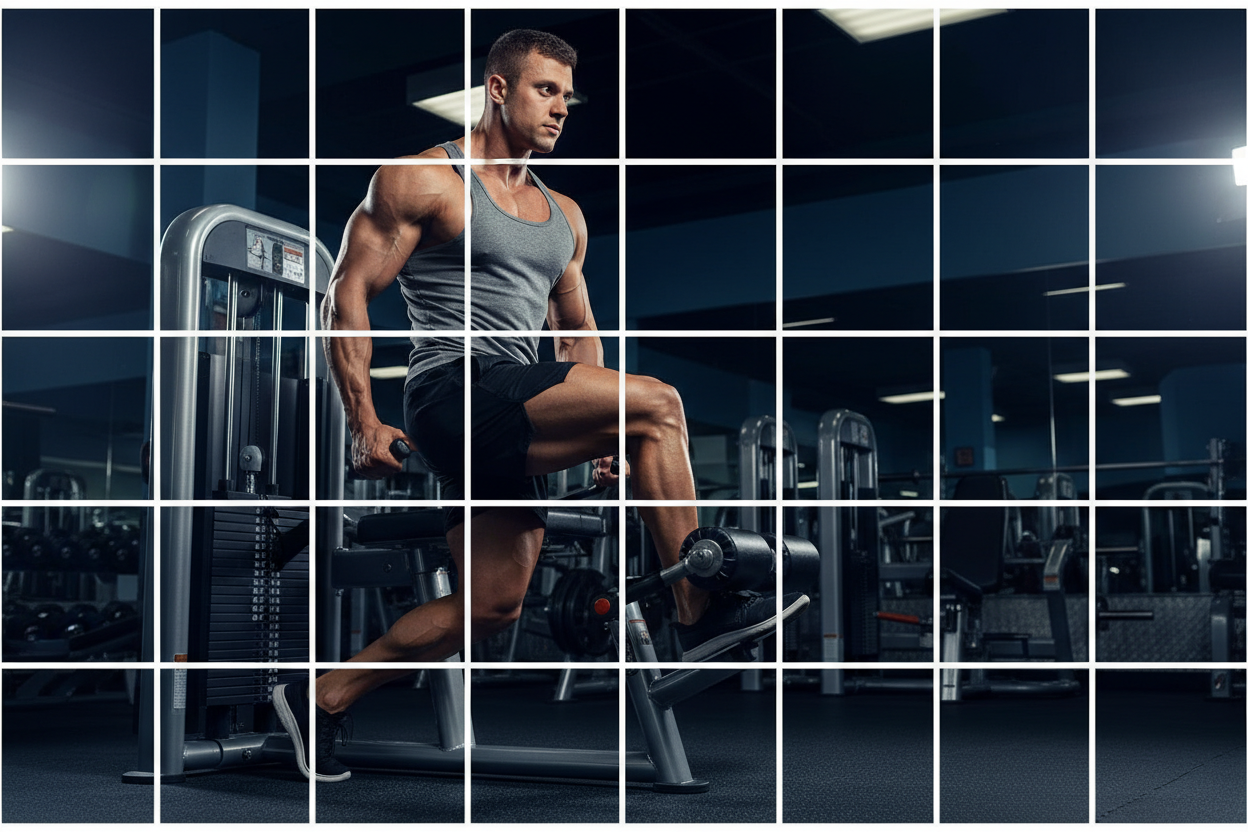
The single-leg curl specifically targets the knee flexion function of these muscles. Because the hip is usually fixed (especially in standing variations), you can achieve a peak contraction that is almost impossible to replicate with free weights.
Proper Setup and Execution
The difference between a growing muscle and an irritated knee usually comes down to machine setup. Do not just jump on and start kicking.
1. Align Your Knee
The pivot point of the machine (the cam) must align perfectly with your knee joint. If your knee is too far forward or backward, you create shearing force. You want the rotation of the machine to mirror the rotation of your joint.
2. Adjust the Roller Pad
The pad should rest comfortably on the back of your ankle, just above the heel. If it's too high on the calf, the lever arm is too short, and you lose mechanical advantage. If it's on the heel, it will slip.
3. Lock Your Hips
Whether you are using a standing or seated variation, your hips must remain glued to the pad. As soon as your hips rise or rotate, you disengage the hamstring and start using your lower back and glutes to move the weight.
Common Mistakes to Avoid
I see people wasting their time on this machine daily because they prioritize weight over tension.
Using Momentum
If you are swinging your leg up, you are missing the point. The concentric (lifting) phase should be explosive but controlled, and the eccentric (lowering) phase should take 2–3 seconds. The magic happens in the slow lowering of the weight.
Dorsiflexion vs. Plantarflexion
Pay attention to your foot. Keeping your toes pulled toward your shin (dorsiflexion) generally engages the calf muscles slightly, which can help move more weight. However, pointing your toes (plantarflexion) effectively creates "active insufficiency" in the calves, forcing the hamstrings to do 100% of the work. Try pointing your toes if you really want to cramp up.
My Personal Experience with single-leg curl machine
I’ll be real with you—I used to hate this machine. For years, I stuck to the lying leg curl because I could load it heavy and ego-lift. When I finally switched to the standing single-leg variant to fix a nagging left knee issue, it was a humbling experience.
The first thing I noticed was the "bite" of the roller pad. I realized quickly that wearing low-cut socks was a mistake; the friction against the Achilles when sweating is distracting. I also learned that the "clunk" of the weight stack hitting the bottom ruins the set. I had to learn to stop an inch before the weights touched to keep tension on the muscle.
But the biggest reality check was the cramping. The isolation is so severe that my hamstrings would feel like they were balling up into a knot. That discomfort, however, is exactly where the growth happened. My left leg caught up to my right in about three months of consistent use, and my squat stability improved significantly.
Conclusion
The single-leg curl machine isn't just for finishing off a workout; it's a prerequisite for healthy, balanced legs. Stop treating it like a break from the squat rack. Treat it with the same intensity, focus on the squeeze, and watch your hamstring development take off.
Frequently Asked Questions
Can I replace deadlifts with the single-leg curl machine?
No. Deadlifts are a hip-hinge movement that targets the glutes and upper hamstrings while building systemic strength. The single-leg curl is a knee-flexion isolation movement. You need both for complete leg development.
Is the seated or standing variation better?
Both are effective, but the seated version places the hamstrings in a lengthened position at the hips, which can lead to greater hypertrophy (muscle growth) due to the stretch. The standing version offers a better peak contraction. Use whichever your gym has, or rotate them.
How many reps should I do for single-leg curls?
Since this is an isolation movement, heavy low reps (1-5) increase injury risk. Stick to the hypertrophy range of 10–15 reps, focusing on slow negatives and a hard squeeze at the top.