I Finally Built a Hip Thrust Program That Doesn't Ruin Leg Day
I remember the first time I loaded 315 lbs on a barbell for a hip thrust program. I thought I was a genius. I figured that if I could squat heavy, I could thrust heavy every single day. Fast forward forty-eight hours, and I couldn't even bend over to pick up a 10-lb plate. My lower back felt like it had been through a car compactor, and my heavy squat session that afternoon was a total wash. Most people fail their glute training because they treat it like a bicep curl—something you just tack on at the end of a session until you're exhausted.
Quick Takeaways
- Frequency: Twice a week is the sweet spot for natural lifters pushing real weight.
- Stability: If your bench is sliding, your glutes aren't working. Use a dedicated pivot point.
- Split: Separate your heavy mechanical tension days from your high-rep metabolic stress days.
- Recovery: Treat the hip thrust as a primary lift, not a 'finisher' for your back's sake.
Why Your Current Hip Thrust Routine Is Frying Your Lower Back
The biggest mistake I see in every garage gym is the 'add-on' mentality. You've just finished five sets of heavy squats and three sets of RDLs. Your spinal erectors are already screaming for a break. Then, you decide to throw 405 lbs on a bar for a hip thrust routine. Because your lower back is already fatigued, it stops acting as a stabilizer and starts trying to help with the lift. You end up hyperextending at the top, using your lumbar spine to bridge the weight instead of your glutes. This isn't just inefficient; it's a recipe for a disc issue that will keep you out of the gym for months.
You have to respect the central nervous system (CNS) toll of heavy hip extension. Even though the range of motion is shorter than a deadlift, the sheer amount of weight you can move is massive. When you move that much iron, your CNS doesn't care that it's a 'glute exercise.' It just knows it's a max-effort load. If you're wondering why your deadlift has plateaued while you're hammering the glutes, it’s likely because you're overtaxing the same neural pathways every single session without a strategic plan.
The Big Question: How Often Should You Do Hip Thrusts?
If you scroll through Instagram, you'll see '30-day glute challenges' that suggest you should be doing some form of hip extension every single day. That's fine if you're using a 10-lb booty band and doing kickbacks in your living room. It's a disaster if you're a serious lifter. When people ask me how often to do hip thrusts, I always look at their recovery capacity first. For a natural lifter who is actually pushing for progressive overload, twice a week is the gold standard. This allows for one heavy day and one volume day, with enough space in between to actually recover.
So, how often should you do hip thrusts if you're also squatting and deadlifting? You have to look at the 'weekly volume bucket.' If you're squatting heavy on Monday, doing heavy hip thrusts on Tuesday is going to kill your recovery. I've found that a 72-hour window between your heaviest leg day and your heaviest hip thrust day is the minimum for most people. If you try to squeeze in three or four heavy sessions, you'll notice your 'pop' off the floor on deadlifts starts to disappear. Your muscles might not be sore, but your nervous system is cooked. Stick to twice a week, focus on the quality of the contraction, and stop chasing frequency for the sake of a calendar checkmark.
The Two-Day Garage Gym Hip Thrust Program
I built this split specifically for people who train in a garage or basement where space is tight and recovery is king. This isn't about doing a hundred reps of garbage. It’s about two focused sessions that target different muscle fibers. We separate the 'heavy' from the 'pump.' By doing this, you keep the intensity high without burning out before your next squat session. It’s a sustainable way to build a hip thrust routine that actually sticks for more than a month.
Day 1: Heavy Barbell Tension (Strength Focus)
Day one is all about mechanical tension. We're looking for low reps—somewhere in the 5 to 8 range—with at least three minutes of rest between sets. This is where you move the heavy iron. To do this safely, you need a rock-solid setup. I spent years trying to use a standard flat bench against a wall, but it always shifted or felt too high, which killed my leverage. Using a dedicated Gxmmat Hip Thrust Bench was a legitimate shift for my training. It’s the right height to get your shoulder blades in the pivot position, and it doesn't slide across the concrete when you're grinding out that last rep.
Focus on a 'ribs down' position. Don't look at the ceiling; look at the wall in front of you. This keeps your spine neutral and forces the glutes to do the heavy lifting. If you feel your hamstrings taking over, pull your feet in closer to your butt. If you feel it in your quads, push them out. You want your shins to be vertical at the top of the movement. Three sets of five to eight reps here is plenty if the weight is actually challenging.
Day 2: Unilateral Work and the Squeeze (Volume Focus)
Day two is about metabolic stress and fixing imbalances. We drop the barbell and pick up a dumbbell or a heavy kettlebell. The goal here is 12 to 15 reps, focusing on the 'peak contraction' at the top. I love doing single-leg thrusts here because they reveal exactly which side is weaker. It's much easier on the spine, but the burn is significantly more intense. If you're struggling with the logistics of the setup, I highly recommend checking out How to Do a Dumbbell Hip Thrust Without Crushing Your Pelvis for some positioning tips that don't involve painful bruising.
This is the day you chase the pump. Short rest periods—maybe 60 to 90 seconds—and high control. You aren't trying to set a world record here. You're trying to make 50 lbs feel like 500 lbs by squeezing the life out of the muscle at the top of every rep. This volume day is what actually builds the shape, while the heavy day builds the power.
Protecting Your Floors (And Your Joints) During Heavy Sets
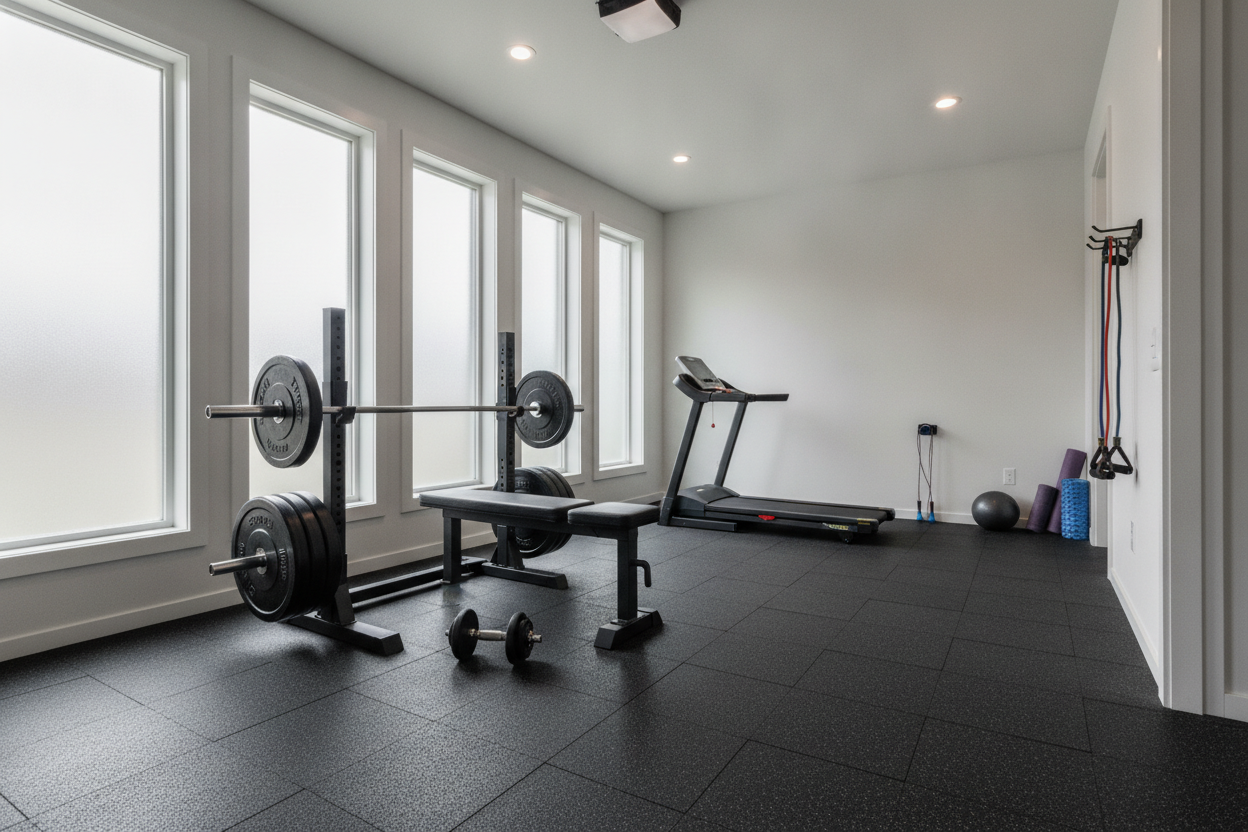
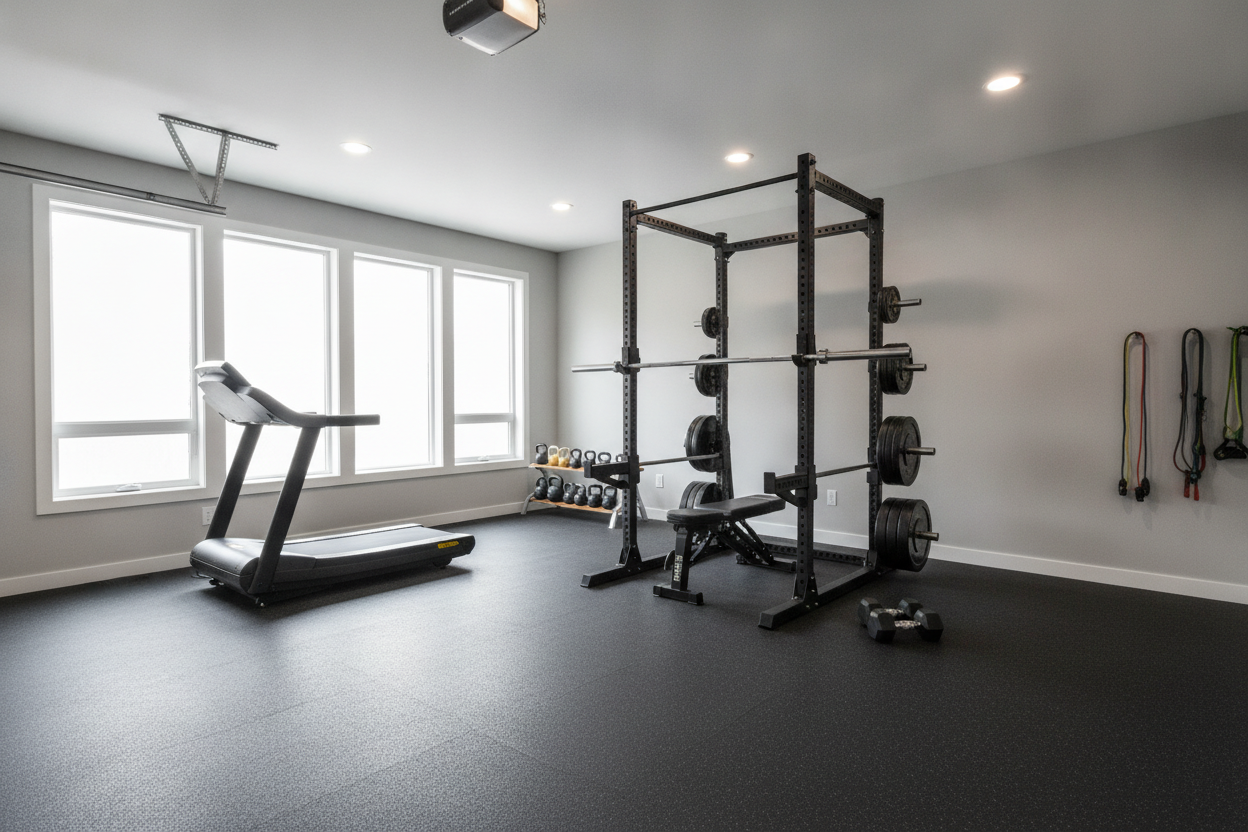
If you're training in a garage, you're likely working on a concrete slab. Heavy hip thrusts involve a lot of vibration and pressure in a very small footprint. I've seen guys crack their foundation or ruin their plates by dropping heavy sets directly onto the floor. More importantly, if your feet slide even an inch during a heavy set, your force production drops and your lower back takes the hit. I eventually upgraded my floor with Gxmmat New Upgraded Exercise Mats because the traction is light years ahead of standard horse stall mats. You need that 'grip' so your feet stay planted like they're glued to the floor.
A good mat also saves your joints. When you're locked into a heavy thrust, your heels are digging into the floor with hundreds of pounds of force. Doing that on bare concrete is a great way to develop heel pain or even shin splints over time. Treat your flooring as a piece of safety equipment, not just a decoration. It keeps the bench from sliding and keeps your feet from slipping mid-set.
When to Back Off the Weight
The ego is the biggest enemy of the glutes. I've been guilty of it—loading up four plates just because I wanted to look strong, only to realize I was only moving the weight about three inches. If you aren't getting a full lockout where your hips are parallel with your knees, the weight is too heavy. You're just doing expensive, dangerous pelvic tilts. You need to read up on how to Stop Ego Lifting: How to Do Hip Thrust Movements Correctly before you end up in a physical therapist's office.
If you start feeling a 'twinge' in your lower back or if your hamstrings start cramping before your glutes even get tired, that's your body telling you to drop the load. Progressive overload is about more than just adding 5 lbs every week. It's about doing the same weight with better control, a longer pause at the top, or a slower descent. Don't be the person who 'thrusts' 500 lbs with a two-inch range of motion. Nobody is impressed, and your glutes won't grow.
My Personal Experience: The Sliding Bench Incident
Early in my home gym days, I tried to save money by using a cheap adjustable bench for my hip thrusts. I didn't have it braced against anything. Halfway through a set of 275, the bench slid backward on the smooth concrete. The barbell stayed where it was, and I basically performed a forced back extension over the edge of the bench. I couldn't train legs for three weeks. That's when I realized that stability is the most underrated part of glute training. If your equipment isn't locked down, your brain won't let your muscles fire at 100% because it's too busy trying to keep you from falling over. Invest in a dedicated bench or at least a high-traction mat before you go heavy.
FAQ
Can I do hip thrusts every day?
Technically yes, but you shouldn't. Your glutes are a huge muscle group that requires recovery just like your quads or chest. If you're doing them every day, you aren't going heavy enough to see real strength gains, or you're just begging for an overuse injury.
What if I only have dumbbells?
You can still get a great workout. Focus on the unilateral (single-leg) variations. A 50-lb dumbbell used on one leg is often more challenging and effective for hypertrophy than a 135-lb barbell used on both legs.
Should I use a barbell pad?
Absolutely. Unless you enjoy having massive bruises across your hip bones and potentially damaging your nerves. Get a thick, high-density foam pad. It's not 'cheating'; it's being smart so you can actually finish your sets.