I Dropped Pump Workouts for a Real Strength Training Physique
I remember standing in front of my bathroom mirror after a ninety-minute chest-and-tri session, looking absolutely massive. Ten minutes later, the pump vanished, and I looked exactly like I did before I walked into the gym. It is a frustrating cycle of chasing a temporary strength training physique while making zero permanent progress.
I finally got tired of looking like I worked out without actually being strong. I ditched the fifteen-variation cable routines and started loading the bar until it bent. The result? I am technically smaller on the scale than my heaviest 'bulk' days, but I look twice as thick in a t-shirt because the muscle is actually dense tissue, not just inflammation and water.
Quick Takeaways
- Pump-based training builds temporary fluid volume; heavy lifting builds permanent muscle density.
- A true strength physique is characterized by thick traps, a wide back, and powerful legs.
- Progressive overload is the only metric that matters for long-term body composition.
- Minimalist gear setups often outperform commercial gym fluff when the goal is raw power.
The Puffy Muscle Lie (And Why You're Still Small)
Most guys are training for sarcoplasmic hypertrophy. That is a fancy way of saying you are filling your muscle cells with sarcoplasmic fluid. It makes you look puffy and soft in the right light, but it is effectively 'fake' size. It is the reason you look great in the gym lighting but like a regular dude the moment you step out into the sun.
When you stop training for three days, that fluid drains. You lose the size because it was never real tissue to begin with. To build a lasting strength physique, you have to force the muscle fibers themselves to grow thicker. That only happens when the weight on the bar makes your central nervous system scream. You want myofibrillar growth—the kind that stays with you even if you take a week off to go on vacation.
What a Real Strength Physique Actually Looks Like
A strength-first body looks different than a stage-ready bodybuilder. It is not about having a six-pack while weighing 150 pounds. It is about having a back so thick people can tell you deadlift from across the parking lot. We are talking about 'old man strength' density—the kind of muscle that feels like wood when you poke it.
This aesthetic is built on the 'yoke'—your traps, upper back, and neck. It is supported by a core that does not just look pretty but acts like a built-in weight belt. It is a rugged, athletic look that says you can actually move the weight you look like you can move. It is functional, but more importantly, it looks permanent.
Why Chasing Numbers Builds Better Bodies Than Chasing Mirrors
If you focus on the mirror, you will drive yourself crazy. Lighting changes, water retention happens, and your ego will lie to you every single morning. But a 405-lb deadlift does not lie. When you prioritize moving heavy weight, your body has no choice but to harden up to survive the stress.
I stopped caring about my bicep peak and started caring about my 5-rep max on the overhead press. Ironically, my arms grew more from stabilizing heavy bars than they ever did from concentration curls. When you force your body to adapt to heavy loads, it builds a foundation that does not disappear. You are building the actual contractile machinery of the muscle, not just the fuel tank around it.
The Only 4 Lifts You Need for Total Body Density
You do not need twenty different machines or a gym membership that costs as much as a car payment. You need a barbell and the guts to use it. My training revolves around the Big Four: Heavy Squats, Deadlifts, Overhead Presses, and Barbell Rows. These movements recruit the most motor units and trigger the highest hormonal response.
To move these kinds of loads, you cannot rely on the flimsy stuff you find at a big-box retail store. You need high-quality strength equipment that is rated for actual heavy lifting. I am talking about a rack that does not shudder when you re-rack a heavy squat and plates that are actually accurate to their stated weight. If your gear feels sketchy, your brain will subconsciously sandbag your lifts to stay safe. You need a setup that handles 500+ lbs without a flinch.
Stop Overcomplicating Your Gear
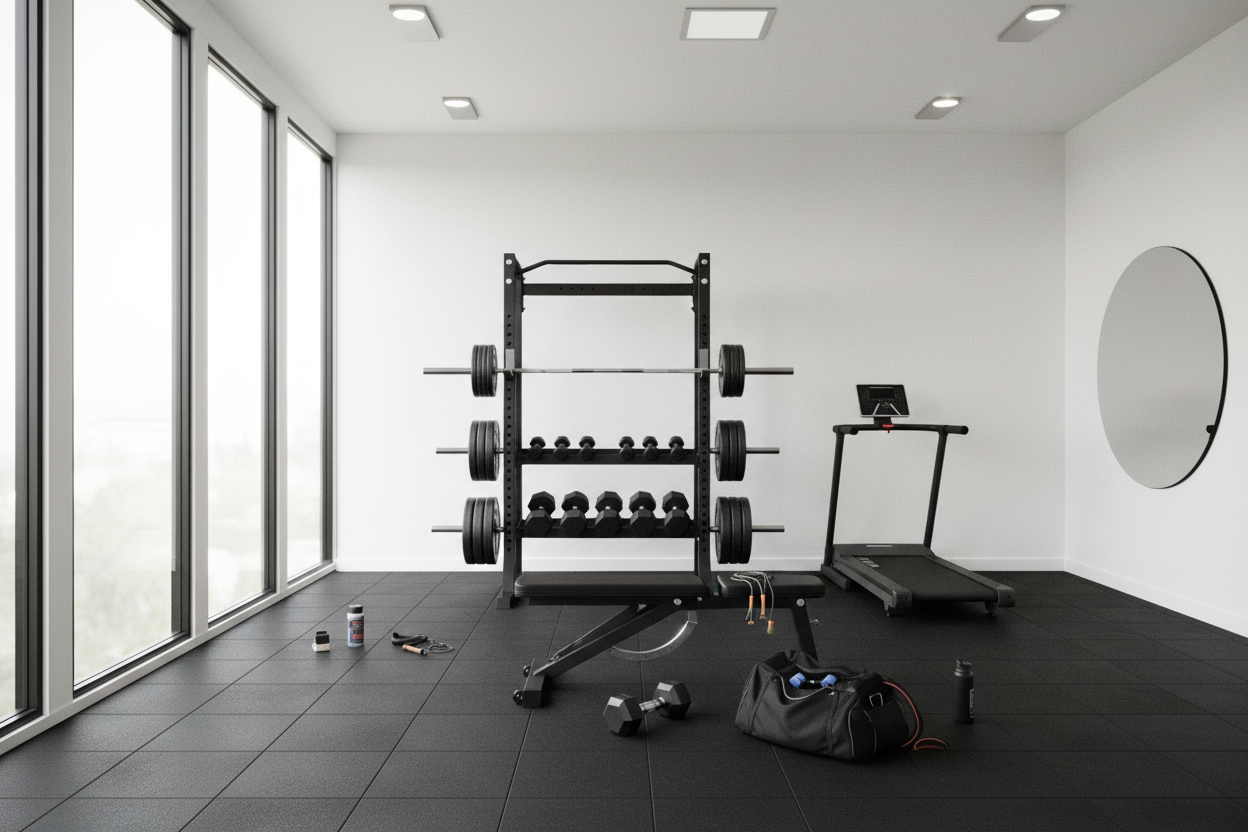
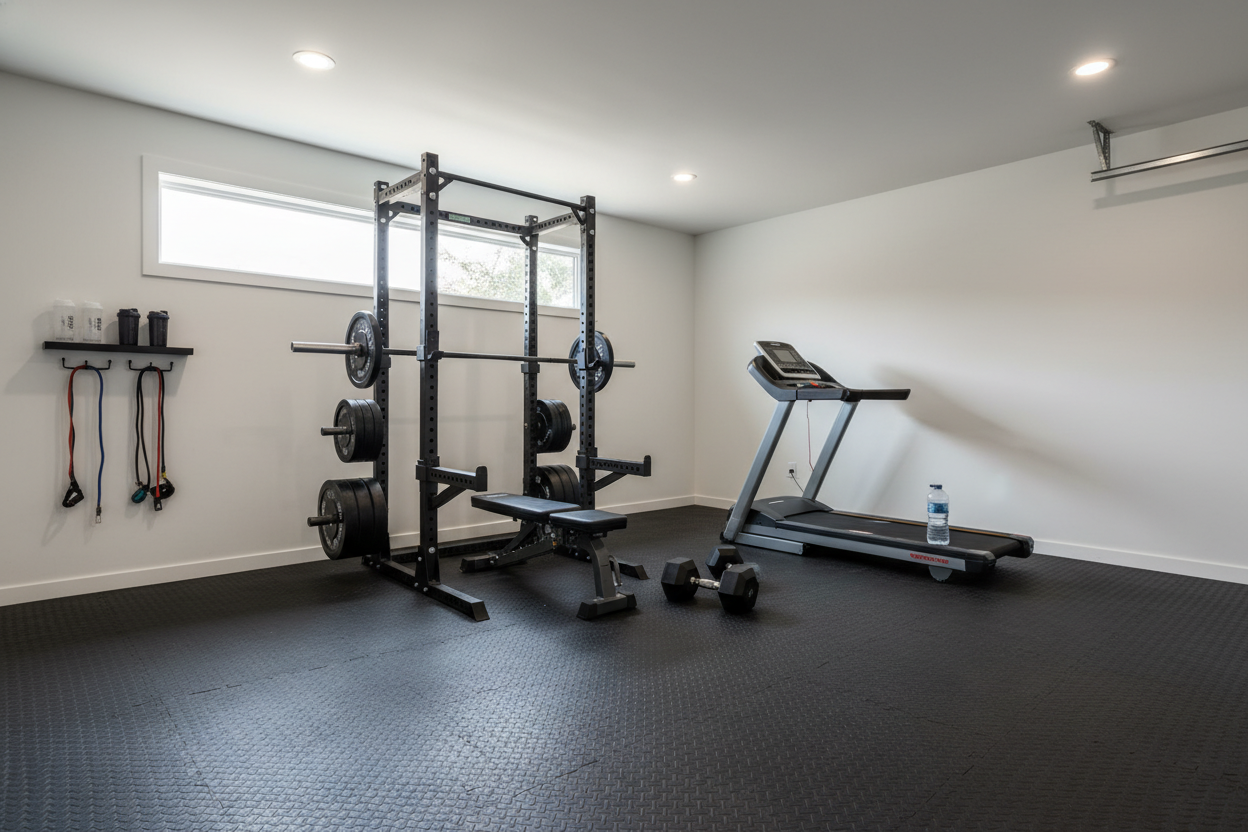
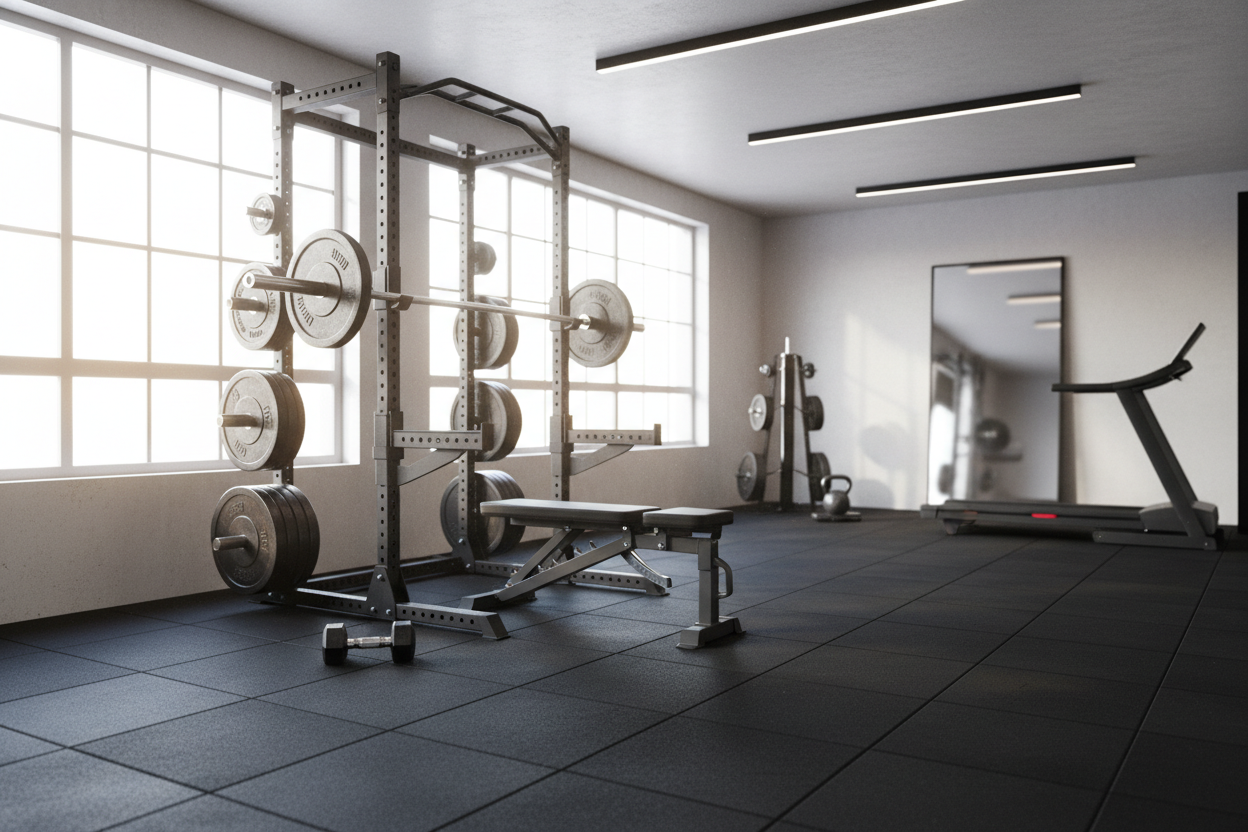
My garage gym is simple: a 3x3 power rack, a multi-purpose barbell, and about 500 pounds of iron. That is it. You do not need a leg extension machine or a cable crossover to build a world-class body. In fact, those things usually just distract you from the hard work of bracing against a heavy bar. If you can't fit it in a 6x8 ft corner, you probably don't need it for a strength-first approach.
Invest in the basics first. Once you start moving real weight, you might want to look into strength training accessories like a 10mm lever belt or some stiff wrist wraps. These are not crutches; they are tools that allow you to push your high-end strength without your grip or your lower back being the literal weak link in the chain. A good belt can be the difference between a PR and a week on the heating pad.
Eat for Performance, Let the Body Composition Follow
I used to cut calories the moment I saw a bit of blur in my midsection. My lifts stalled, my mood tanked, and I looked flat. Now, I eat to fuel my sessions. If I am squatting heavy on Monday, I am making sure I have enough carbs in the tank on Sunday night. You cannot build a mountain out of a molehill.
When you eat for performance, your body composition tends to take care of itself. You will find that you can carry more muscle mass at a lower body fat percentage because your metabolic engine is revving so high from the heavy compound movements. Stop starving yourself and start fueling the work. The density will follow the calories.
Personal Experience
Early in my home gym days, I bought a cheap barbell set from a local sporting goods store. The bar was rated for 300 lbs, and I thought that would be plenty for years. Within six months, I was deadlifting 315, and the bar developed a permanent 'smile'—a slight bend that made every lift feel off-balance. It was a wake-up call. I realized that if I wanted a serious body, I needed serious tools. I sold the cheap stuff and invested in a proper 20kg Olympic bar with aggressive knurling. My lifts immediately felt more stable, and my confidence under the bar skyrocketed. Do not let cheap gear cap your potential.
FAQ
Can I build a strength physique with dumbbells?
You can get close, but eventually, you will run out of weight capacity. For the true density that comes from massive loads, you eventually need the total weight capacity that only a barbell provides.
How many days a week should I train?
Three to four days is the sweet spot. Heavy lifting requires significantly more recovery for your central nervous system than high-rep pump work does. If you train six days a week heavy, you will burn out in a month.
Is this type of training safe for my joints?
Done with proper form, heavy lifting actually strengthens tendons and increases bone density. It is ego-lifting with bad form that hurts people, not the weight itself. Start light, nail the technique, then add weight every week.