I Ditched the Bands for Basic Weight Training With Weights
I was staring at a wall of colorful latex bands and plastic handles, wondering why my bench press hadn't moved in twenty-four months. My garage gym looked more like a physical therapy clinic than a place where people actually get strong. I’d spent way too much time trying to 'optimize' resistance curves instead of just moving heavy objects against gravity.
The truth is, I got bored and fell for the marketing. I thought I needed variable resistance and fancy attachments to protect my joints. Instead, I just got weaker. I finally cleared the floor and went back to weight training with weights that actually have some mass to them, and the results showed up in my physique within six weeks.
Quick Takeaways
- Iron doesn't lie; 45 pounds is always 45 pounds, unlike bands that lose tension.
- Exact tracking is the only way to ensure progressive overload.
- A barbell and a rack outperform a room full of accessories every single time.
- Free weights build the stabilizer muscles that most machines miss.
The Day I Realized My Garage Gym Routine Was Too Complicated
I remember trying to set up a 'banded floor press' with three different tensions looped around a pair of 25-pound dumbbells. It took me ten minutes to set up a set that lasted thirty seconds. I realized I was spending more time engineering my workout than actually exercising. I had plenty of weight/fitness gadgets but very few actual weights for workout sessions that mattered.
The lack of standard exercising weights in my rotation was stalling my progress. I was guessing how much tension the bands provided at the top of the movement. One day, the band snapped and whipped me across the shoulder. That was the sign. I sold the bands on Marketplace and bought a proper set of iron plates.
Why Old-School Weight Training With Weights Still Wins
Gravity is the most honest coach you'll ever have. When you use training weights, the resistance is constant and predictable. Unlike bands, which are easiest at the bottom and hardest at the top, a barbell provides a consistent stimulus that forces your muscles to work through the entire range of motion.
While I still appreciate some weight lifting machines for isolation work at the end of a session, they can't replace the raw stability required by free weights. Moving a heavy bar through space forces your core and stabilizers to fire in a way that a fixed-path machine never will. It builds 'useful' strength that carries over to real life.
The Problem With Guessing Your Workout Weight
You cannot manage what you do not measure. If you're using 'the red band' one week and 'the blue band' the next, you have no idea if you've actually gotten stronger or if the band just stretched out. To see real growth, you need to know your exact workout weight down to the pound.
I started logging every single lift. If I did 225 for five reps last week, I knew I had to hit 230 this week. That incremental progress is the engine of muscle growth. Without a specific weight for exercise tracking, you're just exercising—you aren't training.
The Only Training Weights You Actually Need to Start
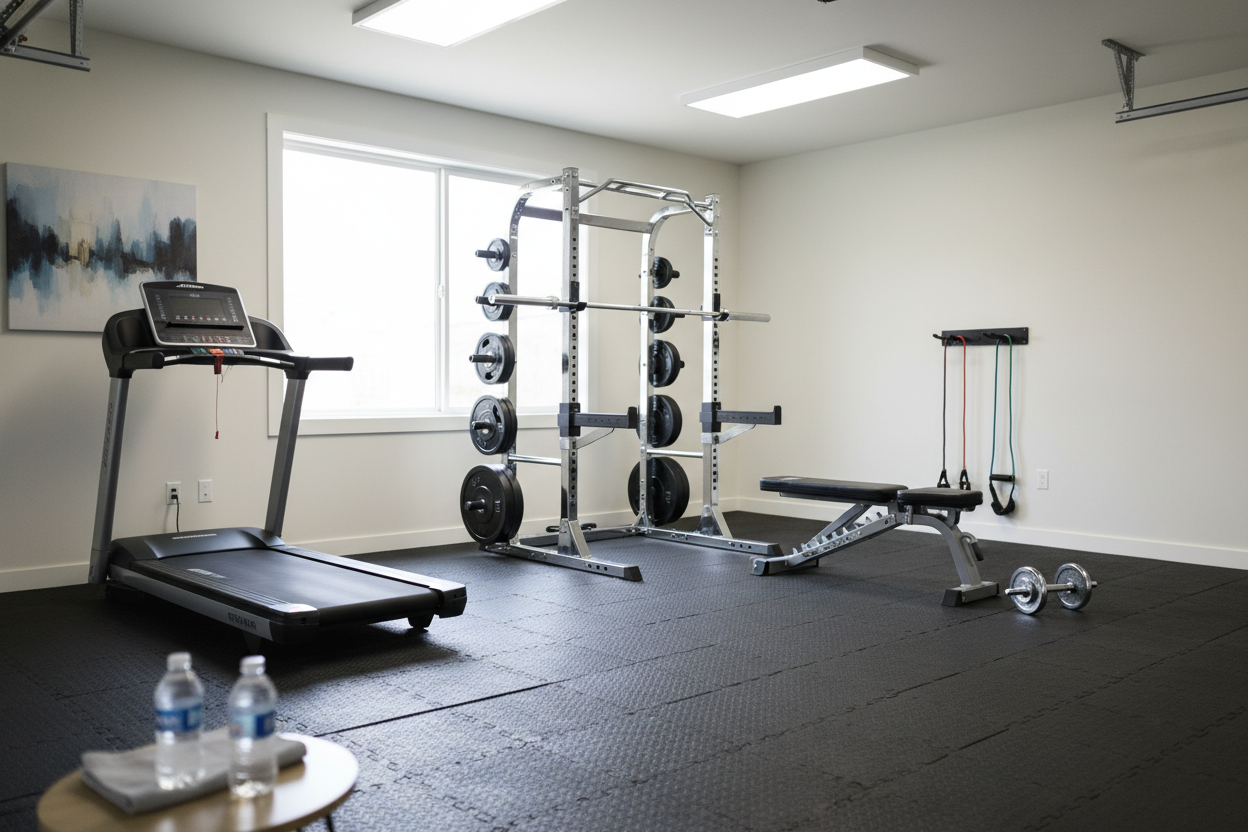
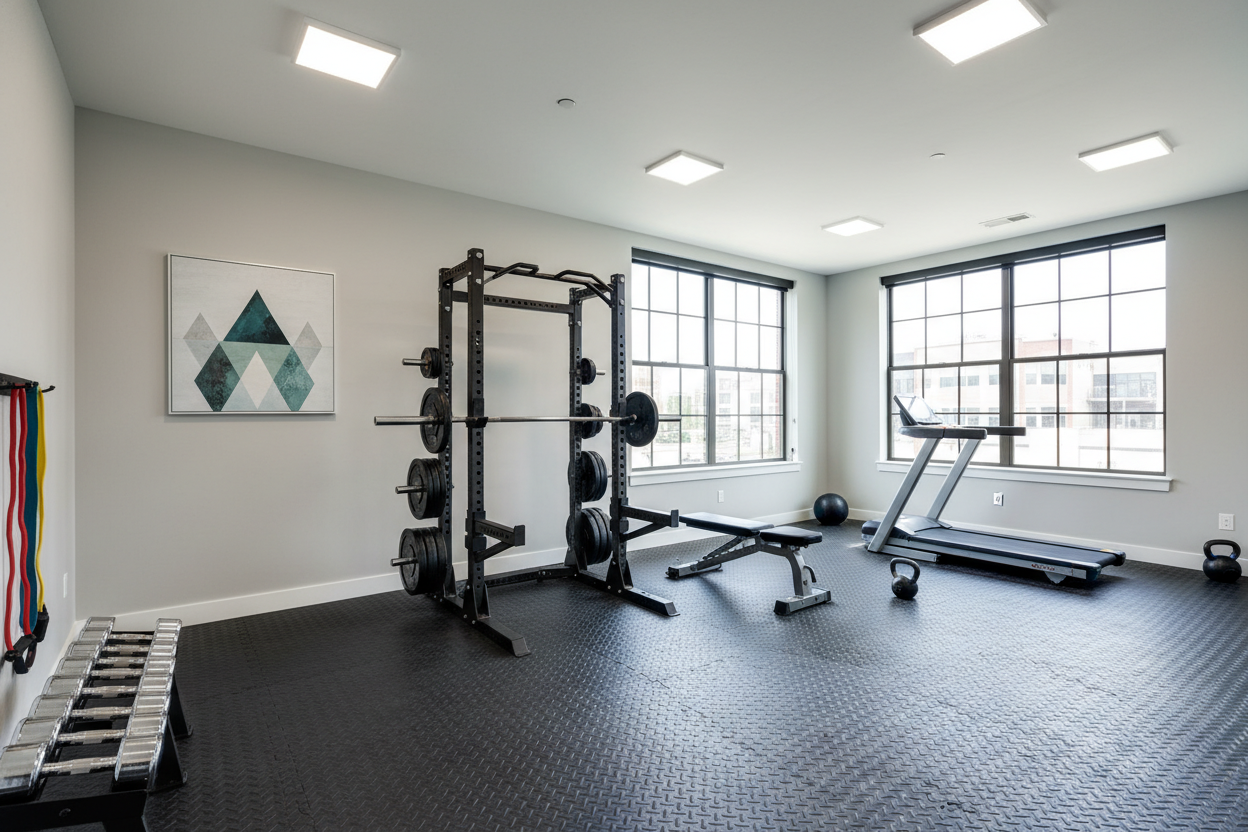
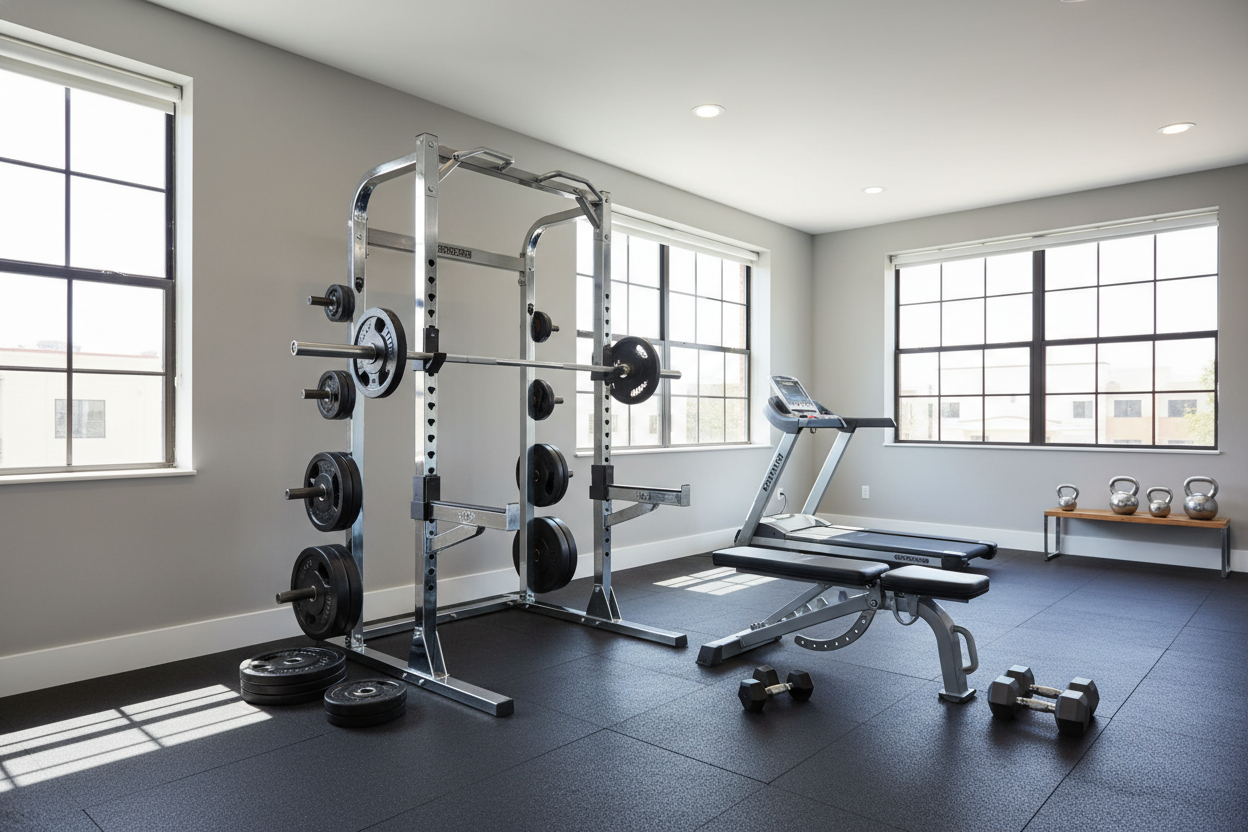
You don't need a 2,000-square-foot facility. I started back with a 7-foot Olympic bar and about 300 pounds of plates. If you're building from scratch, I highly recommend a power rack and weight bench package. It gives you a safe place to squat and press without needing a spotter every five minutes.
A rack is your insurance policy. Along with that, a sturdy adjustable weight bench is non-negotiable. You need to be able to hit inclines and declines to fully develop the chest and shoulders. Look for a bench that doesn't wobble when you've got 80-pound dumbbells over your face. Stability is safety.
How to Pick the Right Weights for Workout Progression
Stop ego-lifting. I see guys in the gym grabbing the heaviest workout gym weights they can find, only to move them three inches. That’s not training; that’s vanity. Your working sets should be heavy enough that the last two reps are a struggle, but not so heavy that your form looks like a seizure.
I recommend buying weights to workout with in small increments. Get a pair of 1.25-pound 'fractional' plates. Adding 2.5 pounds to a lift every week might not feel like much, but it adds up to 130 pounds in a year. That is how you break plateaus without blowing out your rotator cuff.
My Stripped-Down Free Weight Routine
My current routine is boring, and that’s why it works. I focus on five big moves: Squat, Bench, Deadlift, Overhead Press, and Rows. I do these three days a week, focusing on heavy sets of five. No fancy tempos, no complicated supersets—just moving the weight from point A to point B.
On off days, I might throw in a metabolic workout with weights to keep my conditioning up. Using moderate dumbbells for high-intensity intervals keeps the heart rate high while preserving the muscle I worked so hard to build. It’s about being strong and capable, not just looking the part.
FAQ
How much weight should I buy for a home gym?
Start with a 300-lb Olympic set. It usually includes a 45-lb bar and enough plates to keep most people busy for the first year of serious training.
Are iron plates better than rubber bumper plates?
Iron plates are thinner, so you can fit more on the bar, and they're usually cheaper. Bumper plates are better if you plan on dropping the weight from overhead, like in Olympic lifting.
Can I build muscle with just dumbbells?
Yes, but you'll eventually run out of weight. Barbells allow for much heavier loading, which is essential for leg and back growth over the long term.