I Ditched My Bench for the Lying Hip Thrust (Here Is Why)
I remember the exact moment I gave up on standard hip thrusts. I was three reps into a heavy set of 315, and my adjustable bench—which I thought was wedged securely against my power rack—started sliding backward on the stall mats. I spent more energy trying not to die than I did actually hitting my glutes. That’s when I started experimenting with the lying hip thrust.
Most people treat the floor version as a beginner regression, but they’re missing the point. When you’re flat on the floor, you eliminate the stability tax. You aren't worrying about the bench height, the bench sliding, or your neck positioning. You just drive through your heels and squeeze. It’s the most honest way to train glutes in a home gym without a $600 dedicated machine.
Quick Takeaways
- Eliminates lower back hyperextension by providing a hard stop at the floor.
- Zero equipment setup time; no more dragging benches around.
- Allows for massive loading without the stability issues of a sliding bench.
- Easier on the neck and cervical spine for lifters who struggle with bench positioning.
Why I Stopped Thrusting on a Weight Bench
Standard hip thrusts are great on paper, but the setup is a nightmare. Most utility benches are 17 to 18 inches high. Unless you’re a giant, that’s often too high to get a proper pivot point on your shoulder blades. You end up arching your lower back just to get the bar moving, which is a one-way ticket to a lumbar strain. I found that my lower back was doing 40% of the work just to stabilize the load against a wobbly pivot point.
Then there’s the sliding. Even on high-quality rubber flooring, a bench can migrate mid-set. If you’ve ever tried to How To Crush Glute Workouts Without A Hip Thrust Machine At Planet Fitness, you know the struggle of finding a wall or a heavy enough dumbbell to anchor your setup. By moving to the floor, I removed the middleman. The floor doesn't move. It doesn't wobble. It doesn't have a 250-lb weight limit that makes you nervous when you start loading four plates on the bar.
Wait, Isn't That Just a Glute Bridge?
People get pedantic about the terminology, but there is a distinct difference between a lazy bridge and a hip thrust lying down. A standard glute bridge is often done with bodyweight or a light dumbbell and focuses on a short, fast range of motion. When I talk about a lying down hip thrust, I’m talking about heavy, barbell-loaded work with a specific focus on the end-range contraction.
The range of motion is technically shorter than the bench version because your butt hits the floor sooner. However, that's actually a benefit for some. It prevents you from 'cheating' by using momentum from a deep stretch. To make it effective, you need to tuck your pelvis and drive your feet into the floor like you're trying to push the earth away from you. If you feel it in your hamstrings, move your feet out an inch. If you feel it in your quads, pull them in. The floor gives you a consistent feedback loop that a squishy bench pad simply can't match.
How to Load the Lying Down Hip Thrust Without Crushing Yourself
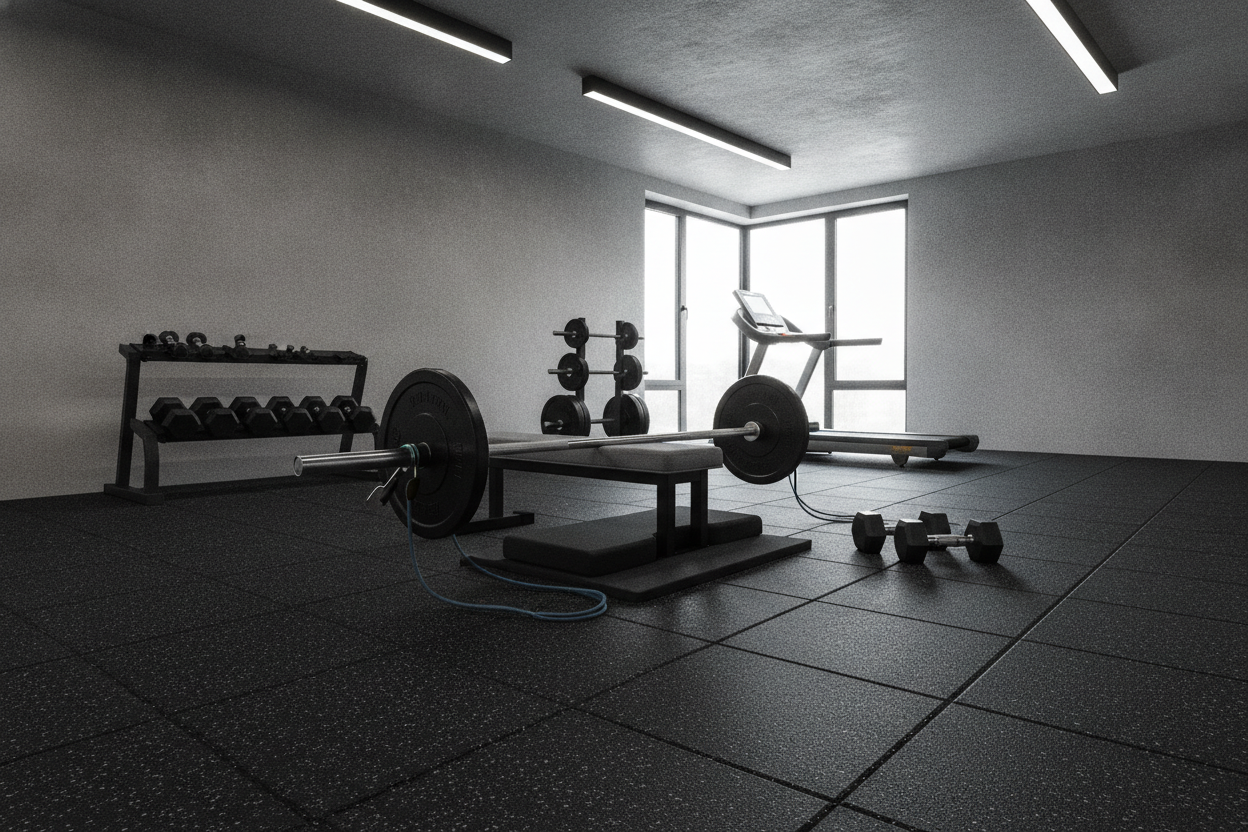
The biggest hurdle to floor-based work is getting the bar into position. If you’re using standard 45-lb iron plates, the bar sits too low to the ground to slide over your thighs. This is where bumper plates are mandatory. A standard bumper plate has a diameter of about 17.7 inches, which provides roughly 8.5 to 9 inches of clearance. That’s usually enough to roll a loaded bar right into the crease of your hips while you're sitting on the floor.
Once the bar is there, use a thick foam pad. Don't be a hero; a 2-inch thick bar pad is the difference between a productive set and a bruised pelvis. If you find that the bar is still too heavy to maneuver, you might consider a Smith Machine Hip Thrust The Ultimate Glute Building Guide style setup, which allows you to 'unrack' the weight from a floor position without the rolling hassle. Personally, I prefer the freedom of the barbell because it forces my stabilizer muscles to wake up, but the Smith machine is a valid hack if your gym’s bumpers are undersized.
The Mind-Muscle Connection Hack
When your entire upper back and head are supported by the floor, your nervous system feels 'safe.' This is a real physiological response. When your brain isn't worried about balance or falling off a 12-inch wide bench pad, it can recruit more motor units to the target muscle. I noticed that my mind-muscle connection with my glutes tripled the second I lay flat. I could actually feel the 'burn' at the top of the rep rather than just feeling the pressure of the bar on my hips.
I also stopped having that weird neck strain. On a bench, you’re told to keep your chin tucked, but as you fatigue, your head tends to flop back. On the floor, your head stays neutral. You can focus entirely on the posterior tilt of the pelvis at the top of the movement. It turns a clunky, technical lift into a pure isolation powerhouse.
When You Actually Do Need a Bench
I’m not saying benches are useless. For taller lifters—we’re talking 6'2' and up—the floor version might feel like a half-rep. You might need that extra 4-6 inches of travel to actually get a stretch in the glutes. Also, if you are a competitive powerlifter or someone who needs to maximize every millimeter of range of motion for hypertrophy, you will eventually want to move back to an elevated platform.
If you reach that point, don't go back to a wobbly folding bench. Invest in a dedicated, low-profile piece of kit like the Gxmmat Hip Thrust Bench. It’s designed to be grippy and stable, solving the 'sliding bench' problem that drove me to the floor in the first place. But for 90% of home gym owners, the floor is a better starting point than a standard weight bench.
FAQ
Is the lying hip thrust better for back pain?
Generally, yes. Because the floor limits how far your hips can drop, it’s much harder to accidentally hyperextend your lumbar spine at the bottom of the rep. It forces you to stay in a safe, productive range of motion.
What if the barbell is too low to roll over my legs?
If you don't have bumper plates, you can prop the plates up on top of two other plates or use a pair of aerobic steps to give you that extra 2-3 inches of clearance. Just make sure the bar is level before you start your set.
How many reps should I do?
Since the range of motion is slightly shorter, I find that higher volume works best. Think 3 to 4 sets of 12-15 reps with a 2-second hold at the top. The 'squeeze' is everything here.