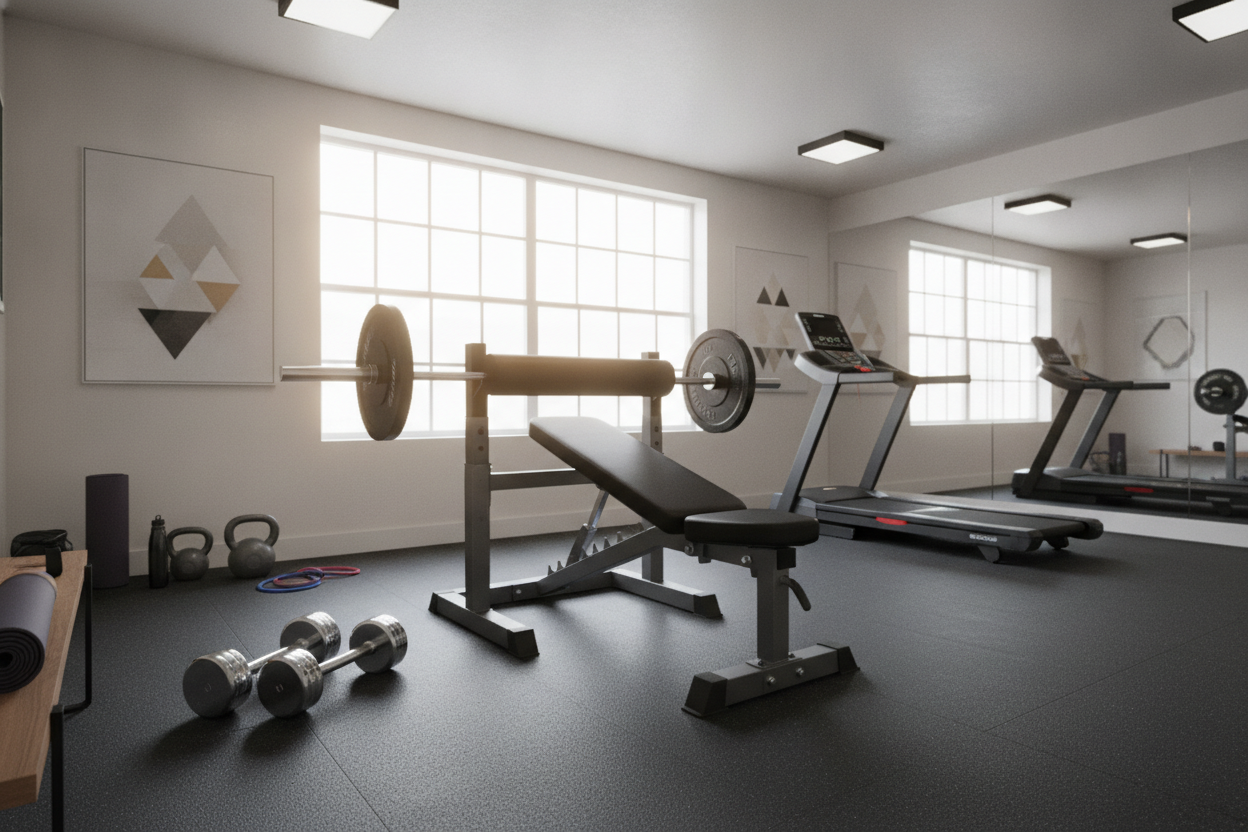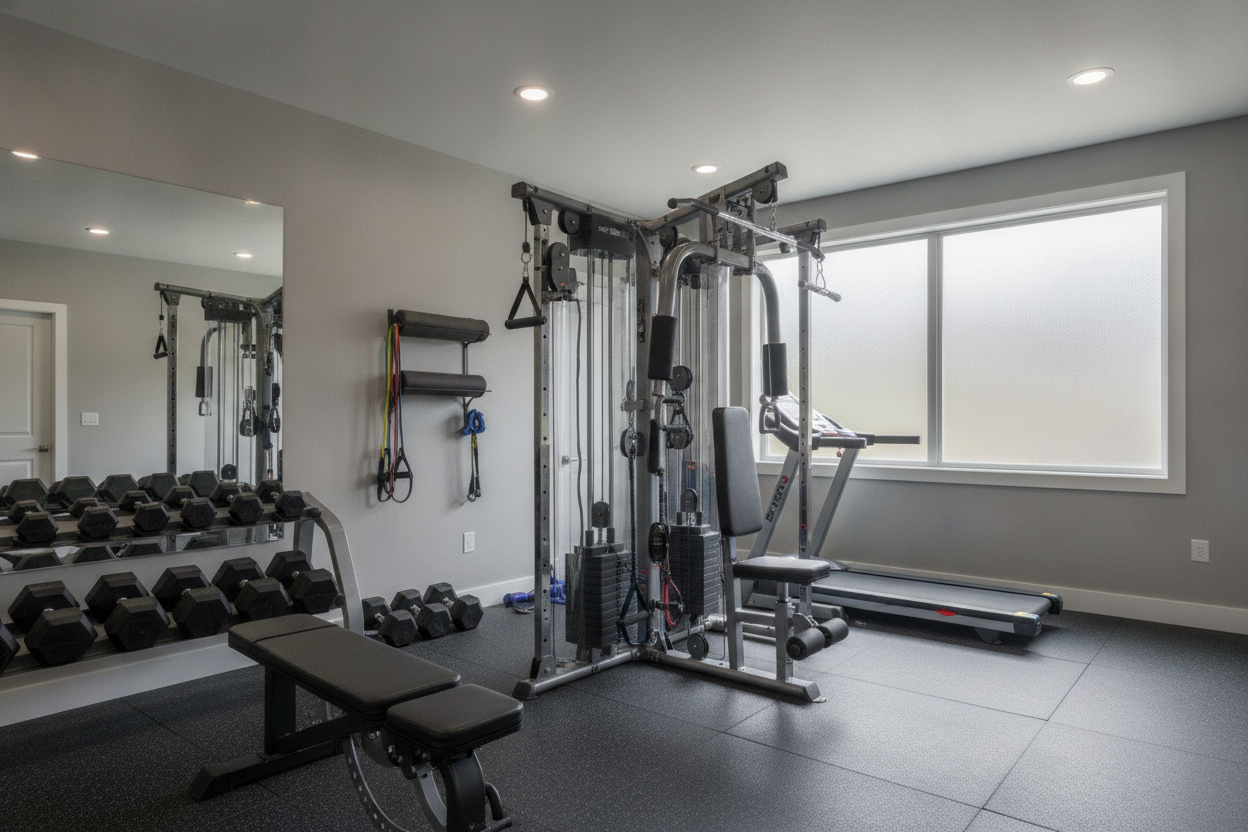
I Ditched Barbells for a Winter of Cables: My 30-Day Universal Gym Machine Experiment
My elbows were screaming. Every time I unracked 315 for a set of squats, my knees felt like they were filled with dry sand. I love the iron, but after a decade of chasing PRs, my joints were staged a full-scale mutiny. So, I did the unthinkable: I locked the power rack, draped a tarp over my plates, and committed 30 days to a universal gym machine.
Quick Takeaways
- Joint recovery was nearly instant; the fixed-path movement removed the stabilizing strain that was killing my tendons.
- Isolation work is objectively better on a stack; the constant tension of a universal weight machine beats dumbbells for lateral raises and flyes.
- Compound movements feel 'off'; you lose the raw CNS stimulation of balancing a heavy bar.
- It is a massive space-saver; a single universal workout machine replaced a rack, a bench, and a full set of dumbbells.
Why I Locked Up My Beloved Barbells
The experiment wasn't about being lazy. It was about longevity. I realized I was skipping sessions because the thought of the 'setup'—loading plates, warming up the rotator cuffs, and bracing for impact—felt like a chore. I wanted to see if a universal home gym could maintain the mass I worked years to build without the systemic fatigue.
The ground rules were simple: no free weights, no bodyweight pull-ups, and no cheating with the kettlebells in the corner. If it wasn't on the multi-station gym unit, I wasn't lifting it. I traded my 45-pound iron plates for a 210-pound selectorized weight stack and a set of nylon handles.
The Reality of Using a Universal Gym Machine Daily
The first thing you notice is the speed. There is no hunting for the second 50-pound dumbbell or stripping the bar after deadlifts. You pull a pin, and you are ready. However, the biomechanics of a universal exercise machine are a different beast. Because the path is fixed, you can't 'find' your natural groove; you have to adapt to the machine's pivot points.
Cable friction is also a factor. A 100-pound stack feels heavier on the way down than a 100-pound barbell because of the pulley resistance. It forces a slower, more controlled eccentric. By day seven, the psychological shift was clear: I stopped thinking about 'moving the weight' and started thinking about 'contracting the muscle.'
Where the Fixed-Path Setup Actually Shines
I was shocked at how much better my chest and side delts felt. On a universal gym set, you can take a set of chest flyes to absolute, soul-crushing failure without worrying about a dumbbell dropping on your face. There is a safety ceiling here that barbells just don't offer.
I found that mastering your universal machine for isolation work yields a crazy pump that I haven't felt since my college bodybuilding days. Because you aren't spending energy stabilizing the load, every ounce of effort goes directly into the target tissue. My arms actually looked fuller after two weeks because I could hammer them with high-volume universal weights three times a week without burning out.
The Exercises That Felt Absolutely Terrible
Now for the ugly truth: the 'universal' squat is a lie. Most multifunctional workout machine setups use a lever arm for squats, which creates an arc rather than a vertical line. It put a weird shearing force on my lower back that felt worse than a barbell. I eventually swapped these for Bulgarian split squats using the lower pulley, which worked, but it wasn't the same.
The chest press on a low-end universal fitness equipment unit can also feel restrictive. If the handles don't line up with your shoulder width, you're stuck in a compromised position. I had to get creative with single-arm presses just to find a range of motion that didn't pinch my labrum.
Did I Lose Strength After a Month of Cables?
Day 31 was the moment of truth. I went back to the rack to see the damage. My bench press was down about 10 pounds, likely because my stabilizer muscles had taken a month-long vacation. However, my overhead press felt stronger, and my back thickness had actually improved from the constant tension of the universal weight lifting machine rows.
The biggest surprise? My joints felt brand new. The 'universal weight system' allowed my connective tissue to desensitize while keeping the muscle fibers engaged. I didn't lose mass; I just lost a bit of the 'skill' of lifting heavy iron, which came back within two sessions.
The Final Verdict: Does It Belong in Your Garage?
If you are a competitive powerlifter, a free weight home gym system still reigns supreme for developing that raw, transferable force. You need to fight the bar to get strong. There's no way around that.
But for 90% of people—the ones who want to look good, stay lean, and not wake up with a stiff back—a high-quality multifunctional home gym machine is a legit centerpiece. It’s the ultimate tool for hypertrophy and safety. I’m keeping mine, though it’ll now live alongside my barbell as the ultimate finisher tool.
Universal Gym FAQ
Can you build muscle with just a universal gym?
Absolutely. Hypertrophy is about mechanical tension and metabolic stress. A weight stack doesn't know it's not a barbell, and your muscles don't either. If you train to failure, you will grow.
How much space does a universal gym for sale typically need?
Most units require about a 7x7 foot footprint to account for the swing of the arms and the bench. Always check the height; some stacks are over 82 inches tall and won't clear low basement ceilings.
Are the weight stacks heavy enough?
For isolation, yes. For heavy compounds, a 200-lb stack might feel light for advanced lifters on lat pulldowns or rows. Look for a gym unit with a 2:1 or 1:1 pulley ratio depending on your strength level.