I Did the Same 4 Lifts for a Year to See How to Make Muscle Mass
I remember staring at my reflection in the dusty mirror of my garage three years ago, wondering why my chest looked exactly the same as it did the summer before. I was doing every 'hack' I found on social media—switching my rep ranges, trying 'advanced' drop sets, and buying supplements that promised the world. I was obsessed with how to make muscle mass, but I was essentially just spinning my wheels in expensive gym chalk and failing to see any real change in the mirror.
- Consistency over variety is the only way to track real progress.
- Compound movements (Squat, Bench, Deadlift, OHP) provide the most bang for your buck.
- Progressive overload is a biological requirement, not a suggestion.
- A stable, high-quality home environment removes the friction of going to a commercial gym.
The Program Hopping Disease (And Why It Kills Gains)
The biggest lie in fitness is 'muscle confusion.' People think that if they don't change their workout every three weeks, their body will stop responding. This is total nonsense. If you are constantly asking how can I gain mass and muscle, the first thing you need to do is stop changing your routine. Your body needs time to get past the neurological phase—where your brain is just learning how to move the weight—and into the hypertrophy phase where the tissue actually grows.
When you hop from a PPL split to a Bro Split to a 'functional' circuit in a single month, you never get strong enough at any single movement to create real mechanical tension. I spent years being a 'jack of all trades, master of none' in my garage. My numbers stayed flat because I was too busy trying to 'confuse' muscles that were actually just confused by my lack of direction. To truly understand how gain muscle mass, you have to embrace the boredom of doing the same thing better every single week.
Why I Stripped My Routine Down to 4 Boring Lifts
I finally got fed up and cleared out the clutter. I stopped looking for the 'secret' exercise and focused entirely on the Big Four: the Back Squat, the Flat Bench Press, the Deadlift, and the Overhead Press. I realized that a reliable weight set and bench was the only foundation I actually needed. I stopped worrying about whether I was hitting my rear delts at a 45-degree angle and started worrying about whether I could move more weight than I did last Tuesday.
The rationale was simple: these lifts recruit the most muscle fibers and allow for the heaviest loading. When you look at the debate of free weights vs machines, the barbell wins every time for a home lifter because of the stabilization required. You aren't just hitting your chest on a bench press; you're using your triceps, shoulders, and even your lats to stabilize the load. This total-body tax is exactly what helps you build muscle when you don't have four hours a day to spend in a commercial gym. I did these four lifts, twice a week each, for twelve months straight. No fancy variations, just heavy, honest work.
The Biological Reality of Progressive Overload
Muscle growth isn't a mystery; it's an adaptation to stress. If you lift 135 pounds today and you lift 135 pounds six months from now, your body has zero reason to grow. To figure out how to add muscle mass, you have to understand mechanical tension. This means you must either add weight to the bar, add reps to the set, or decrease the rest time. In my experiment, I chose the simplest path: adding 2.5 to 5 pounds to the bar every single session until I couldn't anymore.
This is how to boost muscle growth without overcomplicating the science. Your muscle fibers experience microscopic damage, and provided you eat enough, they repair themselves to be thicker and stronger to handle that specific stress next time. If you want to know how to increase muscle weight, look at your logbook. If the numbers aren't going up over a three-month period, you aren't building tissue—you're just exercising. I tracked every single set of my four lifts. There were days I didn't want to do it, but the data doesn't lie. Seeing a 225-lb squat turn into a 315-lb squat over a year is the most reliable way to ensure you've actually build muscle and mass.
How I Set Up My Garage for Brutal Consistency
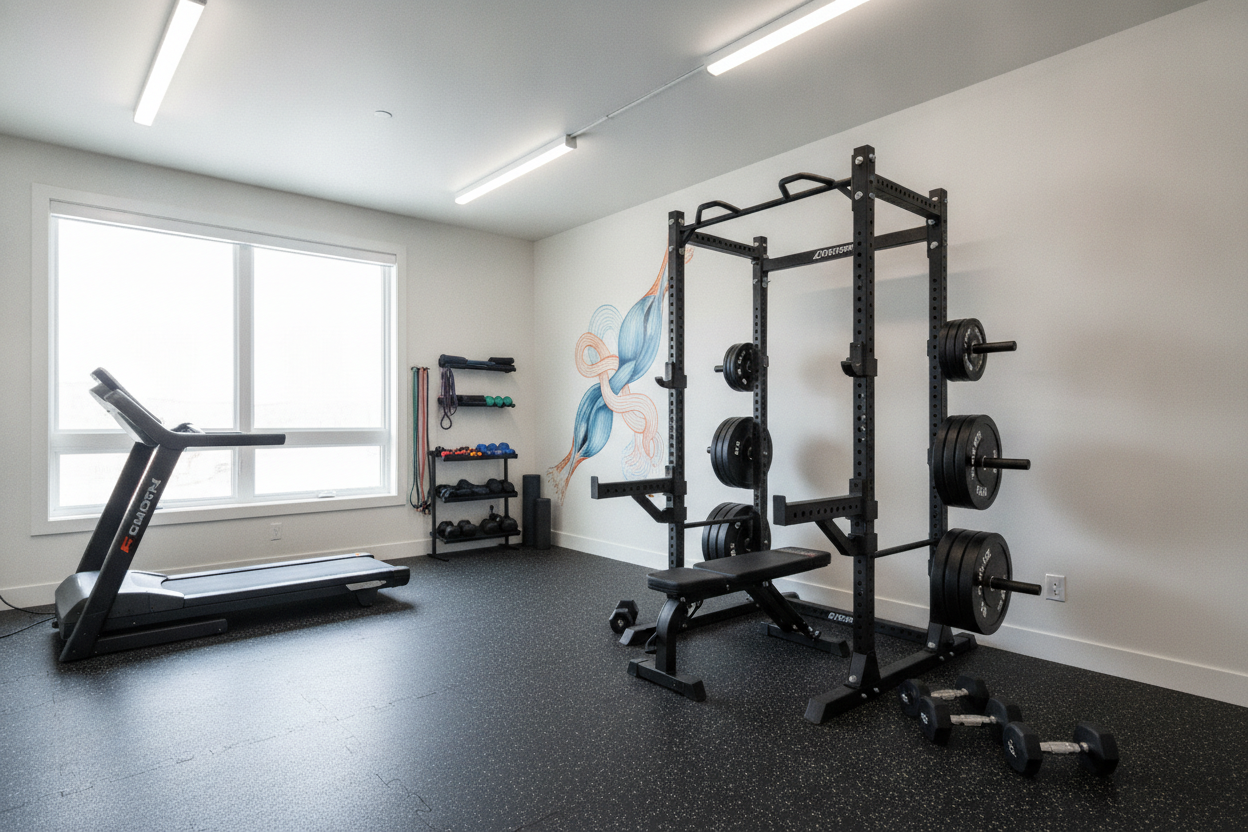
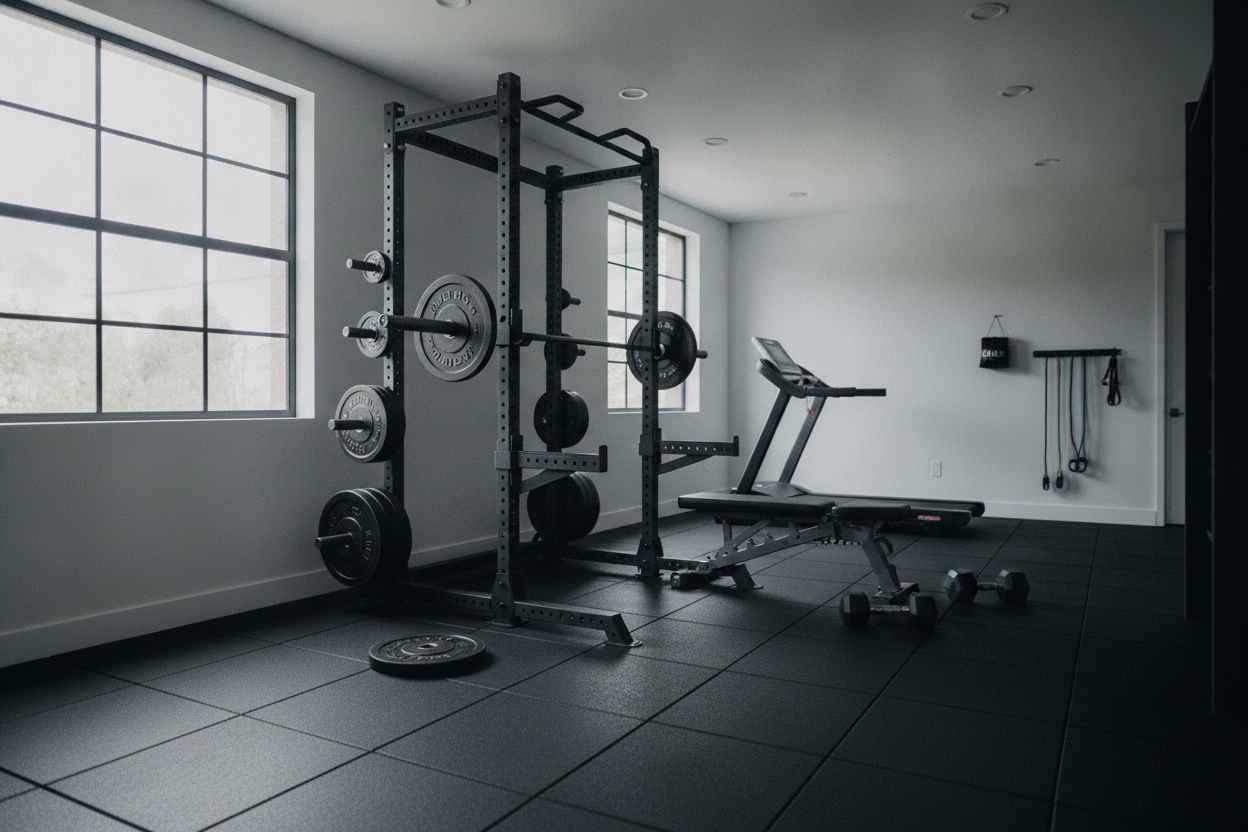
To stay consistent for a year, I had to stop making excuses about my gear. I used to have a cheap, rickety rack that made me nervous every time I unracked a heavy bar. I upgraded to a solid adjustable weight bench that stayed planted during heavy incline presses. There is a psychological component to training; if you don't trust your equipment, you won't push yourself to the brink of failure where the real growth happens.
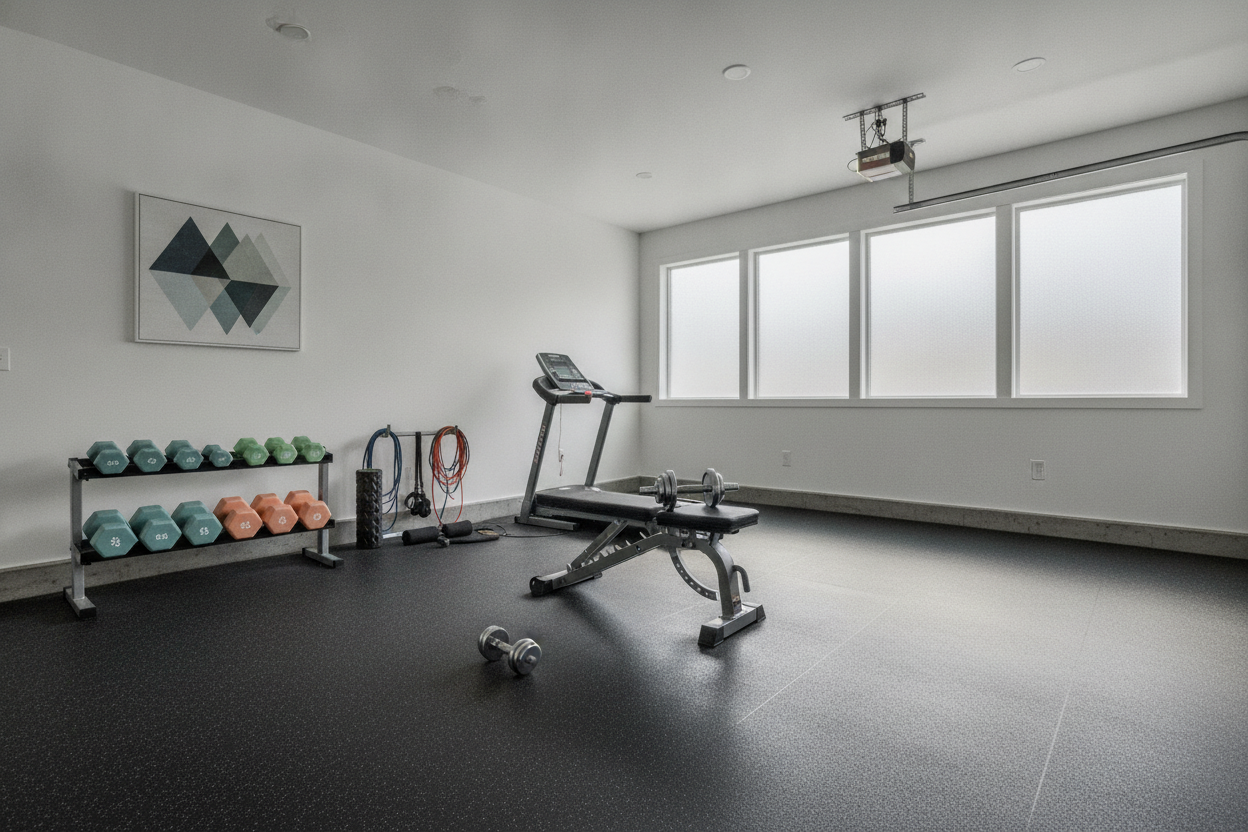
I also invested in an extra wide exercise mat to cover my concrete floor. Having a dedicated 7x10 foot zone where I knew I wouldn't slip during a heavy deadlift was a game-changer for my confidence. My garage was cold in the winter and a furnace in the summer, but because my setup was dialed in and the program was simple, I never had to 'think' about what to do. I just walked out, stepped onto the mat, and got to work. How can i gain mass if I'm constantly adjusting my equipment? You can't. You need a setup that fades into the background so the effort can take center stage.
The Verdict: Did I Actually Grow?
After 52 weeks of the same four lifts, the results were undeniable. I gained muscle in places I had struggled with for years. My back was wider, my legs finally filled out my jeans, and my bench press went up by 60 pounds. I stopped asking how can i put on muscle mass and started answering it with a heavy barbell. The biggest takeaway is that 'boring' works. Most people fail because they get bored and want to try the new thing they saw on a fitness app.
If you want to know how to put in muscle mass effectively, you have to be willing to be the person who does the basics better than anyone else. I didn't need a 20-exercise circuit. I needed four lifts, a high-protein diet, and the discipline to keep adding weight to the bar. It wasn't always fun, and there were weeks where I felt like I was hitting a wall, but the physical transformation was the best I've ever had. Stop looking for the hack and start looking for the heavy plates.
FAQ
How long does it take to see muscle mass gains?
Usually, you'll see neurological strength gains in the first 4 weeks, but actual visible muscle tissue takes about 8 to 12 weeks of consistent lifting and a caloric surplus to really show up in the mirror.
Can I gain mass with just a barbell and bench?
Absolutely. In fact, most of the world's most impressive physiques were built with nothing more than a barbell, some plates, and a flat bench. Complexity is often the enemy of progress.
How many days a week should I train for mass?
For most people, 3 to 4 days of heavy compound lifting is the sweet spot. This allows enough intensity to trigger growth and enough recovery time for the tissue to actually repair and grow larger.